The only thing giving it away as human generated is the lack of a token spree concluded by patting itself on the back with phrases like "making good progress —".
I mean, make no mistake, it is terrifying, but you'll make it through eventually and it will be okay.
Also not sure if this was covered in class, but in case it wasn't: You need to rotate the baby. The baby needs rotation so that the head doesn't grow misshapen. Rotate the baby.
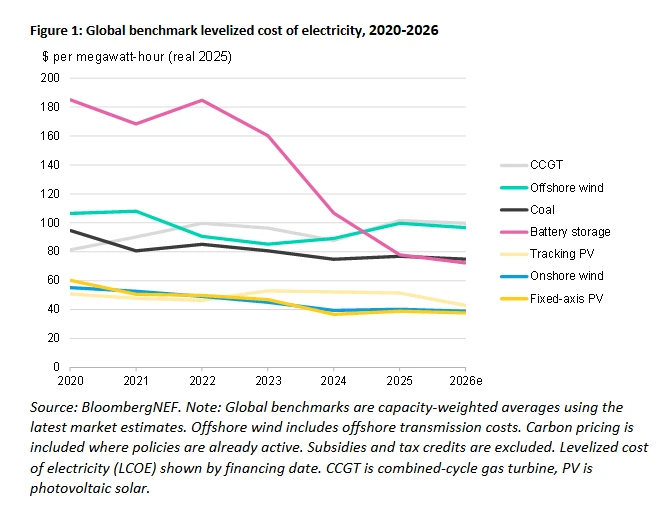
It's enough to fund more than a 10% increase in installed solar capacity in the EU, so if all that energy were to be used to save money, double solar capacity every 7 years - or 10 years if assuming that 3% of all panels are retired annually.
Partly because they still use coal, which is heavily taxed under the emissions trading scheme and partly because of the way electricity auctions work in most of Europe, namely every participant sells at the price offered by the highest bidder.
Spain opted out of this system and is now enjoying cheap wholesale electricity, which is fueling an industrial revival.
> This doesn't explain why Germany has so high electricity prices.
It's the main thing which does.
Say you have two energy sources, Alice Electric can deliver at €0.03/kWh but only up to 10% of your demand, while Bob Energy can deliver 200% of your demand but all units will cost €0.5/kWh.
The net result of the electricity auction, as described, is that the consumers pay Alice and Bob €0.5/kWh each, which gives Alice a €0.47/kWh profit margin and therefore lot of money to expand operations if she wants to, but until she can actually supply 100% of demand, it's priced by what Bob charges.
This doesn't explain why energy costs are higher in Germany. You have to replace the words "Alice" and "Bob" with something that is relevant to the topic at hand.
Bob is the marginal generator: the most expensive power plant that still has to run to satisfy demand in a given hour (or whatever the auction period is, I assume it's per hour).
Bob is not one single concrete thing, it's the abstract concept, anthropomorphised.
Germany's energy is expensive because the marginal generator is so expensive.
That's nonsense. Solar during overcast days is extremely and at night infinitely expensive by itself. You can't just take some average, you have to take expensive gas or battery backups into account when comparing to a stable energy source like nuclear or coal which doesn't need these backups.
2. Literally everybody knows this. 2006 wants their memes back. Why do people bring this up without realising that demand is lower at night, with shops and factories being closed etc.? Even the duck curve thing is solved with just 1-2 hours of storage.
A quick DDG search says that other nearby countries with higher % of specifically solar (e.g. Luxembourg, Hungary, Netherlands), have lower consumer electricity prices than Germany, ergo solar itself isn't what's causing the high consumer prices in Germany.
And it's not like batteries are even expensive any more, at least not when bought in bulk.
> You can't just take some average,
Sure you can.
Consider a consumer with a constant demand (to make the maths easier, still works if not):
Option 1: use only the thing which works 24/7, but costs €1/kWh
Option 2: use the thing which works 50% of the time and while working costs €0.05/kWh, and the rest of the time go back to option 1.
(PV is of course weirder than that, because it's shaped more like "Over the next 35 years it will emit X joules for your initial investment of Y money", so you're pre-paying for something, and also it's immune to any inflation, and there's a long side-discussion about financing here I'll skip as you seem to be refusing to accept even the fundamentals).
> stable energy source like nuclear or coal which doesn't need these backups.
They absolutely do need backups, their downtime is higher than you may expect.
This is, in fact, why even coal rich countries don't only use coal. Why nuclear-happy France doesn't only use nuclear. Etc.
Dismissing the cost benefits of renewables "because they need some kind of backup" is like dismissing the travel benefits of planes because the airspace around them gets closed every night, or like refusing to use a bike ever because sometimes you need to buy a new fridge and that won't fit on a bike trailer.
Or dismissing oil because of the two stupid wars currently going on, and how much they impact oil.
Bob is gas, here, generally. Gas is the supply of last resort pretty much everywhere. Though in Germany in particular, Alice is beginning to be big enough that the dynamic is beginning to break down; this March spot prices started to go zero or even negative at midday.
I jokingly refer to this as the Catholic principle: "sin first - confess and repent later" as it's a common theme in countries that are/were traditionally Catholic, including my own.
It's really just places culturally untouched by Calvinism, Puritanism and the like, all of which put emphasis on order.
The last thing to attempt bringing order to them were various forms of authoritarianism and they didn't last. I think we can agree this is not the right approach.
It's not just a Catholic thing, in Book II of Plato's Republic (written ~2,400 years ago) Adeimantus mentions that some people say there's no point in acting justly because you can just act unjustly and sacrifice to the gods later to make it up.
You joke, but it's not remotely Catholic in principle. A confession is by definition invalid if premeditated.
A presupposition of confession is that you have contrition and the resolve not to sin and wish to receive absolution (which doesn't remove the need for temporal justice btw). Premeditation and without remorse turns that confession into an empty act, and indeed, another sin.
Calvinists also believe in confession. Indeed, it doesn't even require the uncomfortable encounter with a priest. You can just do it privately in their view.
This touches on the purpose of sacraments in the Catholic Church. They are meant to be visible signs that give assurance and certainty that something has taken place. If a human being were to show perfect contrition (very rare), then there is no need for the confessional (and ultimately, God is not bound by the sacraments). But for the penitent, the confessional gives assurance of absolution, provided there is some measure of requisite contrition. You don't have to wonder about your eternal fate after leaving the confessional.
The idea that Catholic societies are corrupt or and Calvinist societies are tidy and ordered is a stereotype, and it is silly and ahistorical to claim that you need authoritarianism to bring order to Catholic countries. Catholic societies have a greater tolerance for the messiness of human life. It views itself like a field hospital ready to provide people with means to get back up and to heal. Calvinists, on the other hand, are strangled by their constant anxiety about whether they are part of the elect or not. That can translate into rigidity, rigorism, scrupulosity, and OCD. These, in turn, can resort in a backlash of moral laxity.
(Another stereotype is the Protestant work ethic. Apparently, no one ever heard of the Benedictines and their influence on Europe. There is also a healthy attitude toward work and an unhealthy one.)
Maybe I'm a Calvinist. I'm definitely happier in the Netherlands. My general experience was that Irish laws existed mostly for show and if you followed them you were a chump. Unless you wanted to smoke a joint now and then, of course.
Ireland supposedly cares about nature too, but you can still buy truckloads of turf off the side of the road in Offaly. Good luck getting those rules enforced.
When we still lived in Dublin I got pretty tired of having to push my baby in her pram in the street because the pavements (sidewalks) were completely covered in cars, even in the city centre trying to get to the YMCA creche.
Our experience wasn't limited to "victimless" crimes though. I think when you're threatening your neighbours and letting dangerous dogs loose on other people's land where there's kids or sheep then authoritarianism is called for.
You may have a point but you're discrediting yourself by using extreme hyperbole.
Authoritarianism would be you and your family getting picked up and interrogated sometime at night for this critical comment you just made.
And saying "crime is legal" when referring to cars parked on the sidewalk or you having had a bad experience with a neighbours dog? I think if you reflect a little you'd realise that these are the kind of "crimes" you probably have committed yourself countless times.
Thats some mighty hyperbole, not everybody is breaking some minor (or not so minor) laws 50x a day. Or a year.
Societies where there is high amount of respect towards each other and rules tend to perform much better over long time, ie Switzerland. Its a pleasure to live in such society especially when coming from more messy ones, triple that with small kids.
> Thats some mighty hyperbole, not everybody is breaking some minor (or not so minor) laws 50x a day. Or a year.
How do you know? Do you know of all of the protected species of bug in your country for instance?
In my town there are laws about using profanity in public. I'm sure they would be deemed illegal if charges were brought but the law is still on the books.
I don't want to discount your experience or judge that particular event. I just disagree with calling for authoritarianism in response to that.
Happy that you are happier :) I'm German, so in general I find it refreshing when people manage to live peacefully with each other without having a rule for every single thing. Obviously a dog endangering children is not such a case.
Last year I was in a Samsung shop when one couple remarked to me that it was the second time they came to buy the same phone for the wife in a month. Then naturally I asked for the reason why, I thought they like it so much to buy a second one.
Apparently the couple just recently come back from a trip in Ireland and lost the new Samsung phone there. Someone has stolen the wife's baggage from the bus when it's doing the routine transit stop by the bus stop while opening the bus baggage conpartment. By the time they realised the thief already going away from the bus with the baggage with the new Samsung phone inside it. They reported to the police but nothing happened. In UAE, Singapore or Japan this type of crime is just not worth it since the petty thief will be punished severely. A lady can incidently left her Louis Vuitton bag inside a restaurant in Dubai, left it at her seat, then after a few hours come back to fetch the bag without losing anything inside.
there was a recent case of a kid who was literally stabbed by a sihk guy and got arrested because the sihk guy said the guy said something racist.
Now before you say that I need to check my white privilege, I am brown. everytime one of these people commit these crimes and the police look the other way in the name of political correctness, it gives legitimacy to the racists who want to cast all of us in a bad light. Law and order needs to be a applied equally and its very strange to me how people are getting arrested for speech when they are a direct consequence of government policies. don't make teh speech illegal, correct the issues the=is speech is surfacing.
> As of March 2023, Emirati authorities continued to incarcerate with no legal basis at least 51 Emirati prisoners who completed their sentences between 1 month and nearly 4 years ago. The prisoners are all part of the grossly unfair “UAE94” mass trial of 69 government critics, whose convictions violated their rights to free expression, assembly, and association. UAE authorities used baseless counterterrorism justifications to continue holding them past their completed sentences. Some prisoners completed their sentences as early as July 2019.
> I think when you're threatening your neighbours and letting dangerous dogs loose on other people's land where there's kids or sheep then authoritarianism is called for.
It doesn't have to require authoritarianism to keep the peace. It also doesn't seem like it could only be solved by an authority. If there's a dangerous dog on your property, shoot it if you can't get it to leave and fear for the safety of your kids or sheep.
Sure, every action has reactions. I'm not saying the first response should be to shoot the dog in such a scenario, it should be the last resort least of all because it wasn't the dog creating the situation.
It and to be handled though. Yes, there may be retaliation for shooting the dog but there may be retaliation for calling the cops as well. All you can do is deal with the situation at hand, there is no magic bullet authority or otherwise.
> I think when you're threatening your neighbours and letting dangerous dogs loose on other people's land
I know too little about this specific situation, but did the neighbour not stop despite being asked to?
I haven't been to Ireland or the Netherlands (aside from driving through of course), but from what I've heard I would not like it in the latter. Nature appears to be scarce there, as for some reason the Dutch insist on being an agricultural superpower despite the population density.
The reason is roughly that there were devastating food shortages in the world wars, and avoiding that happening again has been an important force in Dutch politics since.
> I think when you're threatening your neighbours and letting dangerous dogs loose on other people's land where there's kids or sheep then authoritarianism is called for.
You jumped straight to authoritarianism? How about trying self-defense?
The guy who carries a pistol and shoots the neighbor's dogs in self defense, I would expect that guy to face some social consequences and he'd be lucky if it was just the police.
Hobbes. we create the Leviathan so we don't have to constantly act in self defense. The alternative was cold, brutish, and short.
Personally I like having my TypeScript cake and eating it.
I also truly believe those who design type systems would benefit from taking a look what kind of code people programming in dynamically-typed languages produce.
I do too, but I feel like TypeScript stands alone as an unusually effective and pleasant to use bolted-on type system. I've not seen any other approach come close. (My sample size is Python, Ruby and Elixir)
I really like PHP's type hints (I think they were the first I used) though it's somewhat limited (can't type hint complex/nested structures last time I checked).
Flow for Javascript was okay but Typescript I've found to be much nicer (last used flow years ago but occasionally I'd encounter bugs in Flow).
you don't think the elixir type system is effective? I've never seen a bolted-on type system get so much acceptance from the hardcore "you can add types into my dead hands" crowd
I find it funnysad that python people coined the phrase duck typing and then ended up designing what they have now. Meanwhile TS manages to embody duck typing far better even though coming from very different background.
Does Python needs its own TypeScript moment? Many times, while writing Python and deeply frustrated with its weak(er) type system, I have dreamed of something like TypeScript or VB/VBA from the early 2000s (where the type system was surprisingly strict!). However, there are so many Python libraries written in pure C, it is way harder to create a TypeScript equivalent.
Could you point me towards the kind of code people programming in dynamically-typed languages produce?
I have lived in statically typed languages almost all of my life, and even when I don't, I pretend I do, just without having a typechecker. So I'm very curious about what I'm missing.
I hate TS's tooling with a burning, deep passion. But its type system is actually pretty incredible for what it is.
There are times that I yearn for TS's ability to do duck type reasoning in e.g. Rust (despite that not being feasible) when working with very large data types.
It's an old person's disease. 30% of all cancers occur after the age of 74, 50% after 50.
I used to work in the pharmaceutical industry and my experience is that people in this field in particular are extremely passionate - you can immediately tell who lost loved ones to cancer.


_-_renewable_energy.svg)
BYD is using, among other methods, a "3D direct refrigerant cooling system", so the batteries are dipped in phase-changing coolant.
Aside from that the cells are pre-warmed and were optimised for lower internal resistance.
reply