>a lot of people think about bioluminescence in these tropical regions, but we have it right up here in this very diverse and rich environment
non tropical, colder in winter than Seattle, warmer in summer, the waters of New England have a fair amount of bioluminescence. you can see it brushing your hand through the water, at the tips of oars, etc (only in the dark)
unlike the dinoflagellates in this video (which are eukaryotes she calls algae, not sure if algae have flagella? looked it up "dinoflagellates are not classified as plants; they are unicellular protists that can exhibit both plant-like and animal-like characteristics. Some dinoflagellates are photosynthetic, using sunlight to produce energy, while others are heterotrophic, consuming other organisms for nutrients.") from somebody whoi oughta know I was told for the east coast it's ctenaphores (the c is cilent) the largest mini creatures that use cilia to move. just looking on wikipedia, apparently to cope with feeding themselves they also eat copepods which can also be bioluminescent
"Algae" is a term that is used for any living beings that have chloroplasts, thus they are able to capture solar light and produce free oxygen, except for the originally terrestrial plants (which descend from a certain group of green algae).
Most unicellular algae have flagella.
By phylogeny, there are several separate kinds of algae, which are not closely related and which have appeared as a consequence of separate symbiosis events.
After diatoms, dinoflagellates are among the most abundant unicellular algae. The chloroplasts of both diatoms and dinoflagellates have their origin in red algae that had been incorporated as intracellular symbionts in a distant past.
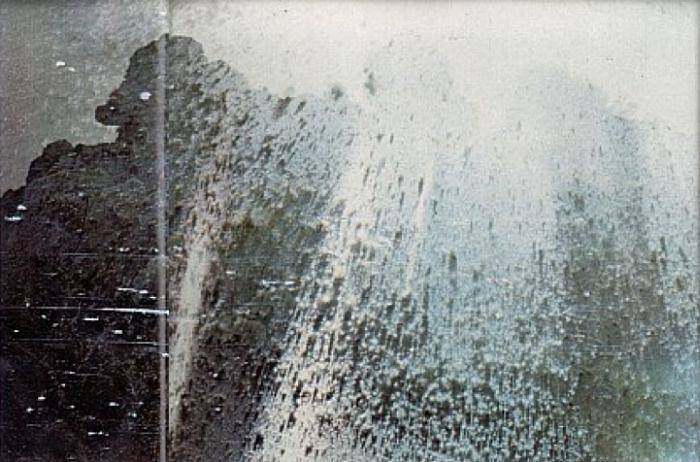
i just posted a sister comment to yours about the Mt St Helens explosion, with a picture from 1980, and then i noticed that they are calling (it's a non technical article) what rained down in the photograph onto the camera and photographer "pyroclastic flow" and it looks very similar to what happened here.
This is not a pyroclastic flow and doesn’t look even remotely similar. The problem is that you’re comparing a very close up image of some lava falling on a camera to videos taken from tens of miles away from Mt St Helens. The scale and nature of the event are completely different.
Weirdly if you are going to be hit by a pyroclastic flow then it won’t be moving across your field of view at all. It’ll just be getting bigger and angrier–looking for the minute or two that you have left in your life.
there is a poignant set of images taken by a photographer Robert Landsburg who chose to post himself too close to the blow up of the top of Mount Saint Helens in 1980.
the last picture from his salvaged camera is similar to what we see for this topic: https://allthatsinteresting.com/wordpress/wp-content/uploads... his camera was found under this body, with speculation that he was protecting it, which doesn't seem unlikely, but it also would not be surprising for him not to have had that presence of mind, things were happening very quickly.
After taking his final photograph, Landsburg removed the roll of film from his camera and placed it in a canister. He buried the camera and the film canister deep in his backpack. Then, he placed the backpack on the seat next to him and covered it with his body.
It was more than just jumping on top of his camera. Sounds like there’s some confidence about his intention.
>you should not bring your personal phone if you don't want them going through all the contents
isn't the right move here: wipe your phone, travel to destination, then restore from cloud backup? in the middle, you can let them inspect your wiped phone.
If you are of interest to the US government or any ally, assume your phone comes back from inspection with a compromised bootloader that will continuously re-infect your phone after you wipe/reinstall.
Wipe it, let them inspect it, sell it, and buy a new one.
For non-citizens, there's not really any law against them installing malware on your phone which could persist through a factory reset. Though I've not heard of such malware for flagship phones.
I have heard of malware like this, and engineers that found it at Google were instructed by higher ups to ignore it and never talk about it without explanation.
Good luck getting anyone close to this to go on the record about it though given such things normally come with corporate or government gag orders.
There are hundreds of privileged vendor binary blobs on most flagship devices not even Google gets source code to though so supply chain attacks should be assumed.
Sure, the NSA can probably pull this off. Thing is, the NSA probably does not need to do this at immigration.
I seriously doubt that this is a realistic problem if your threat model is anything less than "The NSA is very interested in me". In that case I don't see how you could trust any phone, regardless of it having been in the hands of border officials or not.
Or just do not use a phone at all. I travel internationally without one a few times a year. Europe, mexico, canada, japan, no problems. Dirty looks, but no problems.
but to develop better intuition, think of the sun's gravity as a field in space and nothing is being dragged anywhere, it's just that wherever you are feels appropriate to where you are and where you are going is the path of least resistance, and the places around you feel the same way, and where you all are in relation to each other (in this field) changes its relative position to everything else.
the water of an incoming tide doesn't feel "i'm being dragged uphill", it feels "hey, the earth is moving underneath me". it's all in freefall all the time.
you don't feel like you are rotating at 1000 mph (1600 kph) but you do feel your weight against the surface of the earth. same with the water, except it feels itself being squeezed by everything around it like you only feel that in the entrance to a crowded venue.
so, the water on the side toward the moon and the water on the side away from the moon would mostly perceive the earth as dropping away or coming closer (if they could perceive anything at all) where they are is always their point of reference
>Why is it so hard to believe that disabled people can be accepted into "elite" universities?
?? many people would think there is something wrong with the definition of disabled if 38% of the population is disabled: more likely to be mislabeled. now, if 38% of the population is not disabled, but 38% of elite universities is, that is also something of note... is how the headline/article should be read.
then, if you live in a society with the ideological divides that many western societies show, where one side campaigns by advocating more social spending and the other advocates that it's being overdone, the suspicion is sure to emerge in some quarters that the metrics for disability might be manipulated in one political direction or the other. also makes a number like 38% interesting.
The CDC reports that 1 in 4 Americans are disabled. Sure 38% is higher than 25%, but the 38% number is the worst case scenario, two of the other universities cited only had 20% of students who were disabled, below the CDC number.
> one side campaigns by advocating more social spending
Ironically, having more social spending on 4-year universities would actually alleviate this problem if we are following the author's logic. If students weren't the ones footing the bill for their education, there would be less incentive for them to take measures to try and circumvent a system that penalizes low-performance (doubly-so because you both get a bad grade and you still have to pay back the money).
I read the headline/article exactly the way it was supposed to be interpreted. I'm also not reading that far into it, the byline literally states, "If you get into an elite college, you probably don't have a learning disability", which again, is simply not true and is ableist. Disabled people are not incapable of performing certain tasks, but they are hindered, which is why it's called a disability and not an inability.


and here's the Tom7 video he recommends if you want to go deeper https://www.youtube.com/watch?v=QH4MviUE0_s
reply