It's still not entirely accurate, or at least conclusive, that WhatsApp effectively protects people against mass surveillance. It might be that there's enough other sources, messages aren't that valuable in the first place or even that mass surveillance itself, between target surveillance and everyone being a public person, isn't that important to protect people against.
I think it's much easier to conclude that WhatsApp protects peoples messages from leaking or being abused by providers and other "softer" merits.
I'm saying that both the claim that "WhatsApp is effective" and that "it is effective against mass surveillance" might be untrue even if it is effective at E2E encryption.
You can argue that WhatsApp itself de facto doesn't effectively protect (against mass surveillance) because it only works with instant messages and a lot of data isn't instant messages. You can argue that there is still mass surveillance of metadata. And that governments could enact secret laws to force vendors to engage directly in mass surveillance of their customers through the OS (less likely in the US, more so in China, especially as Google isn't present).
Sure, it's a nitpick. It's implied that it's effective because it's a good way to use E2E. But it not necessarily explored in the article whether it effectively protects people. I'm sure someone thinks that PGP was effective against mass surveillance too. So it becomes and issue over what you think is worth protecting.
Few of the people on the list have any, at least obvious, position outside of their field. The purpose of seeking input is to make sure that this isn't 72 "climate change deniers" in fringe positions or with their own "custom" organisations.
I understand what you are trying to say, but you might want to check out the full list. It contains people who have various strong opinions on different nuanced security related topics, yet all agree regarding this. I think that is why it is strange to brush aside the signatories.
> It contains people who have various strong opinions on different nuanced security related topics, yet all agree regarding this.
But it takes a while to verify this if you're not already familiar with it (I'd argue that's a reason why they shouldn't have published the article to begin with, but w/e)
The public editor wouldn't know any of that. It's pretty much thier job to not take someone at thier word. Even if he could verify each person's contribution, their position in the field and the relevance of these facts to this issue he still can't be sure that this isn't e.g. some fight between two sides and that this group isn't in minority to 172 other experts that think differently. It's out-of-band verification if you so will.
More likely that The Guardian weren't very good at finding any experts before or after the story. Apparently if you don't expose a distinguishable interface to the rest of the world journalist won't find you.
Probably not. Someone using Spotify and their hypothetical music recognition service is more like someone using Google Search and Gmail which isn't a problem. This is more like is someone would search Spotify and artists from their own record label (or promotion company) were at the top of the search results.
This is part of a whole debate which you find by searching for "personal data as counter-performance". For example:
> The German Minister for Interior, Thomas de Maizière, has voiced many of the concerns of Member States over the concept of “private ownership of data” and the risk this might entail for consumer privacy. Minister de Maiziere cautions, “If I can sell ‘my’ data, there is a danger of privacy being up for sale. Then at some point, only the wealthy will be able to afford to opt out, while the economically weaker are effectively forced to put ‘their’ data up for sale”. The DCD proposal also conflicts with the rights and remedies detailed in the UK’s Consumer Rights Act, which become invalidated when consumers exchange personal data in return for access to digital content. While the UK government has stated that it has “no fundamental objection” to applying these rights to situations where consumers exchange personal data for access to ‘free’ digital content, it has also said these rights could “unduly inhibit” that “very innovative business model”. Most recently, Giovanni Buttarelli (EDPS) published an Opinion on the Commission’s proposal, warning that “individuals should not be required to disclose personal data in ‘payment’ for an online service”.
One was an operating that had a monopoly that was nearly impossible switch away from and was bundling software to destroy specific competitors.
The other is a web page with tons of competitors, many of which work well, deciding what their own computers after you specifically requested them to do so.
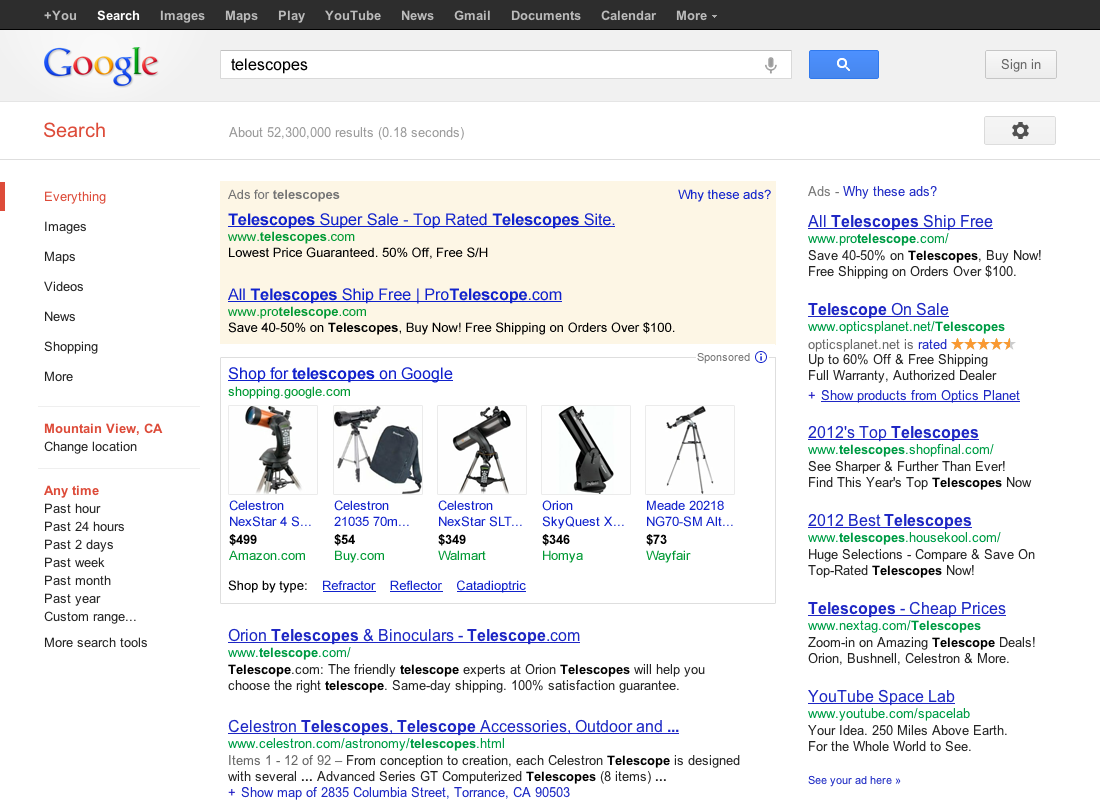
No, the point is that Google is using their dominance in search, which isn't easy to switch away from, to compete in price comparisons. Google just having a price comparison tool isn't the problem, it's when they include it as a part of search. Which is using their dominant position.
While whether you can switch might be important from a user standpoint it's not necessarily a factor from a market standpoint. It's more about how much power you have and how you use that power. It might be very easy to switch to Bing, but Google still have power over >90% of the search market.
> When I go to the SNCF (French rail) website, are they showing me flight and bus options or only their train results?
Yes, apparently they do show bus results. Both from their own bus company and at least one seemingly unrelated one. I know it is similar in Sweden with SJ, which shows trains and buses from other companies.
> Nobody is forcing anyone to visit google. It’s a website. Perhaps if the EU really cared, they’d ask themselves why Europe hasn’t produced a credible Google rival.
Isn't that essentially what they are doing? It might be to late to compete on web search. That doesn't mean Google should have an unfair advantage in other search like price comparison.
> That settlement money ought to go directly to funding EU startups.
Most EU startups will be happy if they just have a chance to compete "pound for pound". US companies have been enjoying single digit VAT and corporate income tax for years. Which is both the result of EU laws and the US leaving their own "loopholes" open to make their companies more competitive.


I think it's much easier to conclude that WhatsApp protects peoples messages from leaking or being abused by providers and other "softer" merits.