A big piece of news buried near the bottom of this page is that the UK has withdrawn from ITER, the major international project to develop fusion energy, to which they were previously a major scientific contributor. ITER may well have it's own issues but I think this says plenty more about the lack of joined up thinking demonstrated by the UK government in recent years.
I've just come back from a short (~400 mile) bicycle tour to visit some friends and have previously travelled by bicycle to conferences or events all over Europe.
If you only ever travelled long distances by highway/rail/air it could be hard to appreciate how much richer the world feels travelling by bicycle. Instead of a dreary bubble between generic transportation hubs you are generally travelling along the old routes that connect all the places where life has been for millennia, the amount of history (in Europe at least), scenery and humanity you stumble across just in the course of a typical day covering maybe 50 miles is huge.
The typical question people ask is "how long did it take?" but the experience itself is more fulfilling, this is very much not what it's about (and you can speed up with trains etc. if you really need to get somewhere). It's one of the only ways I manage to properly disconnect from the ongoing background stress weight of running a startup. I'll eat 5 meals a day, everything tastes amazing and come back healthier and lighter (in more ways than one). I'll be living cheap (though the large amount of food can start to add up) and free under my own power and direction and carrying everything I need to stay so along with me. I'll be meeting people along the way and connecting with their humanity and kindness in a way that just doesn't seem to happen quite the same when you aren't travelling by bicycle.
It may not be for everyone but I want to live in a world where that experience feels accessible to as many as possible.
As someone who deeply agrees with this, and yet just spent most of the day in A&E thanks to a car driver who was not looking, we as a society need to rethink our built infrastructure.
Over the next few decades we have to change so much infrastructure to solar / electrification that we have an enormous opportunity to make it not just a question of survival but a better civilisation - more human.
Cities where every child can cycle to school on car free paths, every worker can get to work on car free paths.
Hell it even makes carbon sense to get rid of petrol cars in favour of diesel buses.
The design of our lives environments is a force multiplier for our quality of life
I get what you're saying but you ever tried biking in Amsterdam at rush hour? There's just as much congestion. Nobody's going to die in a crash though, I'll give you that. But the experience itself is more crowded.
I think what you're looking for is a more rural existence.
> I think what you're looking for is a more rural existence.
Speaking for myself, absolutely not. The amount of things available in cities compared to rural areas is immense. I’ve lived in both.
Theater, music venues, libraries, restaurants, beer gardens, good food markets, schools. I have all of this writhing walking and biking distance. You don’t get that in rural areas without needing a car.
Rural areas are actually bike-averse. No shoulders, high speed limits, drunk drivers, asshole angry white guy pickup truck drivers, conservative contempt for "liberal" bicyclists.
They SHOULD be better but... no.
Then again my urban experience is Minneapolis St Paul, possibly the most bike-able city outside of winter I've seen.
i just saw the same in a documentary about biking in germany. major roads in rural areas have absolutely no space for bikes. cars go at the speed limit, and riding a bike from one village to the next is more dangerous than any city.
It depends. Many major roads have separate bike paths and if they don't there's always the option to use smaller, less travelled side roads but you have to plan your route in that case.
well that situation was what was shown in the documentary. i can't say how common that is, but given the cost and notorious lack of funds i think it is more common than we like. i could be wrong though. we could use google streetview to check.
as for alternative roads, that really depends. generally from my experience between two neighboring villages there tends to be only one road, unless you want to make a big detour. sometimes alternate roads exist when and old main road is replaced with a new one on a different route.
I do / have done the London cycle superhighway at rush hour - it's pretty much the same deal (although i would call any electric bikes "powered" and question if they should be on the same path / as powerful).
The point is if there was a dedicated (about a metre wide, cut off from road traffic by a raised kerb) cycle lane not just through Londons busiest roads but ... well everywhere there is a car road.
Just say if you want a car there you should also have a bicycle.
We seem to think that the industrial revolution chnaged something - like globally there should be some kind of "profit".
I think it's just we as a species get to still be at a subsistence level, just a higher subsistence level.
NB- re london cycleways - yeah people do die. The cannon street path was opposite the LFB station and they did not have far to go to wash the blood away sadly.
> although i would call any electric bikes "powered" and question if they should be on the same path / as powerful
Sort of agree, although an electric assist (for people who aren't in great shape, to get over hills) might be an exception. Limit it to 15mph or whatever.
Like the sibling mentioned, a pedal assist makes intersections safer - at least, it seems that way here in the southeast of the US. Barreling through a walkway and endangering the people around them is the problem, but it is kind of difficult to sell a bike with the potential for the former that doesn't have the latter as well.
It would be so nice to share most roads - but like op mentioned traveling through the historical European sites, the greenways being built here are approximating that. It is changing our city government significantly. Hope it is yours as well.
I'm daily cycling through Amsterdam (City center) at rush hours (8 am, 5 pm), it's busy but no congestion (longer than 10 seconds). But you definitely need some cycling skills and know your way around.
That’s not categorically good for everyone. This means we will need to have dense living conditions. A lot of people would much rather live in semi rural areas and have a lot of land and a lower density of people. That’s pretty incompatible with not having good car infrastructure.
The problem is that rural and suburban living is heavily subsidized in relation to urban living, which has economies of scale. This doesn't even factor in things like per-capita pollution. If people who would "rather" live a certain way actually paid their fair share (i.e. for negative externalities) it'd be a different story.
Infrastructure is used for a lot of things including transportation of goods and produce. It makes no sense to further incentivize moving to cities/urban areas as they already have plenty on incentives already.
Forgive me, if your rural land is on a major interstate then I definitely agree! For every branch off that major arterial the road becomes more and more specific to a few number of people, who rarely pay the full cost of the road/utilities that service them.
> It makes no sense to further incentivize moving to cities
I'm not asking for any incentives. I'm asking to stop sending my money to highway expansion, road repair and other services to people who live very sparsely. Let them pay for the extension (and maintenance) of service themselves, and then they can decide whether they would "rather" live there.
You’re inadvertently arguing against having a nation wide road system. In your ideal would cities be isolated? Have most of the country inaccessible to people? Have no small towns or villages? Have nothing quaint, no national parks, beach towns or farming communities? I don’t think you’ve thought this through.
You're effectively saying my family (in a city) should keep paying to make your life equivalent cost to a city life. I'm saying your life should come with the full cost of the burden it bears, that's all. We'll still have farming communities and beach towns but they can price their externalities in.
As an aside, it's a wild stretch to pull the national park system and state beaches into "I, one person, prefer to have multiple acres to myself", as if these programs exist so that you can live X many miles away from anything, for free.
> who rarely pay the full cost of the road/utilities that service them.
There are costs that are higher in cities too, such as public housing. There are costs that are higher in mountains and in plains, in the north or the south, on the coast or inland, for commuters and people who stay home and people with kids or without, those that have ICE or electric vehicles or bikes, etc.
Allocating taxes or fees based on service usage has a lot of negative effects: 1) It's very complicated to quantify: Those rural roads also carry goods to the city, for example, and each person in the city uses those goods at different rates. 2) It requires a metering, collection, enforcement, etc. infrastructure. 3) It's divisive: Instead of bringing the community together and saying, 'this is good; we should do this together', it becomes 'you used 10 micro-whatever more but only paid X'.
Instead of spending my energy and time on fees, I think this is a much better deal: I'm happy for my neighbors, urban and rural, to do well and have what they reasonably need, and they are happy for me to do the same.
At the same time, would you happen to know about any data or research that tries to sort out the economics of #1 above?
I've always thought there's a way to design living conditions for this sort of thing. Like... front door leads to front porch, front yard and sidewalk / bikeway. Backdoor leads to garage and alley and/or road.
The front door would lead to the relaxed communal part of the neighborhood.
The back door would lead to driving and work and the rest.
strangely, I remember going to a friend's parents house in florida. They lived on the intercoastal waterway. The driveway lead to the garage and the front door. The back door lead to the backyard and a boat dock.
I was cycling 13 miles. I expected to do 13 back. I just wanted to do it safely. along one stretch of road there was a path to the side - inwoukd get off the main road with lorries thundering past and cycle up the path happily not going to get killed. put such a path by every stretch of main road. Rural and urban. Then do something with the other roads.
People will cycle longer if we need to and can do it safely.
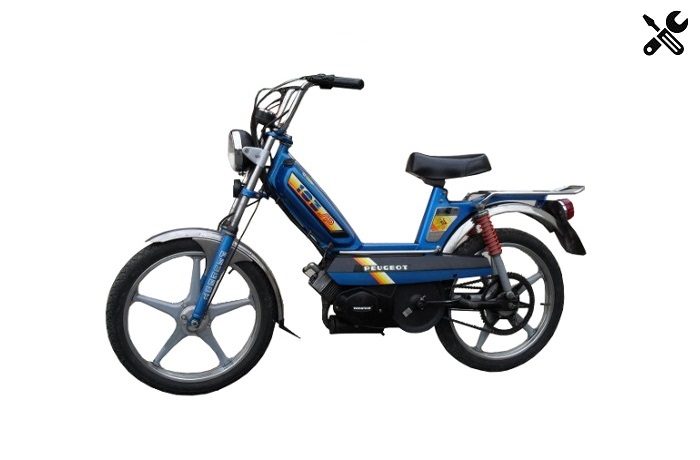
I did a couple of 2000+ km tours in Europe on a... motorcycle. It's not sports, it has a big carbon footprint and gas can be expensive, but you can experience some of the same benefits: take less traveled roads, stop anywhere, meet people.
I ride a bike every day but only on short distances; on a tour I would be afraid of not being able to pack enough things (clothes, shoes...) But it's a neat idea.
> on a tour I would be afraid of not being able to pack enough things
You can always start small with a weekend trip and see which of the items you packed you actually needed, and you'll find out which items you forgot to pack. If you take good note of these, you'll be a proficient and efficient packer very soon, and you'll go on trips that last for days or weeks with the exact amount of stuff you need. And at least in Europe, the next supermarket is never so far away that you can' t reach it on the next day in case you did forget something essential.
And the big one - for me - it's noisy! Bikes are utterly silent so you don't spook wildlife and the locals tend to be a lot more friendly than if you disturb their neighborhood with your motorbike.
A few weeks ago I almost tripped over a fairly massive wild boar, dusk at the Hoge Veluwe. Super impressive up close (and the most dangerous animal in Europe right now). Fortunately I have very good brakes :)
It was over so fast that I didn't have time to get scared. There are quite a few of them in that area (~50) and I know it well so I'm somewhat prepared but normally you see them coming from some distance away, this one (a pretty beefy male) just sauntered out from between a bunch of trees very close to the bike trail.
I don't ride mopeds/ scooters/ motorcycles. I've done a couple of cross country road trips. I do cycle pretty much every day for fitness, fun, and challenging myself.
But just like you did, I kinda feel like cross country road trips would be excellent on back roads via motorcycles. In a car, it's a bit disconnected and insulated. On a bike, it just seems way too slow and tiresome.
Only things I'd want in a cross country motorcycle is: a machine that's under 50 pounds, has a max speed of 50 mph (I'd prefer to keep it at 20-30 mph), goes 300 miles per gallon, and costs under $3000. SO I GUESS I WON'T BE TAKING THAT CROSS COUNTRY MOTORCYCLE TRIP EVER THEN.
I did both, and I think motorcycle tours and bicycle tours are very different.
On a bicycle, you'll be a lot closer to nature. A lot of paths I use are closed to motor traffic and you can't ride with a motorcycle.
On the motorcycle, you can cover more ground and see a lot more different places in the same time. Also, cars don't feel as dangerous, so you can ride roads with lots of car traffic that I wouldn't ride on a bicycle.
Also you can hit the twisties with the motorcycle :) I think both are very different as well for the reasons you have mentioned. I think it depends a lot on where you want to go in what amount of time. On a weekend on the motorcycle you can travel to another country in Europe, on bike it wouldn’t be possible for me because the border is too far away. I believe it’s two different philosophies, for me the motorcycle is the middleground between car and bicycle. Depending on the motorcycle you have a different kind of freedom compared to a car.
Came here to say this. Bicycling is absolute madness to me in any location that doesn't have dedicated separate bike paths. You are maximizing all possible sources of risk by riding a bicycle on shared roads.
I've ridden motorcycles since I was 16, and everyone always sees me as the daredevil. Yet, I still think bicycle commuters are the true madmen. Zero protection, can't keep up with traffic, your very presence is a psychological irritant to motorists which causes them to wish you harm, etc.
My only advice to cyclists: put your bike on your car's bike rack, take to a bike path and enjoy. If you want to get on a road on two wheels, buy a motorcycle and wear every piece of protective gear you can afford. You (and your family) can thank me later.
That seems like a lot of advice from somebody who has apparently never tried it.
If you did, one of the things you'd learn is the extent to which serious cyclists minimize the risks, from route choice to gear to behavior. E.g., the first bike tour I did was about 150 miles. I found a mailing list of local riders and people were happy to discuss my route and how to handle safety issues.
In any case, you're wrong on the facts. Motorcyling is more dangerous. Deaths per 100m miles traveled is circa 25 for motorcyclists [1], while it's between 4 and 13 for people on bicycles [2]. Given that recommended touring distances for motorcyclists seem to be around 300 miles per day versus 50 for bicycles, bike touring is going to be much safer. Which only makes sense; if I'm riding at 10 mph vs 50 on a motorcycle, that's 25 times the kinetic energy that needs to get dissipated if something goes wrong.
> one of the things you'd learn is the extent to which serious cyclists minimize the risks
At a social event which happened to include many members of the local bicycle club, I observed: Almost everyone I know who bicycles regularly has been hospitalized due to a bicycle-car accident. Is that true? Yes, they all agreed, that's about right.
IME, they don't minimize risks well. There's no safe way to ride in traffic unless it's moving near bicycle-speed. However, there are side streets, etc., so that risk could be minimized if they wanted to do it; you can cut exposure to cars by 90% easily.
Source #2 indicates that "wrong-way" biking is more dangerous, but my intuition is that it's safer: I like being able to see the traffic that is closest to me. I guess whatever advantage that provides is more than offset by the accident being head-on, and having less time for the driver to react (and maybe there's an expectation aspect too).
AFAIK: The most important safety factor is being seen by the automobile drivers, and a disproportionate number of accidents happen at intersections and turns, including driveways. The drivers in those situations have a large cognitive load; they are looking for cars, not bicycles, and will look where they expect traffic to come from. You want to be where they are looking.
Next time you drive a car, notice where you look. Consider where a bicycle would have to be in order to noticed if you are in a hurry, distracted, trying to figure out where you are or where to go, not expecting them, etc.
Think relative speed. Even a bike touring cyclist will regularly travel at speeds around 40 kph (25 mph). If you then have cars travelling at 80 kph (50 mph).
Also, you learn hearing the difference in sound a car makes as it moves over to give room.
In short, I’d wager that < 0.5% of all people that have done any sort of serious biking would prefer to ride against traffic.
Yeah relative speed goes hand-in-hand with head-on collision and less reaction time and expectation that I mentioned. I do bike a fair amount, but not on major roads. I am coming to realize that going with traffic is safer, despite it being hard to see cars coming from behind you. I also didn't realize that it's illegal in most places to bike against traffic https://roadbikebasics.com/ride-with-or-against-traffic/
You can get mirrors on your handlebars or helmet if you lack situational awareness. I did this for my bike and it's a huge help, the Spintech drop bar mirrors are sleek and unobtrusive.
I find that focusing on the mirror, aligning it in a useful way, dealing with other issues (vibrations, etc.), and then interpreting what I see in a small mirror (which might need to be realigned to see what I need) - it all takes too long. I'm much better off just turning my head - it's faster and I have better situational awareness while I'm doing it.
Bicycle mirrors aren't comparable to automobile mirrors: Car mirrors are stable in alignment - your body is in a relatively fixed position in the driver seat and so are the mirrors relative to you and the car. On a bicycle, your handlebars are moving frequently as is your head. The whole bicycle vibrates far more than a car, sometimes making the mirrors unusable. Cars have space for more and bigger mirrors.
(Also, isn't it risky attaching anything to your helmet? In an accident, as far as I know, it can both change the helmet's performance properties and also get jammed into your head.)
I'd add Garmin's Varia radar as a better (yet more expensive) alternative to a mirror. It's a bike light combined with a radar that will track and display cars coming up behind you on your bike computer (doesn't have to be a Garmin unit since the standard is open to everyone). Many cyclists who tired it (including me) won't ride without one.
Could you say a bit more about why you like it? I was thinking about getting back into touring and I just recently learned about them. Previously I was using a mirror that attached to my glasses, which seemed adequate. The radar seemed interesting, but I was concerned that it would more be in the "cute toy" category for me.
A lot of people consider it a cute gadget before they tried it and regard as essential safety tool once they did. It certainly depends on your use case - in busy cities it's useless since you'll be alerted to cars constantly. However in my area I ride on countless long stretches of road with little to moderate traffic. Cars will surprise you on these kind of roads. Sometimes you don't hear or notice them.
With the Varia radar I'm much more aware of my surroundings. I can take up the middle of the road until a car approaches. I won't be surprised by cars I fail to hear due to strong winds or other noise. I know when it's safe to slalom around obstacles on the street. Or when to do a left turn (I'd still look but I'm not sure if the radar ever missed a car - it's very reliable). These days I'd feel almost naked without my radar.
Plus, don't forget that it's also a very good rear light which you can control from your head unit. Don't underestimate the importance of daytime lights in order to be noticed by cars - that is the single most important measure to avoid accidents on a bike.
The problem is drivers seeing you. If you are in a serious crash it is probably going to be because they hit you, not from you hitting them. Motorists look for other road users they may be overtaking, but usually don’t expect to see oncoming traffic in their lane
> Came here to say this. Bicycling is absolute madness to me in any location that doesn't have dedicated separate bike paths. You are maximizing all possible sources of risk by riding a bicycle on shared roads.
> I've ridden motorcycles since I was 16, and everyone always sees me as the daredevil. Yet, I still think bicycle commuters are the true madmen. Zero protection, can't keep up with traffic, your very presence is a psychological irritant to motorists which causes them to wish you harm, etc.
Whatever one might think about the general premise, but this video is absolute rubbish. All the little example videos he puts in is of people riding on crazy tuned e-bikes or downhill bikes etc.. On the other hand the few instances of motorcycling videos show him just riding along in traffic, a bit disingenuous.
> My only advice to cyclists: put your bike on your car's bike rack, take to a bike path and enjoy. If you want to get on a road on two wheels, buy a motorcycle and wear every piece of protective gear you can afford. You (and your family) can thank me later.
Considering that the article points to bike paths off general roads your post is a bit redundant.
I would still question your premise. You ride a motorbike beside the fact that motorcycle deaths and serious injuries outstrip cycling ones by quite a margin (it's right there in the video you posted). So I guess safety is not your main priority. Moreover, if we consider overall health benefits you will live longer if you commute by bike, so if health is your priority you should absolute bike.
The comment more sums up what is wrong with current society than with biking: people in 2T metal boxes feel entitled to own the road, plus get totally stressed out if they see anything that prevents them from doing it and perform risky maneuvers.
The answer to that problem should not be pushing weaker participants off the road.
The Highway and Automobile culture are symbols of totalitarian cultures which deny people more sustainable and equitable alternatives for mobility and transport. - Vandana Shiva (2004)
The perception from driving is not true to reality. For example, most busy roadw are completely empty about 70 to 95% of the time. To explain, off-peak, most roads are just quiet. Further, there are a lot of roads, plenty of ways to go from a connector to something less used (arguably too many roads). Then, most traffic are in convoys created by stop lights. This I wan tg to emphasize, the person in a convoy with 2 cars on each side of them feel like they are on a congested street. They do not realize they are the first cars for 3 minutes on that specific vacant stretch of road, and they will leave that stretch of road vacant moments later. There are lots more examples of how it really is a different experience compared to what people think it would be from just looking out a car window.
Seemingly, car traffic is just straight up dangerous in the US (to everyone). It's normalized how dangerous car traffic is, there are plenty of car crashes every day that kill and maim, yet we feel so comfortable driving we hardly pay diligent attention and have very absurdly low standards for who can get and keep a drivers license.
In many places there's a network of tiny little roads that are a much more enjoyable alternative to riding next to traffic. This is certainly true of most of Europe, but also large parts of the US as well - I had a great cycling holiday a few years back in New York State and most of the roads were no busier than here in the UK. Ironically the single worst road was one south of Kingston which was a state-designated bike route!
I run cycle.travel, a touring-focused bike routeplanner (based on OpenStreetMap data, of course) which aims to find these roads. It generally won't find as direct a cycle route as some of the bigger names, but by and large the route should be quieter and less stressful. https://cycle.travel/map - always happy to hear comments/suggestions!
Another happy fan here. So far I’ve used it for a couple of 5-10 day tours to great success (I’m in northern Europe). In fact, I just finished one a couple of days ago.
One thing I’ve noticed is the routing’s great aversion to hills. As someone who doesn’t mind them I would sometimes like to be able to toggle that. (It’s not a big problem, cycle.travel is beyond anything I’ve tried, it certainly beats the 1:200 000 maps of old.)
This is a work of art. I check out different cycle routing options every couple of years and have never been satisfied with the high number of intersections with traffic lights and changes from road to bike path to sidewalk...
Your routing algorithm taking into account Eurovelo routes is an amazing idea. Will test in the coming days!
I suggest you show input validation hints before submitting forms, e.g. for the user name.
That is a great looking site, I'll give it a try and be sure to remember it for telling others. I love how you can pick a point and look for nearby campsites.
Normally I plan my tour routes offline using downloaded OSM maps (something like velomap.org) in QMapshack. One thing I like doing on there is having POIs I can turn on/off with things like UNESCO World Heritage Sites, National Trust Sites, World Wonders from the Civilization games etc. so I can tweak my route to connect a few of those dots if it goes near them.
I don't know about conditions anywhere in the world except the USA. But I've ridden across the USA, on different routes, multiple times.
When bicycle touring in this country, you don't usually (almost never, in my case) do bike touring on roads that carry heavy traffic. You ride on mostly empty roads that have very low traffic counts. Every state compiles Average Annual Daily Traffic (AADT) statistics. There are roads where you might see one or two cars an hour.
It may depend a little on where you are but generally on a cycle tour, where speed isn't such a priority, you don't tend to be taking the same bigger roads used by high speed cars or trucks (or may even be on routes largely separate from the roads). It can happen on occasion that you might want/need to go down a slightly busier road, in that case being a bit more of an odd road user (heavily loaded bicycle stands out) often you get a bit more consideration but a bit of road confidence certainly doesn't hurt.
I can't speak for everywhere but in Europe (where most of my experience is) I think you would be able to find plenty of routes without much traffic (checkout places like https://www.opencyclemap.org/ ) and ironically those routes would probably have much more to see on them than the routes that did have the cars and trucks on.
Yes, when bicycling in my town in Southern California, I often avoid the marked bicycle routes in favor of less busy streets with no marked bicycle route.
Sucks as its properly dangerous due to simple statistics (you need just 1 out of 10000 drivers to not pay enough attention, be high, super tired, getting seizure or heart attack, etc.). Riding on roads without dedicated full cycle lane sucks, period.
Another point - directly breathing all fumes from thousands of cars every day, lorries, buses and other diesel marvels. More than compensating a healthy activity with equivalent to smoking a pack of cigarettes.
Fanatics always propagate their sports/activity as next coming of jesus, but as with everything there are pros and cons. Biking on standard roads has massive cons.
I don't know where you live, but the other thing I've noticed people who have never cycle toured really fail to notice is how many thousands of small roads there are, at least in Europe, which link everywhere.
Agrigultural roads that you'd never bother (or even want) to take your car down. Residential streets that only the residents would drive on.
I'd guess that on the average 5 day cycling tour in the UK and Europe, I'd see less than 1000 cars total, and often go for many hours without seeing any. Its glorious.
In any sort of mountainous Europe, or anywhere else, there is one road through the valley. The side roads will either be dead ends that go up some ravine, or else steer back to the main road.
Any side road advantageous to a cyclist (good pavement quality, shorter distance) will have cars, unless it's brand new and nobody knows about it.
You have to find the good side roads which are not usable to drivers, due to, say, obstacles that a cyclist can get around easily. If it's not obvious from the entrance to that road, you will need local knowledge.
There is always a risk that if you go down some random side road, you may be backing out to where you started.
Riding on roads outside of city limits isn't such a big deal that you'd bother, in the first place. It depends on the exact conditions. What is the visibility like? (Curve with rocky wall on one side, precipice on the other? Or field?) How wide is the paved shoulder? What are the speeds like?
In Europe at least, this is true for a vanishingly small number of key mountain passes. And most of them have been bypassed with motorways on shallower grades which are significantly longer, but still quicker for cars to travel.
Everywhere else, the pyrennes, the alps and company are a spiderweb of tiny towns with tiny quiet roads between them, in a ratio of about 5:1 against the larger main roads. I've cycled them, traffic isn't a problem.
As for paving, on a tour I'll take a hard pack, unpaved surface with no traffic over a main road all day every day.
And knowing where the roads go? That's route planning! Have a little look at where you plan to go before you set out each morning. Strava's heat maps are really useful, though understand that road racers do prefer the highway, and they cycle a lot!
I do this every year, and traffic just doesn't come in to it except at the large terminal cities where we get the international trains or ferries from...
If you want to go from town A to town B, and there is a direct A-B road, then you almost never want the A-C-B spiderweb path going through town C.
The A-C road may not be any different from the A-B one in terms of A-B being "main" and A-C being a "secondary" road, and the path will likely be longer.
A road actually going to a neighboring town is a strawman example of a side road.
> If you want to go from town A to town B, and there is a direct A-B road, then you almost never want the A-C-B spiderweb path going through town C.
He is talking about cycling for travel, exploration, sport and leisure - not about commuting. I have just done the same last week, a 5 day tour and can confirm, I planned everything around secondary, tertiary and country / farm roads. It was mostly empty, and a pleasure. (despite being longer than the "main" road)
on a few bike trips i followed hiking trails. checking that the trail is going towards my destination and not in a circle. those trails were not always meant for bikes. i even remember carrying my heavy dutch-style bike and the luggage over rocks at one point, but that only slowed me down. it didn't stop me.
The Great Salt Lake in Utah is the size of Lichtenstein. The Grand Canyon of the Colorado is longer than the Italian boot is wide. England is the size of Alabama.
Australia is roughly the size of the continental US with a tenth the population and we still have lots of small roads in the populated coastal green bits, so I'm not sure what your point is.
It can be harder to find a safe route somewhere in the country, I'll give you that.
Australia like Western Europe can be traveled near sea level. For example, Bern, Geneva and Zurich are all less than 500m.
The US is not like that. There are only a few routes in the west because the west is more than a thousand miles of mountains and deserts nearly all above 1500m and much of it above 2000m.
It is hundreds of miles between north south routes in Arizona because of the Grand Canyon. And the eastern route goes from vast remoteness to vast remoteness, Navajo nation to the Great Basin (an internal drainage the size of France).
I am not a general fan of American exceptionalism. But for geography, it holds. The average height of the Colorado Plateau is about 2000m…almost as high as the highest point in Australia. And the plateau is larger than Germany.
Hey, I've lived in the US, and it's big enough that you need to specify where you're talking about. If for some reason your bicycle tour is going to take you around all of Arizona, that's a problem. If you're Californian and you don't live in the Sierras, what you've said doesn't hold as much, nor if you live in the Great Plains or New England.
This is vaguely similar to Australia, which has gigantic deserts with terrible roads through them as most of the landmass, but geographically bikeable population centres where everyone actually lives.
Every time a car passes you with a massive speed differential, you are gambling with your life. As long as you (and your family) are willing to accept that risk, then all the power to you.
Also, rural roads aren't exactly known for their alert drivers. Drunk driving is far more common due to lack of taxis/ubers.
>you are generally travelling along the old routes that connect all the places where life has been for millennia, the amount of history (in Europe at least), scenery and humanity you stumble across just in the course of a typical day covering maybe 50 miles is huge.
What stops someone doing the same thing with the car, motorcycle or scooter?
> What stops someone doing the same thing with the car, motorcycle or scooter?
For the car:
> In a car you're always in a compartment, and because you're used to it you don't realize that through that car window everything you see is just more TV. You're a passive observer and it is all moving by you boringly in a frame.
> On a cycle the frame is gone. You're completely in contact with it all. You're in the scene, not just watching it anymore, and the sense of presence is overwhelming.
* Robert M. Pirsig, Zen and the Art of Motorcycle Maintenance: An Inquiry Into Values
When I started riding motorcycle, I remember having this amazing feeling of being connected to my environment. Even though I was on the same roads and going the same speed as when I was in a car, it was wonderful and quite inexplicable.
You stop at a sign or light, and you put your foot down. You have the wind at your face, the sun on your back. No radio, no cell phone beeping at you. You wave to motorcyclists coming from the opposite direction.
Not that riding is without its dangers or downsides, to be sure, but it can be wonderful.
For many of us, imposing a physical or technological limitation on an activity changes the experience. I can't think of a good explanation. A person with exceptional self discipline might not need it, but some of us know that we aren't that person.
The speed and physical inertia of a car seem to translate into a psychological speed and inertia. Again, I can't justify this on utilitarian grounds. I find myself driving faster than I would go if I'm on my bike. As angry as drivers get when they're stuck behind my bike at 12 mph, imagine how angry they'd get if they were stuck behind my car at 12 mph for no apparent reason.
In the car, I don't stop to notice "little" things. To do so requires getting the car off the road, finding a place to park (if there is one) getting in and out. On my bike, I can come to a complete stop and be off the road and parked, virtually anywhere, in about 15 seconds. I get priority parking at the supermarket. ;-)
I admit that I've become somewhat anti-tourist, perhaps influenced by the experience of a driving vacation in the British Isles with my family. It seemed like every coastal or scenic road was jam packed with cars and tour buses, and every square foot of space filled with parked cars. It's possible to find less-touristy places to visit, but now those places are getting crowded too.
These days when my family goes on a vacation, we like to find a destination where we can ditch the car, and hop on our bikes. I actually miss my bike when I'm on a trip without it.
You can absolutely travel the same roads, but there is something about the speed you are travelling that opens you up to really noticing the little details of the landscape around you.
The faster and heavier you are, the more capacity for harm you have, and the more you must pay attention to just the road in front of you instead of the world around you.
Depends a little. Usually you are passing through lots of populated places regularly and so generally I would stop at bakeries (local/different ones if I find them) and supermarkets to get the bulk of the food I would eat in the day, as well as the odd restaurant in the evening. I also tour with camping and simple cooking gear so would mix in some cooking depending on time/budget/availability of other options. On my last tour, for various reasons, I ended up doing more wild camping which this time meant cooking less (more evening time spent in towns before finding somewhere to camp) but in say Scotland, would probably be carrying more food and cooking more when wild camping. Always useful to be carrying at least a little food with you just in case you conk-out and need the energy.
An example of a breakfast I was having on my last trip was: 2 croissants, yoghurt with chocolate coated peanuts mixed in, a banana and some fruit smoothie (which seemed on offer a lot this trip) and I might stop for second breakfast/early lunch and get a couple of pasties at the next town with a bakery (handy because you can eat these while cycling). In Italy you might instead be eating things like focaccia from local bakeries (perfect size for my handlebar bag), the landscape of what you eat changes with region, season and mood. You might be surprised though just how good very simple food (bread/cheese) can taste when you are doing exercise all day.
One thing I would advise is that it is a lot kinder on the body to attach the bags to the bike if possible rather than carry on your back. I tour relatively heavy and I think my bike/bags together weigh about 40-45kg, just about liftable at a push if I need to, for example, get a small boat for pedestrians (though usually I'd take a couple bags off to make it easier). It's very possible to travel a lot lighter than this though, particularly if not camping, some people just take a change of clothes and a credit card.
Yeah, just depends on where you're going. We just finished a 4-day tour along the Neckar river in Germany and didn't carry anything extra (except maybe some leftover pastries from breakfast). But then long days up in the north Georgia mountains will require several hearty sandwiches, lots of small snacks, extra electrolytes and maybe a water filter.
That conveys my own experience exceptionally well. IME, it's the same bicycling within cities, where you live or as a visitor. I know those places and their people so much better now.
when doing solo-trips i tended to skip lunch, preferring a good breakfast and dinner. at best i might have a snack if i get hungry, that is if i got something to carry from breakfast.
I agree with everything you said but for walking. Bikes can’t go everywhere, biking in cities is dangerous and uncomfortable (irrespective of good or bad bike infrastructure) and it’s just not as satisfying as putting one foot in front of the other. Yea it’s much slower than biking but at least a magnitude more rewarding in my opinion.
Good bike infrastructure absolutely makes it safe and comfortable. Separated bike lanes is key. I also love walking, but this kind of rhetoric is just car-centric propaganda.
Even good bike lanes are packed, sometimes shared with pedestrians and involve crossings where you can intersect with cars. That might be okay for some but it’s very different from biking on a trail.
Of course it’s a car centric argument, that’s what I’m advocating for.
Yeah - I should get my grannie and her grandkids to come make the 200 mile round trip by bike!
I hear what you are saying - if you love bikes long journeys are wonderful. I imagine motorcyclists or long distance runners could get the same buzz.
> It may not be for everyone but I want to live in a world where that experience feels accessible to as many as possible.
But let's not kid ourselves that this is a viable option for most people. And if you mean that we should get rid of even more roads for bike lanes, you are actually going to restrict people engaging with distant relations and friends.
> And if you mean that we should get rid of even more roads for bike lanes, you are actually going to restrict people engaging with distant relations and friends.
That is utter bullshit. You could dedicate half the secondary roads to non motorized traffic and add a separates bicycle path alongside every highway and fluidity of the cars traffic wouldn't be affected at all. It would even improve.
Me, my father and my son are making the trip Berlin - Baltic Sea this year (we‘ve made the return three years ago). It‘s about 360 km, so roundabout 200 miles. We‘ll have electric cargo bikes, granted, but the small one is just 5, so he can‘t be expected to ride that on his little bike. It‘s definitely an option, but a lot of people don‘t consider it as an option. One of the problems I believe is that people consider the start of their holidays to be when they arrive at the destination - the trip there is a chore. If you want to travel by bike, you need to consider the trip as part of your vacation.
Many elderly can't drive for medical reasons. Safe bicycle infrastructure doubles as a safer place for electric wheelchairs. Decreasing car reliance with better biking and walking infrastructure and better public transit, such as buses or trains, would increase accessibility for the elderly not decrease it.
Maybe we should reevaluate wether it's actually necessary for a free and democratic society to have these distanced families as a norm. The societal model you describe essentially evolved in lockstep with capitalism (people moving into cities/generally moving for work) and I'm not totally sure that it has to be this way. We could just live more regional and still be free and democratic as well! Indeed, currently it looks like rootlessness proclaimed by you and others as the preferable lifestyle will take away our freedom and democracy with it.
Of course, we don't have democracy. We don't contribute to the thousands of decisions that are made. We have 'representative democracy' where we choose someone (once every 5 years) to make all those decisions for us.
We should re-evaluate what? The reality that the system we find ourselves in, means that families are distributed? Would you force people back together into the same region?
The freedom of movement is a marker of political liberty.
Some people (but by no means everyone) are better off away from their family and the town where they grew up.
Imagine that you are the fourth generation to move far away from your patents, as I am. There is not some community in which I have generational roots…and it was the prospect of conscription by the Tsar’s army that started it all.
Not capitalism.
For me, employment someplace far away was the way out of where we weren’t from and that wasn’t for us.
Some people have a reason to stay. Those reasons are sometimes the reasons for other people to leave.
LightFi | Senior React front-end developer | London, UK | Remote OK (UK only) | www.lightfi.io/jobs
We are a small London based start-up producing novel IoT sensors for building automation, with a particular focus on reducing energy consumption and environmental impact. Our occupancy sensors can be found controlling buildings used by Heathrow Airport and British Gas.
We are developing our nascent web front-end to display new sensor data and analysis that will help clients understand, redesign and reopen their buildings with confidence in light of COVID-19 and beyond. We are seeking someone with a strong knowledge of React.js interested in joining our team to take a lead role in front-end development.
As an integral member of a very small tech team, if interested, you would have the opportunity to gain experience and contribute meaningfully anywhere across our entire stack (sensor hardware/firmware design, embedded linux, python, AWS, data science, fastAPI, React...) and play a key role in the development of new products and technologies.
I've found this to be a fantastic resource for creating travel plans in Europe (and beyond) without flying: https://www.seat61.com/
No affiliation, just been using it to help plan all sorts of travel since I stopped flying in 2011 (although I have to say the best way to travel long distance in Europe is by bicycle, if you can make the time).
As a founder of a startup in the green tech area it is fantastic to hear more and more people sharing an environmental motivation about the work they want to do. There are a growing number of motivated startups around with a direct environmental purpose, though they can be harder to find and a slightly different beast from the established tech companies. (Not wanting to plug myself too much but we're currently looking for a motivated developer actually https://lightfi.io/jobs )
There are also a number of environment and social impact accelerators that may be useful for finding companies or pursuing one's own ideas, we started though the EU Climate-KIC program, for example. Increasingly as well there are a number of larger corporates engaging with social impact as a driver (sometimes this can appear a little like green-washing but there are some genuine motivations behind it).
At the moment it does seem more of a growing industry, the people and the companies are there if you can keep that determination to find them. And the more developers showing and looking for a clear sense of that environmental motivation will itself push through a wider change as there is plenty of great and fulfilling work that can be done.