Humans are not fish, and cannot remain in place when farmland becomes shallow salt water ocean.
Sea level rises are merely one of the things that can cause mass displacement, no matter how much other people moan about it.
I’m fairly optimistic about the future — I see this warning from the UN and think “this degree of reduction in greenhouse gas emissions is achievable in this timeframe” — but even so I’m still expecting New Orleans and a significant depth of the Italian coast from roughly San Marino to Trieste to disappear.
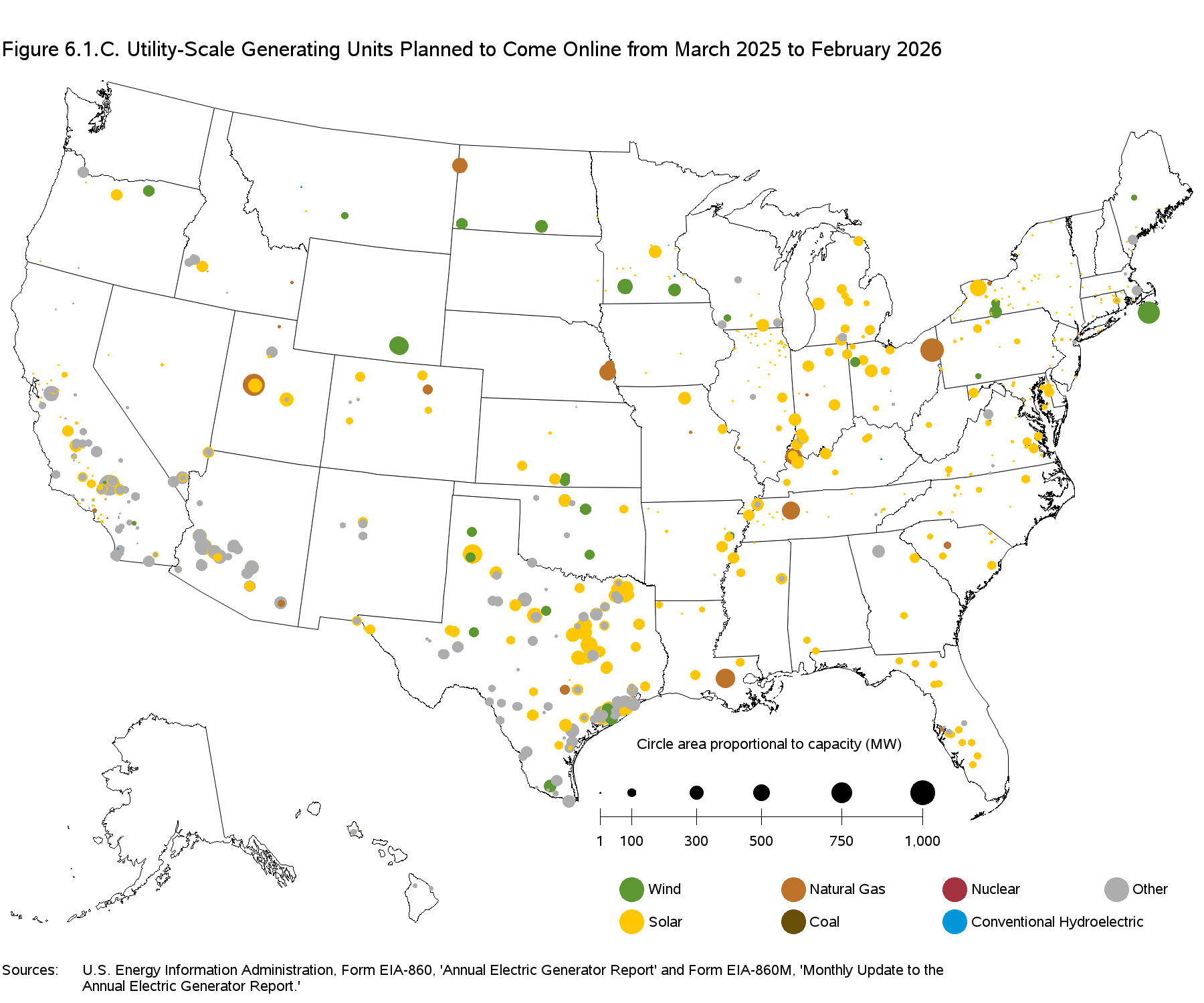
California has enough clean energy to desal for human consumption [1] [2]. Ag is another story, but no one needs to flee California due to water needs [3] (human consumption is ~10-20% of total use). Also, the regulation story of water for Ag in California is improving, albeit slowly [4].
[1] https://app.electricitymap.org/zone/US-CAL-CISO?wind=false&s... (Scroll to "Origin of electricity in the last 24 hours" in left nav; during daylight hours, 75%-90% of total generation are low carbon sources; and I expect that to hit 100% in the next 2-3 years based on CAISO's generator interconnect queue)
But human consumption includes Agriculture, if a country is dependant on the food it grows and there is no water, you will have a famine. If they are just cash crops that you trade for food, you will also have a famine.
All the argicultural land in california is about to become a lot less valuable. It's destruction of wealth and nature on a collosal scale. The idea that allowing climate change to continue is good for buinesss is idiotic, and could result in violence unseen since 1940's
Climate change is not good, but neither is stripping aquifers for cash crop export. California has not managed its Ag wealth very well (water, soil, similar farming inputs); low water use crops that provide high nutritional value are superior to "luxury" water intensive crops exporting California's water to other markets for the benefit of those farmers.
Same way you wouldn't want to support economic policy farming corn in the Arizona desert. Put solar panels there instead (or other crops that are low water intensity). Higher level, there is a lot of inefficiency in US Ag policy causing suboptimal outcomes. Systems get addicted to subsides or resources where costs are not properly allocated.
Human consumption includes some agriculture. You'd be surprised to learn what counts as agriculture for purposes of water in places like California. One example: Golf courses. Others; horse race tracks, horse farms, cemeteries. All kinds of places that produce ZERO crops for human consumption.
80% of California's water goes to agriculture. In a water crisis - which is pretty likely - the first step is to stop growing avocados and almonds. This should free up more than enough water to keep the urban areas going, as long as residents conserve water and don't waste it watering lawns and such.
Water isn't really fungible in that way. You could cut down every orchard in the state and that isn't going to change the water situation of places like Santa Barbara. There really is a huge amount of infrastructure and energy involved in delivering water to cities and most of it is wholly unrelated to ag water systems.
Santa Barbara probably would be fine, along with the Bay Area and some of the LA suburbs. Divert less irrigation water from the Sacramento/San Joaquin system, pump more into the California Aqueduct, central coast has water. Alternatively, pump more into Bethany Reservoir, divert to the South Bay Aqueduct, and Silicon Valley has water.
And are also the leading countries promoting cleaner alternatives to all human activites.
What you're missing is that if underdeveloped countries were even capable of reaching the same stage of development we and East Asian countries enjoy, they would contribute as much, and that is actually their goal.
No matter how you try to warp the logic or the reality of the situation and regardless of the country or culture, the responsibility of dealing with the effects of climate change (or anything else) should be proportional to the contribution that each nation makes.
Sure if any country starts to contribute more, they should also take more responsibility.
You cannot for example tax someone on the amount of money that they hypothetically can have or want to have which you even claim they are not even capable of having.
> And are also the leading countries promoting cleaner alternatives to all human activites.
So are they going to give all those away for free to poor countries? And also pay for massive programs to recapture the carbon they've already emitted? And mitigate already-locked-in effects of climate change, such as drought and extreme weather? Those are the only conditions under which your "why don't they improve their own countries" suggestion is fair.
There are lots of components of "non-war stuff" that originated from military R&D, and probably would appear much later if it wasn't for the Defense Budget.
And how many "war things" originated from non-military R&D?
After all every country's GDP is much higher than its military spending and for sure non-military research dwarfs military research.
This whole hypothesis seems unsound. It would mean that all civilian research is somehow much, much worse per dollar than military research. I highly doubt that.
I never said that, did I? You said R&D cannot increase during war, history showed otherwise. Now it's about war R&D outranking peace time R&D, which was never the question.
I think the typical argument goes something along the lines of, "it uses []{} and doesn't make cons the default data structure, abandoning some simplicity-of-language."
Not s-expressions in the traditional Lisp definition of singly linked lists. In Lisp (a . b) is a cons cell with two symbols a and b. In Clojure it is some complex data structure with three elements a, ., and b.
>but hate speech (in the form of blatant transphobia)
I really hope you Red Army wannabes one day get what you deserve. You think you are the defender of the weak but you openly threaten someone's livelihood because one doesn't follow the new liberal gospel.
It's a shame ESR can't say whatever he wants because he's genuinely afraid.
I love when self-deluding yourself into believing that men who get cosmetic genital surgery and wear women's clothing are magically women is liberal gospel.
> and are overtly hostile to Judaism, as prescribed by their religion.
What does the Talmud say about the Goyim?
>is it really so wrong for a nation to implement laws to preserve its culture, particularly when it's people constitute a tiny fraction of the global population
It's ok, natural and healthy for Israel, but not for the rest of the world, where that is nationalism and equates to ideologies of the 1930s.
> It's ok, natural and healthy for Israel, but not for the rest of the world, where that is nationalism and equates to ideologies of the 1930s.
You say that, but that's ridiculous. I can't become a citizen of any other country without that country's explicit permission, and many countries won't allow just anyone to immigrate.
And it is. So is Transcarpathia (Zakarpattia Oblast) part of Hungary, and other parts or Ukraine that should belong to Romania and even some to Poland.
Their current borders are an accident that should have long been solved diplomatically, but alas here we are.
>Danger is, if Putin can portray this as west vs Russia, he could start enlisting people from far-left and far-right.
The danger was these maneuvers that even in the Bush era, people recognized they would be deemed unacceptable by Russia.
And the whole handling of the relations with Ukraine since the events of 2014.
This situation is far more complex than "Kremlin man bad".
Unfortunately the people who will pay for these are not diplomats or the big interests that played this situation as a game, it will be the average Ukrainian who see their country torn apart, and in a lesser extent the average Russian, severely affected by sanctions.
And who gets to decide which moment in time should be taken as reference for the "true" borders? Because borders in Europe changed so much and so many tomes over history, that pretty much everybody can make territorial claims about everybody else and not be totally wrong. I wish I was exaggerating.
Parent post is prime example of this nationalism. Changing borders in Europe (or elsewhere) is very dangerous. Even in central asia, there is hints of separatism in many small areas, fuelling those fires will lead to mass graves.
If you look at the map in Europe, many of them make no sense, if you travel in Europe many people tell you weird feuds with their neighbors. Even between Polish and Ukrainian nationalists there have been massacres and mass graves, these memories still exist between each other.
If we allow changing borders based on history books, blood will be spilled way more. Unfortunately the genie might be out of bottle, because this war will be very long one.