As anecdotal evidence, I could never remember all the names of the london tube stations as prose, but after listening to Jay Foreman's Every Tube Station song a few times, I cant help but sing it every time I hear a tube station name, and can almost flawlessly list them all off
I'm also suspicious of that 3 out of 10k times. Did they compare an AI examination against a human 10,000 times in novel scenarios? Or did they run it against some data set that's probably in the training data? Or did they run it against some synthetic dataset that is not a good representation of the real world?
Or did they run 5 tests, found zero inaccuracies and extrapolated to 10,000 but though 0 mistakes was too unbelievable and would give away the game.
Did they test the xray on only uncomplicated cases like young healthy people with no deformities? Or did they test it on complex cases too, maybe cases where there are multiple issues and some should be ignored, like elderly or people with different shaped bodies.
Also, what is "wrong" here? Is it a false negative, or a false positive? Is it a misdiagnosis? There's levels of wrongness, especially in the medical field.
"wrong" is a false negative. It says that if the test came back negative, it was wrong 3 in 10,000 times, which means there was actually cancer that it didn't find
Its been a thing since September 30th 2025, and apparently its just embedded content on third party sites, and account features on imgur itself that are blocked. I think its a "we don't want to adhere to your data protection laws" instead of an age thing
No of course not, they have Mario guys running around in karts doing maintenance of hyper complex system with wrenches. No physics can resist Mario's wrench, thats how we move humanity forward
Using the same o-rings afterwards is surprising, I've heard that the manufacturer was surprised that they were being used for that purpose because they weren't rated for that.
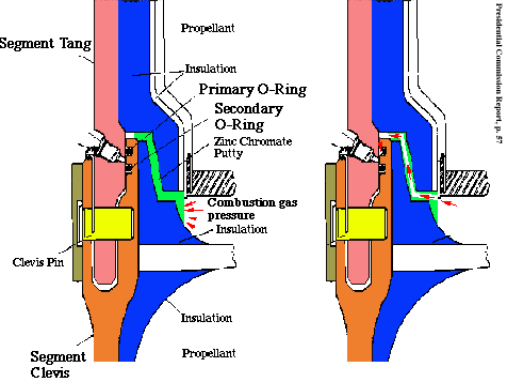
Also I'm not sure the assertion is correct. If the sealant and O-Rings were adequate, the joint would not have failed. It was suboptimal, and increased risk, sure, but it in itself wasn't the reason for the accident. It was the joint and the o-rings in combination. The holes in the swiss cheese model lined up that day, and a lot of small problems combined into one big problem
>> Using the same o-rings afterwards is surprising, I've heard that the manufacturer was surprised that they were being used for that purpose because they weren't rated for that.
Surprised? One of the engineers was literally on the phone with NASA the morning of the disaster begging them not to launch. He was overruled by management.
Surprising for the management. If you are a spoiled brat who always got what it wanted if you just asked/cried you don't expect reality to come and hit you.
The engineering was clear: don't fly. But given political realities had they said that they probably would have lost the contract to build the rockets--and that was a big part of their business.
They made the human choice: chose the option with a chance of success vs the option that was a certain failure.
The sealant and O-rings were meant to keep the hot gasses inside. Simply making a joint slightly wiggly will not keep hot gasses inside. The hot gasses did not stay inside. The sealant and O-rings did not succeed in keeping the hot gasses inside (evidence: Challenger). They were not adequate
> The sealant and O-rings did not succeed in keeping the hot gasses inside (evidence: Challenger). They were not adequate
No. The whole assembly --joint, sealant and O-rings, -- failed.
"They were not adequate" - yet, after the redesign, they kept those same O-rings and declared that boosters are safe to fly, in manifest contradiction to your assertion. So your reasoning is clearly flawed.
>"They were not adequate" - yet, after the redesign, they kept those same O-rings
presumably "redesign" means some stuff changed. why is it not possible that the O-rings were inadequate for the old design, but adequate for the new design?
Exactly. They re-designed the tang and clevis joint so that the metal parts of the joint did not spread under gas pressure and the o-ring did not lose compression. They added a heater to ensure that the o-ring remained in it's usable temperature range. And added a superfluous third O-ring.
Speaking of which, has anyone ever adequately explained why Challenger's Right SRB joint temperature was measured as -13 deg C using infrared pyrometers, when the lowest ambient temperature that night was -5.5C, and the Left SRB was measured -4 C? What subcooled the right SRB?
Allan McDonald's "Truth, Lies, and O-Rings" is mandatory reading for anyone who wants to discuss the details of this particular bit of corporate and government malfeasance. It's 600 pages of technical detail and political intrigue. He suggests that a plume from a cryo vent could have impinged on the field joint and cooled the o-ring to lower than ambient temperatures. No proof though.
>why is it not possible that the O-rings were inadequate for the old design, but adequate for the new design?
Boneheads getting lucky, happens to the worst of them more often than lots of people want to admit :\
I came from Florida and am not a fan of cold weather.
That morning of course nobody knew about defective engineering at NASA contractors when it comes to o-rings. I got in to work, and the office people had turned on the seldom-used little black & white TV in the office manager's room so they could watch the Challenger launch. That was about the only time anybody watched TV at work, except for baseball playoffs when they occasionally occur in the afternoon.
It was 19 Fahrenheit at the launch site so I never thought for a minute that they would go through with it. It was simple common sense. You don't even try anything "normal" during the one day per decade when it gets that cold, and that would be in north Florida. You wait years for it to get below freezing at 32 F, especially on the central Florida Atlantic coast. And no matter what, you never have to wait long for it to get above freezing. I just naturally couldn't imagine anyone not fully on board with living to wear shorts another day. I was thinking about the rubber seals that must be there to keep the crew hatches airtight, for one thing, but aware there were countless other variables which I didn't have a clue about that could also be cold sensitive, like electronics.
I went into the back where my lab office was, thinking they were surely going to delay the launch, at least to later in the day. I didn't get back to the front office until a little after liftoff time, where I expected to find out how much of a delay or reschedule there was. It was very quiet. I asked what happened and they said "it blew up!" I actually thought they were kidding me because I missed the liftoff. Then I saw the tragic replay that was enough to make anybody sick.
Eventually, the o-rings were pointed to, and publicly disclosed and it was stupidly worse than I imagined.
A few years earlier I had experienced a dramatic o-ring blowout on some high-pressure apparatus that one of our engineers had designed at a previous employer. That was an engineering lab, and I'm no engineer but it turned out they needed more help than just chemistry lessons for experiment design. Since I was the one who had taken a reading within the blast zone minutes before I went back to my desk, I took over the redesign of the heavy-walled high-pressure custom cylinders, going over every little thing from alloy properties, dimensional characteristics, reinforced thread strength, etc. It was helpful that I had worked in a machine shop before, but I was the only one there who had any full time experience at metal fabrication. Well constant overtime really. When I got to the critical o-ring design parameters, that alone required more engineering effort than the rest of the project. Each standard o-ring has its own precision design parameters, highly dependent on the durometer hardness of the rubber among many other things.
Without considering durometer, here's a very simplified chart of some key parameters (primarily US inch units):
Never did look into the Challenger o-rings this much until now, all I knew was that defective o-ring design is more likely than not, and you would be a fool to use any o-ring that was not standard size without the equivalent of decades of destructive testing yourself.
All I needed to know was these o-rings circled the entire booster, so that alone was a no-no since it was nowhere near standard. Now in the clearthinking article I see the nominal measurements, 38 feet in circumference but only 1/4 inch thick. Yikes, what were they thinking? No wonder they used two o-rings, it was plain to see that one would never be enough :\
Look back at the d2t1xqejof9utc.cloudfront chart. Notice that a 1/4 inch thick o-ring is not expected to have nominal reliability outside the tolerances listed.
Notice the Groove depth and the gland depth are two different things but actually need to be as close as you can get in practice, within 3 thousandths of an inch altogether across the entire (38 foot!) diameter, or half of that when measured at any one point on the arc. This requires some precision machining and quite rigid metal substrates or it will never come true. This is precise enough that large temperature swings would always be a factor, but more so the greater the diameter of the substrate. And the maximum eccentricity of the groove relative to its substrate must be within 0.005 inch. The widest tolerance on this little chart is the "squeeze" of the rubber to be between 0.040 and 0.055 which is not for the machine shop but depends on the o-ring thickness being within its own design specifications. Not surprised to find out they were Viton rubber which is widely known to be some of the most chemically resistant for a non-teflon compound. Probably would have been better if Thiokol also was aware how "good" Viton is for its intended purpose, strong resilience at temperatures 200 F and above, below which it doesn't seal as well as ordinary rubber. Viton is just too hard and non-tacky at room temperature by comparison.
After all these decades, now I'm even more convinced it was always an accident waiting to happen :(
Which skin colours? The image below that has a lot of colours that I'd associate with darker skin colours, and they're not included in the triggering zone. I'd be interested to see some data on hoe well it works with someone who has dark skin
It may be legally trained, but is it ethically trained? I doubt any of the authors of the training data gave their permission to have their work used in training an LLM
I'm reasonably sure that all of the authors are long dead. (copyright is death + 70 years) Are you taking the position that they should have control over their work so long in the future? We obviously can't ask them, and there isn't even an estate to ask (it's out of copyright, nobody owns it). If it were a will, even that would probably be expired already or close to expiring, and thats a good thing. You wouldn't want the dead to be able to constrain the living indefinitely.
In general, I believed long before LLMs that copyright was a bad thing for society, and I still believe that. Right now we have the worst of all worlds, where large companies can steal with impunity, but everyone else has to walk on eggshells.
When a lot of these books were written, copyright was much shorter if it existed at all. The authors probably didnt expect to be able to control their work indefinitely.
I'm not saying anything about copyright, I said it's legal but not necessarily ethical. Copyright deals with legality. I don't consider Generative AI to be ethical unless all training data is acquired with informed consent, which the original authors of these victorian works did not give
I understand you're talking about ethics. I'm talking about how we conceive of ethics as relates to artistic works which I see as tied to time and law.
Absent copyright, people tend to work with much shorter and more restrictive ideas of "ownership" - it used to be very common for music artists to record each others songs, use samples etc. Similar in painting, and other art forms. It wasnt theft, thats just how you did stuff. Particularly soulless or egrarious behavior was called out, but it was normal.
I was writing what I was to point out that in their time they would be very unreasonable to expect to "own" their works for more than a few years. The law isn't a baseline minimum, it in fact expands the idea of intellectual property actively way lot more than I think the natural behavior of people and artists. I dont think any of them would have had many thoughts at all about what happened a hundred or more years after their death other than they hoped they were remembered at all
They mean ethically as in doesn't break any copyright laws... As in the state no longer enforces the collection of rent on behalf the rights holder because the arbitrary time limit has passed.
i don't disagree but you're arguing past the parent comment; public domain is a legal concept that is not universally applicable to the relevant ethics here
Yes. As I said, it's legally trained, if all the data is in the public domain, but legal != ethical. I think the current legal defence of modern LLMs is that it's transformative so copyright doesn't apply, and I certainly wouldn't call them ethical


https://youtu.be/8jPyg2pK11M
reply