Thanks for the info with the fibre, thought it was closer to light speed. But for a satellite the signal would also travel through the atmosphere for most of the time, or am I mistaken? Is the speed through air close to the vacuum speed? Otherwise it's probably just 10-20% which I guess would be slower after considering the extra distance?
>Is the speed through air close to the vacuum speed?
Yes, very close. The index of refraction of air is 1.0003, so the speed of light in air is c/1.0003 = 99.97% the speed of light in a vacuum.
The index of refraction in a doped silicon telecommunications fiber core is around 1.4475, so the speed of light is 1/1.4475 = 69.08% the speed of light in a vacuum.
>Otherwise it's probably just 10-20% which I guess would be slower after considering the extra distance?
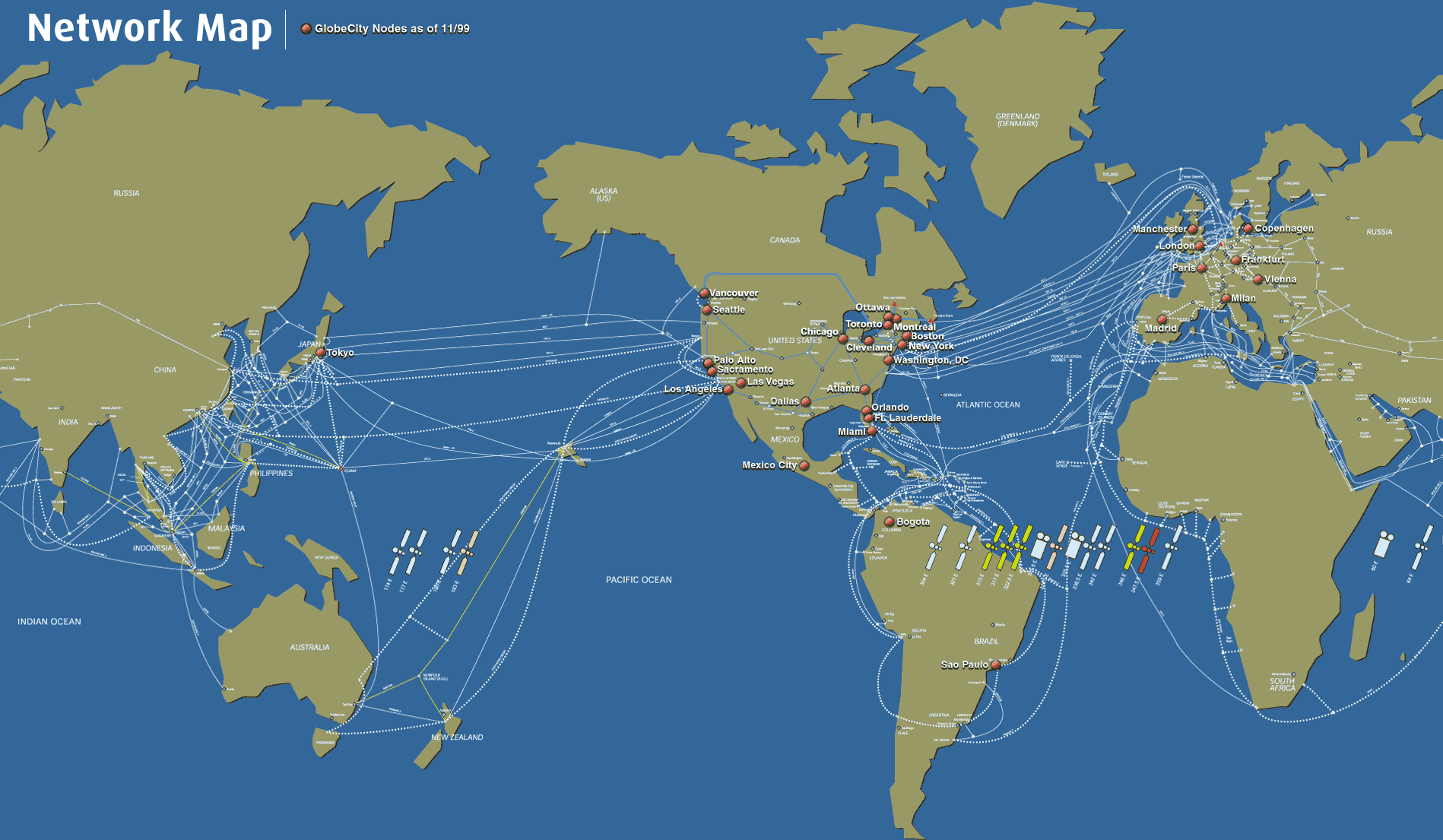
Regarding the sea cable length: the continent argument is what I was referring to before. I don't think it's valid as most data flows US<->Asia or US<->Europe. And in both cases the ways are nearly direct. Only Europe<->East Asia has a major detour but I don't know if that warrants a global satellite system. One could still put a cable through russia (actually wondering why that doesn't exist for algo traders, connecting HK and London directly).