"affordable housing without a government subsidy is becoming extinct."
Was recently in LA, had a very excited Uber driver tell he just bought a house near Topeka, KS and it was 4 bed, 3 bath, unfinished basement, 2 car garage for $95k, on a 3/4 acre. He was extremely excited about moving. That's a massive house. There is plenty of cheap housing elsewhere in the USA, you have to be willing relocate.
The title should be "How did relatively small areas in California in the grand scheme of the USA make housing so expensive most people can't live there?"
Local control of housing and zoning should be taken away and placed at the State level or above. Over time that will probably become just as corrupt and it will need to revert to the local level again. I am amazed what people
will complain about on my Nextdoor group. There
is not one ounce of sacrifice in these people for even a 30 second increase in traffic or a change in the student:teacher ratio from 21:1 to 21.3:1. Maybe we’d have more money for schools if we didn’t keep having to deal with all the externalities developed by expensive housing and long commutes.
Reminds me of that lady in SF who opposed a housing development recently because she said it blocked the sunlight to her zucchini garden. Now many YIMBY groups are adopting the zucchini as their logo...
I'm not sure it's a good idea to take away local control of zoning and other planing just because the result is something that YIMBY groups don't like. There is something very undemocratic about doing that. More housing and more density doesn't always make communities better. The people who live in an area, are voting in local elections and are paying local taxes should have a say in how their communities develop. Shouldn't they? Isn't that how our system of government is supposed to work?
I mean I empathize with the YIMBY point of view -- I make about $56,00 a year as staff at a state university. That's right on the edge in the bay area. There will come a time when I can no longer afford to live here. I'm OK with that. That's how the market works. I don't think you have a right to live in San Francisco, or Malibu, or Los Gatos, etc. if you can't afford to live there. Everyone can't own a Ferrari. Everyone doesn't get to live where they want to.
Speaking of the SF Bay Area, we are subdivided into small interconnected towns who have the incentive to underbuild housing (https://techcrunch.com/2014/04/14/sf-housing/). It is ironic to tell service workers that, in the name of democracy, they can’t vote for the councils who decide the zoning in any of the cities where they spend their economic lives because they happen to live across a town border. It’s more appropriate, and more democratic, to make land-use capacity planning at the regional level where more members of the economy can vote. (https://pedestrianobservations.com/2016/06/18/a-theory-of-zo...)
(I live in Marin County, in the SFBA, and I employ quite a few service workers from Sonoma/CC/Napa counties)
"It is ironic to tell service workers that, in the name of democracy, they can’t vote for the councils who decide the zoning in any of the cities where they spend their economic lives because they happen to live across a town border."
I don't think this is a problem at all. These people are pursuing a very rational arbitrage strategy between place of work and place of living - and it is paying off for them. It is not the "service workers" who are clamoring for less regulation in trendy housing markets - it is overeducated, underemployed hipsters whose self identity is tied to living in a certain type of place and whose life script no longer accommodates the steps their parents took to climb up the housing ladder.
If fancy coffee and cute stores are so important that one would sacrifice the basic building blocks of wealth building and family stability then so be it - but I am not giving up the progressive wins of the past[1] to enable this (bad) strategy.
[1] Which, in my neighborhood, are quite profound. The Pt Reyes National Seashore, the Mt. Tam watershed and accompanying open spaces, agricultural zoning throughout west marin, etc. Remember that all of these were all achievements of the progressive left.
I think “overeducated, underemployed hipsters” would cover activists of many different political stripes. But I disagree that upzoning is desired mainly by people who want to live here due to their urban identity. Many of the people who stay in the Bay Area do so because their family is here. Many of the people who migrate to the Bay Area come for economic opportunities. And if you tell people to follow their parents’ “housing ladder,” I think it is also fair to recognize and fix the ways in which the ladder has stopped working in the Bay Area.
I agree that parkland should be preserved. But communities that preserve a lot of park land should be even more eager to upzone residential land to accommodate regional growth needs. If a city wants to preserve land from development but refuses to upzone to make the remaining housing accessible, then this is indistinguishable from an exclusive gated community and I don’t think I would call it progressive.
Edit: Also, I don’t think I agree with your “very rational arbitrage strategy” point. If my city provides jobs, amenities, and increasingly upscale housing while a town an hour away provides housing for the service workers, I don’t think the existence of the arbitraging town would reduce the moral responsibilities of the city in any way.
"I think “overeducated, underemployed hipsters” would cover activists of many different political stripes. But I disagree that upzoning is desired mainly by people who want to live here due to their urban identity."
I'm not so much referring to upzoning which, in general, I am in favor of.
I am referring to the much more general notion that I deserve to live anywhere at prices that preserve my relaxed lifestyle and refined tastes. This is false.
I am open minded about housing being a basic human right. However, I am flabbergasted by the ridiculous notion that anyone deserves to live in any particular place.
"If a city wants to preserve land from development but refuses to upzone to make the remaining housing accessible, then this is indistinguishable from an exclusive gated community and I don’t think I would call it progressive."
You're correct. It is an exclusive community and it's not necessarily progressive in that manner. There is a place for exclusive communities and they are not necessarily negative.
> I am open minded about housing being a basic human right. However, I am flabbergasted by the ridiculous notion that anyone deserves to live in any particular place.
This kind of thinking is what leads to insulated wealthy neighbourhoods with good schools, amenities and low pollution. If everyone with access to nice stuff thinks this way, they just push poor people into the only other areas which are left, like down near the local power plant, where the air and water and soil have been ruined.
This sort of shit is how Flint happens and how "bad neighbourhoods" stay bad neighbourhoods for generation upon generation. That is, until some investor sees an opportunity to gentrify and pushes the poor people to a new and shittier part of town if not completely out of town altogether.
>> I am referring to the much more general notion that I deserve to live anywhere at prices that preserve my relaxed lifestyle and refined tastes. This is false.
I dont think i saw anyone argue that. Do you have a source?
>> (I live in Marin County, in the SFBA, and I employ quite a few service workers from Sonoma/CC/Napa counties)
How long are some of your service workers commutes?
A city/town/neighborhood is part of a state and doesn't live in isolation. If you live in SF, your water comes from.... drum roll, Hetch Hetchy damn, which is a 3 h 49 min (177.7 mi) away.
Now image if the people living where the pipes come along, decided not to have them in their backyard..... because of democracy, they vote to tear them away.
No water for you....
Democracy can't exist without limits, otherwise you run the risk of 51% controller what the other 49% do in every way...
Zoning laws are restriction on the rights of what can be build in a property, and they should exist in a Macro scale,
Otherwise, your neighbors might decide against water pipes to come in your house, because democracy...
Expanding it, you're saying "If you can't self-sustain your residence from within an arbitrary municipal boundry, it's your own fault if others won't pipe water to you".
That's just not how the world should work. Every major city in the country gets its water and power from other areas outside their town boundry.
I just looked up where my water supply is sourced from, and it's 30 miles. I don't live in a desert, or anything close to it.
I presume you feel the same about power? Again, I looked up my closest major power source, and it's a nuclear plant about 30 miles away the other direction.
My parents, less than an hour from where I live, the center of Atlanta, have well water. They live on a street that no ISP will service, unless you consider <50KBps and 50% packet loss for 60 dollars a month reasonable, if it decides to connect at all that day.
They don't have natural gas lines either. Or sewer lines. You'd be quite surprised how things still are in some places.
I live in upstate NY, USA. Lots of people have well water and septic tanks around here. Growing up in NH, USA lots of people there had wells and septic tanks, too.
I seriously doubt there's enough well/aquifer water in the US to sustain the entire US population for very long. As I understand it, many aquifers are being depleted right now and/or at serious risk of salination due to over usage. If you moved everyone else who gets their water from reservoirs to well/aquifers, there would be no chance.
Right, and the other side of that is that cities couldn't exist at all if we relied on well water alone. There isn't enough concentrated in one place, even if it were clean enough to avoid continuzous cholera outbreaks. Even in relatively wet parts of the country. New York for instance uses billions of gallons daily, piped in from upstate - and has had to for over a hundred years.
The point isn't that the area can't supply its own water, nor that upstate NY can't supply enough water for NYC. The point is that even in a water-rich region, a city like NYC (or even one the size of Albany) cannot support its population off well water. Thus the existence of modern economic centers is dependent on piping in water. Telling city dwellers that they should get their water from wells so as to avoid dependence on their neighbors for their water is an absurdity.
In terms of locally-available water, it really pretty much is. As is almost all of the U.S. starting a couple hundred miles west of the Mississippi River and the Pacific, the Northwest excepted.
San Francisco itself has next to no indigenous lakes or (fresh)waterways. Lake Merced, Laguna Honda, and Mountain Lake. A handful of springs. Already in the 19th century, water was in limited supply and brought in from the Peninsula. Much of San Francisco (the Richmond and Sunset districts) were sand dunes. The part that wasn't was in large part wetlands (Marina, Financial District, SoMa, Bayview).
Rainfall ranges from about 12 in (30 cm) in a dry year to about 30 in (75 cm) in wet, but that's strongly concentrated in the winter months, meaning you need a large amount of water storage for the summer (and, again: no lakes).
If you look at a population density map of the U.S., or one with higher levels of detail showing urbanisations, you note that the pattern devolves from very regular in the east to almost a desert-island scattering in the west. Much of that is accounted for by water availablility, and the water shadow of cities. Look at the map below, which shows the Colorado River, and realise that Los Angeles's watershed reaches very nearly to Denver. In many ways, it is effectively preventing any other cities from emerging throughout that region (not that several haven't tried).
The problem is that its not just San Francisco - in a city like New York (which none would accuse of being affordable) you still have fairly decent options of living outside the city in at least somewhat affordable areas within halfway reasonable commute to jobs.
in SFBA it's almost entirely either unaffordable and/or dangerously crime infested and the semi-affordable options that aren't require an insane commute.
While there are some topological issues, the main differences between NYC and SFBA are transit infrastructure + density.
SFBA[0]: 8.75m people at 859/square-mile density.
Greater NYC[1]: 23.7m people at 1,781.3/square-mile density.
A better compromise might be to put the counties in control over this rather than cities/towns or the state itself. County governments sit close enough to local to be more in-tune with local needs, while at the same time having a broad enough jurisdiction for its decisions to benefit the region as a whole rather than a specific city/town.
I agree with you - but we are increasingly moving toward a state where no community wants to grow or change esp in the Bay Area... which is not offering much for the next generation. Last I saw it’s something like 40% of those under 30 in CA live with their parents. Does it have any room to go up?
I mostly agree. But our system of government should also have checks and balances. I agree the locals should have a say, but they should not have complete unchecked power.
Japan has national housing policy and it works quite well. The problem with local control is that it's often easier for special interests to undermine democracy.
That lady may have purchased her place in order to have a sunlit garden. It's frustrating there's not an easy way for that housing development to simply compensate the gardener fairly for her loss of sunlight, along with everyone else nearby who is adversely affected. Of course, she could also be charged a fee for the benefits of increasing density -- more restaurant options, etc. -- according to how much she appreciates them. It's tough to calculate these things.
So many aspects of our society seem forced to either-or situations when some compromise would benefit all parties more.
Compensate her for her loss... Well, she's been very well compensated for all of the other people's work around her that has turned her property into a huge economic windfall for her while she was busy tending to her urban zucchini patch.
Your feelings don't matter. The political viability of a solution matters. Nobody got (re-)elected saying "let's tax granny."
Moreover, granny might be a paper millionaire based on the current valuation of a principal asset but otherwise be eating cat food.
Why doesn't she just cash out? I think the below linked blog post has some insight into how each asset of a person isn't an isolated atom but represents a structure of complements.
For example, maybe Granny can't drive and walks down to the community center every day to help immigrant kindergarteners learn to code. If she moved maybe she loses exercise and a reason to live and her lives and those of others are negatively impacted in ways money from selling a house can't fix. Or maybe, since Halloween is coming up, she is a sadistic cat killer and if she sells her house and moves the whole neighborhood is overrun with feral felines reducing everyone's property value due to fears of cat scratch fever.
If the neighborhood is so nice, she can trade up for a townhouse or condo in the area. None of those problems are solved with a low density single family home.
> Your feelings don’t matter
They do when the argument begins and ends with tugging at my heart strings. And I honestly don’t see these Jarvis arguments from the 70s holding up for much longer. Not when everyone else is hurting.
Yes! Also, a land value tax does not tax the property value, but only the land's value, so the same amount of tax is owed by these neighboring plots:
1) an empty lot,
2) a single family home, and
3) a 30 floor residential tower,
presuming they're equally-sized lots with equal land value.
If granny's taxes are high, the answer is to put her land to productive use like by adding rental units instead of growing zucchini. Or sell and buy better land for hobby zucchini gardening (or grow it on the roof of her new tower).
Regulations don't allow her to add rental units? Then it's the regulations that are bad, and finally land value taxes are aligning land owners' and renters' interests instead of dividing them.
You're implying that in purchasing a property you acquire a perpetual right to the sunlight that exists on the day you purchased. There is no such right. If this gardener wanted to retain that sunlight, they should have purchased the lot next door, put a building-height covenant on it, and resold it. They would incur a loss due to the covenant, but that is the cost of legally gaining the right to that sunlight.
Perhaps not in California, but it's worth noting that some places, England being among the forefront in this[0], do recognize the right to light is an important property right.
Ultimately, if buyers believed that it would be necessary to go to that extent to to maintain sunlight in their own back garden, the original developer would've done so and we'd just end up talking about how states should override covenants instead in the HN comments about how people shouldn't have a right to sunlight.
While it's possible for any individual to put a price on just about anything, it ain't always easy (as you just explained). We've decided that it's the government's responsibility to help put a price on some of these ineffables -- air quality, etc.
For a well-functioning market that doesn't get bothered by protests and other political machinations, the government needs to provide an easy mechanism to pay for whatever it is you care about. Any market which is restricted to folks who can afford high-cost lawyers and custom legal contracts, that market will be inefficient. Saying, "put a building-height covenant on it" in effect means "let's spend money and time on political advertisements and protests so neither of us are happy."
Zucchini lady moved into a suburb of one the regions growing the fastest, 20 minutes by rail from a growing employment center. She could have moved to North Bumfuck if she wanted to make sure nothing would ever change, and decided not to. When she moved in she knew houses could be built that would cast shade on her backyard. Why should society accommodate her wishes and not the need for more housing? Most countries don't have single family zoning in urban areas.
This is very utilitarian view. Quite probably purchasing zucchini at the market is cheaper than home growing few plants, yet to some people having home-grown zucchini (or apple, grape, onion whatever) is the goal. There are many properties of a property (pun intended) that different people value differently. Density is one of the factors and some people deliberately seek properties in low density areas. Each additional restaurant, each additional piece of property can be seen as destroying the fairy tale world.
Compromises can only be found where all parties are to gain something. If one group are to gain something - housing in this case - and whatever they can offer will reduce negative impact to others - local residents - there is simply no compromise to be found because whatever the state of neighborhood was when they moved in, it was the best compromise in their view.
"no compromise to be found because whatever the state of neighborhood was when they moved in, it was the best compromise in their view"
But the radius within which homeowners gain is wider than the radius in which homeowners bear inconveniences (e.g. shade on their garden). So of course it's rational for a homeowner to be pro commercial development in their city and near their neighbourhood (as it would increase demand for housing, and hence increase property value), but against commercial development near enough to affect traffic and noise levels.
There is a problem with the mystic rational consumer, because theories assume that core goal of every market participant is to increase value. Taking actions toward increasing property value are only rational with intention to put the property into market. Without such intentions (e.g. owner plans to spend the rest of their days there) owner's interest is in keeping the property (and the neighborhood) as it is, maybe even decreasing real value.
While increasing property value may seem rational to probably the majority, but given certain circumstances, preferences and goals the opposite can be easily argued to be rational. With modern metropolis lifestyle of changing home every some years based on workplace location, family size, etc. one is always in the market and increased real property value is quite favorable economically. For some groups changes in property value are seen as irrelevant in face of non-economic values.
This is interesting but is tangential to my point: compensating NIMBYs isn't a viable strategy.
OT, but:
"Taking actions toward increasing property value are only rational with intention to put the property into market"
No, even if you intend to die in your current home, increasing property values are great if (i) you can borrow against the value, to fund current expenditure and (ii) property taxes don't go up as a result (yay California).
"lifestyle of changing home every some years based on workplace location, family size, etc. one is always in the market and increased real property value is quite favorable"
I think that depends on whether you're trading up or trading down. If you want to buy a place double the size of your current one (e.g. to raise a family), then you'd want prices to be lower. As the differential between the sale price of your existing home, and the purchase price of the new one, would be lower.
> even if you intend to die in your current home, increasing property values are great if
Exactly, certain things can be argued to be either advantageous or disadvantageous, depending on mindset/worldview, focus duration (long-term vs short-term goals), focus population (single individual vs average/median of population), etc. and these are core to public policy making.
And that is my point: attempts to maximize quality of life for a single individual/family for a few years naturally lead to NIMBYs. And they are not inherently wrong - annoying with different focus (e.g. median citizen after few decades), but not wrong.
If sunlight for gardening is that important, then purchasing a property in an urban center was the wrong move to begin with. She would have been better off purchasing land in an agricultural area if growing zucchini was that important as to drive her property purchasing decision.
There is an easy way: the developer just writes her a check equivalent to whatever it takes to rent a garden patch somewhere for 50 years. Not that a developer should have to do that for the land they have rights on, but if they want to take away her argument that's one method.
Zoning would be the ultimate gerrymandering. Don't like your voters? Not only can you define specific areas to give your party the advantage, but you can now control who lives there, if anyone does at all.
How does this cabbie intend to make a good wage so he can continue to live in his huge house? Or does he not care, since he bought a HUGE house for $ 95K -- assuming it was all cash. If not, he has a mortgage to pay like everyone else, once a month.
Topeka is the capital of Kansas. There are jobs with the state government and jobs in businesses connected with the state government. It's also a city of 125,000 people with the usual mix of jobs. Not extremely vibrant economically but not particularly depressed either. Just an ordinary small Midwestern city.
Lawrence is the home of the University of Kansas, and is only 30 minutes down the road from Topeka. Quite a few opportunities there, including startups. Kansas City is about 40 minutes away down the turnpike with the opportunities of a 2+ million metro area.
No, he's not going to make the sort of money you do in California, but he's not moving to some economic wasteland either. He won't have too much trouble pulling in 50-70,000 in some white collar job and, considering the cost of living, he'll be quite comfortable. Probably more comfortable than a 100k job in SF or LA.
>He won't have too much trouble pulling in 50-70,000 in some white collar job and, considering the cost of living, he'll be quite comfortable. Probably more comfortable than a 100k job in SF or LA.
This was an Uber driver... you think Uber drivers are making 100k? You really think an Uber driver is gonna find a 50-70k white collar job in Kansas?
The Uber driver will not always be an Uber driver. And probably has something already lined up if he's paying for his new house via a mortgage. The reference to a 100k job was making a comparison between the quality of life in different parts of the country, and not an assumption the Uber driver was actually making 100k.
Can’t tell if you’re trolling but you’re making some seriously unfounded assumptions based on zero information because it fits the outcome you want. I could just as easily make different assumptions to end up with different results.
Not to mention huge houses have significant ongoing costs - maintenance, insurance, utilities, repairs, taxes, HOA fees, etc. Even if you owned your house free and clear you need cash flow to be able to keep it.
Are you being sarcastic? Of course all the jobs in Topeka, KS aren't minimum wage. He probably plans on getting one of those. Just like everybody else who lives in a decent sized (not huge) house in Topeka, KS.
That was just a single example, the greater point being - housing isn't expensive everywhere.
Also, you can't honestly believe that the ONLY jobs in Topeka are "Sales Associate" jobs. Your extensive 10 second google search was probably not all encompassing.
"Affordable housing" implies that there is a job at the destination that can pay a wage that can pay the mortgage. Sure, $95k isn't a lot—but what do jobs in Topeka pay, and how many of them are there?
Following the ‘normal’ 3x wage, gets you an anticipated 32k needed yearly income.
For a double income family that’s right around the federal minimum wage.
Now minimum wage jobs don’t actually support a house of that price due to health care, child care, crap hours, etc. but the idea that there aren’t jobs that allow you to easily buy that house in Topeka is ridiculous. To the point where I want to say “leave California” to you.
> the idea that there aren’t jobs that allow you to easily buy that house in Topeka is ridiculous
I was more expecting "number of job openings available" to be the problem, rather than the pay for any given job opening.
Though, admittedly, I don't live in the US and don't know its geography very well, so until I looked it up just now I was assuming Kansas was part of the infamous US "rust belt" where towns were depopulating and there were fewer job openings than people. I guess that's only happening toward the east coast?
Absolutely. I live in literally the middle of nowhere and we can't find software engineers even though the cost of living is 90% of the national median. Here a $200k house is a mansion.
This is probably why your company can't retain starting grads. Sure, the CoL may be lower, but the vast majority of young grads want something with more hustle and bustle.
Source: I was a young grad who lived & worked in a small town about an hour from the nearest interstate, but moved to a metro area after a year in that area.
The rust belt is north of Kansas and slightly east. Basically the states ringing the Great Lakes. Wisconsin and Illinois all the way over to western NY.
Manufacturing used to be concentrated in these areas because it was cheaper to ship raw materials (especially heavy and bulky ones like coal or iron ore) in and manufactured goods out over water to the ports and population centers that at the time were heavily concentrated on the east coast.
As an added bonus, the region was conveniently (and thus inexpensively) close to the coal producing regions of Appalachia that produced the fuel that powered the factories.
Once railways augmented the port network, the Great Lakes port towns were some of the first and best connected to the rail system because they were already so important economically, and rail connections reinforced their position.
Especially because even with rail you would save days and dollars getting your goods from Chicago to NY compared to the time it would take to ship them from Topeka to NY - and the same applied to acquiring raw materials.
Rail also allowed towns in the region that weren't directly on the Great Lakes or the Ohio or Mississippi rivers to participate in the boom by building spur lines. Since steel production in particular was concentrated in the region, industries that relied on steel had incentive to concentrate there, near their suppliers.
The de-emphasis of boat and rail for shipping, and their replacement by trucks in the second half of the 20th century wasn't the deciding factor in the collapse of these towns' economies, but it didn't help either because it eroded their existing advantages.
Edited to add (though this is already long): the erosion of job opportunity in the US for the past couple decades has been occurring everywhere other than a few major cities such as New York and SF (and a few outliers like Pittsburgh, which was one of the hardest hit rust belt cities but has recently rebounded as a center for the medical and bioengineering industries).
Cities outside the rust belt (including those in Kansas) have also seen an erosion in opportunity as manufacturing and other mid-skill jobs have left the country or been automated away or further concentrated in the major coastal cities.
The rust belt was just the first region to be hit visibly by the problem, as much as 20 years before the impact became obvious in the rest of the country. It had farther to fall, too, being not just a stable economic region but a powerhouse.
I make roughly 80% of what I did as a software engineer in Oklahoma that I did in San Francisco.
My life is exponentially better. I hate the politics here but I hated them in SF as well. Seems there's no middle ground for someone that's moderate, just extremes on both sides.
My mortgage is roughly the same as a parking space in SF, and yes I have to live in Oklahoma. I'll cry myself to sleep on my yearly european vacations, rental properties, retirement accounts and working every other year at most while doing my own self funded startups.
>This, my friends,is a prime example of coastal elitism.
Does derefr really think that there are no jobs in the capital city of Kansas that pay enough to afford a house under 100k? Not a single job?
Derefr didn't imply that in the slightest, and it's rather uncharitable of you to point it out as "coastal elitism."
The question asked was, "but what do jobs in Topeka pay, and how many of them are there?," which to me sounds quite a reasonable question.
So that's why I downvoted you.
And you didn't actually contribute anything of value with that comment; of course 100k jobs exist outside of California.
>"Affordable housing" implies that there is a job at the destination that can pay a wage that can pay the mortgage
seems to imply disbelief that people can live well outside major cities. I'd prefer to be charitable, as the GP has stated elsewhere that they are not American and didn't know, but I've seen that line of thought here enough to understand why the parent could get defensive.
Possible hot topic: should the politics of unconventional job locations scare me from moving there?
Take Kansas. If in theory I'm making 100k and we're playing the "low taxes" game I'd probably be fine financially, but I think it would come at the cost of... well, a few things. School quality, for one- if I have kids are they going to be better educated in NJ/NY (where I am now) than Kansas?
Compared to NYC public schools? You’d probably do quite well unless your kid got into one of the especially good ones in NYC. Schools are a big part of why families move out of the city.
I had a cab driver in Austin tell me that he and his friends all bought $150k houses in the suburbs, with great schools, pools, etc., on 15-year mortgages that many had paid off already.
Wait till you have kids. Turns out it doesn't matter whether you can see a post-alt-rock band in a small venue, it's past bedtime anyways, and spongebob on youtube works everywhere.
Chain restaurants?? We cook at home. Occasionally hit up our local pub in our cultural wasteland suburb.
People with kids and responsibilities have different concerns from those who don't. Whether what I ate or what entertainment I consume are fashionable enough doesn't even hit the radar -- I'm happy if I can eat anything in peace or get any downtime whatsoever for entertainment. You'll be there one day.
I get where you're coming from but you don't seem to get that other people have different priorities.
The set of people living in the burbs with families are generally living for their kids first and themselves a distant second. Consuming more interesting culture is great and all but it's still just consumption. Even if you're producing art or music, that's something for people with a lot of time for it unless they're doing it professionally. (and lots of great music has been created by bored suburban kids, FWIW).
We're talking about suburbs where Uber and cab drivers can afford a house in a good school district. Those places aren't bastions of "homogeneous lifestyle" and "isolated affluence." More like ethnic restaurants and lots of economic/racial diversity.
Wait till your kids are teens and they have nothing to do but drugs and video games because there is nothing else within 200 miles.
The parent poster is right: most of the USA is cultural wasteland. It's also largely an entrepreneurial wasteland. New value creation is concentrated in the same hot spots as new culture creation.
This is always true everywhere to some extent but it's gotten much worse over my life time. I grew up in Cincinnati, Ohio and I remember being a teen and an early twenty something there. You knew you weren't New York but there was a sense that things were possible. I worked on some pretty cutting edge software stuff around web and Internet there in the late 90s. Today it's an opium addiction ward and everyone who wants to do anything leaves. Meanwhile the "alpha cities" are experiencing uncontrollable real estate hyperinflation since everyone who wants to do anything must move there. This real estate hyperinflation problem is a symptom of something much larger.
The majority of the USA (by land area) is in a permanent malaise and has been since ~2000-2001. I quite frankly find it terrifying. It's a precursor to fascism, totalitarian socialism, or dissolution.
>Wait till your kids are teens and they have nothing to do but drugs and video games because there is nothing else within 200 miles.
Teens do drugs and play video games even in your shining coastal beacons of civilization.
>It's also largely an entrepreneurial wasteland ... Meanwhile the "alpha cities" are experiencing uncontrollable real estate hyperinflation since everyone who wants to do anything must move there
If you're trying to become a millionaire making trash like Uber for banana hammocks, sure. Small businesses do just fine outside of dying small rural towns. Midwestern cities have plenty of work in my experience, it's just not the sexy "let's trick ourselves into thinking we're changing the world with our app" kind of work.
I mean, you're not wrong that there's a malaise going around the country in a seriously troubling way. We live in an era where remote work is very doable for many of us and there's no good reason we have to all live in coastal cities. My reflex is to blame the VCs for this, but there's plenty of other businesses that also don't do it for whatever reason. IMO this mindset needs to change, and quickly.
Kids do those things everywhere but there's a difference in intensity.
I agree about VCs. In my experience the coastal cities do not have a monopoly on talent but they do have a strong monopoly on investment capital for new businesses.
I think it's a branding thing too. If you were an angel and saw a company on AngelList would you be more likely to fund them if they were from:
I'd be more inclined to pick (d) or (e), due to living in the Midwest and wishing to do my part to help fund new ventures in this part of the country. Which really just loops back to proving that the VC investment opportunities are limited to the coasts where those VCs are located - it makes good sense for them to want to invest in their local-ish economies, after all.
> Wait till your kids are teens and they have nothing to do but drugs and video games because there is nothing else within 200 miles.
Uhh, I think we live in very different realities. Drugs and video games are proper subcultures in their own right. It has nothing to do with where you live and more to do with your identity.
The culture of the city around here doesn't matter if you have kids, because the nearest decent schools are well out into suburbia. The city's for poor people, recent college grads there for "the culture" (dating scene), and rich people with kids who can afford private school plus paying 4x-6x as much to live in the city rather than 20min away.
No? If walking-distance-to-culture comes with a side of dangerous, failing schools then of course it doesn't matter compared with avoiding that. Driving-distance-to-culture will have to do.
I'm not sure when they bought their houses for $150k but if it was any time recently, it was most likely in one of the cookie cutter suburban developments that look like the definition of suburbia and, if you're like me, dystopia. Some of them don't have anything near them other than houses. No stores, no amenities other than maybe a gas station-- just houses.
Source: I bought a house in one of these neighborhoods recently because it was so cheap. While there was absolutely nothing near me to do, going downtown still only took 15 minutes, so I had absolutely no problem with life there. I had my silence and my work-from-home office in my comedically large, cheap house and then if I wanted to catch a show or get dinner I would hop in the car and go downtown to meet up with friends.
I actually live in Boston now and am paying twice as much as my mortgage for a third of the space. Not an exaggeration. And it actually takes me twice as long to get out and do some things because Boston is so congested with traffic. Sadly, I think by the time I ever return to Austin, I'm sure it will have seen enough growth that it will be much the same cost to get culture from my suburban house.
Curious. Are there no stores because they're not allowed or because they don't want to be there?
I would find it very hard not to have a supermarket or a corner shop nearby for when I run out of this or that and it isn't time for the weekly shopping. And I would think it's an excellent small business opportunity.
For my neighborhood, I believe it's because the neighborhood didn't exist 3 years ago. So I agree I think it's a huge opportunity. The first HEB (grocery chain in TX) to open up in the neighborhood is going to make a killing.
For others that have existed for longer, sometimes the zoning seems to just be residential forever so sometimes you have to drive for a bit to get to the nearest "stuff". I think that's pretty standard for suburbia.
And then for yet others sometimes they're just too far out and too small of developments to make building a supermarket just for them financially viable.
Our cities are too expensive, thanks to NIMBYs, and have terrible schools, thanks to various factors but mostly America's long history of segregation and oppression. Neither of those things will be fixed, probably ever much less any time soon.
So the question is, how do you make the best of what you've got to work with? My wife and I moved from downtown DC to just outside the Annapolis city limits. We probably do more culture/community stuff now, because thanks to Uber and a low cost of living, we can easily justify trying those things out.
If I could find a comparable job in Topeka, I'd totally try that out. Yuppie cultural amenities are everywhere these days. Yeah, it won't be New York, but only New York is New York, but somehow the rest of the country manages to get by with their second-string versions of things.
The luxury of living blissfully anywhere you want is most certainly not realistic to everyone, especially non-whites. HN as a whole seems to believe perspectives like yours are ubiquitous by default.
I was (and still am) amazed at how cheap housing was when I started looking away from the West coast. While places with really depressed home prices likely don't have any jobs, there are still plenty of cities with growing economies and cheap housing. I moved to Texas last year and meet people all the time that moved here specifically for the low cost of housing.
We've actually had a few people where I work transfer to the Texas office because they wanted to buy a house. Can't say I haven't thought about it myself to be honest.
It has never been easier to move across the US and settle somewhere else. The internet has made it much easier to research locations, jobs, housing, etc in advance before moving.
Not sure what your underlying message is but when you want to spend 1 million dollars on a home in la or nyc it feels like money down the drain if you are just getting a 500sq foot studio with no kitchen.
I think almost no one has gotten that message, though I agree with it. People are (and will always be) out to get theirs. Until there are larger forces at work to steer them, I doubt this will change.
When spending more ecologically costs orders of magnitude less money than spending less? Hell no! Of course, that just means the ecological pricings-in have completely failed to happen.
I think a lot of it is that pay scales on cost of living. It allows prices to go to crazy amounts and also disincentives moving to cheaper areas. If pay didn't scale on cost of living then tons of people would move from those high cost areas. I'm making 70k a year but I'm putting 14k into my 401k and investing an additional 14k each year (saving up for a down payment on a house) and that's while having hobbies and travelling some
Something that is never brought up, the lack of recessing property values for property tax purposes.
It really punishes new young families.
example. say an old couple lives in a home presently valued at 2.5 million dollars in California, say they bought the home for 75,000 in the 1970's. So they pay about 750 bucks a year in property tax.
New family, buys the exact same home today, owes 25,000 in property tax a year. Over 2k a month just in property tax that doesn't exist for the older home owners that have been grandfathered into to low property taxes on a house whose value hasn't been reassessed for years.
Just like student loans created the monster of exponentially rising college tutiton, it seems reasonable to suspect housing subsidies as a big cause of unaffordable housing (in addition to perhaps zoning laws).
It's confusing that it seems like more than 1% of the population in a given area are buying houses that demand you're in the 1% of income to be able to afford; until you realize there are no restrictions (or easily circumvented ones) on foreign ownership. There are LOTS of wealthy people in the world.
Has way more to do with lack of new development and the massive increase in costs to build new homes because of ridiculous housing laws. Look at all the cities with high housing prices and look at how few of homes they built in the last 30 years.
Nobody is going to like what I am going to write, but I have the opinion that homeless people are generally happier in modern developed country when you compare to other countries.
As long as there are minimum efforts done to take care of the poorest, meaning charities and a minimum of a justice system, things are relatively good enough.
I think the debate rather belongs to why do we constantly need to use carrots to run a society? As long as society has rules that are in agreement with our natural instincts, meaning self preservation, things will be easily managed, but not easy for everyone.
When we will understand that "go get that income by yourself, joe!" cannot always function properly, maybe things will change a little. I have never understood the undying belief that "work is necessary for society to function". It is not. Humans have constantly worked to avoid human labor, but for some weird reason, people still want to work and mooching has a bad reputation.
We are just approaching a weird, dystopian future where food is everywhere, but for some reason humans cannot agree to find a relevant system to feed and shelter everyone properly. Capitalism is not the problem, it is just that nobody can agree on helping each other, and I sense that everyone is afraid of letting government be more gentle because it would somehow resemble communism or socialism.
I've been homeless in the United States. It sucked big time. Saying homeless people in developed countries are happier than other countries might be true. But that feels kind of like saying most people would rather get stabbed in the leg by a short knife than shot in the chest by a 44 magnum. Homelessness, at least the involuntary flavor, stinks, and I wouldn't wish it upon anyone.
Capitalism as an economic system may not be a problem, but capital in politics is. You shouldn't be able to pay the political system to allow you to essentially destroy the planet with pollution.
Homeless people in the USA may be relatively more opportunities and benefits than homeless people in other countries. But having been homeless - and not knowing who's going to give you your next meal - working in almost any nation is better than being homeless in the USA.
The gutter between upper class and poverty is nothing like the chasm between poverty and homelessness.
I agree with everything you said except the last bit. I wonder if you actually made some research about your own words and ideas. For example:
> When we will understand that "go get that income by yourself, joe!" cannot always function properly, maybe things will change a little. I have never understood the undying belief that "work is necessary for society to function". It is not. Humans have constantly worked to avoid human labor, but for some weird reason, people still want to work and mooching has a bad reputation.
Believe it or not, this is one of the core arguments of Marx. I wonder what was your reasoning to conclude "Capitalism is not the problem". I'm very interested to discuss this.
I think talking about "capitalism" and "communism" is the worst thing we can do at this point, since these words are extremely politicized and they have no meaning at all. Like, today "communism" refers specifically to USSR's Ideology (state capitalism, centrally planned anti-consumerist economy etc...), a Stalin and post-Stalin form of Marxism-Leninism, which has pretty much _nothing_ to do with Marx's original ideas. Anyway, we should start talking about concrete things, like private property. And, it seems to me that, one logical conclusion of your reasoning is that private property is at least a problematic concept for our society.
Thank you. Everyone seems to think they know what they're talking about but there is so much disinformation about the concepts of capitalism and socialism.
The problem is absolutely capitalism. That system is what causes people to behave the way they do. "Human nature" is a product of our environment more than it is any kind of inherent and unchanging thing. Otherwise humans could not have survived and evolved to changes in surrounding nature as they did.
And the solution is certainly not Soviet style state socialism. But there are so many other options. I'm most interested by the attempts at a new social order that were made in revolutionary Catalonia and other places. Similar attempts are being made right now in Syrian Kurdistan - aka Rojava - where they are doing remarkably well despite the ongoing crisis. They call it democratic confederalism.
Hey! Your comment cheered me up! I certainly agree that capitalism is the problem but whatever USSR did is not a solution. In fact, USSR had so many things wrong, I can easily say capitalism is preferable to bastardized, authoritarian state capitalism that is Marxism-Leninism. Democratic confedaralism (ideas of Bookchin, Ocalan etc...) are refreshing and we should definitely read them, but I do not think they solve the fundamental problem. As a Marxist, I believe fundamental problem is capital, and without the people, _voluntarily_ (not dictated by bunch of 'revolutionaries' i.e. opportunists) rejecting their business owners to exploit them, nothing fundamental will be solved. And then, it should be ensured that the very conditions that created capital cannot be produced again.
I wish more hackers read sociology, but unfortunately it is quite common among us to think sociology as an unimportant pseudoscience, without understanding any of it. When I discuss these issues with my friends, they quickly choose "but then Stalin killed XYZ million people" as their argument. He sure did, but that doesn't mean our world cannot be improved. And implications of this train of thought to our job (programming) are obvious too. Even though most programmers are rich, doesn't mean they're not exploited. Most programmers are forced by their companies to use certain softwares that surveil and spy on them. Some companies force their workers not to read GPL'd code _even in their free time_. Why do we accept this?
I couldn't agree more. It would be great if people working in software would gain some collective consciousness and start organising. They are such a valuable part of the economy right now that any demands they make could really have a good chance of changing things.
> Nobody is going to like what I am going to write, but I have the opinion that homeless people are generally happier in modern developed country when you compare to other countries.
You're smart and self-aware enough to have this thought. Why go on and contribute your uninformed opinion? Why not research whether homeless people really are happy or ask people who've been homeless?
> As long as there are minimum efforts done to take care of the poorest, meaning charities and a minimum of a justice system, things are relatively good enough.
Happiness and hope don't come from other people's "minimum efforts".
It's related to Balmol's Cost Disease [1]. Everything that is not technology is increasing in price relative to what employing those people in a high-productivity-multiplier industry would, and of course physical real estate is the ultimate in non-substitutable, non-automatable goods.
This is the same reason that education, healthcare, and other human services are eating more and more of the GDP: anything that can't be automated becomes dramatically more expensive by comparison with things like industrial automation and information technology.
BCD applies to costs of production in which a given factor (typically labour) hasn't had its productivity increased, but because it competes for other employment, the price paid for it if any of the resulting good is to be provided must keep pace.
The interesting part is what BCD doesn't describe, which is the amount of the good provided. The canonical case is the string quartet: you need four performers, no matter how much technology you've got. But: the total demand for string quartets need not remain constant. Tastes could change favouring other forms of music, recordings or broadcasts can increase the productivity of the four essential players, etc.
(The evolution of popular music from self-provisioned to big band to amplified orchestra to amplified three- or four-piece rock groups, to synthesizer, to disco, rap, house/hip-hop, and now extensive one-person sampling acts, is one example of the type of shifts that can occur.)
The "factors of production" in housing are raw materials, housing, and land. Land itself is the original rent-seeking good, for various reasons that ... modern economics fails to explain very well. My argument is that land is a network of control points (owning land gives you control in the right to exclude others), and with varying access costs to other useful capabilities (manufacture, employment, trade, education, entertainment, ag, etc.). The characteristic of economic rents is that the prices they command rise to include part, or all, of the consumer surplus. This contrasts with commodities and labour in which prices generally fall to costs. That paired relation is David Ricardo's famous two observations: the Iron Law of Wages, and the Law of Rent.
(This is why I see both a rent tax and some mix of UBI / employer of last resort with a living wage guarantee as a probably necessary economic policy.)
So, thanks for the opportunity to play with some economic concepts, but Baumol's got nothing to do with this. Your men are Ricardo and George.
Cost disease primarily applies to markets where much of the product is labor. Construction has been slow to automate, but there has been considerable progress especially recently. Most of the excessive cost of properties comes from land rights and acquisition costs and not construction. Over long periods housing markets revert strongly to medians.
What the sibling posters said -- it's not related. Cost of production itself is actually going down because we get ever better tools to make the houses and they don't have a fixed "human content requirement" to the labor.
Costs are spiraling up because of restrictions on building -- both the density, and the transit that could handle it.
> How did we[1] create a society where we[2] can’t afford to live in our own country?
[1] TPTB a.k.a. the 0.1%, a.k.a. the majority of the owners of the majority of private property.
[2] The people that have to work to sustain their livelihood, or are not even that fortunate (jobless, impaired, etc.).
Interesting how the article compares the US of today with the situation in the year 1900. The country as a whole has become sooooo much more wealthy in that period, but still is not able to take care of it's population's basic needs. And it seems to be getting worse.
But it's a democracy, so the 99.9% should have the power to fix this, right? Well...
"If voting changed anything, they'd make it illegal" -- Emma Goldman
Voting has the possibility of changing zoning laws. For some reason it's just not happening. If these few areas in California and North-East had similar density to cities in other countries it would help a lot.
This issue is much bigger then zoning. It's about redistribution of wealth. Currently there is very little of this happening, yet is it constantly mentioned and threatened to be reduced even further.
Concentration of wealth in the hands of few: this is actually being promoted by all administrations the US has seen in the last decades. If only 80% of the insane military budget could be used to house, feed, cloth and educate EVERY citizen...
Zoning would help primarily in the highest-cost areas. The blog post doesn't specify it, but the problem is mainly in a few major metropolitan areas, not country-wide.
Concentration of wealth is insufficient to explain it:
- there is no lack of cheap housing, however it's outside of main cities
- Concentration of wealth was worse in many moments in history, but that didn't imply in unaffordable real estate (at today's levels)
- Most government regulation works to restrict the supply of housing rather than expand it, even the ones that "theoretically" help with affordability (like rent controls - which I'm not against in some cases).
> The problem is that everyone is trying to concentrate their wealth
Here you see people as individuals.
> and that only the wealthy have the means to achieve it.
And here you distinguish classes.
I think this is a class issue, with at the top level: the "wealthy to the extend that you do not have to work to survive" at one side, and the "rest of us" on the other side.
Concentrating wealth to the extend that you can scrape by is a joke. This is called scraping by.
I saw this quote once and had to laugh:
"Socialism never took root in America because the poor see themselves not as an exploited proletariat, but as temporarily embarrassed millionaires."
A major part of that issue is the voting population. Only people who have already overcome the "getting housing" hurdle are permitted in the elections that shape zoning laws.
There's still some variance there: homeowners profit from high housing prices, while renters profit from low ones. But even for renters, who theoretically want zoning laws relaxed, it's often not a top issue. Given that "weaken zoning laws" is a broadly conservative position here, weak-zoning candidates are usually blocked by the general liberalism of urban areas.
(And at least where I live, technocratic Democrats who might support progressive policies and weak zoning get crushed by entrenched Democrats with more funding and union endorsements. A viable candidate would need to be technocratic only on zoning laws.)
This article is trash and I'm stunned that it would be hosted on a harvard.edu domain. Whoever posted this should be ashamed of themselves.
Fallacies, lies, and generally ignorant opinions include
* Pretending the US was a more market-oriented economy in the past (which is not true)
* Comparing the housing situation 100 years ago to that of today. There are many reason why america in 1917 is very different than the america of 2017
* Literally cites a Wall Street Oasis forum post as a source on why we should not subsidize housing for the poor
* Income inequality is (obviously) a huge component of housing not being affordable (especially in urban centers) and this is dismissed using an obvious straw man argument.
One of the biggest housing subsidies is the mortgage interest deduction which is almost entirely captured by wealthy homeowners and financial institutions. It also definitely pushes up housing prices. If the author of this post had any knowledge of the housing market they would have brought this up.
Income inequality is exacerbated by low income housing programs. If wages in NYC are so low that people can't afford to live there, then those people should leave. If we must have a government program, then let's create one that helps people relocate to greener pastures. By decreasing labor supply, wages will rise until incomes and housing prices are in parity. Low income housing programs do the opposite, they artificially increase the labor pool of people who can accept lower wages which of course applies downward pressure on wages.
"Remove all the poor people" is a policy that's been tried before with considerable social costs; it breaks up communities and tends to move people to places that are cheaper because they are worse. The city is the greener pasture - that's where the jobs are.
Low income housing does tend to act as a subsidy for landlords and low pay employers. Perhaps we could shortcut the misery of a whole bunch of people having to move and just raise wages directly, e.g. via a rise in the minimum wage?
Tying minimum wage to some function of house price and interest rates would be amazing.
>Tying minimum wage to some function of house price and interest rates would be amazing.
My point is that the effective minimum wage is already tied to housing prices and interest rates. Get rid of low income housing, some poor people will leave, demand for labor will cause incomes to rise.
You're trying to solve the problem you created with low income housing by creating a new problem with hiking the minimum wage. The minimum wage demands that employers prejudice against the lowest skilled, lowest educated members of the work force by denying them the opportunity get training and experience by working. But that's okay, I'm sure next you'll tell me the solution to this new problem you created is to increase government spending on education and training for adults, and the cycle will continue.
.. which is also an option in the "drive out the poor people" scenario, no? Also, have we given up on the idea of making businesses try to obey the law?
Cheaper because they're worse? Doesn't that just mean cheaper because they have too many poor people and poor people create problems for their neighbors? Those same individuals are always going to live somewhere, and always going to cause trouble for their neighbors.
A problem with that is people will be desperate enough for those now higher-paying jobs that they'll spend hours commuting from distant cheaper places. All that time spent commuting is equivalent to getting a lower hourly wage. We've already figured out that having no minimum wage lets desperate people suffer worse.
That's the argument against "let the market solve it" as I've heard it applied to London. Not sure if it's actually valid or not.
>A problem with that is people will be desperate enough for those now higher-paying jobs that they'll spend hours commuting from distant cheaper places. All that time spent commuting is equivalent to getting a lower hourly wage.
A lower hourly wage which may still result in a net increase in quality of life, right? Because they live in a lower cost of living area. But surely not everyone would commute that distance.
>We've already figured out that having no minimum wage lets desperate people suffer worse.
That's certainly not what I've figured out. What I've figured out is that we put poor people into low income housing that unsurprisingly has no-choice crappy public schools and then we use the minimum wage to force employers to prejudice against the very people in the low income housing we forced into an education system that doesn't give them the skills/education necessary to earn a decent living. Minimum wage, low income housing, and no-choice public schooling is the holy trinity of liberal policies that harms poor people, and especially minorities, over the long term.
"Can we blame rich people stealing all of society’s wealth? Again, wealth inequality was very high 100 years ago. In any case, a rich person may cause us to become sick with envy but he or she doesn’t usually occupy 50 apartments at a time. So it doesn’t make sense to blame rich people for reducing the housing supply, does it?"
"Not only are all of the buyers of the new South Gardens foreign investors; from the 51 bought so far, many appear to be offshore – untraceable and untaxable. Every single one of the 51 purchases made is listed as "care of 2 Tower Street, WC2H 9NP". Helpfully, that's Riseam Sharples' office address."
As with most shortages the issues are related to supply and demand of (desirable) housing:
Supply side:
* Zoning restrictions. Many cities are slow to up-zone because their voters enjoy the high prices (nimbyism).
* Lack of, or insufficient infrastructure limiting size of desirable areas.
* Generally high crime rates in urban areas, due to underfunded police departments and public services, also limits size of desirable areas
* Poor education opportunities also contributes to the limited amount of desirable housing, leading to extremes in home values
Demand side:
* US is the worlds #1 tax haven. Foreign investors buy US real estate as a means of wealth storage and speculation, which increases demand.
* Mortgage interest tax deductions for homeowners are essentially a wealth transfer from taxpayers to banks and homeowners.
* Artificially low interest rates greatly increase the amount of capital chasing homes. For example a $2000/mo mortgage at 4% finances $420k, but at 6% only finances $333k. (People buying homes right now should think about the implications of this).
* Irrational societal obsession with homeownership.
* Historical trend of price appreciation has fostered a false impression of home ownership being a good investment, despite the great risks and expenses involved.
> Mortgage interest tax deductions for homeowners are essentially a wealth transfer from taxpayers to banks and homeowners.
Are corporate loan interest payment deductions also a transfer from taxpayers to banks and companies? Do you propose disallowing that as well? If you don't, you place corporate landlords at a distinct advantage over individual homeowner consumers.
If you do propose eliminating corporate interest deduction, that has huge implications on many industries where borrowing is commonplace (and arguably necessary to start a new venture).
> Can we blame income inequality? Supposedly it was higher 100 years ago and poor people were able to afford crummy houses back then.
Zoning is a huge factor here - many of the "crummy" dwellings 100 years ago were in buildings/conditions that would today be illegal. Whether that's a good or bad thing (and what to do about it) is a separate question, but it shouldn't be ignored.
My "favorite" statistic about this is that Somerville, MA has 80,000 inhabitants, but only 22 legal-today residential buildings.
To be sure, a lot of Somerville is steep-staired, not-handicapped-accessible, and so on. But the most punishing regulations are also the silliest: high floorspace-to-inhabitant ratios, mandatory closets in bedrooms, punitive frontage and lawn space requirements.
At a certain point this doesn't look like a mystery: redeveloping in cities is inherently expensive, and conforming to elaborate regulations means only luxury housing (or sometimes, no housing at all) can turn a profit.
I agree. It's better to bring the pain now, than delay it later when it's much more intense.
It would also be great if we would quit blowing huge bubbles in the market with poor monetary policy and attempted centralized control of something we don't understand.
What was done to prevent a housing collapse? I am under the impression the government focused on preventing a banking institution collapse, which is different. That money was given to offset the liabilities caused by the housing collapse. If Bob was foreclosed, he was foreclosed because he didn't make his payments, at which point his house was put on the market. The banks collapsing wouldn't put more houses on the market than before, it would just mean that a different financial holding company would be selling the houses. So to prevent a housing collapse the government would have to make it easier for Bob to make his payments, but as far as I know the government didn't do that.
Or perhaps you are talking about something other than the bailout like interest rates, in which case I would still be curious what you think would have caused the collapse
My understanding: the government themselves bought a large portion of the housing CDOs (i.e. people's mortgages) from the banks during the credit freeze, to both give the banks money, and give the CDOs a value to get them trading again.
If the government had not done that, and had instead just given the banks money, the banks would have had the breathing room to sell their CDOs off for pennies on the dollar, devaluing the mortgages and thus the properties themselves.
I think I get it. For some reason I thought CDOs were kind of like bonds or annuities based on the mortgage payments, but I didn't realize that if you bought a CDO from someone you were also buying the underlying assets. So in the first scenario I thought banks were on the hook for reimbursing mortgage payments to the CDO holders, but in actuality whoever held the CDO was the one getting screwed.
However, even if banks were forced to sell off their CDOs, I don't quite see how that devalues the properties. Selling a CDO for a lower rate than before might simply suggest a reduced rate of people making their mortgage payments. For example if I have given Bob a mortgage on a house worth $100, expect to make $10 from interest, and think Bob has a 10% chance of defaulting, wouldn't the value of the CDO be roughly $109 (ignoring that the amount of time into the mortgage at which he defaults affects the price), because even if Bob does default, I still own the $100 house? And then let's say I run into liquidity trouble and need to sell this CDO for $101 (over $100 because my own liquidity problems don't necessarily affect Bob's), that doesn't seem to affect the value of Bob's mortgage at all.
Was the problem that the only institutions that could actually buy CDOs were banks themselves? So then if they were all illiquid, there was nobody who could even buy that many assets at once.
If trillions of CDOs were to hit the market all at once because of a concentration of defaults, Bob's house isn't likely to be worth $100 anymore. Depending on how much the CDO Jenga tower inflated the value, it might not even be readily sellable at $50.
Why? Because it will be competing for buyers with Charlie's, Dave's, Eve's, Frank's, George's, Henrietta's, Irma's, Julie's, etc houses that are all also for sale after their defaults and those remaining standing with cash or liquid credit will be able to be choosy and drive a hard bargain especially if they're not going to personally occupy the property (as then they are largely indifferent among the competing housing stock).
>how does selling the CDO at any price push the house price around?
Because the CDO's value is a representation of the value of the underlying security, at least in theory.
From other sources online
>A Collateralized Debt Obligation (CDO) is a security whose value is collaterized (i.e. 'backed') by a pool of underlying fixed-income assets. It is an investment that yields a regular return, its payments being derived from the performance of this pool. It is a financial instrument that traders use to sell securities that individually would be hard to sell (such as payments from a subprime mortgage). As part of a large diverse pool such securities would represent just a fraction of the total value of the underlying assets making it as a whole attractive to investors.
If the value of the CDO goes up it may represent that the ability for the underlying debt to be paid is more likely. If all debts are being paid it may represent that the initial value the asset was sold at was too low. E.g. the seller is not optimizing their ability to profit. Similarly large firms can signal weakness in the market by selling of the CDO for a lower price, divesting themselves of the future risk.
Markets are not bottom up or top down. Every actors behavior in the market can signal behavior changes in other levels of the market.
I only skimmed the article, but would creating something similar to the homestead act, but with regards to low population residential areas be a workable solution? Population dispersal seems like an interesting topic.
The homestead act worked at the time because family farming was a route to economic stability and even success in the economy of the time. Today it's a route to deep poverty.
The route to success today (for all but the few fortunate and motivated entrepreneurs) is to participate in a thriving economic engine - and those engines and the jobs that provide opportunity to do anything other than scrape by while accumulating credit card debt - are concentrated in certain cities. Which in turn is why people are flocking to those cities and housing prices are skyrocketing.
Businesses in turn gravitate to those cities because that's where the smart ambitious employees are concentrating themselves, and it's easier to hire capable employees in areas where they're densely concentrated than to try to attract them to a lightly populated area where you're the only opportunity, or to tease out the few people stuck in that area for family reasons from the rest who simply lack the skills or ambition to do the jobs that people are moving to the cities to seek.
"Using data on gross state output, the authors find that a doubling of employment density increases average labor productivity by around 6 percent. More than half of the variance of output per worker across states can be explained by differences in the density of economic activity."
Number one root cause: The (non)Federal Reserve system.
The big things as a result of it are what caused it. Debt is inversely proportional to freedom, and the wealthy have gobbled up so much of what allowed us to prosper in the first place.
People that always go on about taxes or the budget deficit etc need to realize the fed is a root causal issue here.
Also, two more points. I think the fed is unconstitutional, and I think Hammurabi had it right that such a system requires regular debt jubilees.
I'm not generally anti regulation, but for housing it's ridiculous. New housing should be granted by-right permission. NIMBY's have a major empathy gap and should not have a veto.
Country? No the country is fine, the problem is that so many want to live in hotspots. In the U.K. Central London is super expensive but there is plenty of cheap property in the North.
What is the problem with people want to live in hot spots? Cities are where you can have diverse communities, walk around, and be able to interact with people outside of your immediate family. The problem with the country is it is extremely car and gas dependent. The auto industry and oil companies have screwed up public transportation. People who live in smaller cities out in the Midwest are disconnected. They can only going to movie theaters, the mall and fast food restaurants. Everything else is super far away. How do I know this? Because I grew up in the Midwest. It is tremendously boring and once you realize your life is much more than shopping malls, that's when you want to move into cities.
The government in the US tried this. Wages didn't keep up. The predictable result: a stagnant, demand-starved economy where no one can buy anything without taking on more debt.
It's very curious that we are so focused on housing because it's a problem in relatively few areas driven by demand surging because of increased job centralization. It isn't surprising and it's hard to fix because it's complicated to incentivise lower density cities.
But what about food and clothes? What about books? For all our wealth, everything in the US is dozens of times more expensive than in some poorer countries. Can we develop a society that produces these products at a similarly low cost while sustaining our lower classes in other industries (since the ultimate floor for costs of goods in the US is the cost of paying laborers 'living' wages)?
Most immigrants I know, including myself, get sent "shopping lists" by our families abroad because the US is a notoriously cheap place to be a consumer. Especially compared to poor countries.
Not sure if you are talking about cost of production or price of the products, but comparing to Brazil, clothes, books and electronics are usually cheaper to buy in USA.
At least in some places, the root cause of high housing prices is their proximity to work. In those cases, why not address the root cause?
Example: If you wanted to start a business that would consume more city resources than city infrastructure could support, say sewage/water/parking/etc, the city would deny a permit
to build.
Why not restrict the number/size of businesses in a location based on how many people/workers could reasonably afford to live there?
Solutions are the easy part. Getting people to agree with it when it hurts their financial interests is the hard part. The same NIMBYs that are keeping prices high in those areas with strict zoning rules would also never allow any such changes that will reduce prices. They depend on too many jobs and not enough houses.
Because this would make the business less competitive and thus reduce both jobs and growth.
Density tends to increase economic productivity and spur growth. Being close to other businesses, services, and population essentially reduces latency.
"Using data on gross state output, the authors find that a doubling of employment density increases average labor productivity by around 6 percent. More than half of the variance of output per worker across states can be explained by differences in the density of economic activity."
https://ideas.repec.org/a/aea/aecrev/v86y1996i1p54-70.html
I’m surprised that the article and the discussion here don’t assess the impact the booming short-term rental market has on keeping otherwise available inventory off the residential market. Many cities have a lot of empty dwellings on any given day, yet seemingly face a scarcity of inventory.
i have been looking into buying land and building a house on it -- ive been reading and researching intensely for a while now and i am simply astonished at how affordable it is to have your own land and a house, all while being well within commuting distance of the city. the thing about owning land is that instead of paying for your landlords luxury car and his wifes boob implants, you only have to pay property tax. if you make other simple efforts to reduce your expenses, you can bring your total operating costs down to insanely low levels without sacrificing any quality of life. i feel like this is some kind of conspiracy -- i have no idea why people seem to be oblivious to the wonders of cost reduction. it takes monumental effort to increase your income but its pretty much trivial to reduce your expenses which accomplishes the exact same outcome. rent is currently 80% of my expenses and there is nothing i can do to change that, except buy land. even if i lived in a super crummy part of town (i dont want to do that) it would still cost a fortune compared to property tax for land and a modest house (modest but still a thousand times better than most apartments).
> simply astonished at how affordable it is to have your own land and a house, all while being well within commuting distance of the city
This depends on the city and its planning regime. I'll agree that in many cities ownership+mortgage is much cheaper than rent, but I'd be interested to know where you can "just" buy land and build a house.
(Also, not having buildings insurance, which is not actually all that expensive, is a very big bet on your fire safety)
You have maintenance/depreciation and insurance expenses, and have the opportunity cost of whatever capital you have tied up in the property.
I think home ownership is a great choice for many and I own slightly more than 50% of the house we live in [the bank owns the rest right now]. But there are very real costs to ownership and they don't stop at property tax IME.
besides tax, what are ongoing costs composed of? i think that you will find that a house can be made in such a way that besides tax, there isnt much cost. and you dont have to have insurance to own a house, people think that because lenders force you to buy insurance. and, once again, if the house is designed properly, there isnt any need to buy insurance for it. and bringing up depreciation and op cost makes absolutely no sense.
There's really no way to design a maintenance-free house. A typical house has a lot of parts slowly failing all the time, meaning you will eventually need expensive repairs on various timelines (sometimes many years, so it can be "ignored" for a while at your peril). Roofing, HVAC systems, sheetrock damage, repainting, replacing aging flooring/carpeting, replacing failing major appliances, etc.
You'd have to design and build a custom home way outside of the designs considered normal for the market to make it significantly more (but not completely!) maintenance-free in the long run, at a significant increase in construction cost. But then you've subjected yourself to another hidden downside: the more strange/custom/expensive a home is, the less liquid that home will be on the market if you decide to sell later. A home that's awesome to you but not-awesome to 95% of the market doesn't move. And if you're stuck with it and it's a significant chunk of your wealth, then you can't move cities for that new job or whatever.
if the house is made of icf construction, it wont rot, suffer from termites, warp or burn. if you have a metal roof with steel trusses, your roof will last a very, very long time. all of this also makes the house impervious to fires both inside and outside as well as high winds. they make houses in southern florida that arent made out of stick and that dont simply fall over in a strong wind -- i look at those a lot for guidance. the construction cost is only slightly higher excluding the steel trusses. my house wont be very big so i can afford the steel trusses. even without steel trusses, you can make it practically fire proof. coating the outside of an icf house with cement based stucco will make that house classified as a non combustible structure in the eyes of the code, and you can insure it as such.
you mention hvac. i will not have hvac. you mention repainting, i dont have to paint if i dont want to. you mention flooring, my floor is concrete. you mention sheetrock, the sheetrock will be fine.
all of this is well within code and well within what i would call normal. but i hope that people will find it strange or un-buyable because that would reduce the market value of my improvements to the land and therefore lower my property tax. i am aiming to get the lowest operating cost possible, and having a home that has low liquidity actually greatly helps that. not every home has to be a flipping scheme.
I chose our current house in part because of the slate roof and unpainted structural brick exterior (both very low maintenance). I admire your search for low operational cost housing; I hope that your eventual house comes out just as low cost as your optimistic projections above.
im going to dig into every source of information i can on the subject of houses and their materials. my plan for the house has already evolved dramatically and will probably continue to, terminating in a design that stands a very high probability of satisfying my requirements. i very much hope that it works because unlike some people here, my prospects are not bright -- they are unsure at best. this is probably the only way that i will be able to retire in a house of my own without waiting until im 70.
I think freneticfox said it best, but i'll add that there are sometimes non-financial costs to having your home sway too much to the custom side of things.
Example: Did you ever have to run out to your local hardware store to pick up a small widget (e.g maybe a few screws of specific size, length, etc.) late at night...only to find that the store doesn't stock that exact type of widget that you need...the hardware store doesn't stock what you need because most of their customers buy typical stuff, and your needs are too long-tail. Let this seemingly little annoyance happen to you a couple of times before you start hating that your home is "one-of-a-kind". And then you begin to buy parts/widgets that cost too much - either because you have to drive all over the place (and maybe you buy an extra widget to avoid repeated future searches) or because the widget costs a premium to begin with...Or, worse, you begin to use 3rd party repair providers - because they regularly stock weird widgets like what you need - and then you're paying them a slight premium to repair (which maybe you could have repaired if you only had the freakin' part/widget)!
Or...What if your property has trees on or near it...and your area goes through seasonal changes where the leaves fall? Maybe you care (or don't) about raking up leaves...Or, maybe your town has ordinances - or your community has local "rules" - about you needing to keep your land "neatish", and then "forces" you to clean up your area through fines, etc. Here again, you can pay someone else to rake/pick up the leaves, or you can do it yourself. Bam, you pay one way - either time or money.
There are countless other examples - no matter the home or location - where owning a home requires investments in time or money, and often both. And, if anyone tells you that "they love working on the house, or cleaning up their yard"...and that it doesn't count as money or time used up, then managing their home is basically their hobby...and hobbies cost money and/or time.
i mean, ill just rake the leaves. itll take an hour. maybe ill design a robot to do it. i would rather do all of that than work to earn money to pay someone to rake the leaves. thats just my personal preference.
You don't need to take care of every eventuality, just the ones that are most likely to occur where the house was being built. For example, if you were building a house in Japan making provisions to mitigate against earthquake damage would be wise, but making the same provisions in the UK would be a waste of time/money.
who says that the house has to be so weak that it blows over in wind? who says i have to make it out of tinder? have you ever asked yourself why it is that california home owners build houses out of wood literally upon the ashes of a previous wood home that burned down? the answer is that there is no reason. there are other options.
On-going maintenance for a home is typically ~0.5% to 1% of the home's value. That might seem high, but it's an average across all years. When you need to spend $25,000 replacing a roof, it pulls the average up.
I think I’ll probably be ok, mostly because I won’t have children. I don’t understand how people do that these days, unless they have a lot of help from the grandparents. Suddenly you need a bigger house and it needs to be in a good school district, or pay out the ass for private schools. And then it all just gets worse from there.
We raised our standards of what constituted housing not out of an overflow of love for our fellow human beings, but because we got tired of cholera outbreaks.
Pack people together again, relax the code on plumbing, watch the people who make our salads pick up some still very dangerous and painful diseases.


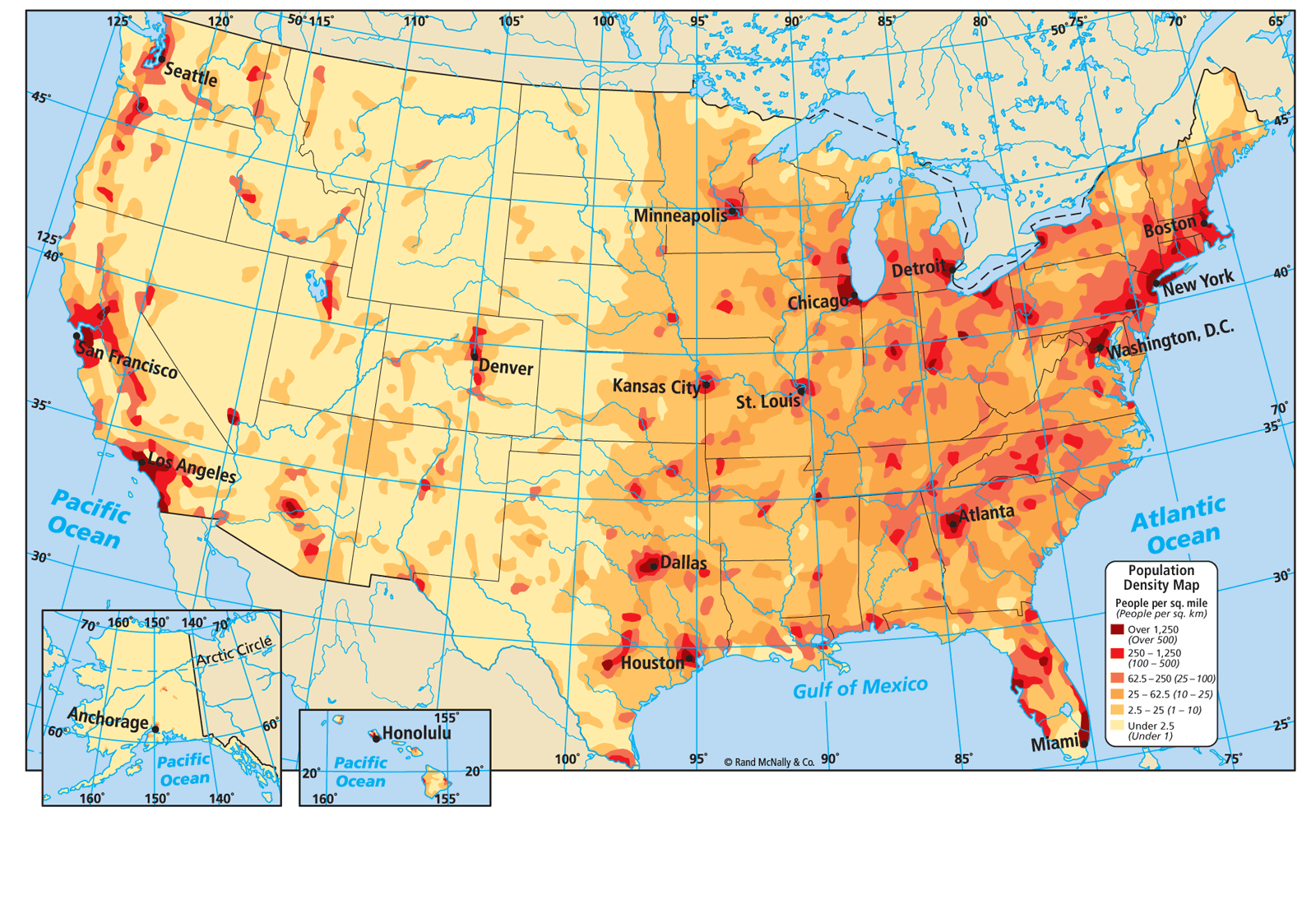

Was recently in LA, had a very excited Uber driver tell he just bought a house near Topeka, KS and it was 4 bed, 3 bath, unfinished basement, 2 car garage for $95k, on a 3/4 acre. He was extremely excited about moving. That's a massive house. There is plenty of cheap housing elsewhere in the USA, you have to be willing relocate.
The title should be "How did relatively small areas in California in the grand scheme of the USA make housing so expensive most people can't live there?"