50MW per reactor at 12 per plant is 600MW. Or 600k homes powered by a single power plant. Nuclear is now very safe, and cleaner than coal. I am glad this project is moving forwards.
EDIT: Opportunities for more skilled jobs is always a plus too.
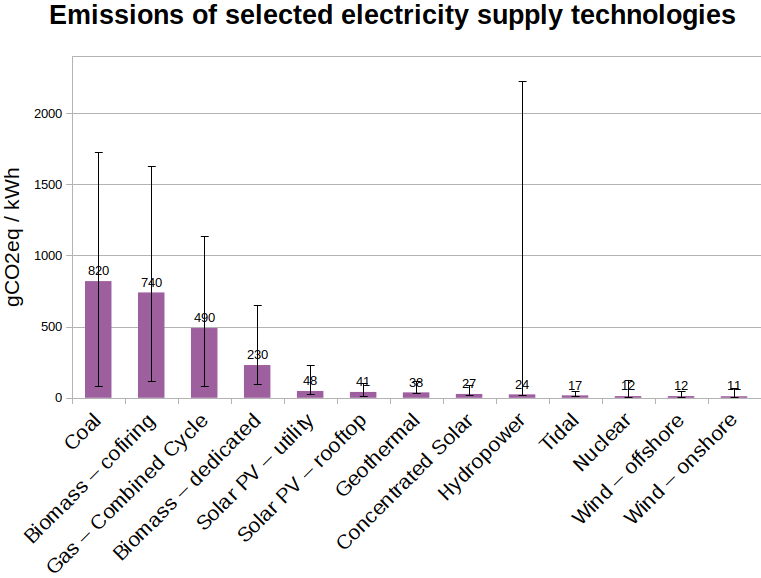
It's also cleaner and less carbon intensive (12 gCO2/kWh) than pretty much everything else out there. Wind beats it as the least carbon intensive (11 gCO2/kWh).
Given it’s not pumped into the atmosphere to be finely dispersed globally and stored in our childrens’ bones and lungs, almost any solution beats the status quo.
That's already changing very rapidly. "World coal production fell by 6.2%, or 231 million tonnes of oil equivalent (mtoe) in 2016"
What changed is both solar and wind cost less than coal. So, coal is being fazed out about as fast as alternatives come online. Give it another 10 years and the landscape will look very different.
Actually LNG is 30% less CO2 per unit of energy which isn't revolutionary but it's not a tiny difference either. If a lot of things that currently burn other hydrocarbons (such as ships) would instead burn LNG we could cut emissions quite a bit.
But then you have to account for methane leaks from pipelines and account for the fact that methane has 60x more warming power than co2 and they end up being basically a wash. Consider the error bars in, i.e. https://partofthething.com/thoughts/wp-content/uploads/ipcc-...
First that ends in 2015 and coal is already dropping slightly.
Second, Natural gas is used for both heating and electricity generation. It's heating not electricity production that's driving LNG demand. Further, coal is very rarely used for heating so LNG is mostly replacing fuel oil.
PS: That also ignores the worlds largest uses of energy. Growing plants from sunlight which completely dominates all other energy sources.
There's better data in here [1], page 9, with projections. My conclusion is unchanged. Global warming doesn't care what the energy was used for so it's important to consider the entire energy usage portfolio of the world in these discussions. We gots to decarbonize and we are not on track.
Growing plants from sunlight is indeed a large energy flow. However it's not dominant in our emissions to the atmosphere which are changing the climate. 70% of anthropogenic CO2 emissions are non-plant energy-related. Fact is, we use a lot of non-plant energy too because it's very dense energy and that allows us to do things like drive cars, fly airplanes, and heat homes without destroying the environment. Back when everyone was using renewable plant biomass for heat (i.e. firewood) air quality was getting bad and forests were getting destroyed. It's a very good thing we switched to coal when we did, for the forests' sake, but now we need to totally decarbonize. This means intermittent renewables, hydro, and nuclear.
BTW this book [2] has all the info you could ever dream of about world energy usage.
This is a thread about Nuclear power. Which is rarely used directly for home heating, generally it's just resistance heating after being turned into electricity. Anyway...
Your link [1] is for the United States which as I said uses an unusual amount of LNG. Though if you look at Coal on page 10 it's down (~22 to ~14 = ~40%) from 2006 petroleum is also down quite a bit (40 to ~35 = ~12% drop) it's only LNG that's up but again it's up significantly less than just coal has dropped let alone coal + petroleum.
(pedantic) Plants also dominate our emissions to the atmosphere. They simply also extract carbon from the atmosphere.
I think most projections are wildly off base. In the end it's a combination of economics and incentives which will determine changes and while the economics favor renewable incentives are much harder to predict.
Sure nukes aren't generally used for heating, but in places like Russia and more frequently China, district heating directly from nuclear is very much on the table. And electric heating isn't exactly far-fetched of a proposal either. If we ramped up carbon-free electricity sources like nuclear, hydro, and intermittent renewables we could couple that with more electric heating pretty reasonably.
Damn, you're right that it's US only. Ok [1], page 11. Still only through 2016 though. IRs are the fastest growing but they're still very tiny. We have a lot of work to do to decarbonize.
In Europe, it's going to a places like the one for Finland. France has similar plans.
https://www.pri.org/stories/2017-07-31/finlands-solution-nuc...
In the US, it stays at the plant for the next generation to figure out what to do with it. Then that problem gets passed to the next generation.
If anyone finds this interesting the film "Into Eternity" is about the construction of Onkalo, a huge underground nuclear waste store in Finland. It's a nice watch, trailer here: https://www.youtube.com/watch?v=xoUkhOup1C4
transferred across our roads, rails, rivers and then returned to earth with a sign that says stay out forever. These are not points to ignore when talking about the benefits of using this process. I haven't read the reports, hopefully the accounted for that extra co2 from disposal processes, clean up and recovery.
Modern transport and disposal techniques are much safer than the transport and disposal of many other industrial chemicals/waste both due to the nature of the waste as well as precautions taken. And disposal cost and carbon footprint are absolutely accounted for in all studies/reports worth their salt. I'd be totally fine having the spent fuel buried in my backyard (in typical/standard disposal canisters) and drinking well-water pumped from below.
How is more skilled jobs a plus? Doesn't the US have an excess of skilled job vacancies and and excess of unskilled people? I would think more unskilled jobs would balance the market out better.
Of course any kind of job is also a cost to the company running the plant, which means more of an obstacle to the adoption of more nuclear power. If we could do it without any jobs, I'm sure it'd be much cheaper and more prevalent!
You can always educate more people. Not only helping the economy, and the people, but also getting side benefits like more informed society that makes better decisions in elections.
> Doesn't the US have an excess of skilled job vacancies and and excess of unskilled people?
Yeah, mostly because of its obsolete education system.



EDIT: Opportunities for more skilled jobs is always a plus too.