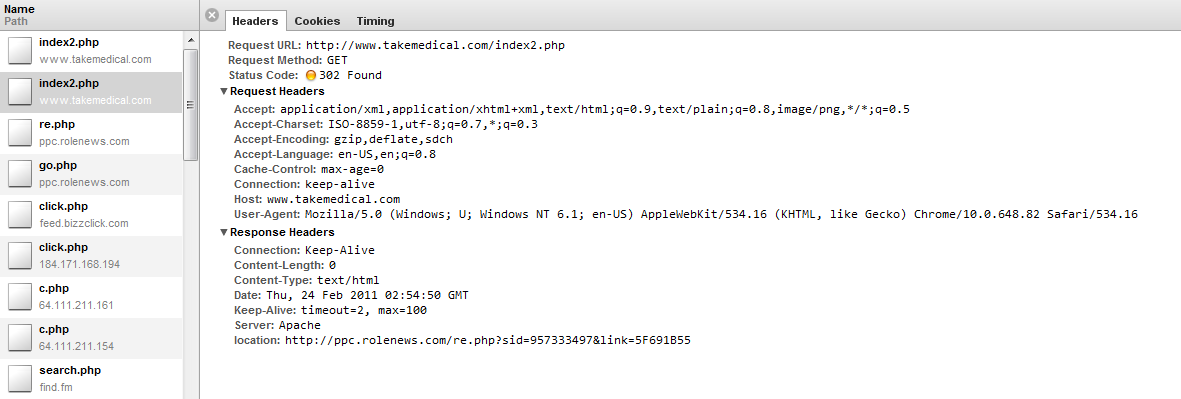
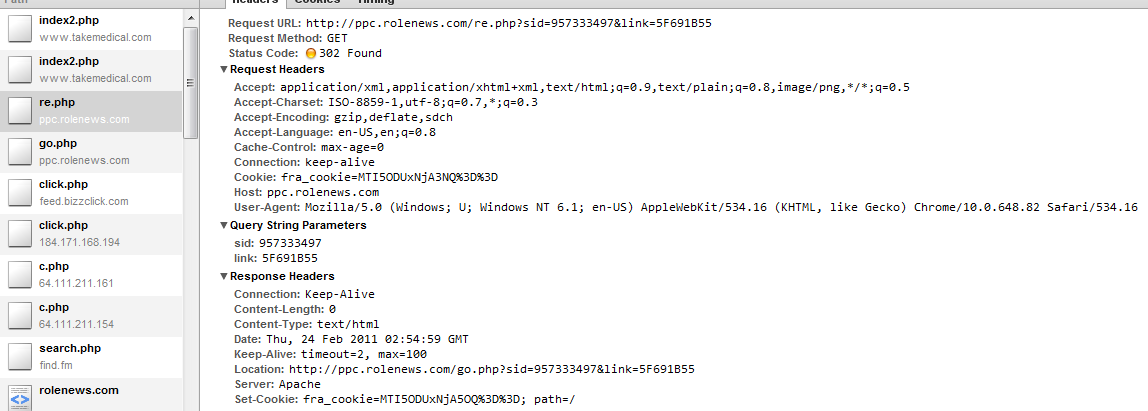
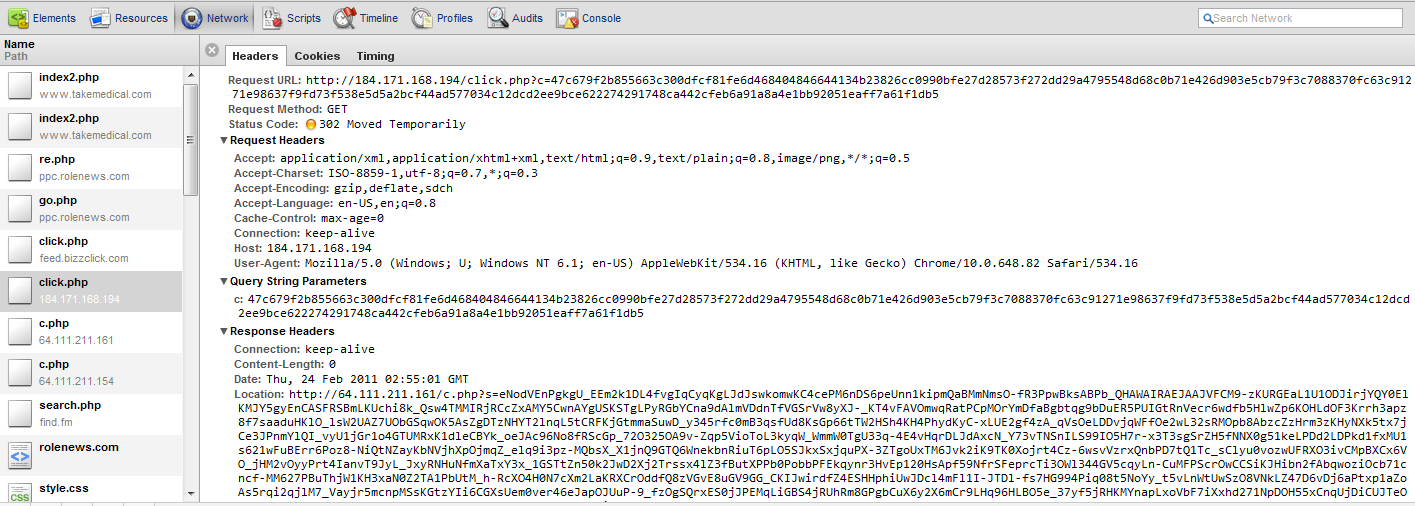
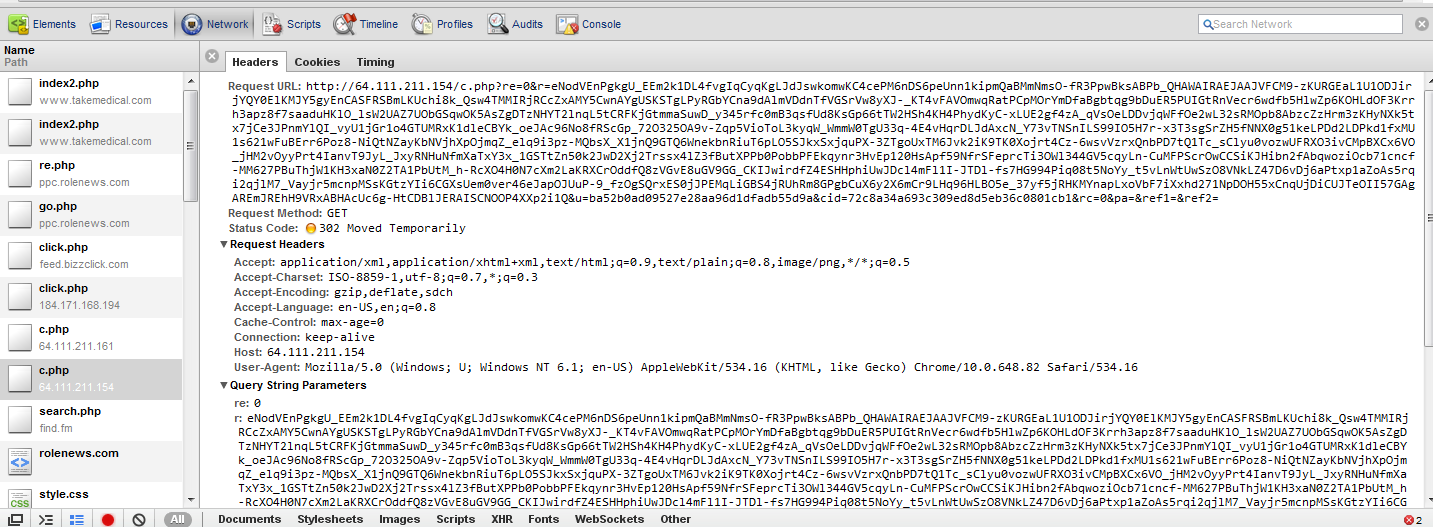
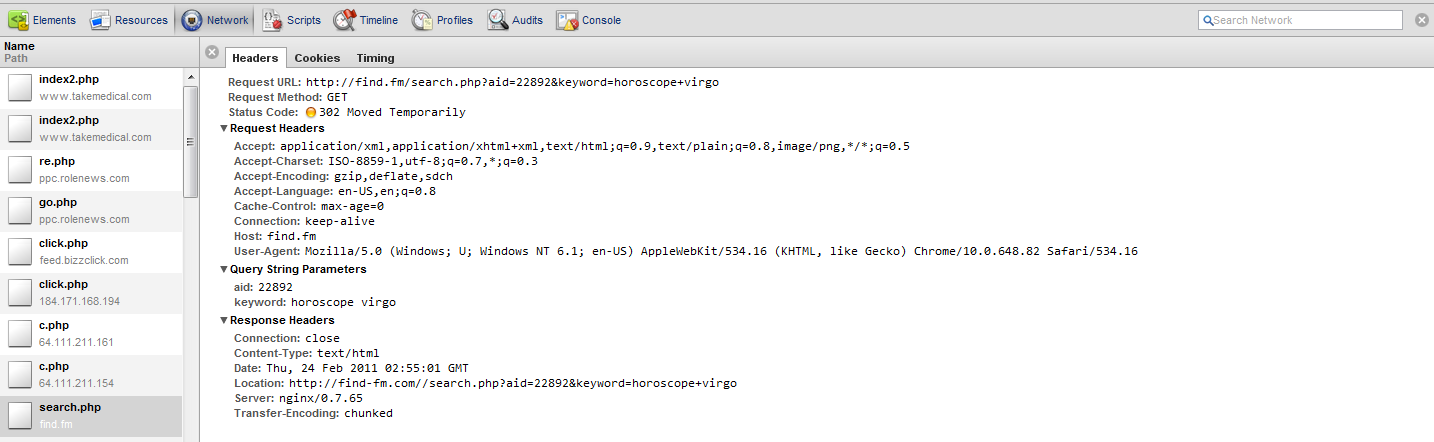
What is a click other than a "redirect" from one page to another? Add the appropriate parameters in the HTTP call and you are done. There is no need for actual user interaction for an HTTP call to be considered a "click".
Take a look at the screenshots: You will see that the redirects are URLs that you would "click" as a user to see an ad.
The clever part is that the "clicks" come from a wide variety of IPs, wide variety of browsers, and on different times.
All these parts happen within the index2.php of the parked domains (see the section with the title "Re-directions and generating click fraud with normal click patterns").
I got the explanation: All the targeted sites (e.g., Mevio or Current.TV) now have filters in place. So you will not be able to see the actual landing pages. The landing page will be a blank page as the ad click will not work.
Btw for the record: It is mainly CPC fraud, sending (invisible) traffic to sites like Mevio and Current.TV which serve mainly CPM ads.
OK, I added the screenshots that show the adservers as well. When I was writing the article, I was told not to involve any party that has been defrauded and did not give explicit permission to be involved in the story. Since I see them mentioned in the WSJ article, I feel that I can put the relevant screenshots there as well.
thats what I am wondering, how is sending the actual click? does he have access to a PPC feed (from who?) or is he somehow getting the links for the link via javascript and for what ad networks ??
That, unfortunately, I could not observe. My intuition says that he had a PPC feed for his parked domains and he was using the click.mygeek.com etc services to click on them.
Note that he was not always clicking on the links, to maintain a reasonable low clickthrough rate for the ads.
You run a video site or a search engine that serves CPM ads. If you can buy PPC cheap enough, you can arbitrage and make money.
PPC from Google is expensive, but there are companies that sell cheap clicks. Some publishers on these ad networks run porn sites with hidden iframes that generate the clickthrough.
However, iframes generate a http referer, and this gives away the rather dubious traffic sources. The series of redirected clicks are used to subvert click fraud analysis.