To me this signals that Buffett believes that huge growth of cheap and crazy-popular wind and solar generators will continue to be directly correlated with a massive expansion of fracked natural gas (i.e. high-carbon fossil fuel) to back up their intermittency.
Fracked natural gas is certainly better than coal in almost all metrics (way less deadly air pollution, arguably less carbon emissions given better pipeline seals/maintenance), but it is not compatible with a climate solution because of its high carbon footprint.
I'm always advocating for 24/7 low-carbon, low-land, low-material energy (i.e. energy with high power density) like nuclear but it appears that the public simply is not interested. It would help if we could just choose a reactor design and serialize it like the Koreans did to get costs way down.
Buffett's utility holdings (i.e. PacifiCorp) are aggressively shutting down coal plants and ramping up their wind/solar capacity in their service territories.
One perhaps far-fetched possibility here might be that he is vertically integrating the natgas based aspect of their utility business instead of buying natgas from another company while as you say dealing with the intermittency of renewables, although that would require some kind of merger with those utilities so that the natgas input could be provided at-cost to them.
He owns both extensive utility operations and extensive transportation operations. Might as well own some natural gas assets too, if it can be acquired at the right price.
> "Buffett believes that huge growth of cheap and crazy-popular wind and solar generators will continue to be directly correlated with a massive expansion of fracked natural gas"
But this is not actually true, at least in the UK's experience. Britain's renewables have expanded massively in the last 10 years, allowing almost all coal power plants to close and grid carbon emissions to be cut by over 60%.
Britain still leans heavily on natural gas generation during times when the sun isn't shining and the wind isn't blowing. However, the quantity of natural gas used has declined as well.
Natural gas generation may remain profitable, because wholesale power prices rise when generation is scarce. But because natural gas power plants are being used less often, gas consumption and carbon emissions still decline.
The UK built lots of plant biomass, and generates more electricity from it than solar. The capacity factor of these has dropped to 62%, indicating that they are load following with biomass. Unfortunately, even though biomass is renewable and counts as such in poorly designed energy policies, it uses combustion and causes significant air pollution (worse than gas) as well as high carbon concentration in the atmosphere, which causes global warming (on par with gas).
Worse still, biomass used lots of land and competes with food production. Gas is arguably better for the environment than biomass.
So yeah you're right. I should change the statement to say either gas or biomass or some other destructive combustion rises with renewables.
Yes, biomass (supplying 7.0% of UK demand in the past 12 months) is a bit bigger than solar (4.5%). But both are relatively minor compared to wind generation at 23.8%. Wind has also overtaken nuclear (18.3%) to become the 2nd largest electricity source behind gas (34.0%).
However, there is now a ban on subsidies for new UK biomass plants or conversions. So it is very unlikely that biomass will grow significantly in the coming years. Solar and wind, however, are still growing fast - and many of these projects are being built unsubsidised! Even projects that do receive contract for difference (CfD) subsidies, such as offshore wind farms, are receiving far lower strike prices compared to nuclear.
Also, solar generation is concentrated during the day, closely matching the peak grid demand period. So despite being smaller in total generation compared to biomass, it's significance to the grid is disproportionately higher. Biomass generation typically acts as a baseload spread out over 24 hours - generating, and receiving subsidies, even in the middle of the night when it's not really needed.
Your criticisms of biomass are valid, except that biomass for UK power plants consists mostly of wood pellets. Forests do not really compete with food production unless you are advocating forest clearance for food production! Unlike fossil fuels, biomass also does not cause "high carbon concentration in the atmosphere", except insofar as fossil fuels are consumed in the production and transport of that biomass.
You could just look at it’s current valuation and assets and compare it to the valuations and assets of other companies in the area.
Basically you could bid on some esoteric future or you can bid on the bad present.
This is the difference between someone who had a good life and education and suddenly ended up in a car crash and lost all of their family vs someone who decided to be a meth addict and ended up killing their family.
In both cases you’re bidding on their future and in both cases they are in the same position, but it doesn’t make them equivalent.
He's still been the most successful investor in modern history, including covid. It's a blip to him - and he's right. He's one of the few to consistently beat the S&P 500, and even so, he recommends just buying the index.
A zero interest (or low) interest rate doesn't have to equal stagnation. The free flow of money could also kick start an entire generation of entrepreneurs, solely by reducing capital risk.
The performance of the Nikkei is significantly more complicated than just a low interest rate. For example. the lack of productivity and population growth in Japan is another set of pieces that also impacts the rate of return.
Exactly, that's the only thing that matters in this calculus unless Berkshire Hathaway governance forces them to add additional factors into purchases in some industries.
I've seen the video of the guy opening his faucet and lighting it up but I read somewhere that that was found to be biogenic, and that that kind of thing is actually really rare with fracking. Not an expert in this though so I could be wrong.
Coal pollutes lots of water though so it seems hard to beat. Certainly fracking causes more fracking waste than coal, but I believe the overall environmental impact is less across the board.
I think a lot of people forget: 1) how bad well water often naturally is and 2) that it still exists. There is a reason why treated public water systems are such a foundational part of modern public health. I have family whose water is undrinkable, not due to man-made pollution, but due to high levels of natural minerals in their well. They rely on bottled water for human consumption.
Maybe he's not interested in the natural gas for energy.
Everything I know about natural gas came from visiting and energy museum, but from what I remember, natural gas is used to make hydrogen, plastics, fertilizer, certain types of animal foods, and even things like vitamins.
At an elementary level, it's easy to imagine a world without natural gas because there are lots of other ways to make electricity. But it's harder to imagine a world without plastic.
I guess I'm thinking Buffett's lack of interest is related to the public's lack of interest at the current price point.
On June 23, a Pew Research poll about energy preference came out. Nuclear did relatively poorly compared to renewables but, to your point, it did beat out most fossil-based solutions (barely).
But the real issue if the how much the transmission providers are willing to pay. This market is open to all generators of an acceptable size who have passed govt. certification. In most countries this market is an auction in various sized time blocks (from months long down to a few hours).
Obviously the price of solar and wind are lower than coal in a lot of localities, and in some are even lower than natural gas. And what's more for solar once it is in place it has miniscule opex, so almost any price above zero will produce net revenue. Natural gas will find it hard to compete with this in even a few years time.
Having said that in the US approx 30% of natural gas is used in electricity production. Even though it is a minority of end use market share it will still affect prices.
So I'd say if Buffett got it at a 30% discount or more he should be OK, a lesser discount may be problematic.
> I'm always advocating for 24/7 low-carbon, low-land, low-material energy (i.e. energy with high power density) like nuclear but it appears that the public simply is not interested.
As a member of the public, I have never been asked where I want my electricity to come from, so my interest has little bearing on what actually gets built.
The public may be asked to make a decision by proxy (R versus D), but that is only one of many decisions that get made, as a consequence of that choice.
> As a member of the public, I have never been asked where I want my electricity to come from, so my interest has little bearing on what actually gets built.
Really? Here in the UK every energy supplier offers a "green tariff" (usually at a slightly higher rate) where a proportion (or all) of the energy is derived from green sources. There's some shenanigans with trading of certificates which means it's not quite as straight forward as that, but still I believe this does end up subsidising green energy.
In California we have this as well. PG&E (SF Bay Area) calls it Solar Choice, SCE (SoCal area) calls it Green Rates, and SDG&E (San Diego area) calls it EcoChoice. You can choose between 50% or 100% renewable energy and are charged a premium per kWh used.
I bet many other states in the US have this as well.
This may not apply to you (vkou) specifically but many people don't know that 1/3 of states have deregulated electricity markets that allow customers to choose who generates their electricity. There is still a local utility company that maintains the wires and handles billing, that does not change. The choices vary on price, length of contract, amount of renewables, etc. Signing up is as simple as filling out a web form, you continue to receive your bill from the utility as usual. The only difference is the part of the bill for generation has the new company's name and rate.
My sense is that the awareness and participation is so low that ESCOs don't really make a difference. There's essentially no competition of the kind you see in other countries.
In Norway (my native country), there's a wealth of national providers, lots of competition, and it's easy to find the rates, and also super easy to switch. Pretty much everyone paying utility bills is aware of the choice, and most people don't choose their default infrastructure provider because they're usually much more expensive.
When I rented in NYC, I had the option of using ConEd or an ESCO. ConEd was always cheaper, because they already negotiate the best rates on the open market. I could choose a "green" provider, but I'd be paying 20% more.
In DC where I live about 15% of residential customers choose other than the standard offer service, while 85% of nonresidential do. Consumption breaks down similarly, however, since nonresidential is a bigger market the incumbent on supplies 30% of total MWH.
There are a lot of policies put in place that affect the energy markets that elected leaders are heavily involved in. For instance, there are production tax credits for wind. There are incentives for rooftop solar. There is talk of a carbon tax or cap and trade. There are debates about whether or not nuclear should be counted for or against clean energy targets. In the 1970s, there was massive legislation (the clean air act) that increased the costs of coal dramatically. These all greatly influence the mix of energy that gets built and are very tied to consumer preferences (if a little indirectly).
In the US most places have an established company (“the utility”) with a legal monopoly on electricity supply - and those companies choose where they source their grid power from.
Check with your utility though - we opted into a 100% renewable mix at a slightly higher price/kwh. Even in geographic monopolies, you can vote with your dollars if given the option.
I only see him valuing the pipelines themselves, and perhaps not as strong of a shift into absolving fossil fuels like everyone expects. Humans are slow to change and adapt, I mean look at coronavirus and masks in the US.
Natural gas is great because of the low levels of emissions, the not so great aspect is fracking continuing to mess up peoples homes, i.e. flaming sinks.
Those that are in control should advocate for the publics best interest imo.
The not so great aspect of gas is that its a high carbon fossil fuel that causes global warming. 490 gCO2-eq/kWh is not even close to low. Low carbon sources have lifecycle emissions closer to 10.
The big wildcard here is massive stationary storage, such as Tesla’s megapacks. They’re contracted to start on a 1MWh project with PG&E in California this year (Moss Landing). Renewables with stationary storage, in some cases, kill the economics for these “peaker plants”.
First of all the assumption of nuclear being low carbon is really doubtful. Nuclear requires fuel and uranium mining is a very expensive and dirty process. The real carbon impact on nuclear depends largely on the quality of the uranium ore and for bad quality ores the impact maybe worse than natural gas.
Furthermore, the massive risks of nuclear are inescapable for any right-thinking person. Furthermore, the almost eternal nuclear waste problem is still there and still has not been solved.
Furthermore, even if gas is more carbon intensive it is better overall, because it allows for zero carbon generation like solar and wind to flourish. Because gas can be used to compensate when there is no wind and no sun. Nuclear is absolutely useless in these cases because it is very slow to start up and turn off. The fact that nuclear is "24/7" is not actually a positive thing when you want to to work with cheap solar/wind energy.
Eventually we will develop suitable storage solutions but until then gas is a good interim solution.
The myth of nuclear being not low-carbon has been wholly rejected by a large and significant meta-analysis of the IPCC itself, as clearly seen in Table A.III.2 in [1], which puts nuclear at 12 gCO₂-eq/kWh, the lowest on the list except for wind at 11. Solar is around 40. Natural gas is 490. Coal is 820. The data are plotted here [4] directly from that table.
It's no surprise either. When uranium has 2,000,000x more energy per mass than any chemical, and when splitting atoms has nothing to do with carbon emissions, it's very difficult to make it high-carbon through lifecycle issues.
I went deep with someone a while back on here who claims that nuclear was closer to 100 gCO₂/eq than the IPCC number of 12g CO₂-eq/kWh, and they realized they were using 1950s energy values for gaseous diffusion enrichment instead of much-more-efficient centrifuges.
Another source verifying that nuclear is very low carbon include [2] (which is a writeup for [3]).
Tell me nuclear is expensive. Tell me you're concerned about accidents. Tell me what about the waste. But do not tell me nuclear is not low carbon. This is an absolutely unjustifiable belief propagated in public almost exclusively by institutional anti-nuclear organizations with a long and storied history of using incorrect information to make nuclear look bad.
The real clincher to this argument is that we all agree there are no direct carbon emissions in fission. Splitting uranium makes no CO₂. So it's all lifecycle stuff. And in a 100% nuclear future, 100% of the mining, transportation (electrified), enrichment, etc. would be nuclear powered and so the carbon emissions would be literally 0. Same can be said for all other non-combustion sources.
> Furthermore, the massive risks of nuclear are inescapable for any right-thinking person. Furthermore, the almost eternal nuclear waste problem is still there and still has not been solved.
That is the story at least. Fortunately we have scientific methods to help prevent us from fooling ourselves even when things are postulated that seem wrong. The actual fact is that nuclear is way safer than mainstream energy sources (gas, biofuel, oil, coal), and is perfectly on par with wind and solar. If this sounds crazy, please dig into the data! I admit it is surprising, but it is true.
When you look at the data [5], nuclear is actually amazingly safe. So much so, that it's irrational even in the face of nuclear accidents to not shut down all fossil and replace it with nuclear from a public health perspective. This is because the toll of air pollution (both from fossil and biofuel) kills about 8M people every single year.
I invite everyone to read the WHO reports on the impact of Chernobyl and compare with 8 Million deaths per year and tell me who's right-thinking!
> Because gas can be used to compensate when there is no wind and no sun.
Yeah except gas emits 490 gCO₂-eq/kWh when the wind is not blowing and sun is not shining and that is wholly incompatible with solving climate change, even if we cover the whole country with wind, solar, and gas plants.
With nuclear you get 0 carbon 100% of the time in any geography or season. Check electricitymap.org [6] for live emissions data and take a look at nuclear-heavy ontario and france compared to germany for real-world live proof of this.
Lastly, nuclear waste is a solved problem already. Did you know that zero people have been injured or killed by stored nuclear waste in dry casks (which is where we put them now)? You can walk right up to them [7]. We have a long-term solution like Onkalo [8] but even in the interim it's crazy to not build zero carbon energy even though we have properly handled commercial nuclear waste for 70 years. Again, remember that our current energy systems today are killing 8 million people per year.
This is an excellent run down of a clear view on nuclear.
However, I'd like to add that nuclear waste is also very much a solved problem beyond just storing it safely as well.
Nuclear reprocessing [1] is capable of taking all spent nuclear byproducts and turning them into not just vastly more useful energy, but also comparatively tame byproducts that do not require extreme storage methods as they are of no harm to humans in less than 100 years. It literally closes the nuclear fuel cycle and is ~80 year old technology.
The only reason we don't do this is economic. Uranium in America is plentiful and incredibly cheap. It is currently less expensive to buy fresh Uranium for ancient reactors and store toxic waste forever than to build reprocessing plants and breeder reactors and have no toxic waste.
Reprocessing is done routinely in Europe, Japan and Russia where Uranium is not as cheap and they incidentally don't have any problems with nuclear waste.
> low-material energy (i.e. energy with high power density) like nuclear
Nuclear is not particularly dense, kilogram for kilogram, compared to something like solar. A reactor and containment and cooling require absolutely massive amounts of concrete and steel.
And check out the size of the new SMRs that are being proposed; 1-10MW of an SMR isn't that tiny. I haven't run the masses at all like I have with solar and 1GW plants, since I'm not very familiar with wind turbines, but I wouldn't be surprised at all if wind and SMRs were within an order of magnitude of mass per MW.
Nuclear gets tons of energy out of small masses of fuel, but the rest of the infrastructure isn't so small, especially compared to solar which has massless fuel.
They are indeed massive, but a gigawatt is a lot of power! In the balance, nuclear uses a vastly less raw material and land per energy than almost all other energy sources. The DOE 2015 quadrennial report shows data on things like this, and here is a plot of the data (with citation) [1].
Where are you getting your info?
E=MC² from the fuel does indeed carry over into incredibly low land, raw material, and waste footprints in nuclear. That's what's so cool about it.
Edit: actual citation is table 10.4 in [2] on pg 390 of the pdf. That cites ref 52 which points to [3] from Argonne National Lab. Would be nice to find a better reference.
The people who study these kinds of things consider accidents as well. We've been running nuclear reactors for 70+ years and can still see that on average they use a truly tiny amount of land, very compatible with ecosystem conservation. That's why a lot of conservationists do like nuclear.
Keep in mind that Colorado is naturally more radioactive (due to cosmic rays at elevation and uranium in the rocks) than almost all the area surrounding Fukushima today. Thus you can find people who say that nuclear accidents create permanently uninhabitable wastelands, but that is simply not true. Below 100 mSv/year of radiation, no one has proved that any harm is done (or not done).
Antinuclear institutions have formally used the strategy of terrifying people into thinking that even levels of radiation close to the natural background (3-6 mSv/yr in most places) are deadly. It is unjustifiable.
There are some interesting arguments to be made about Chernobyl as well. It is not really a wasteland, as you can see in the pictures and discussion here [1]. Wildlife has returned incredibly with the absence of humans.
Climate change has pretty large potential land impacts so that should be factored into fossil like natural gas too.
> The people who study these kinds of things consider accidents as well
"Consider" is a lovely word. I would certainly consider how they accounted for things like a ~220 sq/mi exclusion zone in Japan, if I had any idea what was being referenced.
> Wildlife has returned incredibly with the absence of humans.
It is true that many animals find radiation more tolerable than people. You can make similar claims about mountain top removal - thanks to devastated ecosystems, Kentucky is repopulating their elk.
When you get around to looking at the costs of these wildlife havens, enthusiasm for diving down this line of inquiry in any serious fashion tends to evaporate on the nuclear-booster side, though. "Something can live in any hellhole humanity can create" isn't the best of bumper-stickers, I guess.
> Climate change has pretty large potential land impacts
Anything that encourages taking these externalities more seriously than now...
The key question is: how many square miles of Japan have annual dose rates higher than, say, 10 mSv/yr? If people knew the science and units of radiation dose response, I believe many would absolutely choose to live and play and raise children in that kind of environment. When you can detect a single atom decaying, dose rate numbers and health models matter.
That's an interesting argument. I've always seen people downplay the exclusion zones but if you are accepting them as a cost of doing business then they clearly should be counted towards the footprint of the power plants.
I've just run my own numbers. But looking at your image, something seems seriously seriously off on the solar side. I get roughly similar numbers for nuclear; e.g. 250 thousand metric tonnes concrete / TWh for an AP1000 and 5x that for Sizewell B, using concrete mass numbers from [0]. Averaging these two designs is really close to their 760 number for concrete.
For solar, let's take some average random numbers, 800 pounds for a 6kW array on a roof [1]. So starting just with the panels, a 25% capacity factor over 30 years will generate 394 MWh == 0.000394 TWh. 800 pounds is 0.000363 thousand metric tonnes. So converting to the units of thousand metric tonnes / TWh, we are at 900 thousand metric tonnes/TWh for the panels for solar. Add another 10% for inverters, double that for framing if you're installing in a field rather than on a house, and I don't know where they are coming up with their stuff. 2700 tonnes/GWh for glass alone is ludicrous.
I'm not sure where that report comes from, but it would be worth checking the sources. After a basic sniff test, I'm going to dismiss it. Maybe it's using weights from 1980 solar panels or something.
Edit: and honestly, both weight / Wh and land / Wh are fairly meaningless numbers for both technologies. What really matters is cost and environmental impact, since we have ample land and ability to put weight on land.
1. These numbers are from a 2015 report that was probably prepared in 2014 and calculated using data from several years before the report was written. Solar tech has improved a lot in the last couple decades.
2. The graph is measured in tonnes per TWh, not thousand tonnes per TWh, so that might be part of the confusion. 2700 tonnes per TWh is high, but reasonable. My estimate would be closer to 1000-1500 tonnes/TWh.
3. You are correct that mass is a pretty useless metric. A more important metric would be energy payback time (how long before the power source produces enough energy to make a copy of itself, essentially). For modern solar this is measured in months, possibly up to a year or two in extreme cases. For nuclear, this is probably measured in days or weeks, since nuclear power plants produce so much energy. However, when looking at power plants with lifetimes measured in decades, the difference is insignificant. Both nuclear and solar are fantastically better than any fossil fuel.
For EROI, "months" for deeply decarbonized renewable systems (i.e. what matters) seems to be in stark contrast to the values from this November 2019 study [1]. Is there a good critique of this line of thinking that you're aware of?
I tried smell testing it too. For glass, we find 70 tonnes for a 1 MW capacity unit [1]. Using slightly more normal 20 year lifetime, and I'll re-use 25% capacity factor (which is about the avg in the USA), this comes out to 1597 tonnes/TWh of glass, compared to 2700 on the plot I showed. Running some sensitivity analysis shows that if you use 15% capacity factor, then you get 2662, basically the number given. Capacity factor is very location dependent so I guess the answer for solar resources is also highly location dependent. For instance if you're choosing between nuclear and solar in Boston, these numbers are pretty reasonable. In Arizona, there might be a factor of 2-3 improvement in solar's resource usage.
In any case, best-case solar uses vastly more raw materials from Mother Earth than all-case nuclear.
Also, solar is usually first built where it will make the most money, so early fleet capacity factors are likely to be biased high. They will decrease as people build solar in less sunny places.
Your original graph is heartily contradicted by the IRNEA numbers. I used glass as a baseline because the bad QBER numbers had it as a small component, but it has become the dominant component in these builds. The original table (vs. IRENA):
2.9x (vs. 0.8x) as much steel as glass
1.4x (vs. 0.67x) as much concrete as glass
0.62x (vs. 0.55x) as much "other" as glass
Panels have 25 year warranties, assuming they will be replaced before the warranty ends doesn't seem very realistic. Choosing the worst-case-for-solar deployment of Boston isn't a good comparison metric either.
So all in all, the numbers that you have linked here show that solar, in its heaviest form deployed in an open field, is within a factor of 5 compared to nuclear on the weight per amount of energy over a lifetime. And various nuclear designs easily vary by a factor of 5.
SMRs, the only hope for nuclear going forward, have been avoided for a long time because it was thought they would be less efficient on a W/kg scale. So nuclear's future designs will take more mass per kilogram.
In contrast, solar is decreasing its weight and efficiency all the time, and there is no shortage of sites for solar, so we will see solar's Wh/kg decrease as the technology develops.
This is all a meaningless metric, but even if it did have some sort of meaning, it's not much of a win for nuclear.
While I don’t think Buffett is going to live long enough to see if this bet pays off, it’s reasonable that this natural gas play is going to fall flat considering renewables uptake and the cost decline curve of battery storage. This is without even discussing that many jurisdictions are considering or are starting to ban natural gas distribution to residences. After coal is driven out for electricity and heating, climate advocates and policy makers will be coming after natural gas next (and rightfully so if we intend to limit total carbon emissions).
It’s not quite as “dumb money” as SoftBank, but very similar to T Boone Pickens’ natural gas play. Dominion sees the writing on the wall and found a greater fool.
https://www.utilitydive.com/news/utilities-dont-see-stranded... ("We get approached a lot about buying gas plants in the U.S. — I wouldn't touch one ... In a lot of these [jurisdictions] it's the next coal, and I think it's coming quicker than we think." — Ken Hartwick, President and CEO, Ontario Power Generation)
I agree, in that this seems like the wrong tech to back at this time.
However, I do wonder if these pipelines could be transitioned to something like HVDC; rip out the pipe and use the right of way for an entirely different, safer purpose that will have tremendous value in the future.
Building new transmission is unbelievably difficult in this age, and I think most of the opportunities for doing so will require repurposing existing, defunct infrastructure.
Underground HVDC is straightforward (supporting anywhere between 600MW and 1.5GW of capacity) and can be an effective replacement for above ground projects blocked by NIMBYs. More money, but doable, and in zero interest rate policy environments just borrow some more. You don’t even need to rip out existing pipes, you can leave them in the ground purged and unused.
I would expect that you’ll also see “repowering” projects where aging overhead AC transmission lines are upgraded to more efficient, higher capacity HVDC.
> Building new transmission is unbelievably difficult in this age, and I think most of the opportunities for doing so will require repurposing existing, defunct infrastructure.
I think this is a very astute observation. Don't underestimate the value of an existing pipe running to almost every building in America.
Hasn't been mentioned yet, but the same pipelines can likely be used for hydrogen as well as methane. Those pipelines would cost a fortune if built today.
If there is a place for hydrogen in the future of energy storage (and there probably is, in addition to batteries and pumped hydro storage), then I think it's quite a good buy. It will take some time but they will make money out of the natural gas use case until then.
The question is whether Buffett got a low enough price that his risk is low. Natural gas demand may be on a long term downward path, but it’s not going away entirely any time in the next 30 years.
At the right price I’d happily own natural gas for the next decade, the question is did Buffett get that price? He’s been a victim of his own success for the last couple decades, his growth in portfolio size has removed the least efficiently priced market opportunities from his consideration.
Evidence is he’s not able to find the discount to intrinsic value that he used to demand in the biggest market caps, and is being forced to reduce his margin of safety on deals. The fact that this is the first significant deal he’s been able to swing in the 4 months since the market crashed supports this.
As a Berkshire shareholder, I'm happy that Buffett didn't pounce in the crisis. Prices were only just becoming reasonable when the Fed stepped in and upended the calculus of the value investor.
As Buffett likes to say, there are no called strikes in investing.
“I call investing the greatest business in the world,” he says, “because you never have to swing. You stand at the plate, the pitcher throws you General Motors at 47! U.S. Steel at 39! and nobody calls a strike on you. There’s no penalty except opportunity lost. All day you wait for the pitch you like, then when the fielders are asleep, you step up and hit it.”
I have over half my net worth in BRK, but I’m also a realist. Every year Berkshires asset value grows and every year it makes Buffett’s job harder. He’s a master of resisting bias and unwanted psychological influence, but he has to be thinking of expanding his strike zone. I’m hoping for massive stock repurchases to make things easier for him.
I dunno. I think there's a good argument that fracked gas will become more valuable as intermittency of the grid rises. Oftentimes in energy transitions, externalities rise with scale. As the scale of wind and solar and batteries rise, they may hit roadblocks (NIMBY, transmission lines, chemical fires, chemical disposal environmental concerns, energy return on investment issues, etc).
There are plenty of people who say that fracked natural gas value will go up and up. Rocky Mountain Institute is kind of fringe in their beliefs on this topic.
Ken Hartwick at OPG has more nuclear and hydro than almost anyone, so I'm not surprised they are anti-gas.
Tesla (Musk, specifically) has said the demand for their batteries for utility scale storage is tremendous. I believe that as long they keep spinning up Gigafactories (and everyone else is chasing them), batteries (along with cheap, overbuilt renewables that we curtail and transmission investments) will negate the need for gas in the next decade. Enough sunlight falls on Earth in an hour to power humanity for a year. We just need to continue to scale up the capturing of that energy and moving it around efficiently.
> The target year of 2035 allows sufficient time for most coal and gas plants to recover their fixed costs, thereby avoiding risk of stranded costs for consumers and investors, if the right policies are in place. Wind, solar, and battery storage can provide the bulk of the 90 percent clean electricity. The report finds that new fossil fuel generators are not needed. Existing gas plants, used infrequently and combined with storage, hydropower, and nuclear power, are sufficient to meet demand during periods of extraordinarily low renewable energy generation or exceptionally high electricity demand. Power generation from natural gas plants would drop by 70 percent in 2035 compared to 2019.
The scale of chemical batteries needed to handle a deeply decarbonized grid is almost unfathomable. It is certainly physically possible (i.e. not forbidden by the laws of physics), but to postulate that it will go off without significant hitches related to environmental concerns, resource issues, transmission permitting issues, land-use issues, chemical disposal/recycling issues, energy return on investment shortages, etc. seems really optimistic to me.
I get that this is what people want to happen but I just think it's vastly harder than most people think.
> Enough sunlight falls on Earth in an hour to power humanity for a year.
There's enough recoverable fission fuel on Earth to power humanity for a billion years. Energy resources is not the issue. Accessing it economically and in politically-compatible ways is.
How do you think all of coming wind and solar will be balanced on the grid? Today and for the foreseeable future, that's what natural gas is going to do. Batteries have come down in cost, but natural gas is far, far cheaper than grid scale batteries.
Also, to put one of the quotes in perspective, the vast majority of Ontario Power Generation's assets are hydro. The two ways you balance the grid currently are natural gas and hydro. Hydro is fantastic, but it's really, really hard to build new hydro.
> Batteries have come down in cost, but natural gas is far, far cheaper than grid scale batteries.
Source please? Natural gas peaker plants are not cheap to build and have a terrible utilization rate by nature, so they are not cheap to operate, either.
Natural gas plants don't have a limited duration. They can run as long as you want. Generating methane from carbon capture and burning it in natural gas plants is a much better way to get from 80% renewables to 100% than with giant batteries.
Natural gas is cheaper only because of massive tax benefits and lack of accountability for environmental damage caused by gas extraction. The moment one of these two parts of the equation get adjusted, the true cost of natural gas will far outstrip the cost for renewables and batteries.
> From its inception in 1888 until the start of the 21st century, De Beers controlled 80% to 85% of rough diamond distribution and was accused of being a monopoly.[5] Competition has since dismantled the complete monopoly, though the De Beers Group still sells approximately 35%
Interesting. I wonder if synthetic diamonds played a role in that downward trajectory.
The competition is Canadian and Russian diamonds but De Beers have waged a publicity campaign against synthetics for years, even recently launching their own line of synthetic diamonds but branding it as an inferior product.
Just this week I heard an established jewelry store advertising synthetic diamonds. I've understood that historically de Beers would cut off jewelry stores from the supply of natural diamonds if they sold lab-grown, but maybe their power has declined enough for the stores to jump ship.
Prove it. I spend a significant amount of my time making sure I buy brands that DO NOT fund that hateful family. I have also written to companies I like that advertise of Fox News.
(I don't need a hobby, I like using my time to vote with my dollars.)
Guardian might've made your windows (car & home); Invista might've made the nylon in your clothes; Molex makes the liiiiiiitle tiny bits of plastic in the computer you're using.
Live pretty much anywhere except the coasts in the US? Koch probably sold the softwood lumber used to build your house.
You sure your car doesn't burn gasoline from Flint Hills?
Do you ever use paper products? Georgia Pacific (Brawny, Dixie, Angel Soft...).
They're so foundational in so many basic industries, they're just unavoidable.
I avoid the GP products. I can't change the plastics in my computer. My house is older than dirt, and the windows are so old you can see the glass warping. The lumber's proper sized, not scaled by 0.5inches (eg, rafters are true 2"x8"), but I get your point. It's hard to PROVE what the state is.
Plus, most of these companies are in B2B commodities industries where purchasing is the margin driver, not sales. So I wouldn't worry too much about whether the Nylon 6,6 in your yoga pants was made in an Invista facility... your purchasing decision just wouldn't matter that much.
I like my job. I don't want to go into the paper manufacturing business (or oil additives, or fracking chemicals, etc.).
Personal choice is what I have here. I am fighting with the tools I have at my disposal. It might make some feel better to say my personal choice is useless. Let's assume that's true. Given that I choose to think that even smallest person can make a difference. I also choose to think that it's cop out to say otherwise.
Dominion and Duke Energy also cancelled the controversial Atlantic Coast Pipeline the same day this deal was announced, citing mounting costs from legal uncertainties.
Lots of analyzing what Buffett is signaling. My bet is he had little to do with the purchase and it was more likely made and informed by Greg Abel.
Rather than nabbing a bargain, they probably thought the deal just made sense to expand their existing energy assets. In other words, the deal wasn’t good, but it wasn’t bad either. There hasn’t been much bargain buying in wide moat companies at Berkshire for the last ten years.
I wonder what this is signalling, when it comes to how Buffet's firm stands on market volatility? With stocks up and fresh bad news about the state of the pandemic rolling in, I would think that they would be more inclined to wait now and buy later.
Maybe they feel that the energy sector has gotten "discounted enough already" and that the short-term gains from waiting longer would be outweighed by the relatively safe gains that the investment promises post-pandemic?
Warren Buffett's long-standing position on market volatility is that he never worries about it or tries to time the market.
If he finds a deal and he believes that the fundamental value proposition is there, then he makes the purchase without regard to what might happen tomorrow.
Exactly. It's possible a better deal could be made later but he looked at it and believes it's a good deal now so he'll do the deal now. It makes a lot of sense really.
However public company leadership and professional fund managers cannot stop worrying about short term impact , their job is on the line .
There is enormous pressure to deliver short term results very few people like buffet can escape that.
He is able do it due to his reputation, wealth and peculiar holding structure of Berkshire Hathaway (no splits or dividends )
I should mention as much as short term focus is painted as bad , on average it is good strategy to base people’s performance on. It is better management fails faster than fails slower . “Blue chip” companies should reduce risk more than maximise gain .
There is room in finance for multiple strategies, and a lot of niche funds that you've never heard of.
As an extreme example, Taleb's black swan hypothesis requires investors who are OK with losing money day in and day out. And yet people are willing to invest in Universa Investments. (Which is making a killing this year.)
However as Taleb says, courage is the one virtue that can't be faked. Running a fund that follows a different strategy than the mainstream requires having the courage to tell investors that if they are not on board with your fund's strategy, then you would prefer that they take their money elsewhere. That kind of courage is rare. (And can be indistinguishable from stupidity for unbounded times.)
Niche funds are exactly that niche. Most(in numbers not the money they control) are not accredited investors and cannot afford to lose their whole investments. There is not much room for multiple strategies in mainstream investments for good reason .
Correspondingly most fund managers are not fancy hedge fund managers who can simply be courageous, the legal and the corporate framework they operate under would not allow for that kind of risk taking. Popular media and writers like Taleb focuses way more on this niche segment because it sells more books/movies etc, or is more interesting to write about, and perhaps also because the industry does control a large amount of wealth.
Buffet himself strongly believes that hedge funds simply do not justify the management fees they charge and famously bet a million dollars on that thesis and won. Even of the fund managers who actually do have the chance to take aggressive decisions do not always do better than say index traded funds over a long enough time period.
This is only a partial buy of assets. In the deal Berkshire agrees to buy out 6 billion of debt (out of 70 billion in liabilities). It's not necessarily a deal that could be had in a fire sale, but one in which Dominion agrees to sell off assets that have some intrinsic value (around 10 billion by Buffet's estimation).
Oh interesting. I'm part of the Dominion Energy Green Power initiative. I have no idea whether I'm actually making a difference...but I pay more and get a green sticker + pamphlet, so that's cool. Saving one starfish and all that.
To justify spending that money, they'd have to think they'd get better returns on their R&D than shareholders could get elsewhere (e.g. by just buying the S&P 500).
It is quite difficult to beat the S&P 500, and they're saying they don't have any ideas which can.
If the shareholders don't think the R&D is going to be profitable then they can sell their own shares. It doesn't seem like the company should be making that decision for them.
More to the point, if the company is seeing such great profits then their competitors should be undercutting them. If they don't have competitors then maybe they should be regulated more like a utility and give that money back to the customers. Stock buybacks usually end up being just a handout to the rich, which they don't need.
> If the shareholders don't think the R&D is going to be profitable then they can sell their own shares
It's not that the companies aren't profitable, it's that past a certain point their money is more valuable as cash to their shareholders than anything the company could use it for.
HN is just another news aggregator, while it is obviously more tech-focused, the people that use it tend to be interested in more general news as well.
I cannot speak for anyone else, but on the one hand HN is very bullish on alternative / clean energy, and on the other hand a well respected investor like Buffet is taking a contrary position. So I want to see the comments hashing it out, to adjust my priors.


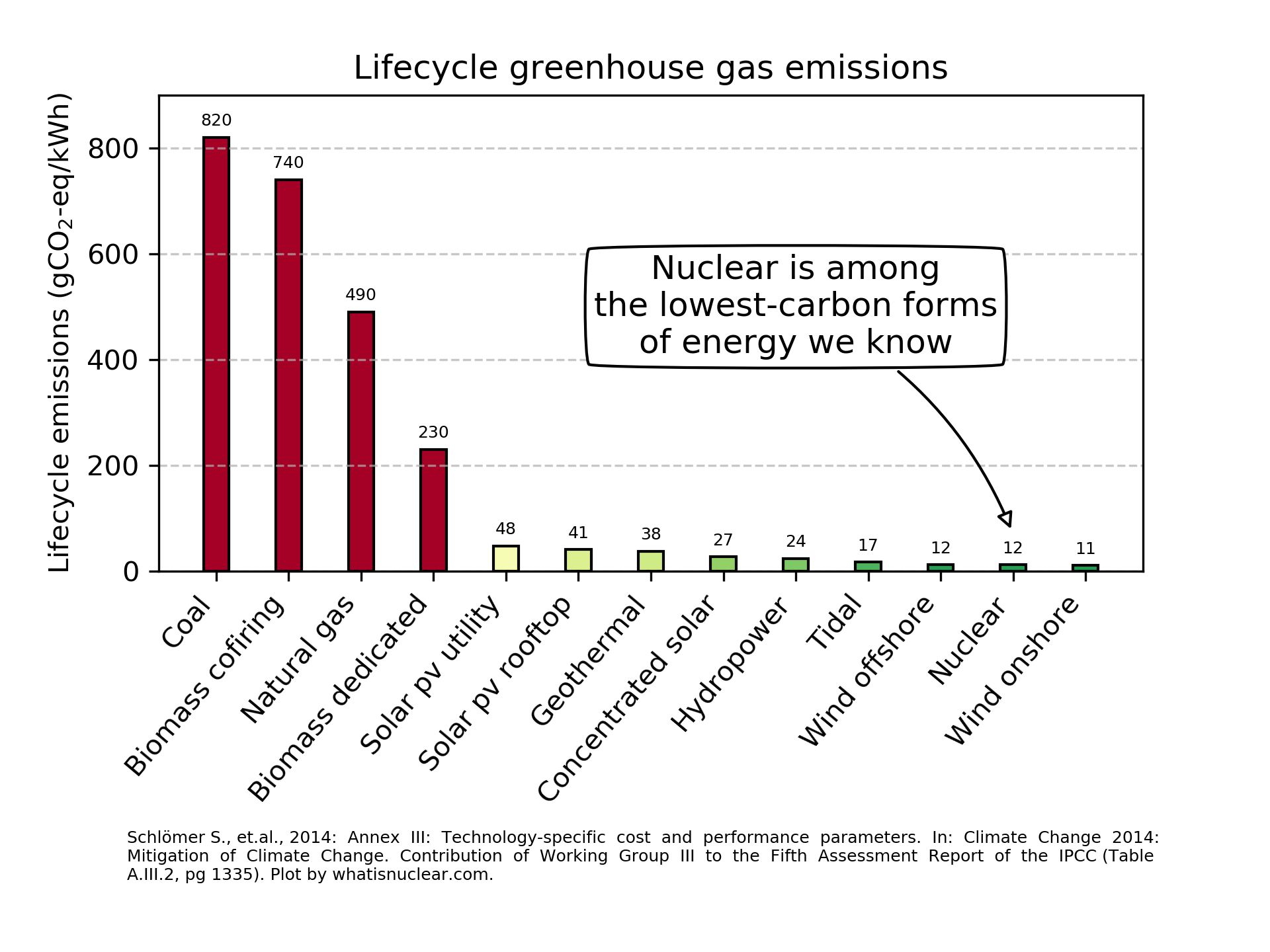

Fracked natural gas is certainly better than coal in almost all metrics (way less deadly air pollution, arguably less carbon emissions given better pipeline seals/maintenance), but it is not compatible with a climate solution because of its high carbon footprint.
I'm always advocating for 24/7 low-carbon, low-land, low-material energy (i.e. energy with high power density) like nuclear but it appears that the public simply is not interested. It would help if we could just choose a reactor design and serialize it like the Koreans did to get costs way down.