There's two kinds of freedom: freedom from and freedom to.
These are some children's books that contain illustrations that some people find offensive and the publisher (and sellers) are deciding they no longer want to be associated with and sell to children. There are internet forums where the images are available and people can view them without the police knocking your door down, and I'm sure these are available in 2nd hand bookshops.
The actions of the publisher and ebay enhance the first (freedom from) without inhibiting the second much (freedom to) for those that really want to view the images.
There's a difference between "utterly repugnant" content being available and it being casually given to children, and people and companies being forced to sell it.
These are market-dominating book distributors like Amazon and eBay effectively deciding what people can and cannot read.
The fact that a few people might still be able to view images of these books (illegally, as they are copyrighted) on some tiny closed forum on the internet isn't a real comfort.
In the Soviet Union, there were also tiny isolated pockets where "forbidden books" were surreptitiously copied and read. However, the project to ban them was still very successful overall. The average subject of the Soviet regime would not have access to these books.
This is very much what is happening in the US right now. These books are being banned, and the next generations of US readers will have no access to them. The fact that one person in ten thousand might be able to find a used copy at a rare used bookstore (and pay pay thousands of dollars for it) doesn't really change anything, and it's dishonest to pretend otherwise.
This is book-banning, pure and simple.
> The actions of the publisher and ebay enhance the first (freedom from)
I would also like to thank our cultural commissars at Amazon and eBay for "freeing" us from dangerous ideas by forcibly preventing us from buying and selling the books which contain them.
eBay just took away the freedom of private individuals to sell books they legally own to each other.
You are calling this "freedom", using the word to refer to its exact opposite. This is Newspeak.
The reality is that these books will not be accessible to the vast majority of future American readers. This is just a fact at this point.
It doesn't even matter if Amazon keeps selling them, as the publisher banned them, so the number of (legal) copies will dwindle to zero. Also, with Amazon starting to ban books on similar political grounds, saying "but Amazon didn't ban this specific book (yet)" or "you can still get a copy at some obscure second-hand stores" is burying our heads in the sand and ignoring the reality of what is happening.
Isn't this more of a matter of copyright and, specifically, the moral rights of authors and copyright holders to control their work? It's not that ebay is so offended—it's that Dr Seuss Enterprises doesn't want to lose billions due to a tarnished legacy. (Oops!) To me, this is just like a mature author that wants to stop the sale of an embarrassing early book because it was poorly written. In this case, the rightsholder thinks the early books are in poor taste and no longer wants them associated with the brand.
For the record, the same whitewashing (wokewashing?) happened to the Richard Scarry books which are all "abridged" because they were so offensively conservative about the role of women.
Sometimes it's because the copyright holders (which are not the authors) decided to stop publishing them for political reasons. This decision is all too easy to make when you are a massive copyright holder like Disney. The result is that these massive copyright holders can decide which ideas are allowed, and which ideas will be banned.
In other cases, these book bans are executed by large book distributors, like Amazon: https://ncac.org/news/amazon-book-removal. These are done very much against the wishes of the author, publisher, and copyright holder.
In still other cases, the book ban is enacted by a secondary market distributor, forcibly preventing one private legal owner of the work from selling it to another reader. This is what's happening here with eBay and the Dr. Seuss books.
This is a multi-pronged attack on the freedom to express and distribute ideas. And yes, it's all legal, much like the commissar control of all book publications under the Soviet regime.
> In still other cases, the book ban is enacted by a secondary market distributor, forcibly preventing one private legal owner of the work from selling it to another reader. This is what's happening here with eBay and the Dr. Seuss books.
That's just not true. This was Random House Books' decision, not eBay or Amazon. The marketplaces are just following orders.
> The decision won’t affect Dr. Seuss’s best-known works, which publisher Random House Books for Young Readers and several booksellers on Tuesday said would remain available to customers.
> The review of the six books at issue was conducted last year by Dr. Seuss Enterprises LP, which oversees Dr. Seuss’s publishing interests and ancillary areas.
First of all, hat-tip for using that chilling phrase in this unintentionally appropriate context.
Furthermore, eBay is a secondary market bookseller. As such, they facilitate legal sales of privately-owned books between individuals. They have absolutely no duty to "follow orders" by a publisher. In fact, publishers would shut down all secondary markets if they could - it would help their sales of new books.
Nowhere in the article is it mentioned that a publisher "ordered" eBay to stop selling the books, and such "order" would be invalid and ridiculous.
This is a decision by eBay to flex their corporate muscles to ban books they find politically disagreeable.
I am so comforted to hear that the marketplaces are “just following orders.” I know that no one following orders should ever be held accountable for the actions of their superiors. Really, things are good when people just follow orders.
>The result is that these massive copyright holders can decide which ideas are allowed, and which ideas will be banned.
They're not deciding which ideas are allowed or banned.
They're not stopping anyone else from creating, espousing, publishing any other ideas at all. There's thousands of publishers, and even the very biggest only hold a tiny fraction of the publishing market, so this complaint seems quite overblown.
Should a publisher be forced to publish things they choose not to? I'd prefer not. There's plenty of others. And the internet makes it easy to post any ideas you choose, vastly easier than at any point in history for individuals to make their ideas available to billions of people.
The entire purpose of copyright is to encourage people to publish their works. It may be reasonable for a rights-holder to restrict access to a work under certain circumstances - for example refusing to let neo-nazis play your music at a rally - because people might refuse to publish their works if they believed they couldn't stop that. Even a hiatus to distribution may be permissible if the rights-holder needs to be confident they can walk away from a distributor if they don't like the current distribution situation. However permanently and completely stopping distribution of a work breaks the social contract - society no longer gets what it payed for. The Seuss estate could put a big label on the front cover saying not for children, and a forward in every copy explaining why the content of the books is potentially problematic, but if they refuse to make the work available their right to exclusively control the work's availability should be rescinded.
The purpose of copyright in the US is "To promote the Progress of Science and useful Arts, by securing for limited Times to Authors and Inventors the exclusive Right to their respective Writings and Discoveries." This is from the provision of the US Constitution that authorizes Congress to pass intellectual property legislation. Allowing for copyrighted works to be withdrawn from the public and made effectively unavailable to anybody for the remainder of a 95 year term does not promote scientific progress or useful arts as that effectively erases the work for the remainder of a lifetime. Nobody is entitled to use copyright laws against the constitutional purpose of copyright laws.
If somebody were to publish the 6 banned Seuss books and get sued by the estate, they'd be able to make a compelling legal argument that the copyright laws that allow the estate to effectively ban books for 95 years are unconstitutional though they'd probably need a different Supreme Court to have a chance of winning and actually making the "science and useful arts" clause mean something again. It would probably be ill-advised to even attempt a challenge to copyright law on these grounds with the current court as it could lead to another bad precedent like Eldred v. Ashcroft (the "perpetual copyright is constitutional if Congress extends the terms every 20 years via Mickey Mouse Protection Acts" case where the FSF filed a brief in support of the plaintiff). I think a more productive course of action would be to use the right wing outrage over this to push for an "abandonware" exception to copyright law (basically a "keep it in print or lose your copyright" requirement) and possibly copyright term reduction. Given that the political party that is traditionally more supportive of corporate interests is now furious about corporate censorship, there is now a golden opportunity to roll back corporate power and those on both sides who share that goal (albeit for different reasons) should work together for the greater good.
"Exclusive Right" means exclusive. Period. If I don't have the power to distribute my work how I see fit, including not at all, then I don't have exclusive control over my work, and that's going to make me think twice about publishing it. How does taking control away from authors promote the progress of science and the useful arts?
You're reading it the other way around. Copyright is an abridgement of the first amendment right to publish anything you want, and it is only permitted as long as it exists to further science and the useful arts. Thus, it could be argued that copyright itself should not extend to the right of completely banning a work from being published, as it is hard to claim that promotes the progress of science.
So in essence, you could aim the current copyright law is inconsistent with the constitution.
I am not a legal scholar so I have no idea how naive this argument might be from a constitutional law perspective. I have a feeling it would be pretty naive, to be honest.
I just don't see how one could argue that "exclusive Right" means anything other than exclusive. The intent behind the copyright clause is that when authors have exclusive control over their work, they will be incentivized to produce more. When you start carving out exceptions to their exclusive right, well then it's open season on what control they have, as "exclusive" can no longer be interpreted as to mean the plain understanding of the word.
Let's move away from the Dr. Seuss example and look at another instance of where artists have used their exclusive right to restrict distribution of their work. In 2015 the Wu Tang Clan produced a single copy of their 7th album "Once Upon a Time in Shaolin". The album itself then went on a tour of its own and was showcased at museums until it was eventually sold to the infamous "Pharma Bro" Martin Shkreli for $2 million. The contract he had to sign included the following genius clause:
"The buying party also agrees that, at any time during the stipulated 88 year period, the seller may legally plan and attempt to execute one (1) heist or caper to steal back Once Upon A Time In Shaolin, which, if successful, would return all ownership rights to the seller. Said heist or caper can only be undertaken by currently active members of the Wu-Tang Clan and/or actor Bill Murray, with no legal repercussions." [1]
The legend behind this album has now birthed a forthcoming Netflix documentary [2]. So here is a situation where the author's exclusive control over their art has birthed not just a documentary, which is art, but a legal document which I would classify as art. None of this would be possible in a world where an author's exclusive copyright doesn't exist or could be infringed if they choose to restrict distribution of their work. So I would disagree with your conclusion that it's hard to claim that restricting the distribution of work doesn't "promote the Progress of Science and useful Arts".
Bank robberies produce an order of magnitude more art than a strange contract that happens to contain stipulations relating to exclusive distribution. That doesn’t mean we should perpetuate them.
I'm getting at your support for the claim that copyright fosters the creation of new art with a novelty contract that has a provision in it supposedly allowing for stealing the work back spawning content on it because of its notoriety, mostly because it has nothing to do with copyright.
The only reason the contract can exist is copyright. There are others arguing on this thread that if a rights holder restricts the distribution of their work they should effectively forfeit all control over their work. They have justified their position by saying restricting distribution fails to promote the creation of art. I’ve argued the opposite case and brought examples, and it all comes down to the phrase “exclusive rights” in the Copyright Clause of the US Constitution.
Your use of the word “banned” here is telling, especially with your reference to the Soviets. The actual bottom line here is that this was a decision by capitalists under a capitalist system. This is the free market at work. People who own the intellectual rights to these books decided for themselves using their own free will to stop selling them. That’s just capitalism.
You say that eBay is preventing one private owner from selling to another private buyer, but what’s the alternative? To force eBay to facilitate the transaction? How is that freedom? The owner and buyer are still free to sell and buy this book, just not thorough eBay. If there is enough demand for this kind of transaction then the market will find a way to facilitate it. That’s capitalism.
I see your point, but the confounding factor for me is that the government granted a monopoly on these books through copyright. That's an artificial construct designed to promote science and the useful arts, but in this situation it's being used to suppress art. In this case, I would advocate for terminating the copyright and letting it be distributed by whoever is willing to.
>>That's an artificial construct designed to promote science and the useful arts, but in this situation it's being used to suppress art.
Do you honestly believe you're "suppressing art" if you fail to force the rightful owners if said art to go against their own will and instead follow your orders and desires on what others should do with what's rightfully theirs?
It sounds an awful lot like your are not as much interested in anyone's freedom as you're interested in imposing your personal will into everyone around you.
It's designed to promote science and the useful arts by giving artists control over their art. If I decide to create art, but I lose control over it once I decide I don't want to show it to anyone anymore, then that's not really control, is it?
My opinion is that copyright should be limited to the lifetime of the author, at which point it goes into public domain. In this particular case, that would mean the books would have been in the public domain for a long time now and there wouldn't be a controversy over this particular issue.
But the issue could still arise if the author were alive. Imagine Dr. Seuss were alive today and made this decision himself. It's the same controversy: person/entity with control over IP makes a decision on distribution of IP, people get upset. But that's the deal - you want to promote the useful arts by granting limited monopoly rights over art, then you better actually grant limited monopoly rights over art. That means the right to not publish the art.
> the same whitewashing (wokewashing?) happened to the Richard Scarry books which are all "abridged"
Do you really have issues with the changes they made? They weren't abridged but just edited to show both sexes and different races doing jobs other than being maids and housewives. I'm not sure replacing milkman, fireman and cowboys with firefighters, gardeners and scientists is 'woke'
> I do have a problem if they ban the older editions.
I don't see how they are "banned". Banning means "forbidden, disallowed, illegal". The older editions do not fall under any of the definitions. They are harder to get, because the author stopped selling them. You can still find them somewhere, and if you already have them you can keep them, they are just less convenient to acquire than they used to be.
Banned books of the week were also not banned. They actually often remained in print. The bs Ning was being done by busybodies who knew what was right for young children.
You’re trying too hard to defend the indefensible. eBay and Amazon stopped the used book market for these not just the publisher and rights holder.
According to your take no book has ever been banned in the US and people who complained about book banning were clutching pearls.
It's a normal argument for the time, but it is far from reasonable. The person who wrote the original response to me failed to respond to any of the logical arguments I was making, just spouted some outrage and moved on. So, normal yes, reasonable, no. The word "ban" in this context applies to legal or cultural actions where you make owning, acquiring, or reading a book disallowed. All that has been done is a company decided to stop selling it. You can still get the book elsewhere, still keep it if you own it, and still read it in any library that has it (which I'm sure many, many do). They are just spouting outraged nonsense.
No, it's you who failed to engage with the other commenter's arguments, or failed to understand them. They made the correct point that the famous "banned books week" also typically celebrated, and continues to celebrate, books that were not literally banned according to your definition. Thus this rhetorical extension of "banning books" to cases where books are not literally made illegal to read has a long history, and both detractors and defenders; reading the wikipedia page on Banned Books week is a good way to educate yourself on that history.
In the case of Dr. Seuss books, the near-simultaneous decision of the copyright owner to stop publishing them and of the largest online reselling market, eBay, to forbid selling and buying them, makes them, if not literally banned, vastly more inaccessible than many many other books that have been covered under the Banned Books Weeks event, written about in the media, celebrated by liberal readers (in those prior ages where liberal readers thought that right to read was more important than right to forbid) and so on. Your narrow-minded insistence on literalism is just a way of displaying your ignorance and unwillingness to engage with these difficult questions.
You're approximately the first comment I've seen on this entire thread that actually noted the difference without hyperbole about banning books and censorship, thank you.
I'm with you; I don't think ebay should be forced to sell anything, but I think it was a bad decision to knee jerk ban auctions for the books in the news this week when they sell literal nazi medals.
I'm not angry with ebay, but I think they made a stupid choice and that they have highlighted how few alternative ways there are to purchase used books.
Upside is that it's good they are highlighting it now, finally. It's a very peculiar flex for them to decide to do, reselling books has a very long history of court cases saying the publisher cannot control the sale of an original purchased copy.
> In this case, the rightsholder thinks the early books are in poor taste and no longer wants them associated with the brand.
This is an incomplete story. The company convened a panel of outside "experts" to make these determinations:
> Dr. Seuss Enterprises said that it had consulted a panel of experts including educators in reviewing its catalog of titles and made the decision last year to cease publication of the six titles.
> In a statement to the Associated Press, Seuss Enterprises said it is “committed to listening and learning and will continue to review our entire portfolio.”
Unlike other so-called "cancel culture" stories, the pressure campaign didn't play out publicly. But the language is the same and strongly suggests that the publisher is deferring to the judgment of outside "experts", hoping this will keep them in the good graces of the increasingly woke publishing and education worlds.
If the publisher shutdown and the IP on the books went into legal limbo, then the exact same thing would happen - has happened - to numerous works. For example try to get the Sid Meier Alpha Centauri novelizations - they're almost impossible to find, they're out of print (they're expensive as hell on ebay).
It's been a problem for years that there's been so redress available when a publisher either owns an IP and refuses to sell or license it freely, or when an IP falls into unclear ownership and the same basic thing results.
This all has nothing to do with anything political (because these are not being suppressed by a government, and citizens and organizations are free to choose their own speech and associations) and everything to do with just how garbage copyright law is.
> If the publisher shutdown and the IP on the books went into legal limbo, then the exact same thing would happen - has happened - to numerous works.
You are talking about works that became incidentally unavailable for commercial reasons (not that many people are interested in 22 year-old strategy video games). The Dr. Seuss books are an example of intentional book banning on political grounds.
Their publisher also didn't "shut down": they delibrately decided to stop publishing these books because they deemed them Politically Incorrect:
> “These books portray people in ways that are hurtful and wrong,” Dr. Seuss Enterprises told The Associated Press in a statement that coincided with the late author and illustrator’s birthday.
And now eBay has decided that if you legally own a copy, you can't sell it to another reader, because it contains Dangerous Ideas from which the American mind must be protected.
The books are not being banned. You can still give money in exchange with anyone who has copy they're willing to sell. It's just that the Seuss estate and eBay have both decided they don't want to be involved in the transaction.
And "Politically Incorrect" is sure a gentle way of describing the content. Maybe you should quote the line from the article you linked which describes some of the "politically incorrect" bits? Or do you recognize that they're actually pretty offensive. I sure wouldn't want to use my printing equipment to print copies of that "Politically Incorrect" book either, and I'd have a problem with the suggestion that someone should be able to force me to.
> And "Politically Incorrect" is sure a gentle way of describing the content. Maybe you should quote the line from the article you linked which describes some of the "politically incorrect" bits? Or do you recognize that they're actually pretty offensive.
President Obama praised, quoted, and recommended Dr. Seuss's books in official press releases throughout his presidency, all the way to his last year as president - 2015:
But now the Woke Mob has come for Dr. Seuss, and we're all instructed to recite that Dr. Seuss is racist, was racist, has always been racist.
To quote Orwell: "The past was alterable. The past never had been altered. Oceania was at war with Eastasia. Oceania had always been at war with Eastasia."
By my count, there are somewhere in the range of ~70 Dr. Seuss books (I'm too lazy to count, and that's more than enough for my point). They've stopped publishing six of them. That's less than 10%. He hasn't been cancelled, it's just that a few of the more egregious books are being discontinued. Horton Hears a Who? Still a great message. The Grinch? Still great, both versions (there might be a third now, who can keep track).
People making a big deal out of the cancelling are blowing it into a far bigger thing than it is. He's not being cancelled, those works are just being recognized as offensive. There's no gotcha to Obama having praised some of his books, because those books are still worthy of praise.
"What's the problem banning a few controversial books? We still publish thousands of books we deem acceptable!"
> He hasn't been cancelled, it's just that a few of the more egregious books are being discontinued. Horton Hears a Who? Still a great message. The Grinch? Still great
You are clearly in favor of banning ideas you disagree with. Nice to see you are fine with the publication of books when you approve of their "message".
Free speech is not the right to force others to repeat your speech. It is also not the right to a loudspeaker or megaphone. Free speech gets you the right to say it, but makes no promises about others being forced to listen, forced to spread it for you or forced to repeat it for you. Don't impinge their freedom in the name of your own.
How is the existence of a book, "... the right to force others to repeat your speech"?
People want the book removed because it exists, someplace - not because someone has a metaphorical megaphone. Let's stop with the metaphors, by the way. This isn't literary critique, or English Literature 301. It's a discussion of censorship. Stopping someone-who-isn't-you from reading a work that has nothing to do with you, is censorship.
Wait, sorry, is someone confiscating the book? Burning it? Requiring it be burned? Arresting people who have it? Arresting the people who wrote it? Legally compelling the publisher to edit it? Legally compelling distributors not to distribute it?
As far as I can tell, everyone complaining is upset that distributors don't want to tarnish their brand with certain content, and authors and stakeholders have decided that certain content doesn't match their modern brands. None of these are censorship!
As an author, you are free to write dumb things. As a bookstore, I am free to not sell the the dumb things you wrote. That's not censorship.
As a publisher, I am free not to publish the dumb stuff you wrote for you. That's the metaphorical megaphone, in case that is unclear, and no one can force a publisher to give you one.
Again, everything you're saying is legitimate, but it completely ignores the elephant in the room, the big elephant, the monopoly power, the concentrated distribution and unprecedented centralization over the flow of information and broadcast media. Whether it's YouTube, Google search results and playstore access, Facebook, and many more, we are all concerned when a new one is added, such as Ebay.
Yes, we won't be sending people with the naughty Dr. Seuss books to the gulag. No one is saying that. We're concerned about monopoly power combined with wokist ideology.
I wish to see just once someone who makes that argument try to turn it around and apply to something else they don't like to see censored. I'm yet to see it.
The Hollywood Blacklist was completely voluntary on the part of the movie studios which enforced it, a decision of certain private companies not to -- how did you phrase it? -- "tarnish their brand" by collaborating with people suspected of Communist tendencies. It is held to be morally repugnant today, and somehow I doubt you would defend it with the same argument you use in the Dr. Seuss case.
I do defend their right to do that, so let me fulfill your wish, friend. I see a massive distinction between "things I don't like" and "things that should be legally compelled."
I worry about the authoritarian leanings of anyone who doesn't draw this distinction.
The point is the terrible ease of applying a double standard in how you approach an issue.
Some private actor X performs an action Y which other people Z find reprehensible. The action Y is within X's legal rights to perform.
You can focus on how reprehensible Y is and how Z are right to condemn it. Or you could focus on how X should be totally free to do Y if X so desires, even if we don't like Y.
What usually happens is that if you feel Z are right or you wish to support Z or you wish to not be seen as supporting "enemies" of Z, you will focus on condemning Y. It won't even occur to you to emphasize that doing Y is legal; if pressed you'll freely admit it is, but to you focusing on how Y is legal will look like hypocritical attempts to evade the real issue, which is the terribleness of Y.
On the other hand, if you dislike Z or like the "enemies" of Z, you will focus on how Y is legal and how Z's dangerous rhetoric about Y poses a real danger of conflating Y with actually illegal acts. You might or might not agree that Y is terrible, but to you it will seem a decidedly minor concern compared to the dangerous rhetoric issuing from Z.
That feels like a personal attack, which is disallowed. In any case, I think you didn't read the article above:
"“EBay is currently sweeping our marketplace to remove these items,” a spokeswoman for the company said in an email. New copies of the six books were no longer for sale online at major retailers such as Barnes & Noble on Thursday afternoon, which put eBay among the most prominent platforms for the books to be sold."
Who is doing the banning? ebay can't can books, and hasn't. The publisher can't ban books, and hasn't. The rights holder can't ban books, and hasn't. Who is doing the banning?
> Dr. Seuss is racist, was racist, has always been racist.
This is a true statement. His behavior always showed this regardless of what obama said. Unlike your orwellian quote, we're not rewriting history, just changing our tolerances.
Do you have any evidence for that at all, or is this standard counterfactual leftist revisionism?
Also, if Dr. Seuss was always so racist, how come the left embraced him until very very recently?
Are you seriously claiming that all the many people on the left, including Obama, were embracing a clear and known racist as recently as a few months ago?
TLDR: The past accepting something is not indication that the future must or should accept.
I don't really think this is a good-faith argument based on the language of the first sentence, but i'll reply anyways...
Yes the evidence is his clearly documented body of work. He used many racial stereotypes and derogatory imagery. He has images of Japanese Americans, Africans, East Asians, and they all use stereotypes and caricatures that are negative.
I can't speak for "the left" but he was embraced by most people because he was popular and many of his stories and books were benign. Lots of bad behavior was embraced by both left and right Americans throughout history. Past acceptance is not indication that the future must accept.
Yes. I am making the claim that people, including Obama (who is not the only image of the left, and not particularly important figure in a literary sense) were embracing Dr. Seuss. A lot of his more objectionable work is rather unpopular, so its not crazy to think that his supporters did not audit his behavior.
There is no doubt that people were embracing him. There is no doubt that much of his behavior is racist. There is no contraction here. People have embraced bad people before and that is (somewhat) ok as look as society learns and grows and corrects their behavior. This is the learning and growing. A book that sold 7k copies over the last few years is no longer in print because it portrayed people in bad ways.
> it contains Dangerous Ideas from which the American mind must be protected.
Have you actually seen the imagery? This is not a good-faith characterization of what is happening. The images are just rude racist imagery (saying a chinese person has "slanted eyes" for example) that the IP owners were embarrassed by.
> The Dr. Seuss books are an example of intentional book banning on political grounds.
No, it really isn't. When a book edition goes out of print that does not mean it's banned. If the editor decides not to invest in a re-edit ion that does not mean it's banned. If you go to a book store and it doesn't have a book that does not mean it's banned. If you go to a library and it doesn't have a book in its inventory that does not mean it's banned.
If you lack arguments, please don't fabricate lies and misrepresentations like that. That only makes you look dishonest and desperate to grasp to an argument that even yourself acknowledge has no basis nor merit.
> The Dr. Seuss books are an example of intentional book banning on political grounds.
As always, the only dynamic considered here by the publisher is money. They have made a calculation that doing this will benefit their bottom line in the long run. That's the free market and the way the system is designed to work. You may not like their decision, but it's their decision to make. That's the freedom they enjoy under our system. You have the freedom to complain about it and no one will stop you, but everyone is free to act however they best they see fit.
> And now eBay has decided that if you legally own a copy, you can't sell it to another reader, because it contains Dangerous Ideas from which the American mind must be protected.
eBay has not decided this. They have no power to decide this for you in our free market capitalist system. They have decided they don't want to facilitate the transaction, which is their right as a free enterprise. If you own the book you are still free to sell it to anyone you want. eBay is not going to help you though, and forcing them to do so would be against free market principles.
The free market gets distorted under monopoly conditions.
If I'm Disney, and I own millions of works, I can start banning some of them on a whim. My bottom line won't be meaningfully affected.
> They have decided they don't want to facilitate the transaction, which is their right as a free enterprise.
It was the legal right (duty, in fact) of Soviet commissars to vet any book before publication. The net effect was book-banning.
Just because something is legal doesn't mean it won't lead to catastrophic consequences.
Standard Oil's complete monopolistic takeover of the US oil market was also legal at its time. Then we decided we can't live with these results and made laws against them.
I don't know why you are blurring the lines between "single publisher decides to stop publishing book", "mega conglomerate decides to stop publishing media", and "authoritarian government vets all books before publication".
The topic of discussion is a single publisher making a decision for themselves. You are all the way over in Soviet land talking about book banning and government censorship. None of that is happening, and the slope isn't nearly as slippery as you're imagining. Anyone in this country is free to write, publish, and sell works with content identical to those in the books Dr. Seuss Enterprises decided to stop publishing, as long as they don't have images and words similar enough to violate their copyright. The ideas contained within are not banned by any government or monopoly.
> the slope isn't nearly as slippery as you're imagining
I had a great chuckle at this.
The issue that is being tossed into a big pile of other issues is simple. Ebay, a private company, has taken the path of banning the sale of those now-discontinued books. This action is totally within their rights and is fully legal for them to do. You can, rightly, talk about the content of _this specific book_ as much as you want, but that's not the broader issue here. What is riling up some people is the idea that in the US we are, ostensibly, a country founded on freedom and they feel like that freedom is being encroach upon. You seem to feel like them banning the sale of the book is no big deal, but they are in a large market position and them preventing the secondary market sale has a large impact.
The even bigger issue is that what we are seeing are very vocal groups that push the idea that we have to prevent these kinds of thoughts from being in our society at all. They force these ideas onto the greater community as a whole by attacking any entity they deem as non-compliant. As a result you have companies preempt that attack and voluntarily comply. To use the theme from the previous poster, they are voluntarily banning or self-censoring. This _is_ an attack on freedom though. You cannot have freedom of speech if you make it so only the speech you _like_ is effectively allowed. And I purposefully said effectively and not legally.
This obviously doesn't get into the broader topics of corporate censorship. I have many thoughts, some of them conflicting, about that as a whole. The simplest distillation would be that as long as your free speech is not encroaching into illegal territory then I don't feel like you should be excluded from society, even if your communications are repugnant.
So, back to where this started. You claim the 'slope isn't nearly as slippery' as they were imagining. Perhaps today that is the case. Maybe it's the same next week or next year. At some point the thoughts being attacked may very well align with your personal beliefs and _then_ the shape of the slope will be drastically different _for you_.
>The Dr. Seuss books were banned not just by eBay but also by their publisher
I don't see the problem here. The copyright owner's no longer wish to distribute certain items in their intellectual property collection? So? I don't see people concerned that Disney isn't pulling "Song of the South" out of their vault, or isn't streaming it on Disney+.
What's the alternative you want? The government to FORCE artists to publish? FORCE Ebay to list these particular Dr. Seuss books? What the hell?? Isn't that worse?
Disney is a great example. It's a huge copyright owners which owns the rights to numerous important cultural works. They can, very effectively, decide what ideas the American public will have access to.
Yes, this is all legal. However, legally, the commissars of the Soviet Union also had the right and the power to ban ideas, books, works of art, and every form of expression.
The problem is the result: a small elite group of cultural commissars controlling the flow of ideas, and shutting undesirable ideas out of the public discourse and the public mind.
That is how totalitarian regimes are created and maintained.
Incidentally, the "government force" in copyright protection is the protection of copyright. That was done for the explicit purpose of fostering the publication of works, since the American lawmakers could never imagine that there will come a time in which huge corporations will ban books on political grounds.
All the government has to do is to stop enforcing copyright protection for copyright-owners who no longer publish the copyrighted works. Guaranteed other publishers will pick up these Dr. Seuss books, since he is by far the most popular children's books author of our time.
As things stand, bid these books adieu. Your children will not be able to read them.
This is not how totalitarian regimes are created at all. Commissars in the USSR having the power to ban books meant repercussions from the state for reading or distributing those books, and was a clear signal that similar works would meet a similar fate.
The publisher deciding to no longer sell some part of their work is entirely different. It makes no difference to your ability to enjoy a copy you own or to sell it to someone else. Nor does it affect your ability to create a similar illustrated children's book including whatever stereotypes you desire. No one is 'banning' you from doing this, although it might diminish their opinion of you.
This is not how totalitarian regimes were created in the past.
Once expressions of ideas are effectively banned, you are in a totalitarian, oppressive regime. It doesn't matter whether that banning was done by the state or by huge monopolistic corporations: the end result is the same.
Also, in this case, while corporations are leading the way, we also see increasingly loud calls for our government to step in and criminalize some forms of speech, for example those deemed "hate speech": https://www.nytimes.com/2020/10/13/magazine/free-speech.html
This is really a two-pronged attack on free speech and the free exchange of ideas: in the private sphere, individuals and companies move to effectively ban certain expressions, such as the publication of "objectionable" books. In the public sphere, there are moves to criminalize "objectionable" expressions.
The actions in each sphere reciprocally support each other, and normalize the idea that the free exchange of ideas must be policed and restricted.
It's a poor decision on the company's part, and we are criticizing the decision. No one (reasonable) is asking the government to regulate this. We're merely criticizing the decisions of two private companies, and the social movements which pressured them to do so.
It was public criticism, or the fear of public criticism that led them to make this decision in the first place, so this seems like a perfectly fine line of argument to make. (ie, that this was a poor decision on their part.)
Can you expand on how not continuing to distribute materials with racial representations from a time when skin color determined humanity / slavery is a poor decision?
I do not like to see what I am seeing in this HN thread. I think that not propagating offensive, dehumanizing views publicly seems perfectly wise.
Caricature and racism are not identical. I think that would be my primary counterpoint. Just because it's fallen out of fashion to draw people in such caricatured ways, does not necessarily mean that there was any negative or racist intent by the artist. I think this matters quite a bit. Dr. Seuss is not evil because he could not predict where the moral zeitgeist would lead us.
People who actually supported slavery, or Jim Crow, I would say are in fact evil, regardless of whether those views were acceptable in some circles.
You really must pay attention to intent, and this is a major failing of the modern edge of these progressive movements. If suddenly, some phrase quickly falls out of fashion, an I use the old antiquated phrase, it must matter whether I actually had any racist intent. Just the fact that I haven't kept up with the newest moral outrage is not enough on its own.
Ok, sure, this is a fair point in general, but how is it exactly applicable here?
Let's take the example of "If I Ran the Zoo", since it's one of the only images [0][1] I can find.
The synopsis of the book seems to be a child daydreaming about the animals he would keep at his zoo. Whether or not the "Africans" in this book are one of those animals is not clear to me, but this is a representation of African / Black people as literal monkeys.
How you can try to imply that representing black people as monkeys is not racism, given the hundreds of years of insults in that vein, pseudoscience from slave owners and sympathizers suggesting the same, and indeed all the folk with the moral failings of the time that you suggest who would hold and perpetuate this viewpoint?
> Dr Suess is not evil because he could not predict where the moral zeitgeist would lead us
I completely fail to see how you can infer that a publisher not generating additional copies of prose that has found itself in a morally compromised position implies that Dr Suess is evil, or that anyone thinks that.
Indeed, I believe Dr Suess to have published 60 or more books in his career, so merely 10% of his career publications have been selected to cease being replicated further because they partook and perpetuated the darker side of a slaver society's worldview. This is not saying the man was evil or that his works were nefarious, it is saying that science and society have moved us beyond those viewpoints and propagating them further does us no good.
Indeed, I'm not even sure how this is being portrayed as "canceling" or any such thing. A publisher with control over the book rights stopped producing the book rights. Your entire rant is predicated around this being a retaliatory act for perceived evils, but that's incredibly lacking in nuance.
Children develop their worldview thru the mediums of information they interact with, and to for a publisher to refine its selection to prevent children growing up with unconscious cognitive biases that are dated, far outside, and even contrary to mainstream societal views of our time is just a complete non-issue.
>Let's take the example of "If I Ran the Zoo", since it's one of the only images [0][1] I can find.
I was originally going to issue a rebuttal based on my reading of "If I Ran the Zoo." But, it occurs to me that you can't really be very offended if you haven't even read the story. What's there to be offended by? You don't even know the context of the image which offends you.
>I completely fail to see how you can infer that a publisher not generating additional copies of prose that has found itself in a morally compromised position implies that Dr Suess is evil, or that anyone thinks that.
Although I still disagree with the publisher's decision, I take your point here.
>because they partook and perpetuated the darker side of a slaver society's worldview
What exactly is a "slaver society?" Dr. Seuss was born in 1904, after slavery was abolished. I doubt he was much of a "slaver," as in "someone who literally obtains slaves."
>Children develop their worldview thru the mediums of information they interact with,
Yes, precisely, and I don't believe it's appropriate that children learn to fear and ban ideas which they find distasteful.
> You don't even know the context of the image which offends you
Excuse me? Those monkeys in that picture are representing African humans. I know perfectly well what I've just seen, because I read the article I linked. Perhaps you have failed to do so?
> What exactly is a "slaver society"? Dr. Seuss was born in 1904
Ok, and the Tulsa Race Massacre was in 1921. State-backed murder of black people for the crime of being successful. The south was clearly deeply unhappy about their loss of slaves and backed a set of increasingly "plausibly deniable" laws over time that were designed to segregate, undermine, and condemn to failure Black people in the USA.
If you really think "slaver society" is an overkill to describe an entire region of the USA with extremely racist ideals towards people they consider slaves, let's instead say "because they partook and perpetuated the darker side of a society that wishes they were still slavers". I'm so sorry I was slightly pedantic for you
> I don't believe it's appropriate that children learn to fear and ban ideas which they find distasteful
What kind of horseshit disingenuous representation of the situation is that? These Fox News - not legally a news corporation btw - talking points are so stupid. Once again, just like the "USSR book banning" fear mongering analogy above, you are acting as someone who pretends that a private business ceasing publication of books with societally repulsive views is somehow analogous to "banning ideas".
I hope children grow up and learn that condemning and removing from modern discourse historical or traditional views that no longer match up with the ethical framework of society is the only way we can continue to increase human rights in the face of governments and billionaires increasingly concerned with removing those.
Your framing doesn't follow from your logic in any way, and you don't play with pedantry particularly impressively.
We should probably tone down the temperature here. I don't think we're getting anywhere productive, and it's not looking like we're going to see eye to eye.
For the record, I don't watch Fox news, and I dislike it quite a bit.
I agree, I do not see eye-to-eye with those who, never having commented on how a book publisher manages their inventory and resource allocations, decide that a private corporation ceasing publication of select books with racial epithets they consider dehumanizing is analogous to "banning" of the material in any way.
Indeed, the fact that the first time you've ever hopped into a conversation around book publishing is to decry the fact that a publisher isn't generating more pictures of Africans represented as monkeys distances us even further.
Finally, the fact that you don't think "slaver society viewpoints" persisted in a society that murdered an entire city block of Black people merely for being Black people really hammers home how ignorant you are.
If you do not like Fox News, you should question why you are parroting their ridiculous mischaracterizations of a private corporation's normal business actions.
You and a large number of people feel those views repugnant. That said, there are likely certain views you have, that you feel you should have the right to express freely that a large group of people feel are equally repugnant and offensive. Freedom of speech provides a natural check and balance by letting the best ideas thrive via an open market of ideas, not a large un-elected ministry acceptability. History shows that wielding the weapon of censorship tends to have a boomerang effect long term and can have other consequence, such as radicalizing people.
On a personal note, when I see groups banning ideas and views I automatically discredit the group and ideas behind the banning. The reason is that if a view truly has merit it should be able to stand up to healthy debate on it's own merits.
> Freedom of speech provides a natural check and balance by letting the best ideas thrive via an open market of ideas, not a large un-elected ministry acceptability.
I agree with what you wrote here, but if you believe this I'm confused why you would take issue with what happened here. This is exactly what has played out. These books were created and published in an open market. Remember, in free markets there is the possibility of failure. That's what you're seeing right here. The publisher of these ideas have determined that they have failed in the market.
So what's the problem? No "large un-elected ministry acceptability" caused this to happen. It was the marketplace that rejected these ideas, and the publisher didn't want to bear the cost of continued publication, which they are free to do. Everyone involved exercised their individual freedoms in the marketplace. The system is working as intended. Where is the failure?
"These books were created and published in an open market." Sorry, but this is utterly false. The extraordinarily extended periods of copyright-terms enforced by the government make this the very opposite of the open market.
The marketplace hasn't rejected these ideas. The holders of the copyright - a law enforced by the government - have rejected these ideas and no one can oppose them. Because of copyright, no other publisher can publish these books in the marketplace. Ergo - no free market and an effective ban on the books.
You are confusing the particular expression of an idea with the idea itself. There are an infinite number of ways to express the ideas contained within the books that Dr. Seuss Enterprises decided not to publish. The expression of those ideas has not been banned at all, by anyone. Not eBay, not Amazon, not Dr. Seuss Enterprises, not even the government.
Dr. Seuss Enterprises has decided to stop publication of their particular expression of these ideas because the ideas themselves are not popular enough to financially justify their continued publication. That's the method by which the whole system works. Ideas flourish in the marketplace when people support them. When people support an idea, it achieves financial success for those that express it. People who express unpopular ideas difficult to find financial success due to a lack of a support base.
How else do you imagine the marketplace of ideas works, and what exactly do you think happens to ideas that are rejected by the marketplace?
Please don't change the goalposts to "general ideas". The works of Dr Seuss can NO longer be published by other actors without violating the terms of copyright and inviting the full force of law and government and punishment on those who would attempt to do so. Besides, ideas can only be expressed through mediums and when those mediums are banned, so is the expression of ideas.
There is no flourishing of the market place here - it has been implicitly denied. If there were no copyright - you can be bet your years salary that there would be folks willing to publish these books for the audience that wishes to read them.
Remove the copyright - make it a true free market and THEN let's see if your argument that the ideas themselves are not popular enough holds true. Besides your statement of financial justification is utterly false. Dr Seuss tops the list of top 10 children's books.
No, its fascist ultra-left ideology that is responsible for these implicit bans. Some folks want to dictate what other should read - capitalism doesn't even come into the picture.
Woooah hang on. Don’t blame the left for the problems of copyright. As a Marxist, I am on board 100% with you that copyright as an idea should be removed from our daily lives. Copyright has no place in leftist ideology, so I have no idea how you are making the connection. As I’ve stated many times we live in a capitalist society, and it’s under the rules of capitalism, at the desire of capitalists, that copyright exists. Capitalism absolutely comes into the picture because capitalism is the system under which all of this is happening. We don’t live in a socialist system so how are you blaming leftist ideology?
And I’m not trying to move any goalposts. In several conversations here I’ve been assured that the actual problem is not the discontinuation of these specific books, but the larger picture wherein under some slippery slope argument the general ideas could be eventually banned outright. But apologies if this is not your position and you take issue with the ability of these companies to control their own IP. I would agree with you there.
But at the same time I also recognize that copyright is built into our Constitution and it’s not going anywhere anytime soon. So under that framework, I don’t see anything wrong with what Dr. Seuss Enterprises did. Copyright gives them freedom over the creative works they own. The freedom to distribute and the freedom not to distribute. Without the freedom to not distribute works, the decision to publish any works becomes risky for the author, because it cannot be undone, ever. This is going to have the necessary effect of reducing the number of ideas that are expressed, as riskier ideas cannot be retracted by their authors. After all, this is the general idea behind the concept of copyright and underpins the entire marketplace of ideas.
I have no doubt that if copyright were abolished, others would pick up the unpublished works and attempt to distribute them. But this comes at a cost of time and money. What if they don’t sell enough copies to recoup the effort, and they go out of business, thereby halting publication? What if seeing this failure, no one else takes up the mantle of publishing these books? We are in the exact same situation. Would you say they are banned? Of course not, they have just failed financially, which is what happens all the time to books, and what happened in this case.
Dr. Seuss Enterprises surmised that the continued publication of these books would hurt them financially. As your link indicates, they publish a number of very popular books, but notably none of the books in your link are being discontinued. We already know the ideas aren’t very popular because they don’t sell well as it is. If they were popular, they would be on your list.
Anyway, tldr; don’t blame leftist ideology for the perceived failure of a system of, by, and for capitalists.
> That said, there are likely certain views you have, that you feel you should have the right to express freely that a large group of people feel are equally repugnant and offensive
I highly doubt this. I do not dehumanize others nor believe that likening enslaved races to monkeys is in any way appropriate. Besides, you are discussing free speech here - Dr Seuss in no way had his free speech curtailed. He is dead.
> Freedom of speech provides a natural check and balance by letting the best ideas thrive via an open market of ideas
This is a meaningless feel-goodism.
Freedom of speech protects citizens against government retaliation or censorship for most categories of speech, notably carving out exceptions for calls to violence / treason etc.. Freedom of speech basically means you can say whatever the hell you want if it's not too overtly tearing at the fabric of society.
Freedom of speech is not freedom from consequence; I can say 2+2 = 5 but that doesn't make it smart. People will call me an idiot, and they have that right.
Freedom of speech doesn't protect authors from not "eternally having their works published by their copyright holders even after the author's lifetime has ended", and that is literally the only thing I can see you arguing for here. A publisher who owns the rights to these books has stopped generating more copies of them. What is wrong with that?
> On a personal note, when I see groups banning ideas and views I automatically discredit the group and ideas behind the banning
So, when you see Dr Seuss' publisher stop generating additional copies of books they believe further ideas and sentiments they wish to have no part of - surely, they are free to do this - you are automatically discrediting what group for this banning, exactly?
This newfound moral outrage is hilarious. President Obama praised and recommended Dr. Seuss books in an official press release as recently as 2015, his last year as president. Now they are suddenly "outrageous and unacceptable".
One of the books they banned, "And to Think That I Saw It on Mulberry Street", was Dr. Seuss's breakthrough work, and certainly not "obscure". Another, "If I Ran the Zoo", is widely considered among his best.
thats just revisionism, i dont remember either of them, and ive never seen anyone reference them until these past few days. after the controversy is over, nobody will miss them
How are you acting as if a publisher ceasing to generate material that it wishes to ethically distance itself from, executed as a perfectly legal maneuver by a private corporation, is in any way analogous to the USSR's centralized government banning books?
I'm sure some people will miss these books, but for those people they can go ahead and find a collector's copy on a marketplace, use a library which has them, find some other private holder, or use the internet to enjoy them in whatever capacity. This is because these books are not banned by a centralized government, but instead have been selected to cease publication by a private corporation.
They were important to dr seuss as a person and his development as an author, but culturally theyve been eclipsed by his more famous work.
These books arent gone, you can still find them and they are documented for historical purposes, but as a society we have decided that there is no need for them as childrens books. Nobody cares about the hundreds of books that go out of print every year
You are not arguing honestly here. You are just defending this decision by any means you have, honest or dishonest.
The books will be preserved, much like banned books in the Soviet unions typically were preserved, in some government archive.
The millions of readers of our generation, who had access to these books because they were offered for sale, will no longer have access to them.
My parents read these books to me. I will not be able to read them to my children.
"Nobody will miss them" is an incredibly false and irrelevant argument. Nobody "missed" all the books in the Soviet union that were blocked by the commissars and never published. How is that a valid justification for this happening in the US now?
You are justifying book banning, pure and simple, and you are using any available argument, and many dishonest ones, to do it. Ultimately, you yourself don't understand why you do this. You just follow the cancel mob.
I am a member of a minority that is supposed to be offended by these books. I am not. I would bet anything that you were not personally offended if you ever read them, too.
But the Cancel Mob has mobilized and you are mindlessly following, because it is the convenient choice, the easy choice, the SAFE choice.
You’ve devolved completely into Fox News - which is legally not news btw - talking points, and you’ll say others are arguing dishonestly?
This decision - to cease publishing select Dr Seuss books - was taken, with no external pressures, by the private corporation and legal owner of these books.
There is no “Cancel Mob” mobilizing here, except perhaps the right wing one that is acting as if a business is not free to remove some part of their inventory on a whim.
Your analogies to the USSR banning books is completely inappropriate as the USSR was a centralized government banning books. A private corporation is certainly not compelled to produce or sell any product they do not wish to continue to sell, and the books remain legal to possess, sell, or trade because no rights have been infringed by the US government nor any legal actions or pressures issued on this topic.
Whoa. I just bought a new copy of Mulberry Street a couple of years ago. It was on some end cap display at Barnes and Noble. I have read it to my daughter a dozen times. I hadn’t actually looked at the list of Dr. Seuss books, and assumed they were obscure like people said, but Mulberry Street definitely isn’t obscure.
if you associate Black people with literal monkeys you are the one that is racist.
All the book is explicitly saying is that it would be a good idea to hire a person of African origin to work at the zoo.
This have some logic to it in a child mind because they could assume they would know best how to take care of those animals.
It's obviously a caricature but nowhere does it say African people are animals or monkey. This is all originating from your own racism.
> If you associate Black people with literal monkeys you are the one that is racist
Man, isn't it just fantastic how easily you make my point for me. This is also the viewpoint that Dr Seuss' publishers imagined the public at large would hold, so accordingly they have ceased to publish a book that represents "Africans" with this picture:
Edit: I am unable to respond directly. The Africans are the monkeys holding the rod in that picture, that is the entire point of this whole "ceasing publication" business
The monkeys in that picture were the picture representation of the "Africans" in that book.
Your ridiculous deflection is saddening. You yourself stated the criteria the publisher made their decision under, and now you will act like you have not said it
Edit: the very image you linked shows "the African island of Yerka", where they're retrieving the bird from, and you expect me to believe you can't see the implication that the monkeys in skirts holding the shaped bar the bird resides on are the African residents of that island?
Did you read the book? I just did and did not find the page where it refer to an African Man. I might be wrong or it already got modified in recent copy of the book.
Song of the South is a good movie especially for its time (Black representation in film) that Disney destroyed because of its aversion to controversy. Since actual Black people are unpopular in racist America, honest portrayals of Black people are considered offensive, effectively removing Black people and characters from mainstream culture unless they "act white".
Slavery is terrible, and since black people were enslaved, literature about Black American's lives from before 1865 is not acceptable. This is bad.
But what actually is happening?
Thousands of books go out of print every week. There are over 50 or so Dr Zeus books. If the heirs of the author and publisher no longer want to sell a handful of them will the vast majority of future American readers care?
I would guess that eventually (if these books are popular enough) they will be edited and brought up to date like Richard Scary books:
These are all arguments that would support book banning in the Soviet union and all similar totalitarian regimes.
"Thousands of books go out of print every year, so what's the problem with us banning these specific books for political reasons?"
"Does it really matter that we banned these dozens of books? Thousands others were not banned, and are available to the Soviet reader at the nearest bookstores!"
This is a slipper slope, and we're already sliding quite deeply into it. Amazon just banned a book about transgenderism that it considered "offensive":
This is clearly the Soviet case: it's not banning a single book, it's banning the ideas that it presents, for being Politically Incorrect. Once the book is unavailable, American readers will not have access to these ideas anywhere. Any other book presenting these same ideas will also be banned on the same grounds.
This is precisely what was happening in the Soviet Union and similar totalitarian regimes that banned "forbidden / politically-incorrect" ideas.
So if our lives are effectively controlled by huge corporations, then we should accept that simply because they are technically companies and not the government?
No, and we should criticize how companies allow access to their platforms, but just because something was denied access to a platform doesnt inherently make it a free speech issue
This is not fighting corporations, this is getting bogged down in culture wars
We know. But you also know, if there are monopolies, even if they are private, they can meaningfully limit the flow of ideas in a way that is highly problematic.
And the term censorship is broad, and isn't specific to private entities versus government. Just because we don't have a Soviet-style government (good), doesn't mean that automatically everything is free and open. If I buy out all of a particular work of art and burn it in a bonfire, I've committed censorship. If not illegal, it should at least elicit some moral eyebrow-raising, no?
A cohort and I were just ballparking what it would take to corner some neglected yet vaguely nostalgic market and then seed alarmist copy to manufacture a rush on sales.
We decided it'd be a lark, but the return probably wouldn't beat printing Bibles.
Can these people you are talking about still sell their book, legally? Could they give the book to another person in exchange for money, right in front of a cop, and face no legal recourse? You're confusing the word "banning" with the word "inconvenience".
Have you looked up the definition of the word "banned"?
"to prohibit, forbid, or bar;"
These books are no longer being published; this is a legal freedom that the publisher has. They are no longer sold on Amazon; this is a freedom Amazon has. They are still available somewhere in the US, they are still legal to read, and they are still legal to own. This isn't banning, this is becoming distasteful to the market.
They have simply become less convenient to acquire.
I'm reminded of In-Q-Tel at times like these. I defy anyone to find more than 20% of wildly successful "tech giants" who have not received government funding and support. It's not a free market when some get tax breaks and government money. If you get those things, your utmost law should be the law that governs the government in your region. This will never happen, of course.
What does IQT have to do with any of this? I get where you are coming from and to a certain extent agree with the principal. The problem is that the us government is a giant beast of an organization and can't be thought of as a single entity.
In FY19 the us government spent 4.5 trillion dollars.
To put that in perspective (these are the top 5 companies in the world by market cap and some quick googling): Saudi Aramco spent 150 Billion, Apple spent about 200 Billion, Microsoft was 82 Billion, Amazon spent 265 Billion and Google spent 127 Billion.
Combined the top 5 companies in the world spent less in an entire year than the US government spent in a single quarter (824B/year vs. 1,125B).
There is so much spend that it is difficult to have a company that in some way doesn't either directly do business with the USG or benefit within 1 degree of separation from USG spending.
The utilization of government assistance is the utilization of force and violence. If a small number of players do this, it is not a free market, was my main point. If there is a way to utilize government, it should come with the strings attached by which the government itself is nominally controlled (granted, the government itself ignores those strings, but it would be a step in the right direction, imo).
To be fair these books ought to live on Archive.org, because they are basically 'classics' at this point. Plenty of problematic and dated books live there. While it has some Dr. Seuss books, it doesn't have the problematic ones, but for at least historical reasons, it should.
There's likely plenty of things today that I'm sure that centuries or even decades from now will be considered morally repugnant. Animal cruelty, particularly in the context of factory farming, might be frowned upon today, but may one day be seen as unspeakably horrific.
I hope so too. What becomes taboo or morally repugnant in the future is hard to speculate, so I guess the better examples are yet to manifest. But to elaborate further, maybe eating meat might be verboten in entertainment for kids? Of course this would include re-runs/re-prints/etc. of old media.
To be genuinely fair, the six books we're actually talking about are minor works that no one reads to kids anymore. We're not talking about Green Eggs or the Lorax here.
Even absent any controversy about racially insensitive artwork (I mean seriously: there are africans drawn as half-monkeys and a chinese man whose eyes are slanted lines! This is not stuff modern kids should be presented with), these definitely aren't "classics".
But as far as a place to find them for adults who want to read them, that will curate them for posterity: have you tried the library?
In the East Asian country where my family came from and many of my family still live, and in the neighboring East Asian countries where I've lived for so many years, drawing their own eyes as "slanted lines!" is commonplace. (gasp! look at me! Can everyone see how much this offends me? Oh, the humanity! I'm having the vapors! can all you fashionable westerners whose opinions are actually the only ones that matter to me see how sensitive I am?) East Asians don't have any problem presenting themselves to their own children this way, nor do they shy away from drawing big, exaggerated noses on westerners. Western cartoonists often caricature western noses likewise, which doesn't seem to trigger these sensitive westerners at all. It's almost as if they're not actually bothered by it--just like their East Asian counterparts. It's almost as if their outrage depends less on actual hurt feelings and more on how much of a payoff they calculate they might earn from Those in Charge Whose Opinions Actually Matter.
> In the East Asian country where my family came from and many of my family still live, and in the neighboring East Asian countries where I've lived for so many years, drawing their own eyes as "slanted lines!" is commonplace.
Yeah, and black people commonly use the N-word among themselves too. That doesn't mean it isn't offensive for me to use it.
I think what he's saying is that context matters. Nobody is saying that you need to hire an asian artist to draw the eyes and suddenly that makes it okay.
You have to take into consideration history and changing sentiments when looking at these things.
For example, a white man overly emphasizing asian-ness to an extent that it caricatures them and makes them a one-dimensional "other" is MUCH different than an asian culture portraying themselves this way in a better context.
Same with words like the b-word... a man using this word towards a woman is (usually) incredibly offensive. A woman using this word towards another woman CAN be endearing in the right context, or used to cut her down.
Words and depictions of people are HIGHLY context sensitive!
How do you feel about blackface? It's not a thing you can do anymore in theater or movies. It's not like no one is allowed to ever wear black paint on their face or anything, it's a matter of portraying a specific kind of person in an offensively stereotypical manner.
In "Tropic Thunder" (2008) Robert Downey Jr. famously wore blackface. Of course I doubt he could do it today, but is that because it would be genuinely offensive, too controversial or both?
When Robert Downey Jr. did it, the context mattered a lot. It was a commentary race. There was an actual black actor along side him that was basically spelling it all out for the audience.
They were using blackface as a way to talk about race issues rather than the offensive way it has been used in other contexts.
Whether or not that kind of thing would fly today is a different question. I certainly hope that people could look at things holistically and not just have a knee-jerk reaction to something like this. I'm also interested in what black people think about this, because ultimately that's what matters most.
I found it hilarious, but then am I "black enough"? Do I "act white"? I'm not sure I care what people on either side think about it.
Although it is a bit ironic to see so many saviors valiantly offended. The entire SJW thing is more alienating than run of the mill, day to day racism. The gymnastics people pull off are astounding. Next they claim they're doing it on my behalf. Perhaps they'll call me a racist for disagreeing online. Those looking to be offended will always find a way. At a certain point we have to stop indulging them.
Dr. Seuss had some offensive cartoons in his early days, but I don't see that as illustrative of his entire character. I don't recall being offended as a child.
One important point to me is that culture changes. We should accept it without banishing where we came from.
A lot of music is misogynistic and violent, same as old movies, books and so on. Sure, don’t frivolously add to it to cause pain, but don’t ban things that are today anachronistic but when produced were uncontroversial.
Let’s say hypothetically the Great Wall of China was built by prisoners of war, slaves and other spoils of war. Do we then not visit them? Are they denounced?
Context might matter here. Seuss made lots of propaganda for the us military during wwii, specifically with the intent to dehumanize Japanese people. Which, if you’ll recall, eventually led to an environment where the us government thought it was a good idea to murder hundreds of thousands of Japanese civilians in nuclear holocaust. So when he was drawing these slant eyes, he was drawing on that experience and mindset. I don’t believe it was as innocent as you imply.
There's a distinction here between demonizing the enemy you're fighting against and demonizing the citizens of your own country for having a particular national origin. The cartoon here implies that Japanese-Americans (depicted the same way as the Japanese emperor in other cartoons) are traitors. And Dr. Seuss was German-American himself and did not try to imply through his cartoons that German-Americans or Italian-Americans are traitors.
There were German internments[1] (true not to the same degree and extent) and while Seuss may not have contributed to anti-German propaganda himself (imagine the converse situation of a person of Japanese descent volunteering anti-Japanese caricatures), I assure you we had very good anti-German propaganda as well[2].
As it regards “murder”. I think people get overly excited about nuclear bombs. We Capet bombed Germany and Japan. Japan carpet bombed China. Germany sent over their V1 & V2s. Many more of your ‘civilians’ died in the carpet bombing campaigns. You also forget that in Japan the Emperor was a cult-like hero. The majority would have walked over a cliff for him. It wasn’t a bunch of innocents we were fighting in either theater.
The program that led to a very small percentage of German nationals in the US and an even smaller percentage of German Americans in the internment camps was for German nationals that were considered to be pro-Axis. They did not mass intern German nationals, let alone German Americans. German Americans that ended up in these camps generally went voluntarily to avoid family separation. There were a lot of Nazi sympathizers in the US at the time and it's not surprising that a small percentage of German nationals may have been supportive of the Nazis in ways that were considered problematic.
Japanese internment isn't considered problematic because it led to Japanese nationals that were supporting the Japanese war efforts being interned. It's problematic because it was indiscriminate and race-based - nearly all Japanese Americans in the continental US ended in internment camps. There's no comparison here - Japanese Americans were treated substantially worse than even German nationals, actual citizens of the country the US was at war with.
> You also forget that in Japan the Emperor was a cult-like hero. The majority would have walked over a cliff for him.
I'm struggling to find a charitable interpretation for this. Could you elaborate? Are you saying that it's okay to consider Americans of national origin X traitors if the US is at war with X and the country X happens to be led by a cult-like hero?
It kind of does undermine your position. It shows that you don't really care about the process of dehumanization for purposes of encouraging warlike action, but rather the inherent offensiveness of specific types of images.
>It's almost as if their outrage depends less on actual hurt feelings and more on how much of a payoff they calculate they might earn from Those in Charge Whose Opinions Actually Matter
I wonder if _some_ may feel guilt for their own past actions or a historical burden unfairly hefted upon them. Instead of approaching that, it _may_ be easier to externalize and blame others. This _could_ explain the rampant accusations of racism. It is easy to see how this could become a self-perpetuating feedback loop.
It's also common for East Asianers to get plastic surgery to "westernize" their eyes, as generations of Western imperialism has warped their idea of beauty about their own eye shape. They may not be notably offended by such slit eye drawings, but they are still damaging.
That line of thinking is incredibly patronizing and paternalistic. When white people do something because they think it looks good, it’s free choice. When non-white people do something because they think it looks good, it’s the “damaging” consequence of “western imperialism.”
It’s like how white people think they invented colorism, even though the preference for fairer skin in women exists throughout the pre-colonial historical record in India, Africa, and Asia. (As a dark skinned person whose half white daughter came out darker than him, I applaud the trend away from fairer skin as a beauty standard! But white people thinking they invented the beauty standard to begin with is self-centered and paternalistic: https://quillette.com/2019/02/13/the-origins-of-colourism/ We had colorism in India long before white people.)
It’s interesting that you mention colorism in India. The British were not the first group of people to rule India. There has been a history of thousands of years of migration from Central Asia to both India and Europe. These people had light skin. They became part of the ruling class of the places they migrated to.
In India that meant dark skinned Dravidian natives were ruled by the light skinned upper classes or castes. As a result of minimal intermarriage, these Central Asian genes are found mostly in “groups of priestly status”, ie, Brahmins. This led to the standard of beauty becoming ingrained.
There’s other factors as well, in that it’s a status symbol for some families to make their women stay at home rather than work. Not having to work in the fields means you don’t get tanned, making such people appear more beautiful by this standard.
Side note, I’d like to apologise to the Indians who believe that they’re the original inhabitants of the country and that “others” (ie, Muslims) are “invaders”. However, notwithstanding your hurt feelings, you still gotta face facts.
> Side note, I’d like to apologise to the Indians who believe that they’re the original inhabitants of the country and that “others” (ie, Muslims) are “invaders”. However, notwithstanding your hurt feelings, you still gotta face facts.
People act like Indians had this authentic indigenous culture before British colonization, overlooking that it’s the synthesis of wave after wave of colonization over millennium. I spoke English, even before coming to America, because of British colonialism. But I’ve got a Hebrew last name because Muslims colonized India before the British and brought it over from the Middle East. The food I grew up eating is a product of those same Muslim invaders, plus ingredients (chili peppers) sourced from Europeans who got them from the Americas. If you removed the layers of colonization from the culture I’m not sure what you’d have left.
The British, of course, are themselves the result of wave after wave of colonization to the British isles. If you peeled away the influences of the Norman colonizers, the Saxons, the Romans, the Vikings, etc., what would be left?
It doesn’t make sense. Whites can tan or not tan at will to their detriment (melanoma).
Japanese used to have a stigma related to being tanned as it represented manual labor. Not being tanned meant you didn’t work like a peasant. In western society oddly being tanned was associated with having leisure time to tan. All in all ‘not tanning’ was all around better than foot binding as a status marker.
Now, in Japan you see two situations people who want to look untanned and others who want to look ultra tanned (really dark make up).
I’m sure this will make these ultra sensitive types go into a tailspin.
Now in South Asia there is a tendency for middle class women to lighten their skin tone. Is that good, bad? I dunno. That should be up to them. To me it’s no different from other make up or getting hair transplants or nosejobs or other cosmetic surgery. But some people want to jam their preconception on other people’s freedoms.
>When white people do something because they think it looks good, it’s free choice. When non-white people do something because they think it looks good, it’s the “damaging” consequence of “western imperialism.
White people engage in other forms of plastic surgery because various media has told them a certain form is the most beautiful. The difference here is that Western media has clearly spent over a century villianizing certain with Asian traits.
I don’t see Seuss making them into evil characters.
I do see woodcuts using the same eye rendering for demons and other underworld characters, but I hope those don’t get banned by a foreign culture because it thinks it misrepresents its own people.
At this point people are on a veritable ‘witch-hunt’ looking for their witches and waiting for Bradburys Firemen to come burn them.
Evil, maybe not explicitly... but over-emphasizing asian-ness in order to portray them as a one-dimensional "other" is not a culturally sensitive way to handle it. I don't even think there's anything wrong with them being asian, it's the caricature aspect of it where it emphasizes race above all else.
Those woodcuts you are referring to have a much different context. There's a big difference between a white man caracituring based on race and an asian culture using this depiction on their own terms.
I disagree here. I don’t see him putting people in there as one dimensional characters.
And I don’t think things can only be described by people on their own terms. If it were the case then only descendants of imperialists (Japanese in Asia, Britons in India and America, etc) could talk about the aftermath. And only Africans can talk about things Africans and only Mexicans about Mexico, etc. That’s untenable.
> I respect your difference in opinion. I'm interested in how asian / black people feel about these Dr. Seuss books.
Which Asian and Black people? Inevitably, it seems like it’s some professor of ethnic studies that are consulted about these questions. (That’s actually exactly what happened here to decide on what Dr. Seuss books were racist.) But think about that for a moment. Do you think the opinions of a random white Columbia University social sciences professor are a fair gauge of “how white people feel” about some issue? Obviously not. Then why would you assume the same is true as to people of color?
As a person of color I am vigorously opposed to this trend of putting professors and activists in charge of speaking for people of color. It’s totally distorting the conversation we are having with the rest of America, and also amongst ourselves. My mom and aunts, immigrants from Muslim countries, fret over their kids being exposed to western moral values (divorce, premarital sex, disrespect for elders, aggressive individualism, etc.) I have never heard them complain about some depiction in some book or movie. Meanwhile, professors and activists are making a huge deal about pictures and depictions in our name. But they are simultaneously working with white social progressives to undermine things that typical people in these communities care a lot more about. It’s perverse.
> I don’t see him putting people in there as one dimensional characters.
How are you just ignoring his WWII career as a propaganda artist? I linked you one of the tamer examples, but he was creating cartoons depicting both Japanese and Germans as the evil enemy.
Isn't that what war propaganda is about? To highlight differences and paint an enemy in the worst possible light as a way to rally against a fanatical enemy who doesn't consider you human.
Though I find issue with how you view dehumanizing the enemy as acceptable as you say they don't consider us human, and I'd argue that such dehumanization always causes more harm then benefit, neither of those points matter here.
If that's how you view war propaganda, clearly nearly a century after the war things influenced by such propaganda should not be exposed to young children.
This is a slippery-slope and it's already played out in other contexts e.g. black-sploitation.
Even "bad guys" can be good characters [0], the most complex/nuanced characters are also complex. Start dictating that <x> characters can't have negative attributes, and you end up with boring, simplistic caricatures of <x> thrown in as tokens, but never managing the highlight (because why would you want boring, restricted characters to be in central roles?).
[0]: Is Gregory House a good character? Is "Dexter"? What about characters from the shield, or breaking bad?
Can you support this claim about imperialism (also, "common" is a rather huge exaggeration)? I hear it made all the time in a hand wavy way with no substantive demonstration. Frankly, it sounds rather condescending, as in: East Asians couldn't possibly find the kinds of eye shapes more common among European stock more beautiful unless they were conditioned into believing that in some way! Seems rather dismissive.
Western imperialism is an obvious factor in the East Asian countries this is popular in, such as South Korea and Taiwan. There's no concrete proof this is a result of imperialism, but the differences between the counterparts North Korea and China provide limited evidence it's the cause.
As for common, the estimates I can find show between 1/5th and 1/3rd of South Korean woman receive double eyelid surgery.
I'm going to challenge this. Anecdata may be what it is, but I've never seen any popular artwork from any east asian culture that embraces the slanted eye representation. It just doesn't happen. Asian cultures draw asian people as... people.
The kind of ridiculous physical caricature we see in this kind of artwork (slanted eyes and buck teeth on asians, long arms, huge lips and a completely non-representative chimpanzee circle around the mouth on africans, etc...) only makes sense when viewed from outside, in the "look at these strange and alien people" sense. No one drawing themself reaches for tropes like this.
> I haven't seen the other tropes you've mentioned though.
It doesn't strike you as odd that in this whole enormous controversy which has consumed right wing media all week and driven this thousand+ comment thread to the top of HN...
... that no one thought to show you the actual artwork in question, and that you never looked it up for yourself?
> I'm going to challenge this. Anecdata may be what it is, but I've never seen any popular artwork from any east asian culture that embraces the slanted eye representation. It just doesn't happen. Asian cultures draw asian people as... people
My prior comment was in response to this gap.
With regards to the controversy stirred up by right-wing propaganda, Aesop's fable of the bull and the gnat applies for me.
The news is full of articles about which libraries might be doing what with these books.
If you were a Librarian and the Washington Post called to ask you whether you were going to keep circulating the books that everybody-even-the-publisher has acknowledged are racist, don’t you think you might interpret that as pressure to pull them? How about if Karen comes in and holds one of them in front of your face from the shelf and starts loudly demanding that racism not be allowed in your community any longer. Do you honestly think that won’t/hasn’t happened?
I don't see what the problem is here? If I open a book store I'm sure as hell not going to sell Mien Kampf or white supremacist manifestos. Am I being unreasonable by standing by my values and not stocking these books? I don't think they should be banned but I also don't think I should be required to sell them.
I'm sure there are plenty of Christian book stores / libraries out there who are unwilling to stock The God Delusion. And why would a LGBTQ bookstore sell LGBTQ hate propaganda?
I guess this could be taken to an extreme. Maybe a library in a highly conservative town chooses to not stock anything that has a hint of left-wing ideology, and maybe they have internet filters to block any left-wing web sites, and they only put front-and-center highly right-wing books.
Why would a christian bakery sell gay wedding cakes?
The truth is, there is already plenty interference is private business, but it (seems) to not be evenly applied. If I request a library stock (or borrow) a book that I'd like to read, I don't consider political aesthetics to be a valid reason to refuse.
> I'm sure there are plenty of Christian book stores / libraries out there who are unwilling to stock The God Delusion
Do you mean a normal bookstore owned by Christians, or a specialist bookstore that only stocks christian literature? If the store could refuse any non-christian material (e.g. a cookbook) as well as Dawkins books, I'm not sure if that's censorship - a greengrocer can also refuse to stock The God Delusion on similarly reasonable grounds.
> Why would a christian bakery sell gay wedding cakes?
I think we've decided as a society that sexual orientation is a protected group. You cannot discriminate based on sexual orientation. But I think you can still discriminate based on views of what is racist and what is not? If a white guy walks into black-owned barber shop and throws around racial slurs at the barbers, can the owners of that barber shop refuse him service and kick him out? I certainly hope so... but am I being hypocritical?
Honestly I'm out of my depth here. I have opinions but I don't think my opinions are necessarily as informed as I want them to be.
This specific thread is about public libraries. I definitely don’t want public librarians to see their job as an avenue for expressing their views.
But for the rest of it, I get what you’re saying. I definitely want to live in a world where there are Christian booksellers selling their curated collections, and left wing revolutionary bookstores selling theirs. That only adds to diversity of expression. On the other hand, if I started to see large numbers of previously neutral purveyors of books saying they wouldn’t carry anything that offends the church I’d criticize that. I don’t want to live under a new puritanism, even if everybody forwarding it is entirely within their rights to do so.
> I definitely don’t want public librarians to see their job as an avenue for expressing their views.
Doesn't the fact that there are more books in existence than any library can possibly stock forces them to pick and choose what gets onto shelves? That filter process cannot be divorced from people's values and baises unless we went with some sort of random selection of all texts that have ever existed, which would result in complete nonsense. We pick winners and losers all the time and not everybody is going to agree with those choices.
I guess I don't see it as unreasonable for a library to not want to stock what they view as racially insensitive books, especially kids books. But of course, people are going to disagree with exactly what that means. Maybe somebody out there truly thinks Green Eggs & Ham shouldn't be stocked because it glorifies exploiting animals for their meat and eggs. There's just no pleasing everybody I guess
>> “ Maybe somebody out there truly thinks Green Eggs & Ham shouldn't be stocked because it glorifies exploiting animals for their meat and eggs.”
Maybe we’ll get there. In my lifetime censors have been mostly concerned with childrens’ books with supernatural themes and more recently lgbt stories. I’d guess that’s still where most of the library “book banning” is focused.
>We're not talking about Green Eggs or the Lorax here.
Yet.
And it's tiresome and boring to hear people pretend that any reasonable line will be drawn. History is full of racially "insensitive" things. What, are we going to make sure "modern kids" don't see that stuff too? What a nullified and pretentious existence.
>have you tried the library?
I have, and it turns out that the same people who think banning books is fine also run the library. Oh the irony!
> Even absent any controversy about racially insensitive artwork (I mean seriously: there are africans drawn as half-monkeys and a chinese man whose eyes are slanted lines! This is not stuff modern kids should be presented with), these definitely aren't "classics".
We all grew up with those bugs bunny cartoons with the same depictions, some even going so far as to depict them as cannibals, and I can't say either of those made our generation really think that of either of those ethnic groups. I think it was a realistic trope that 90s kids usually watched cartoons in groups after school with every ethnic group, that Sunny Delight commercial comes to mind [0], as does Dave Chapelle's joke about purple drink.
People need to realize that the World is messy, and racism and prejudice exits in all walks of life: none greater than in social class, which transcends ethnicity. And the sooner children realize that the sooner they will be able to acknowledge it and develop a sense of agency in the World to deal with an imperfect World.
Instead, all this re-enforces is a helicopter parents 'Karen' antics on to their children in which complaining to no end is the only way to get one's point of view, that ultimately drives to discord in Society: be it person or on social media--with the latter being critical to sustaining it's way over-valuations which mask their Black Mirroresque business models which that often provoke this type of behaviour and should really be the focus here and not canceling Dr. Suess books.
Sidenote: I'm sure their is some SJW interpretation for canceling Sunny Delight to be made about this as well as the kid was 'accosted only after a white aggressor perpetuated violence which provoked the black one to do the same' type narrative, but either way it's just best to ignore them.
Maybe adults can rationalize this stuff, but a child absolutely cannot. Children are sponges and mirrors at the same time, they do not have the ability to think critically about the world they experience in the way you are suggesting. So in the context of a children’s book, this makes a difference
This is like expecting that children would develop phobia to birds after playing angry birds (have you seen this very obvious slanted eyebrows in the main character?).
A figure with slanted eyes pose the same danger currently as giving your son a tin toy with sharp angles. Could cut their skin if one single child in the planet would find that stuff remotely funny, or accept to play with it for money.
This old fart WWII bomb has been inactivated long time ago. Just can't compete the thousands of positive asian characters that are the bread and butter in the journey of the western child. Unlike 1945 farmers, the pokemon generation are very aware of anything remotely related with japanese culture. Can talk for hours about their favourite asian characters, specially the evil ones, that they absolutely adore.
That depends on the child. I'm having deep and engaging conversations nightly about these recent events with my 13 and 9 year old who bring it up during dinner, my 4 year old follows along in her own way and keeps up with the understanding.
My wife and I help guide the convo and but they draw their own conclusions. Critical thinking is a muscle which must be exercised and grown.
13 and 9 (to a lesser extent) sure, they can start to understand some of this. But 4? The 4 year old isn’t at the same level at all.
I find as a parent that I sometimes lump in my younger one with my older one and unfairly (to the younger) compare them to each other, even though the older one is just so much more developed. This sometimes ends up with me putting too high of expectations on the younger one unintentionally, and she feels inadequate.
Not trying to get all advicey here, but I know I have a hard time addressing each child at their own age and level, and while maybe the 4 year old appears to be keeping up, a 4 year olds’ brain is just not as developed as a 13 year old.
Sure, we are careful to keep her included in all conversations regardless. Also there isn't much going over her head and she loves to change the subject with a joke which amuses me the most.
That's what you, the adult, is there for. They absolutely can critically think; they just need guidance and practice getting thete.
Don't outsource your tesponsibility to help guide the next generation. Don't shelter them from your idea of obcenity either. If you respect their capabilities; you let them set their boundaries on their own.
I swear this wokeness movement is getting so tone deaf they don't realize they're becoming the radical pearl clutchers that the actual Liberal's fought against the auspices of to make sure that knowledge was shared.
When you're in stark opposition to the cause of a bunch of Librarians, you're almost certainly in the wrong.
> People need to realize that the World is messy, and racism and prejudice exits in all walks of life
Yes, they do! I was explaining just this to my kids yesterday, in the context of this very controversy. I don't understand why you think I should have read them those particular books to them when they were toddlers. Seriously, that stuff is pretty vile.
‘ Plenty of controversial items—including Adolf Hitler’s “Mein Kampf” and “The Turner Diaries,” a novel popular with white-supremacist groups—were available on eBay as of Wednesday evening. When asked, the spokeswoman said these two books also fell in the “offensive material” category and would be removed. On Thursday afternoon it appeared that “The Turner Diaries” was no longer available on eBay.’
From the article at least, it appears eBay will also remove those books.
Ebay has had an "offensive material" policy since at latest 2018 -- that's the earliest that Wayback Machine has a capture of the URL that the present "offensive material" policy is at.
The 2018 one probibits "items that promote or glorify hatred, violence, racial, sexual or religious intolerance, or promote organizations with such views"
I am not sure to what extent or in what ways it has been enforced against what sorts of items. Perhaps it has been enforced unevenly or mostly not? I suspect that nazi memorabilia, at least, has been consistently rejected for a while.
But the policy is not new.
The today one at that URL gets into a lot more specific details than the 2018 one, including prohibiting "Items with racist, anti-Semitic, or otherwise demeaning portrayals, for example through caricatures or other exaggerated features, including figurines, cartoons, housewares, historical advertisements, and golliwogs"
It looks like those details were there as early as Nov 2020, not sure how long before that. But that predates the current Seuss controversy.
Is Mein Kampf sold as a children's book? I meant it in the context of children's books. Would you think "Marquis de Sade" would be a good book to sell as a children's book?
I recently read "They Thought They Were Free (Germans 1930-1945)" where he mentions that after the war the Germans were amazed to hear that you could still buy Mein Kampf in the United States throughout the entirety of World War II. The US used to be a bastion of free speech and classical liberal values. Oh how things have changed.
While many other bans, especially on social media, seem to me to be quite nuanced, banning the re-sale of an old book is insane. Who does it hurt of this book is still sold? There are good reasons not to publish it for children anymore. There are good reasons not to stock it in a book shop. There are good reasons not to lend it to children in a library. But why would you prevent two people from selling it between themselves at a (digital) marketplace?
The re-sale of the book is NOT banned. You're free (at least in some cities) to sell that awful book on a filthy blanket on the sidewalk if you want. You're free to put an ad in the newspaper. Just because a single company doesn't want to be associated with something that is hurtful does not mean you are prevented from trading in whatever book you desire.
It IS banned on eBay. Who does this protect? Who is hurt if A sells a Seuss book with hurtful stereotype pictures to B on eBay?
This is not like Facebook amplifying someone's vile posts and showing them to hundreds or thousands of people. It's just a 1:1 transaction for a physical object that contains racist depictions.
Ebay should be forced to allow buyers and sellers to trade anything that is not illegal. They should not be forced to promote items they do not want to promote, but they should not have the final say on whether I can sell or buy an item on their platform.
Why should they not have the final say? It’s their platform. By the way, in eBay’s seller terms & condx, I guarantee there’s a clause where sellers give up any recourse if eBay decides for any reason to delist your items.
Of course, that wouldn’t work. Any platform that is “X, but with slightly relaxed rules” becomes a magnet for people who really really care about those particular rules not being enforced.
If the enforcement effort is nontrivial (e.g., moderating a global social media platform), this dynamic is a moat for the company doing the enforcement. Every time they introduce a new rule that the majority of their users don’t care much about, they strengthen the moat. So over time they’ll find an equilibrium with the strictest rules they can get away with.
I don’t mean this happens intentionally, but rather in an evolutionary, survival of the fittest sort of way.
I am not saying it is. I wasn't aware that ebay still sold Mein Kampf, which I don't think is necessarily a bad thing. I read Mein Kampf it's really not that special. But I meant selling Mein Kampf as children's books. And I don't think Dr. seuss is hitler. On the contrary, I think they are miles apart.
I am just tired of all the pro-capitalist, pro-freedom people who are telling some company that they aren't allowed not to sell a book. Just start your own platform then and sell the things that ebay doesn't. Nobody will care. I certainly won't. That being said, I think it is good that old books, traditions and stories are held against the light of racism and discrimination.
> I wasn't aware that ebay still sold Mein Kampf, which I don't think is necessarily a bad thing.
Mein Kampf is listed as a Best Seller on Amazon.
Edit: I'm not sure why I was downvoted. What I wrote is literally true. There is a Best Seller badge next to the first version that is listed, when searching for Mein Kampf.
This. And also: if they don't exist. Open a new one! There is no law against it. And we would stand shoulders to shoulder if and when the government would ever propose such a law. But until that time, stop whining.
Yes, I am implying that a typical bookstore shouldn't have Mein Kampf for sale. And as a matter of fact, I think a typical bookstore doesn't have it. Are you implying that they should have it?
I am suggesting that Dr. Seuss is comparable to hitler in this context: they shouldn't be in the children's section. Just like I think Marquis de Sade shouldn't be in the children's section.Do you think that bookstores should be forced to sell books that contain racist charicatures?
There is a difference in a bookstore choosing not to offer select children's books because their content violates the owners sensibilities, and a mall preventing a bookstore to sell a children's book because the mall owner finds the book offensive.
Both are quite normal. What if the bookstore owner decided to only sell porn? The mall van decide to force the bookstore to stop that. That's just how it works. The bookstore is a client of the mall. So the mall decides.
> Yes, I am implying that a typical bookstore shouldn't have Mein Kampf for sale. And as a matter of fact, I think a typical bookstore doesn't have it.
I never found this a very useful analytical framework, especially once you define “the freedom to interfere with third parties” as a “freedom from.” It’s too easy to move things from category to category by describing them differently. And I just don’t see what you get out of it anyway. It doesn’t affect the importance of the relevant interests.
I understand the publisher deciding not to publish these books as children's books anymore (it could make sense to publish a special edition as 'Racially insensitive Seuss books', but that's another matter). However, why would eBay prevent sellers from selling them? I view eBay as a second hand book market, would I not be allowed to sell a copy of Mein Kampf there?
> they no longer want to be associated with and sell to children
Though you are largely correct, the "think of the children" angle is unnecessary to your argument and fundamentally flawed. Pornography and other materials that ought not end up in the hands of children are available on both eBay and Amazon, neither of which allow young children to have their own accounts.
How the fcuk is a rare out of print book on ebay targeting children? You mean like if I kid sees it he might pick it up because of the friendly art on the cover?
Seems strange that eBay would delist these though, given they still list items like this https://www.ebay.com/itm/Antique-Cast-Iron-Jolly-African-Man...
as well as books like "Little Black Sambo". Seems like they are more interested in following the latest trends than purging their platform of objectionable content.
Compare to Charlie Hebdo. Suppose, after the massacre, retailers "chose" not offer it in stores (because if they didn't there may be fatal consequences). Should that really be celebrated as "freedom to"?
Isn't Ebay acting here similarly over a preemptive concern of blowback from a small group of determined activists?
Everything is offensive one way or another. It's a personal opinion and there are way too many people in the world. Even Good Morning can be seen as sarcastic or any text in English can be see as colonialist.
> These are some children's books that contain illustrations that some people find offensive and the publisher (and sellers) are deciding they no longer want to be associated with and sell to children. There are internet forums where the images are available and people can view them without the police knocking your door down, and I'm sure these are available in 2nd hand bookshops.
"The Pico case is only part of a pattern of intense local battles erupting around the country as opposing forces arm themselves for what could become a destructive war over books in America’s schools and school libraries. The insurgents, whose ideological supply lines extend deep into the right wing and its quasi-religious satellites, are well organized; and the advocates of civil liberty in the nation’s schools are reading reports from the front with alarm. “The community of the book,” as Random House vice president Anthony Shulte calls it, is beginning to prepare for a long struggle whose outcome is by no means clear."
...
"Unfortunately for the nation’s authors, their publishers, and readers, the AAP report understates the magnitude of the movement to ban books. Ira Glasser, executive director of the American Civil Liberties Union (ACLU), calls the proliferating challenges to books “an epidemic of future shock” among individuals who “have little more in common than insecurity and fear of a world they can no longer understand.” Judith Krug, director of the ALA’s Intellectual Freedom Committee, is alarmed that the number of reported incidents of attempted book censorship in school and public libraries ballooned immediately after the Nov. 4 election of Ronald Reagan, and has continued at a record rate along with the rising fortunes of the new right."
[p.s. I'ts even better than I thought. I missed the sidebar on the above 1981 page on Seuss:
Indeed. Giant technology companies are effectively part of government now. They make and enforce the rules about public discourse.
The libertarian argument used to support censorship is that a private group or business is free to do what it wants. However this misses the increasingly apparent fact that an insufficiently politically correct business in this environment is quickly targeted and perhaps even 'cancelled'.
So we have a systemic problem. Private entities are not truly free just as the de facto government is not truly accountable.
That's a good point. Not to mention that mobile providers and tech companies can, and do, volunteer private data to police and authorities without a warrant. I believe Apple was one that pushed back on this.
It is time to declare the old argument, since it's a private company it can do what it wants, and free speech should not apply, dead and outmoded. Yes, the 1st Amendment. But it's time to rethink the entire moral fabric that has informed us before the Internet Age.
What I find positively shocking is that, myself as a lifelong progressive, am seeing Woke people using that free market argument, to promote censorship and what they call antiracism. I think it goes hand in hand with large megacorporations like Amazon and Bloomberg promoting wokist ideology.
Bottom line, they want more, not less control over our minds. They know what's good. We must ask someone with a Ph.D. in __ Studies to tell us what our ethical path should be. It's positively insane.
Ebay isn't forcing people to read the books, and ebay isn't forcing people to sell the books, so you're making a fairly fallacious argument, in my humble opinion.
I have never understood why people add sentences like: "probably a minority" to their arguments. This is something that weakens your stand. Let me explain:
If a minority (nerds/D&D-players,etc) gets bullied in school. Is them being a minority:
A) a fact that aggrieves the bullying
B) a non-relevant fact
C) a fact that absolves the bullies from their wrong-doing?
Because it seems like you are implying that it's option C by making this comment.
There's a bit of a discussion here, you can promote either option depending on how you frame your hypothetical which means this particular framing doesn't add to the conversation. Take "medicine" and "side effects on a minority". Suddenly you can consider option C) as a perfectly reasonable one.
The problem is you didn't focus on the real critical issue: why do the ends justify the means? "The ends" for medicine is saving thousands of lives. The ends for bullying is making one person feel better about themselves (maybe?).
This is the question you need to ask when you wonder "should we ban a book".
I am not making a point I am asking why he adds the "minority" remark in passing. I think this is not very relevant. But adding such a remark in passing tells me that the OP does think it is important. This triggers me into investigating why it matters
I objected just to the framing of the example. The question "why would minority change anything in the case of books?" is a good one. And I believe it makes a hell of a difference in this particular case (while it did not in the bullying example). The reason is simple: if a minority being offended is a good enough reason to ban a book then you can see how it could very easily be used to arbitrarily ban any book. Books on global warming, round Earth, on evolution, on religion, or any controversial topic could easily be targeted as there are already large established groups ready to object. Someone will always be offended rightfully or not.
Maybe it's more important to look at the overall impact on society as it is right now, and in the context of where we want it to evolve, rather than what particular individuals may like.
Australia has a case where this is very relevant: most of the aboriginal people of Australia consider the direct mention or depiction of dead people in photographs and videos very disrespectful[1]. Because of that, it's common in Australian TV for almost any program to include warning for native Australian viewers about that.
Imagine if Australia bookstores followed the principle that even if a minority (and in this case, a very important minority as the aboriginal people are the "original owners" of the land) does not like a book, it should not be made available... you wouldn't be allowed to sell any books that contained or even mentioned deceased people.
But now, imagine that the British had not invaded and forcibly taken over Australia, so that the aboriginal people would be the current rules of the country. Now, you would probably expect no bookstores to want to offend their customers, so they would, presumably, avoid selling most books, arguably.
So, yes, I think that whether or not it's a minority that takes a certain stand makes a whole world of difference.
You went from someone claiming to find something "utterly repugnant" to a minority "being bullied". There's no necessary relation between the two. Because you don't know if the bullying is real, and if the minorities match. The relationship can easily go the other way around, for example a minority can claim to find gay marriage "utterly repugnant".
Semantics. The real question is: does it matter that it is a minority that "finds gay marriage utterly repugnant"? Because I think it DOESN'T matter. It could have been said by a minority or a majority, you are the one that is implying that it's important that a minority said this. That means that you think that's important. Tell me, how is that important?
Whether it's only a minority that takes a certain view is not just important: it's fundamental to a society's set of morals, which is what the question really is about.
What is a culture if not the rules and customs a large majority of a certain population agrees on?
Some cultures try to accomodate minorities, but there's always a threshold to what's tolerated even in the most open societies. A certain minority may not like something the majority does, but unless there's very little cost for the majority to stop doing that, they won't, even if that offends some groups.
There's no way around this because there will always be groups who take offense in things you may consider completely and utterly harmless (I gave the example of Australia aborigines not being comfortable with talking about or depicting deceased people - obviously a problem in the age of movies and books). A society that tried to acommodate every group's sensibilities would be completely unable to function.
The more distant the groups, the more patently obvious this becomes. If you are not sure what I am talking about you probably should try to learn more about other cultures.
I don't care what society thinks I have my own moral compass that is partly my own and partly shaped by society. I do my best to shape society to my truth and don't care what "the majority" or "the minority" thinks. You make many claims about "society" and what would work or wouldn't. But these are just assumptions. I like experiments. My question remains why is it relevant that a minority asks for the removal of something. 100 years ago slave owners said society would collapse without slaves and that black people were too stupid to do more that physical work. A minority of people from "society" objected to this at first. And slowly the old truths were replaced by new ones. This is happening now as well. You presume many things but you are not talking about the justness or inherent truths. I ask you: Why shouldn't we let books that are implicitly discriminatory fade into obscurity?
Oh my... I suppose you're writing this from prison as if you don't care about what society thinks you certainly must disagree with many laws of that society...
This is a really childish argument and thinking there's an absolute truth is an obvious sign of your lack of understanding of what humanity even means.
There is no absolute truth. Nothing has inherent value, not even life. We only give value to life (and really different values depending on what type of life we're talking about) because we have an obvious interest in keeping our species alive, but this is not inherently good, or an absolute truth in any way.
You now come up with an argument that's drowning in your own culture and the very recent past of your own society and you don't even realize that, thinking there's some kind of absolute truth behind your position. There isn't. You're so deep into your society mindset you're compleetely incapable of thinking outside of that.
You seem to be trying to refer to Sam Harris' Moral Landscape without actually understanding at all what he means.
Freedom of speech is the most essential negative freedom (freedom from), it means you are not bound and limited by something external, while positive freedom is a right to something, like education or similar institutions.
The freedom of a publisher to control what happens to sold books isn't at all part of negative freedom (freedom from).
I'm basing my understanding on the Two Concepts of Liberty by Isaiah Berlin.
U.S. law does provide interesting examples of the intersection of positive and negative liberty, I don't personally agree with all of the decisions and some of the examples listed on that page are much, much more nuanced than they appear at face value including subsequent cases that clarified the meaning of those decisions. If we stay on topic with the relation of the two concepts of liberty to the decision by Dr. Seuss Enterprises LP to no longer publish 6 books because they “portray people in ways that are hurtful and wrong." and the subsequent decision by Ebay, Amazon, et al. to prevent resale of existing copies of those books then we get a really good example of another topic covered by Isaiah Berlin which is the abuse of positive liberty. Specifically, the demand for freedom from these entities to control the purchasing decisions of their customers with regard to materials that some supposedly rational authority has determined to be detrimental to some group of people (there are echoes of Roth v. United States here). The factors that make this a difficult problem are the near monopoly that Ebay and Amazon enjoy over online sellers and resellers and the fact that they act as intermediaries between those sellers and their customers.
My answer to this situation is similar to that of Justice Holmes, we need a free marketplace of ideas as well as a free marketplace of products. Breaking up monopolies in commerce and discourse goes a long way towards those goals.
I'm not talking about anything US related, I'm talking about the concept of negative/positive freedom in philosophy. And no, there isn't anything intrinsically wrong with this concept, freedom of speech if essentially a negative freedom if your constitution has some exceptions that doesn't change that...
The reason is that postmodernist philosophy has lead to a lot of mental gymnastics that have either been proven wrong.... for example the fallacy of the slipper slope, which has indeed happened and continues to happen and has been proven to not be a fallacy and the paradox of tolerance which has been used to rationalize censorship among other things. Thus many people are understandably skeptical of arguments that use it as it's basis.
I understand the main problem with the book is the "China man" Caricature.
Can someone (ideally Chinese) explain why it's offensive?
Is it more offensive or racist than a painting like this https://imgur.com/a/4k0IFDG ?
If so could you explain why?
How is my 6 years old son supposed to draw an ancient Chinese villager without being racist ?
To be clear the "freedom from" I'm referring to here is the freedom for innocent bystanders - children in this case - not to see lazy racial stereotypes surreptitiously in what should be a funny book that either offends them or gives them a false/bad impression of those races.
Throughout history society has decided what (legal) things are acceptable in public - public executions, graphic sexuality, violence. Today, (I think) the majority of society seem to have accepted that racism and racist stereotypes are bad and don't want to see them in childrens books, TV programs and films etc.
This is different from Mein Kampf or Marquis de Sade, or Lolita being available in bookshops - the majority of people reading them would know what they were getting into.
> To be clear the "freedom from" I'm referring to here is the freedom for innocent bystanders - children in this case - not to see lazy racial stereotypes surreptitiously in what should be a funny book that either offends them or gives them a false/bad impression of those races.
You do realize your comment perverts the very meaning of the word "freedom" to mean the opposite of its actual meaning, right?
You are "freeing" people from the freedom to access information and ideas you find unacceptable.
That is not freedom, that is the opposite of freedom.
Banning "unacceptable" ideas is the staple of Orwell's 1984, and appropriately, we are starting to use Newspeak as well: "Freedom is Slavery".
> Throughout history society has decided what (legal) things are acceptable in public
This is a dominant used book seller banning private individuals from selling a book to each other to read in private settings. Nothing about this is "public".
> This is different from Mein Kampf or Marquis de Sade, or Lolita
As if anyone will be surprised when our new commissar overlords at eBay and Amazon ban these books next.
>You do realize your comment perverts the very meaning of the word "freedom" to mean the opposite of its actual meaning, right?
It's not a perversion at all; in fact, this sense of freedom being more than raw ability to "do whatever you want" was recognized as early as Rousseau and possibly even earlier. This also led to the creation of the concepts of positive and negative liberty. "Freedom from" is absolutely a valid form of freedom, and a core one in our society. It's why things which aren't harms (and sometimes barely even hurts) are prohibited - public nudity, playing loud music on a bus, and other forms of nuisance. The canonical example is the fact that there is no harm-based reason to ban corpse desecration. In fact, it's a law based on the offence principle. There is some space in our society for laws like that, but we need to be careful with them, of course.
This case is even more benign - we have here a company refusing to sell these items. You speak of 'information and ideas', but these ideas can still manifest even on Ebay. No 'unacceptable idea' has been 'banned'. I'm not sure who you're saying is using Newspeak. As was pointed out by Marcuse in the 60s we're well past Orwell - now the contradiction is hidden in the noun itself.
What we describe as 'free societies' are full of restrictions on some freedom to ensure the development and use of greater freedoms. That's a core part of liberal society.
Yes, there are views of "freedom" that are paradoxical. In fact, that's precisely the view that 1984 presents, with the party's second motto: "Freedom is Slavery".
What the woke mob is doing right now is to extend this paradoxical definition of "freedom" to the extent that nobody will have any (real) freedom at all.
In a nutshell, the woke argument is: "I should have the 'freedom' from being offended, and this 'freedom' overrides and cancels all your freedoms."
For example, in this case: "I am offended by the idea that someone, somewhere, will read a book containing ideas I dislike, therefore your very important rights to publish and read such books are hereby revoked".
This is the same line of reasoning that led to the establishment of totalitarian utopias (favored by Marcuse) which inevitably end up as 1984-style dystopia.
>Yes, there are views of "freedom" that are paradoxical.
All views of freedom are paradoxical other than the most basic view, which is that everyone has the freedom to do anything to anyone. The law provides freedom from armed bandits, or the worry of armed bandits, attacking you at night. At least, it aims to. Property rights provide freedom from your things being appropriated by others (including a government). The right to representation at trial provides freedom to fair judgements in the legal system. This isn't a dystopia.
>In a nutshell, the woke argument is: "I should have the 'freedom' from being offended, and this 'freedom' overrides and cancels all your freedoms."
Nobody has made that argument, but as I mentioned, the canonical case is corpse desecration. People in general desire freedom from that offense, and this freedom overrides and cancels the freedom to desecrate corpses.
>For example, in this case: "I am offended by the idea that someone, somewhere, will read a book containing ideas I dislike, therefore your very important rights to publish and read such books are hereby revoked".
I don't think we should do that, and I don't think the "woke mob" in general really thinks that either. Political philosophy consists of more than a worrisome story written eighty years ago.
> All views of freedom are paradoxical other than the most basic view, which is that everyone has the freedom to do anything to anyone.
No, there is a valid view of individual freedom that is limited by other people's freedom. In fact, that's the traditional American view of freedom.
I have the freedom to do anything that doesn't actively restrict the freedom of others. I can walk into an empty space. I can't walk into a space you occupy.
> Political philosophy consists of more than a worrisome story written eighty years ago.
If only 1984 was just "a worrisome story written eighty years ago".
Instead, it describes the totalitarian regime created by Marxist takeover of the Soviet union.
We are now experiencing an attempted Marxist takeover of our own society.
Books are being banned. Ideas are becoming unacceptable, shunned, erased from public discourse, and from our memories.
President Obama praised, quoted, and recommended Dr. Seuss's books in official press releases throughout his presidency, all the way to his last year as president - 2015:
But now, barely 6 years later, the Leftist Mob has come for Dr. Seuss, and we're all bullied to recite that Dr. Seuss is racist, was racist, has always been racist.
And his books are, accordingly, being erased. Cancelled.
To quote Orwell: "The past was alterable. The past never had been altered."
The real point isn't that Dr. Seuss is actually racist (he never was), but to condition us to reject, ban, and shun "unacceptable" ideas, thoughts, and expressions - on social command.
The overarching theme here is control: in the leftist vision, society must control and regulate the consciousness of all its members, in order to create a perfect Utopian centrally-controlled society.
>I have the freedom to do anything that doesn't actively restrict the freedom of others. I can walk into an empty space. I can't walk into a space you occupy.
Exactly! In this way, your freedom is limited for the sake of other freedoms. However, as with the corpse desecration example, your freedom is also limited for the sake of various freedom froms. With assault, for example, there is no freedom to write and post threatening letters. If I receive a threatening letter, my freedom to do things hasn't been impacted. However, my freedom from threats has been impacted. Even the traditional American view of freedom is very widely restrictive, and for good reason.
>We are now experiencing an attempted Marxist takeover of our own society.
If this is a 'Marxist takeover', I'd have to say the Marxists are doing a pretty poor job of it. I don't recall Marx writing that racist depictions in children's books shouldn't be sold at auction, though.
>But now, barely 6 years later, the Leftist Mob has come for Dr. Seuss, and we're all bullied to recite that Dr. Seuss is racist, was racist, has always been racist.
No, you're not. Who's forcing you to say that? In fact, who's even forcing you to accept that view? The very fact that we're having this discussion is evidence that this isn't happening.
>but to condition us to reject, ban, and shun "unacceptable" ideas, thoughts, and expressions - on social command.
This is conspiratorial thinking. We are already conditioned to shun unacceptable ideas, thoughts and expressions; it comes from two elements of our world - freedom of association, and moral autonomy.
>The overarching theme here is control: in the leftist vision, society must control and regulate the consciousness of all its members, in order to create a perfect Utopian centrally-controlled society.
I'm a leftist and I don't share that view, at least. I can't really think of anyone who does. All the leftists with influence (from Marx to academics) has never shared this view. In fact, they called out the capitalist regulation of consciousness and its control through culture. The 'leftists' were the first to systematically investigate the role of ideology in the modern world.
The point is that the left is expanding the concept of "freedom from harm" to such an extreme and paradoxical degree, that it eliminates all freedoms.
If we are all "free" to not ever be offended, then nobody has any sort of freedom at all, because any expression or action might be offensive to someone, somewhere, at some point.
As soon as anyone is willing to claim offense (which is actively encouraged by the left), whatever happens to offend them is banned and cancelled.
We are actively cancelling books, people, scientific research, and numerous other ideas and expressions. Our politicians are explicitly promoting government-mandated limits on "offensive speech".
If you object or resist any of these social trends, you are a bigot, and you will be cancelled.
We are not yet in a 1984 zero-freedom Marxist dystopia, but we are well on our way there. The ideological foundations for this dystopia have been laid and accepted by most on the left, including those unaware of their ultimate outcome.
Marx and his original supporters likewise didn't intend or foresee the Soviet totalitarian dystopia that resulted from their ideology.
Much like leftists today, they excused incursions on individual freedom because it will lead to "greater good" such as "freedom from harm", "freedom from want", etc.
It ended with gulags, commissars, purges, mass executions, genocide, and the elimination of all actual human freedoms in pursuit of some idealized, self-contradictory mirage of "perfect freedom".
This was not intended, but it's also not an accident. Once you ideologically commit to sacrificing individual freedom in pursuit of other goals (social justice, a socialist Utopia, etc) then totalitarian oppression becomes a distinct possibility - arguably, an inevitability.
You have blamed Marxists and leftists for the topic at hand many times in this thread, and have likened what's happening to "Soviet" book banning and the USSR.
But the decision to stop selling this book was made by capitalists in a capitalist system. Marxists and leftists have nothing to do with this. You say "Once you ideologically commit to sacrificing individual freedom in pursuit of other goals (social justice, a socialist Utopia, etc) then totalitarian oppression becomes a distinct possibility", but this decision is due to individual freedom at its height. It's a perfect example of the exercise of individual freedom in the marketplace of ideas. Indeed, any other outcome would be a contraction of individual freedom.
Dr. Seuss Enterprises decided to stop publishing the book. That is, they exercised their individual freedom to stop publishing the book. No one made this decision for them except for themselves, particularly not the government. In fact, it's only due to their limited monopoly over the rights of this work that they are able to have this freedom. Marxists and leftists would disagree with the concept of "intellectual property" outright. Dr. Seuss Enterprises would not be able to stop the publication of these books under a Marxist system because they would not have the right to make that decision; anyone could decide to publish them if Dr. Seuss Enterprises didn't want to. It sounds like maybe you are taking the Marxist position on this one.
eBay decided to stop selling the books. It is their right as a corporation to decide what they want and what they don't want on their platform. This decision was made by the capitalists who own and control the eBay corporation. The alternative would be the government forcing them to sell the books on their platform. How would that in pursuit of individual freedom? Marxists and leftists would say that the workers at eBay should make this decision, for they are the ones who should own and control eBay. But I fail to see how capitalists deciding what they should do with their platform, under a capitalist system, is somehow a reflection of Marxist ideology gone haywire.
The idea that we're "being bullied" into believing that a man who drew extremely racist anti-Japanese war propaganda was perhaps not beyond reproach in terms of his views on race is, itself, revisionism. When you say "he was never racist", you're either woefully misinformed or lying.
He very much was racist; and after the war, regretted it, and ended up campaigning against the sorts of "America first" views he once championed.
>"I am offended by the idea that someone, somewhere, will read a book containing ideas I dislike, therefore your very important rights to publish and read such books are hereby revoked"
Did you actually read the article? The owners and publishers of the books decided they contained images that they felt were offensive and didn't want to be associated with so stopped publishing. Should they be forced to continue? Why are their rights different from yours?
The 'ideas' in the books are still available to view on the internet, you can print them out and share them with your friends. The originals may be copyrighted but you can make similar pictures with the same ideas and sell your own books containing them.
Ideas have generally been considered protected ground and the 'positive' freedom of ideas is the basis of scientific progression (tenure for example is a freedom to be contrarian, not a shackle toward rational self mastery). The fact that these books are oriented toward children is irrelevant, it is still an attack on the 'idea' that parents/teachers can use offensive works to a productive end. I would love to be a fly on the wall in Ebay or Amazon during their discussions on these bannings, because it seems their attempts to pacify certain audiences is so hopelessly naive it's hard for me to understand their motivation.
Do we want to live in a society where certain corporations decide which training wheels to put on us? The discussion isn't about their legal right, but about what their policy should be when X group comes along saying Y is offensive. I doubt these decisions were made from a cynical bottom-line perspective. No one as far as I'm aware was boycotting these places because they sold offensive children's books. The most disturbing thing to me is they did it purely because they thought it was the right thing to do. Their policy is what we're saying is wrong.
>The fact that these books are oriented toward children is irrelevant, it is still an attack on the 'idea' that parents/teachers can use offensive works to a productive end.
We 'attack' ideas all the time; in fact, that's what most of us are doing on HN. There's nothing wrong with such an 'attack' on an idea. In fact, if you open Ebay right now, you'll likely find works of philosophy and law debating whether parents and teachers can use offensive works to a productive end.
>The discussion isn't about their legal right, but about what their policy should be when X group comes along saying Y is offensive.
That's a good question, but it does not demand an answer culminating in an accusation that actually rather reasonable answers constitute an attack on the very idea of freedom. We recognize 'offense' even in law in every country on the planet, and it seems to me that so long as corporations have less power than governments, there is at least some room for reasoning from moral or practical principles that are not available (nor do we wish to be available) in law.
The very fact that it's a not a legal question actually seems to tilt the scales towards reasons why a private entity should exercise moral autonomy in the market.
>The most disturbing thing to me is they did it purely because they thought it was the right thing to do. Their policy is what we're saying is wrong.
This isn't disturbing to me; the market is a big part of our social life, and with the law generally more restricted on dealing with moral issues, actors in the market can step in and make those decisions for themselves. There is nothing repugnant about acting on the basis of what you find wrong or right. There may be something wrong with the moral reasoning of Seuss' estate and Ebay (if it even is moral reasoning - to a consequentialist this wouldn't even matter). But the form of the decision (moral reasoning) and its content (the morality of facilitating the sale of racist caricatures, if the books really are that bad) are two different questions.
I have zero problem with a stock exchange refusing to sell tobacco or even alcohol or strip club stocks. I may disagree with them - maybe I think alcohol and strip clubs are not morally wrong businesses. But I can't see any reason to disagree with their exercise of moral autonomy. Their exercise of moral autonomy is a contribution to the moral discourse, and censorship of that discourse is a bigger concern, and not merely from theoretical reasons.
Thank you for your response. It's funny, I think I agree with you on these points. We can agree that it is of critical importance that this is a private policy decision, not mandated by the state. That doesn't make it right.
To me these externally imposed training wheels hurt our ability to move forward. The _policy_ is misguided, and hiding the past destines us to repeat it. These companies are entering the business of vigilante thought police, there's really no other way to explain what's happening here.
Well, it looks like soon we'll have many more freedoms like that.
Freedom from saying forbidden words, freedom from thinking forbidden thoughts, freedom from all the people who write, research, or joke about controversial subjects, freedom from anything that could potentially offend or upset anyone ever, freedom from anything that doesn't comply with the dogma.
Boy, I can't wait to be liberated from all the wrongthink!
Every time I see people espouse "freedom from", I have to point out you're making a claim on everyone else to keep you safe from something you don't like.
You don't have that right. The world is not safe. Nowhere are you guaranteed happiness, or refuge from upsetting ideas. You are guaranteed the right to pursue happiness. The outcome is a function of how fast your legs are.
In a nation that sincerely values the concept of Liberty, the Public Safety (a subset of which is your presumed "freedom from") always takes a second seat. To have it any other way is to put an end to the very ideal at the center of the United States. Liberty is scary. Freedom makes no guarantees. Non-hackers can feel free to not consume in their own spaces, but don't start trying to dictate what others should or should not have access to.


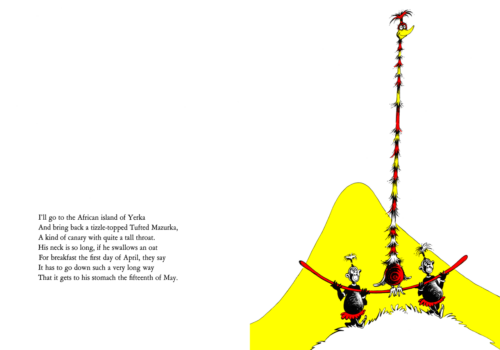


These are some children's books that contain illustrations that some people find offensive and the publisher (and sellers) are deciding they no longer want to be associated with and sell to children. There are internet forums where the images are available and people can view them without the police knocking your door down, and I'm sure these are available in 2nd hand bookshops.
The actions of the publisher and ebay enhance the first (freedom from) without inhibiting the second much (freedom to) for those that really want to view the images.
There's a difference between "utterly repugnant" content being available and it being casually given to children, and people and companies being forced to sell it.