I suffer from wrist and finger pain when typing, sometimes to where I can't type without excruciating pain. Here are my experiences.
I have the Drop version of the Planck, as well as the ErgoDox EZ, the Drop ALT, Logitech G915, two Havit low-profile gaming keyboards (TKL and full), and the AA battery Apple TKL. Previously, I had a Das (Cherry MX Brown).
I have relatively big hands (4" across the knuckles, 9" base to tip) and relatively wide shoulders (20+").
I suffer from wrist and finger pain when typing. Lower-profile is better for me, in general.
The best, overall, is the ErgoDox EZ, but takes up a ton of space and requires serious dedication to learn to type well on. Also, the thumb movements make this a bad keyboard for people who have thumb arthritis.
The Apple is best for finger pain and typing speed but not great for wrist pain.
The low profile mechanicals (Havit, Logitech) are fine. I get some finger pain and some wrist pain, but not a ton. They don't feel great to use.
The Planck is the only standard key switch mechanical keyboard I can type on without hand & wrist pain. In terms of overall pain, it's second only to the ErgoDox EZ. I also retain more typing speed than the ErgoDox EZ. I find the frozen in place hand positioning better than trying to use the Drop ALT in a keyboard tray.
As you also rightly point out, there's a learning curve with a move to these kinds of keyboards but since you're on an ergodox, the gap should be significantly smaller.
My daily driver is a Diverge 3 (company no longer operating), but the best one so far. Close in, thumb clusters with few, easily accessible keys. The thumb can really only access 3-4 keys easily.
The real one I want to go after is the Dactyl Manuform... but omg there's no nice way to get at that thing. And the cost is so high just to 'try it out'.
I'd just like to chime in to offer a different opinion - around 1.5 year in with my Ergodox EZ, and I have no issues with the thumb keys at all. I use them for space, shift and delete/layer switch on one side, and backspace, layer switch and return on the other. It's been working well for me. There's 3 more thumb cluster keys on each side, but they're unreachable from a typing position; I use them for stuff that isn't related to typing, like closing a window and setting/navigating through bookmarks in my IDE.
Overall I'm a very happy customer. Never had issues and my typing speed on it is by far the highest I have had (though admittedly I haven't tried many others). I also have much higher accuracy than I'd ever had with a standard keyboard. The first 2-4 weeks were pretty painful indeed, but now I wouldn't consider switching for anything else.
One of the problems that I have with the thumb cluster with the ergodox is placement. Given my hand size, I need to have my thumb in further extension to hit the cluster's first key.
When my thumb is relaxed, it's actually sitting in the dead space.
The Diverge 3[0] and the Keyboard.io[1] bring that first/main thumb key ever so slightly closer (i.e. more underneath the "b" and "n").
The next one is the the ergodox's thumbs are stacked columnar. This isn't how the thumb naturally extends, which is an arc. So the Diverge 3 and Keyboard.io both mimic this.
For me, that was the deciding factor over the Ergodox.
I made an open source split ortho keyboard for me (that I should really write about) and gave the thumb keys some thought and measurement. Maybe you'd like to try it out, it's quite easy to build:
> There's 3 more thumb cluster keys on each side, but they're unreachable from a typing position; I use them for stuff that isn't related to typing, like closing a window and setting/navigating through bookmarks in my IDE.
I rarely use those smaller keys on the thumb cluster without moving my entire hand (which is generally for alt tabbing, and I should figure out a better way to do that).
The main reason I was interested in the Ergodox was that my Razer Orbweaver was having issues, and I really liked the ortholinear layout for gaming. Now I've got separate layouts for different game types (fps, mmo, rts), and I just move the right half out of the way for more mouse room. Can't go back now, I struggle to type on any normal keyboards.
I have never tried an Ergodox, but my main keyboard right now is a Redox, which is similar in terms of thumb cluster placement. The thumb keys gave me trouble at first, but I replaced the switches with ones that had a much lighter spring (35 cN, I think?) and since then it's been fine.
As a programmer I used to suffer from wrist and thumb pain long ago, tried many different keyboards as well.
Eventually, for this and other reasons, I decided I should type _less_, and started to look for a less verbose programming language than C which was my goto language at the time. I settled on a ML-like language for its terseness and performance. The pain went away (alongside my collection of fancy keyboard) and I had even forgotten that I experienced such a pain.
Other factors might have helped of course (maybe I started to exercise more? I also tried to learn the guitar at the time, also in an attempt to fight the pain).
So, YMMV, but in any case I wanted to let you know that there is no fatality in this.
I've been using the ErgoDox EZ for maybe 3-4 years now, and my experience hasn't matched yours in a few regards:
Thumb arthritis: I've started to develop arthritis in my thumbs when grasping, and the EZ doesn't trigger it at all.
Effort to learn: I wouldn't say "serious dedication", but it did take an effort. I had a few bad habits, namely pressing 'b' with the wrong hand (can't do that on a split), and having to look when typing the numbers. It took me a couple days of feeling like I couldn't type, and maybe two weeks before I felt like I was 100% comfortable with it.
I do agree that the thumb clusters, other than the two primary keys, are basically useless. I have some VERY infrequently used keys mapped to them (pg up/down, alt). It also does take a lot of space to use and to carry.
I use a customized keyboard layout particular to my workflow with i3 and vim. I'm SUPER happy with it.
I've been very tempted to try the Moonlander, but I also really don't want to go back to labeled keys. My current keys are blank. If they had a blank set of caps, I'd have ordered it.
Not sure if it's what you mean by blank (not a big keyboard geek, but I just got a Moonlander), but when you buy it there's an option for all of the keys to have "-" on them, so it's effectively blank?
I may be misunderstanding what you're asking, but the ErgoDox EZ has two different keycap shapes.
The printed keys are all the same shape and can be moved around as one remaps the keys. However, this results in a flat keyboard. You can get the same effect by buying another set of keycaps from a keycap company.
The blank keys are sculpted, so each key is unique to it's position or a set of positions. This makes reaching keys much easier from the default position, but makes learning the keyboard harder.
I had started down the path of trying to buy replacement keys, ideally blank but with some sort of a clear spot so the keyboard lights can shine through. That was rare enough, and I guess maybe in the end I might just want clear keycaps for the lights. But there's a whole set of lingo in the keycaps that I felt like I had to understand to stand a chance of getting the correct set of keycaps. There wasn't just a "Here's a ErgoDox EZ caps set..."
I just tried buying and didn't see an option beyond color and keycaps. I had even mailed them maybe a month ago just to double check, because for my ErgoDox EZ they were able to do a custom order with the lit keys but black keycaps. They had said they are still looking at doing an "all -" blank set, but didn't have it available yet.
How do you like the Moonlander? I really love my ErgoDox, but the Moonlander looks nice.
- Even though Moonlander has approximately same layout as Ergodox, the "margins" around the keyboard are a lot smaller, so I noticed it fit a lot better on my desk. Small thing, but I felt it made difference for me.
- The thumb clusters are more ergonomic for me on the Moonlander
- I still often feel that I would like to have an extra row of buttons on the Ergodox/Moonlander, instead of the layer system. Oh, well ...
> I still often feel that I would like to have an extra row of buttons on the Ergodox/Moonlander, instead of the layer system. Oh, well ...
This is one of the things (the other being price) that stop me from jumping on the moonlander.
I really like having direct access to some functions I don't use constantly, like media controls and such. I don't mind having to move my hand to reach those, since I don't use them constantly, but it's practical to be able to operate them with just one finger. Like volume when I'm eating, etc. The Moonlander doesn't even have proper F keys...
More generally, this is a gripe I have with compact keyboards. I would really love to have "macro" keys, either to the top or to the left of the keyboard, but I absolutely hate having a number pad.
For some reason, all the "compact" keyboards seem to want to go "as compact as possible".
I don't carry my keyboard with me and have enough desk space for a big surface keyboard. I just don't want my mouse hand to have to travel far to reach the mouse.
That's good to hear. I'm tempted to get the Moonlander. I have ergodox ez at the moment which I really like.
I've never really got into the layer system. It feels like something that would be great to already be fluent with, but the effort involved in getting there doesn't seem to be worth it.
I get wrist pain typing on normal keyboards, but I've found my main issue is negative wrist angle. I have been using those silicone roll up keyboards [1] for almost two decades now.
At first we got one because our keyboard broke and it was all they had at the Radio Shack in our small town. Then I grew to like it because it is nearly silent to type on. And as I've gotten older, I've found that I don't get wrist pain when using it, unlike every other keyboard I've tried.
I know people go on about the greatness of split ergonomic keyboards, but if you are like me and those just don't really do it for you, I'd suggest giving one of these a try. They are sort of love it or hate it, with a heavy skew towards hate it though.
I had the ErgoDox EZ for a while, switched it out for a redox (https://github.com/mattdibi/redox-keyboard) which I find is perfect for me. It is a lot smaller and just removed all the keys I was not using on the EZ anyway and shrunk down some of the others.
That's what I am on, too. The one thing the Redox does that irritates me is the 1.25u keys on the outside. It's gratuitous, and makes them less comfortable to type - I know that technically I only need to reach as far as I would for a 1u key, but the scoop of the keycap means that I naturally tend to reach further so that I can hit the lowest point of the key, which means a fair bit more pinky stretching. Also made finding an appropriate keycap set an unnecessary hassle.
I keep meaning to try swapping the 1u and 1.5u keycaps in the thumb cluster to see if that would make the upper two thumb keys more accessible. As it stands, they're annoying enough to hit that I'm happy to leave them on the default pu/pd/home/end simply because, as a Mac user, I never use those keys anyway. Which seems a bit of a waste of real estate.
Had a friend who got one of these as a joke and he ended up loving it, which in turn sent me down the 40% keyboard rabbit hole.
However, rather than a pure ortholinear board like planck, I _highly_ recommend a columnar stagger board like the Reviung41[0] or the Corne[1]. Columnar stagger retains the benefits of ortho, but also accounts for the natural difference in finger lengths and I find it by far the most comfortable layout type. Full splits like the Corne are really good for ergonomics, but the Reviung41 is my favorite board because it has some of the advantages of a split, while retaining the advantages of a single piece board like the Planck.
I did initially buy a ZSA Moonlander, but I highly regret the purchase. The thumb cluster is incredibly poorly designed for anyone who doesn't have freakishly giant hands, and becomes even more unusable if you prefer a steeper tenting angle, since that moves it even further away from the rest of your hand. And putting the tenting at a shallower angle to make the cluster usable, kinda defeats the whole purpose of tenting the board in the first place. If you want a split like the Moonlander, I think you're better off looking at something like the Lily58[2] or the Corne, or any of the myriad number of split keyboards with sane thumb clusters.
After using a 40% board for a while, I no longer understand why people insist on bigger boards other than habit or fear of change. The smaller layout means that despite having to rely on layers to reach some keys like symbols or numbers, they're also far closer to your homerow than on a traditional board.
Switching to a 40% and a trackball was one of the best decisions I've made comfort-wise, and even resolved some hand pain issues I was having because my desk is tiny.
I personally don’t understand why someone would want an ortho if you’re going to 1) have to learn a new layout and 2) spend a lot of money on something custom. The ergonomics of either a columnar stagger or something like a manuform seem way better.
Yeah, I think ortho has benefits over row stagger, but if you're going to go through the learning curve anyway, I think going straight to columnar stagger is more beneficial. That said, I don't find it that hard to switch between ortho and columnar stagger, so it may not be a huge deal if you learn ortho first, unless you're moving to a board with incredibly aggressive pinky stagger or something.
I think the one thing ortho has going for it over columnar stagger is aesthetics, which is a little silly in a discussion about ergonomics, but after a certain point, some smaller keyboards are kinda just there for fun. I have a small ortho 10 column board that is just adorable and I like using it, but it's definitely not as comfy or efficient as my reviung.
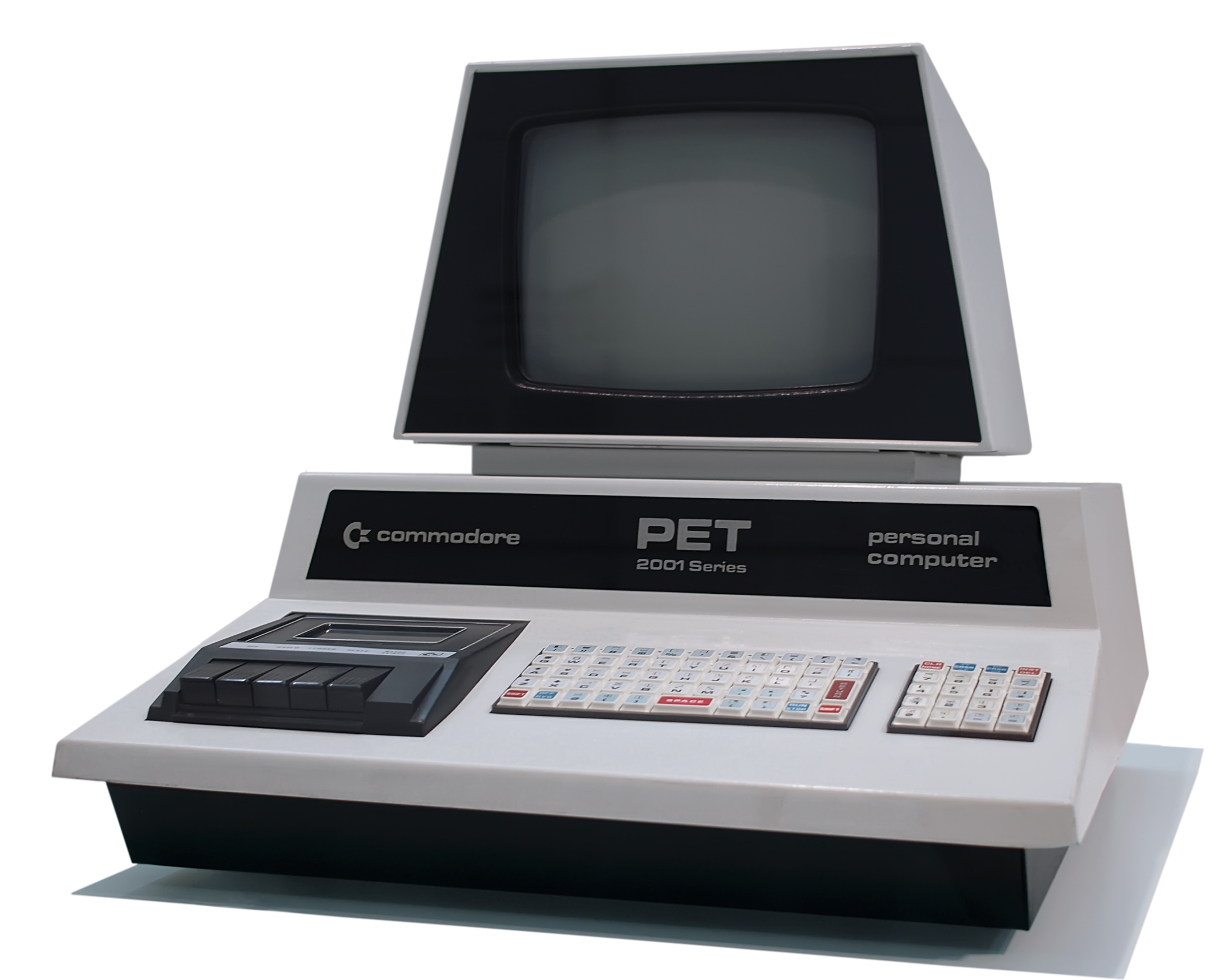
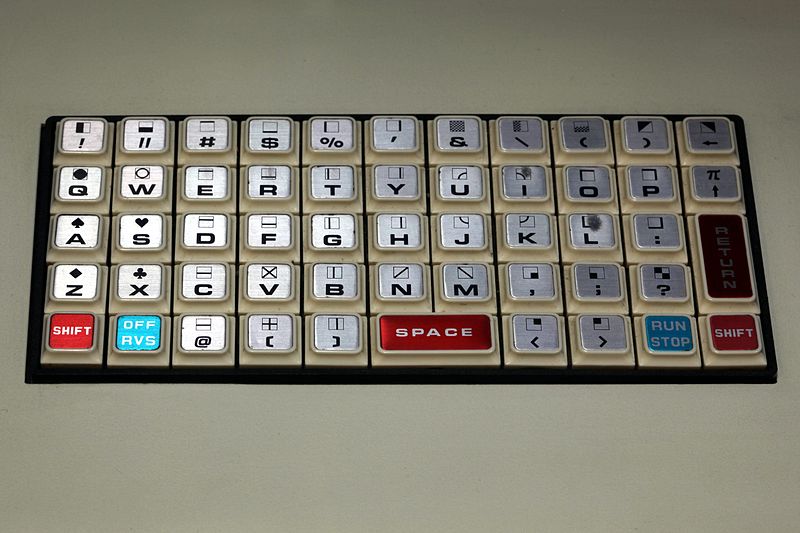
The original Commodore PET [1] had such a keyboard layout [2,3], this was seen as a disadvantage compared to rivals like the Apple-II and the TRS80 which sported "real" (staggered) keyboards. The oddball layout mostly was the result of Commodore starting out as a company making calculators where the square layout is the norm. They moved to a "real" keyboard for the next version [4]. Fast-forward a few decades and that original PET layout starts to become innovative again. Maybe one of these companies should sell a portable version of the PET keyboard with similar keycaps and colour, it would probably sell quite well.
I think it's great that interesting layouts are still being designed, and that the mechanical keyboard community has become open to non-ANSI layouts. Hopefully we will see more of that, and maybe someday the Logitechs of the world will make novel layouts more mainstream.
Until then, an ortholinear + 47 keys is a tough sell. Even for serious keyboard people. Let's consider a 65% board (~68 keys):
1. is almost as portable
2. still functions more or less as a regular keyboard
3. layout matches laptops
4. layout doesn't need to be learned
And finally, as cool as the Plank EZ is, it's clearly targeting "power users", the exact users who have 20+ years typing on ANSI/ISO keyboards. The people who know shortcuts for everything and have Vim muscle memory. The same type of people who tried Dvorak for a month because it was cool but gave up because there was too much mental overhead for doing basic tasks. Layers for standard keys? No media keys? I got stuff to do, man.
I've been using my own Planck* for a while now, and I absolutely love it! It's actually my second - I've pretty much exclusively used Plancks for almost 5 years. Strongly recommend giving them a go, even though the layers will feel very alien to begin with. I've also used an ErgoDox EZ for a while, and I actually prefer the Planck.
There seems to be a lot of people with wrist issues here, so I thought I'd ask. I get a lot of pain in my right shoulder and right wrist after using a keyboard for a while. I've noticed it more when I have to use my little finger (e.g. curly bracers, etc.)
I'm currently trying out a split keyboard (freestyle 2, wanted something cheaper to see if the split helped), and it definitely has. I went back to my Ducky 5 for a few days and felt it.
I'm currently learning to type Dvorak, which feels nice but I'm not using it enough so far to know if it's an improvement. I'm really liking the look of the Kinesis Advantage, has anyone with similar wrist pain noticed that it made a difference?
You should absolutely go see a doctor. The problem with ergonomics is that everything is bullshit. For instance, you know that famous thing where all your joints should be at 90°? Yeah, not so much. My cubital tunnel symptom was because my hands were too bent. Putting my keyboard deeper into the desk helped. Similarly, your issues with the shoulders don't sound like anything garden-variety, but then again they might be.
If you would like to hear anecdotes, here's mine. I was a horrible typer (spacebar with my index finger etc.). I learnt Programmer's Dvorak, which helped me type more sedately/less spastically. But it was still on a full-sized keyboard. More recently, I switched to the Ergodox EZ, and I definitely prefer it. It sits shoulder width apart. I found out I prefer NOT to have it tented, as my desk is too high already, and it would lead to pain on the top of my wrist. I also changed my keyboard layout to basically ignore half the keyboard, and just stay on the home row as much as possible. Fn keys, the thumb cluster etc., I try not to use at all. All of these things helped. But what helped most was going to a doctor, she measured my nerve speeds, and recommended a strap to wear at night. So, go to a doctor!
To be clear, my shoulder isn't really painful just tight. It's the same with my wrist, everything in my right hand feels tight.
For example, on my left hand I can stretch my fingers back without feeling any tightness, and on my right hand I can feel a stretch when I do the same thing.
I will go to a Doctor, I think I've been putting it off too much thinking adjustments made at home would cure it. Sadly, some have made it much better but it still ultimately returns, just slower than before.
I've experienced some such issues, too. And indeed, I think it was mouse related, but maybe not so much the mouse itself as the fact that it was too far out.
I've switched to more compact keyboards (a MS sculpt ergonomic) and it went away.
That sounds like a likely pain point here to me too - I've settled on using a Logitech MX Ergo trackball sitting between the two halves of my split keyboard. No more stretching to move the mouse!
I've had good luck with switching the mouse between the left and right hands. It takes a few weeks to get used to, but helps a lot with spreading the strain a bit more evenly between the two hands.
I had that too when I switched from a 14" ThinkPad to a 13" XPS and happened to use a chair which was slightly low compared to my desk.
Switching to using a external keyboard fixed that.
But I also happen to hardly use my pinky finger (which turned out to be somewhat of a problem when I switched to a split keyboard which works best with 10 finker/touch typing). On reason for not using the pinky finger is that it's noticeable shorter to the point that the "home row" of my pinky finger is one row below that of my other fingers...
I've had one of these for nearly a couple years now and I absolutely love it. I ended up getting a second so I could have one at work and home and not have to move either.
After I got the second I had the issue of keeping the two firmwares in sync, so to solve that I wrote a github action[1] to build the firmware and a quick Nim app[2] to pull it down & flash it, although it turns out I haven't felt the need to really change the key map after I settled on something.
I wish I could get a good laptop with an ortholinear layout, it's just that much more comfortable for me. Your hands will kind of torque when typing on a regular keyboard layout after getting used to an ortho.
This build doesn't work anymore, I actually just tried it the other day and I haven't bothered to figure out what to update but I assume the action would still work with a valid target.
If you're happy with your keyboard it's likely a hard sell.
I'm not sure where you're getting the impression it's meant to be used with one hand, but QMK would give you the ability to create a keymap that you could use with one hand if you wanted.
Handful of reasons I like it:
- I was able to maintain the pok3r navigation function layer
- QMK is pretty flexible, it took little effort to type/code until I felt something could be better, then modify a keymap to make it better
- The size is a bonus, it's really easy to take with you
- Hotswappable switches are great, and only needing 47 of them to try out new switches makes it easy
While note quite as cool as a 40% I've personally been very happy with a Mistel Barocco[0]. The MS Sculpt was one of the best keyboards I'd ever used before that opened my eyes to properly done ergonomics.
My keyboard journey actually went like this:
- keyboards not worth mentioning
- MS Ergonomic 4000
- keyboards not worth mentioning
- Microsoft Sculpt
- Filco Majestouch 2
- Unicomp M
- Mistel Barocco
I have to say, the first jump to tactile keyboards was uplifting. I felt like I could touch-type more quickly with more certainty which was nice. Can't say that it's all uphill from there (not all switches are even tactile), but finding both split and tactile was great and my hands have never felt better.
Also, make sure to check out wooden Filco wood rests. But it looks like they're only made in Japan (which is where I happen to be currently) -- none of the grime and all of the support of "gel" wrist rests.
Some other interesting entries in the split+tactile space:
I've been a huge fan of the Microsoft Sculpt for years. Its the only keyboard that doesn't hurt my wrists/hands hurt. Just my personal preference.
I tried the Moonlander for a bit, but could never get over the learning curve (it is very very steep). It's build quality is fantastic, is amazingly customizable, but the shape didn't work with my brain/muscle memory.
I went back to the Sculpt. If they ever decide to discontinue them I guess I'll need to stock up.
I ran through 3 MS sculpts over the years and was very happy.
The function keys on the sculpt are pretty bad and so was the longevity. Had to switch out the keyboard quite frequently because the palm rest turned disgusting :D
I switched to the KinesisGaming Split + Cherry MX Brown keyboard a few month ago and don't regret it so far.
Sometimes I miss the tiny sculpt because it takes up less space on the desk, but I do not miss having to switch batteries :D
Wow, how much do you type? Mine last more than a year.
Actually, the batteries it came with only ran out last week and I thought the keyboard itself was dead, since it happened all of a sudden after I moved apartments.
Never heard of the barocco, thanks. If they made that keyboard with bluetooth (particularly the 60% version) I'd be sold. Currently using a Nuphy F1 which is minimal yet sadly not split.
Never heard of the Nuphy! Looks like we've both learned of some new keyboards today!
I've always wondered why there weren't more wireless keyboards, and it's relatively reasonably priced. Looks like an awesome board, maybe they'll have a split version at some point...
I moved over to the Kinesis Advantage (LF model) because I was concerned about developing hand/wrist issues, not because I had any currently manifesting, or so I thought.
Whilst I lost a few hairs during the adjustment period, I didn't realise how comfortable a keyboard (and typing on it) could feel, to the extent that I wonder whether I had wrist issues previously but as the onset was so slow I didn't really notice them.
I bought one recently too. Not quite used to it 100% but I am seriously digging it. I get pain in my right hand from typing in particular symbols like {},[],\ etc. that are commonly used in programming and rely way too much on my right pinky. I've mapped them on to keys that are easier to hit on the keypad layer and made that super easy to toggle into. It's a game changer.
I also get a lot of shoulder pain from using a standard keyboard but I'd already resolved that with a split board. I just wish they were cheaper!
I suffer from the same problem on the Kinsesis Advantage2 LF. Can you please share your recipe how you've mapped these symbols to the keypad layer and how do you easily access them (the blue "keypad" activation key is hard to reach and requires to toggle mode)?
Sure! If you use Windows you can do it with a GUI in the SmartSet software that's on the drive of the keyboard itself. You can access that by hitting "progm+F1" which will mount the drive. If you don't have Windows you can do it easily in a text file in the "active" folder of the drive.
You can have multiply qwerty and dvorak layouts. qwerty.txt is the default qwerty layout which I edited. I set "delete" to be keypad shift which shifts (but not toggle) into the keypad layer. This can be done in qwerty.txt file by adding the lines:
"[delete]>[kpshft]" and "[kp-delete]>[kpshft]" with no quotes. Then to set ( & ) on the C and V keys in the keypad layer for example you create a 1 key macro basically like this:
{kp-c}>{-lshift}{9}{+lshift}
{kp-v}>{-lshift}{0}{+lshift}
kp keys are keys in the keypad layer. Some keys like [] have special names so they are done like this:
[kp-F]>[cbrack]
[kp-D]>[obrack]
You can find more how to do this in the manual. Xahlee also has a good tutorial.
Incidentally, I also found it more comfortable to switch over to a trackball style mouse - Logitech MX Ergo at the moment, but keen to try something even more vertical.
I wonder how people using a keyboard like this handle numbers and function keys?
My daily keyboard is an OCZ Vortex 3 which has a dedicated numbers row and above that a row with ESC/F1-12. I cannot imagine using a keyboard that does not have these two rows. Mainly because my IDE/Vim/Tmux configs are heavily customized to use F1-F12 and <C-$num> for common actions.
Small keyboards like these trade-off hand movement, and instead use layering and other tricks; you'll end up customising the layout you use with it to suit your use case.
Because I can arrange those keys exactly in the way I want, my proficiency with the numbers and F-keys has skyrocketed since I switched to a standard Planck.
I've been using Planck for about a year now. F1 is combination of two keys: lower(special modifier key left to the space) and a. I usually have no problem with this, and kinda prefer this now as my fingers don't have to move away from the homerow.
I do have a little bit of trouble when I have to press multiple modifier keys and a function key though.
I heavily use QMK to change how my keyboards work. I keep most of the normal upper and lower layers, but I also have a layer with a numpad and macros (such as a key that inputs my email). It is still a bit of a learning curve, and I find myself having to think for a second when I am using things like screen or tmux.
The theory with these short keyboards is that for a poweruser who remembers all the combos it's easier / quicker / more comfortable to press a combination of keys at their fingertips rather than to move their hand over a dedicated key (and back).
For the past 15 years or so, I have been using a TypeMatrix keyboard (2030 USB, Dvorak).
For me, the best part of the keyboard is the ortholinear layout. This is really a great feeling to just extend/retract a finger to reach to above below row. It has dedicated function row (which for debugging is for me a must have).
I would recommend anybody with pain to try an ortholinear layout, be it from company X or Y, I really think it is a massive improvement against the standard non symmetric layout.
Big, 100+ key keyboards have fallen out of favor with the keyboard crowd and I can't understand why. I have a desktop, I'm not carrying my keyboard with me, and I have plenty of room. Why on earth would I want to start removing keys?
They typically put the mouse too far over. They also just take up a lot of room. I don't personally use keys in the nav cluster or numpad on full size boards anyways because it's too much effort to move to them. Why have keys I don't use?
That's the unicomp one. I like their "new model m", but the ones that haven't had a tooling update are not really my cup of tea, especially not compared to my F (which I got new old stock). I got tired of hauling it along when I moved, so I sold it for a minor fortune. I haven't really regretted it until now, 14 years later.
I love this. One suggestion, instead of dedicated keys for ctrl, option and other modifier keys you can use 'permissive hold' in QMK to put modifier keys in your home row.
Hold down F or J for F Lock, D or K for Ctrl and so on. My fingers adjusted to it really fast. Your keys can act as modifiers when held, and normal keys when pressed and it is works super well.
a turns ijkl into arrow keys (like wsad, but I have a left handed mouse)
k + j = copy, k + l = paste
and so on for symbols, brackets, etc.
The goal is to move from the home row as little as possible. I attempted to gather statistics on most used keys when programming at work, which was mildly successful.
As someone who started this hobby with an Atreus42, the ergo planck layout was a helpful bridge to ortholinear keyboards because it gave me the extra thumb keys to emulate what I was already familiar with.
Bought one of these for travel but made it my main keyboard to force learning the smaller layout. It’s a steep upfront cost, but setting up and learning the multi-layer layouts (which you basically have to use on the Planck) is so worth it. Numbers, symbols, app switching, and window management are all on the home row and my hands are thankful. Don’t imagine it’d be comfortable for someone with broad shoulders, though!
Errr, contradicting all the other responders: yes it does (or can) change the backlight colors per key. It still takes a ton of practice/trial and error, but you’d be surprised how much you can communicate with just lighting changes.
In most cases you just have to know. There are some ortholinear keyboards with some sort of display or indicator and you could program the backlight to show your current layer. It sounds like it would be hard to get used to but a few days was all it took for me to be proficient and I type faster now than I did on a conventional keyboard.
I have a Moonlander and had to print my layout on paper so that I could glance at it until I got used to it. Did a few adjustments, and eventually settled and enjoy it.
Also have a Moonlander. I found it helpful to set a color scheme for my upper layers, matching the corresponding activation keys in the base layer (e.g., my function key layer is yellow). I also color coded special things like modifiers, whitespace keys.
It's not a big deal. I have an Atreus, which has even fewer keys, and correspondingly makes a bit more use of layers, and I had it all into my muscle memory within 3 or 4 days.
For people who use these 47-key keyboards, how long does it take for you to be comfortable with them?
Is there any type of work that is NOT suitable on these keyboards? I feel that the UP and DOWN keys are kind of strain at least in the beginning.
edit
Holy just checked the price and it's above $200. Why is it so expensive? It's almost at par with my second-hand laptop. I guess it's fancy but do you feel the price is justified?
This is clearly not a keyboard for those who only have to spend $200 on their computer. But I guess most people here have rigs that cost well over $1000.
From that perspective, it is not that expensive considering that it is the thing you are using all day to interact with that computer and a good keyboard can last decades, unlike the rest of your computer.
Is the price justified? It is because it is a small run. If Logitech did it, it could have been much cheaper because of economizes of scale, but Logitech doesn't make it. Is it for yourself? That's your choice, try it if you can, and then check your budget.
Personally, I got my current keyboard, a $200+ Topre RealForce after trying a bunch of keyboard in a specialized shop. I didn't look at the price, and unfortunately, I preferred the most expensive. I didn't buy it outright, because I too thought that $200 is way too much for a keyboard, but I came back later, and bought it. I have been using it for 8 years and I see no reason to change, and not once I have regretted my purchase.
I had to intentionally practice for a couple of weeks before I felt really comfortable typing. When it came to typing symbols I've always been a cheater, so the shift+numrow symbols were the hardest for me to remember.
Replacing the modifier switches with loud and clicky ones helped me get the feedback needed to allow me to type combinations quickly (and ZSA optionally sells a secondary pack of ten with your purchase, just enough for the mods/space/enter/esc).
The arrow keys should be familiar to anyone seriously using vim / vim bindings, as they're in the same hjkl configuration.
The thing made hardest with this keyboard is actually video games. There are fewer buttons in the range of one hand, so I often end up remapping some buttons to my mouse if I have to. The ctrl/z/x/c keys are all pretty hard to press when your hand is on w/a/s/d. For games that fully utilize a keyboard (Space Engineers, GMod, etc) you will find yourself making layers specific to those games.
This all being said, I don't have the largest hands and I enjoy that my wrists basically don't have to move around. The customization is a treat. I actually take it with me to work and back home, because it's so small and easy to move that I don't mind it. Also I made a numpad layer that I'm really happy with, and that only works on an ortholinear.
The price tag is serious, but the keyboard is hand assembled by well paid workers in Taiwan. For the amount of time I spend typing on my keyboard (at least 8 hours a day, every day) I'm perfectly happy to dispense with some money for a solid product.
> Is there any type of work that is NOT suitable on these keyboards? I feel that the UP and DOWN keys are kind of strain at least in the beginning.
I'd say situations where you need more discrete buttons that are easily accessible. Gaming comes to mind as a big one where the lack of physical keys in a situation where you need immediate access is going to be difficult. This is of course game dependent and some games can be easily accommodated. Tasks that aren't as latency-dependent will be mostly fine.
> edit Holy just checked the price and it's above $200. Why is it so expensive? It's almost at par with my second-hand laptop. I guess it's fancy but do you feel the price is justified?
Manufacturing relatively low volume products with injection molded parts and the need to hand assemble the keyboards is pretty expensive. You can find planck kits for cheap and if you know how to solder you could build one for under 100 dollars probably. DIY kits will usually use stacked laser-cut acrylic or 3d printed cases. The price is justified if you want one that is well made and prebuilt.
> how long does it take for you to be comfortable with them?
Not so long for typing out letters if your fingers are disciplined to stick to each column. e.g. it didn't take me long to switch my Dvorak skills to use it.
Getting comfortable with typing symbols took more time, since there's more flexibility about where you put the symbols on the keyboard.
> Is there any type of work that is NOT suitable on these keyboards?
I'd say the reduced-size layouts don't lose much when you can keep both hands on the keyboard. (e.g. using Emacs or Vim in a terminal).
e.g. they're especially difficult to use for FPS games; or for (say) Blender or using KiCad where moving your hand all-over the keyboard. (It's possible to an extent to customise the layout to work with various use-cases, though).
> Price
ZSA's keyboards come with warranty, etc.
I got a BM40 (sold on AliExpress) for about $100. Expensive, but high quality.
There are ways to assemble niche keyboards for a lower budget, but it won't be as nice a quality.
I used the keyboard for a year. Coming from ErgoDox EZ (from the same company), it took me ~half a year to type as fast with very few typos.
I found it unsuitable for gaming, since my layout was programming-related. I'm sure I could have configured it for gaming, but I found it easier to just switch to a regular keyboard.
It's also not totally suitable for writing in other than English. If you have other characters, like accents, I found it difficult to program the keyboard properly.
On a compact keyboard, the special characters are no further away than capital letters, and often easier to get at than they are on a standard keyboard. For example, on a standard US layout, } and | require both pressing a modifier key (shift) and a stretch. On my compact keyboard, they do still require a modifier key (I call it "sym" on my keyboard), but there's no stretching - they're all no more than 1 key away from my left hand home row.
For digits, it's the other way around. On a standard keyboard, they require a stretch but no modifier key. On my compact, they require a modifier key but no stretch. For my part, I find it to be a net positive because the modifier key puts me on a layer where I've got essentially a numpad under my right hand, which allows me to key in numbers with the speed and accuracy of a numpad, without having to pick up my hand and move it.
The main reason this keyboard's keycaps are ~R1 / ~R2 is because of RGB and consequently north-facing switches. This trades a more pleasant typing experience for aesthetics. Wouldn't be my first choice over the JNAO, which is a solderable compatible alternative.
I've never personally used a Planck, but I've got plenty of experience using alternative keyboards.
With regards to ergonomics, I don't think the Planck solves really any of the issues with a standard keyboard. While the straight columns and rows might reduce some horizontal movement of your fingers when typing, the fact that it's one piece with no angle means that your wrists will be contorted, which is the same problem with a standard keyboard. Also, your fingers aren't the same length, so having ortholinear keys doesn't really account for that in any way and pinky finger keys are more difficult to access.
If you're going to bother with learning how to type on an unconventional keyboard (and if you have any sort of concern for your wrist/hand health, I'd encourage you to do so), I'd suggest looking at split keyboards what have offset rows with straight columns of keys, at the minimum. ZSA actually sells the Ergodox EZ and Moonlander, both of which I'd say are better keyboards. They are of course a lot bigger than the planck, which might be problematic if you're using it on the go a lot.
If you're looking for something a bit more portable, perhaps something like the atreus would be more suitable. There's a prebuilt one you can purchase from keyboardio [1] though you can find kits online to build one yourself. Gboards [2] also has some nice low profile small form factor keyboards, though the owner of Gboards is currently not accepting any new orders as she's working through the backlog of orders. There's a ton more shops that sell kits for small form factor keyboards and there is no shortage of choice for keyboards with all sorts of form factors and numbers of keys. A good place to start researching it is the ergonomic mechanical keyboards subreddit [3] and the olkb (planck) subreddit [4].
Personally, I use the Kinesis Advantage 2 [5] with a custom microcontroller designed by Michael Stapelberg [6] that allows me to run QMK [7] on it. Kinesis has announced a new fully split keyboard that doesn't have a ship date that I'm also very interested in [8]. These have concave key wells which are a bit hard to describe but once you've put your hands on one, it becomes pretty obvious the difference in just pure comfort to the hands they bring. Any keyboard with these key wells however are very large and not exactly a great portable keyboard. Still, I think the tradeoffs are well worth it.
Finally, If the Advantage isn't your jam, there are open source keyboards made with key wells and are fully split like the Dactyl [9], and Dactyl Manuform [10]. Prebuilt manuforms can be found at Oh Keycaps [11] and a few other vendors. These are very geeky keyboards that will require a lot of effort on top of the effort of learning how to type, so I'd only suggest them if you're really ambitious about using alternative keyboards and getting the most out of them.
A lot of the more popular mechanical keyboard communities are great for what they are, but they have kind of zeroed in on focusing on mostly aesthetics. The Mechanical Keyboards subreddit [12] is primarily glamour photos of people's keyboards and offers very little discussion in terms of ergonomics, alternative keyboard layouts, or other aspects of the hobby. Still, it's a great place to look for key switches you might like (the sound being one of the big considerations) or keycap group buys that you might be interested in. I hope that I can help get more eyes on the ergonomic keyboard community since more eyes is more interest and more interest means more innovation and better keyboards.
I had hand pain and bought a Planck EZ for ergonomics but resold it almost instantly because of the issues you note. It’s small so your wrists are angled and your hands are bunched together more than even on a standard keyboard. I discovered that what I really needed was a split sculpted keyboard instead and the ortholinear aspect was not a panacea. Yes my fingers would more easily move in a line than side to side, but my wrist and arms were so far from being straight it was actually worse.
I tried a Maltron keyboard (very similar to Kinesis Advantage) and loved the concave key wells - its the only keyboard I've ever had that I could confidently hit the number and FN keys without looking. Only reason I didn't buy it was because the hand separation was not large enough (shoulders are my big problem area ergonomically) so I would love a fully split Maltron/Kinesis.
For that upcoming split Kinesis, I really hope the cable is longer than it appears in that tweet photo so that the two halves can be moved far enough apart.
I agree with you that the Planck isn't an ergo board. One important feature in the OLKB/Drop Planck v6+ PCBs (missing from the ZSA variant) is the 2x2u spacebar option. The 2x2u spacebar moves the thumbs 0.5u outward, and at least for my big hands, there is negligible wrist twisting for me to worry about. I like it even more than the Atreus42 and ErgoDox boards that preceded it.
I do think that have 2x2u keys would be better, though I don't think it's the main issue with the Planck as far as ergonomics go.
Going with the assumptions that you want your elbows to be next to your body and that you want your arms parallel or slightly negatively tilted towards the ground, when you have a keyboard that isn't split, you are always going to have to angle your hands inwards if you're typing with two hands. When you take that angle into account while trying to retain straight wrists, you end up with something like the atreus. If you don't, you end up with something like the planck (or standard keyboard layouts). In order to do "proper" touch typing, you are rotating your wrists outwards to accommodate the shape of the keyboard.
Still, it's not like there's one right answer and I feel like any decision you make with regards to ergonomics you end up compromising on another aspect, so in the end it may not matter very much that you are contorting your wrists. Some people have been typing for longer than I've been alive and haven't had issues with standard layout keyboards so YMMV.
is ortholinear anctually harder on finger movements overall? i've tried 3 different sizes of orthlinears (and split ergodox ez) and have never found anything quite comfy so im just back to a regular keyboard for now.
i certainly agree with you that it's mostly an aesthetics wankery game in most places. how long are you usiing kinesis advantage 2? It's something I want to try eventually
Ortholinear (which is the straight row/columns like the planck) kind of fail to account for the fact that your fingers aren't equally long. They do feel more comfortable than a normal staggered layouts as far as moving from keys between rows, but hitting keys like q or p (on qwerty) are a notable strain. In fact I usually hit the 'p' key with my ring finger since even with keyboards that do try to account for it because unless you have variably sized keys, you're going to be compromising the pinkies on any layout.
> how long are you usiing kinesis advantage 2? It's something I want to try eventually
I've been using the Advantage for less time than most, only a couple years. It's pretty great but the space between key wells is a little narrow for my shoulder width. A fully split option doesn't have this issue, so I'm waiting for the new kinesis board to come out. I have a dactyl manuform that I have to rehandwire, but haven't had the motivation to do so but I think they are probably superior ergonomically.
Still, I think once you've tried a keyboard with the key wells it's very hard to go back to something that is flat, even with tenting.
IMO column stagger is much superior to an ortholinear, as it matches with the different finger lenghts. I like aggressive pinky stagger like the Kyria or the Ferris but ortholinear just feels weird.
You can make ortholinear work as well, but then you'd have to angle your hands quite a bit, but that's only ergonomic if you have a split board, and even then I personally didn't like it.
You just need to get used to the ortholinear layout. There's really nothing else for it. My accuracy took a hit and it felt weird on my fingers for a week or so, and then it was fine.
Now, of course, I can't type for shit on a staggered layout.
I am not up on niche keyboard lingo and assumed this was advertising a keyboard where 40% of the keys were mechanical.
Really was wondering what advantage that would have since mechanical keyboard people seem very opinionated about the inferiority of all other key styles.
This is something I’ve been considering getting, but the lack of Bluetooth is a blocker.
I have no use for the RGB stuff (and maybe not even backlighting, since I seldom look at any keyboard), but neither will I go back to having cables across my desk…
Would highly recommend the Planck for anyone who would like to improve their touch-typing. A grid is a lot easier to get a feel for than a staggered layout, and the clicky sensation is just a bonus at that point.
Those are usually hand-wired (otherwise you need some sort of flex PCB design, which I have seen but it's uncommon) and that makes individual LEDs a huge pain at best.




I have the Drop version of the Planck, as well as the ErgoDox EZ, the Drop ALT, Logitech G915, two Havit low-profile gaming keyboards (TKL and full), and the AA battery Apple TKL. Previously, I had a Das (Cherry MX Brown).
I have relatively big hands (4" across the knuckles, 9" base to tip) and relatively wide shoulders (20+").
I suffer from wrist and finger pain when typing. Lower-profile is better for me, in general.
The best, overall, is the ErgoDox EZ, but takes up a ton of space and requires serious dedication to learn to type well on. Also, the thumb movements make this a bad keyboard for people who have thumb arthritis.
The Apple is best for finger pain and typing speed but not great for wrist pain.
The low profile mechanicals (Havit, Logitech) are fine. I get some finger pain and some wrist pain, but not a ton. They don't feel great to use.
The Planck is the only standard key switch mechanical keyboard I can type on without hand & wrist pain. In terms of overall pain, it's second only to the ErgoDox EZ. I also retain more typing speed than the ErgoDox EZ. I find the frozen in place hand positioning better than trying to use the Drop ALT in a keyboard tray.
(Edited to add thumb arthritis note.)