this article seems to have more. Reading it sideways, what seems to come out is:
> “There was a notion held widely in the scientific literature and said at public meetings that a public hunting season would increase acceptance of wolves,” says Adrian Treves, professor in the Nelson Institute for Environmental Studies and co-author of the study.
> Treves isn’t certain whether most hunters in Wisconsin will ever embrace wolves because the predators feed on the white-tailed deer that hunters value.
> “It’s easier to talk about and tally the costs of dead calves than it is to talk about improved populations of endangered plant species or the other ecosystem benefits that come with wolves.”
Sounds like it's basically that hunters dislike wolves (I imagine rural populations aren't fans either...) and that's kind of the default position. And Wisconsin seems to have adopted this hunt as a way to keep the population under control and "release pressure" from, for example, trying to get them completely wiped out.
Pretty nasty, though my impression is that wolves are not really accepted much anywhere in the US? I don't know if this is more cruel than other mid-western states or not.
Based on an environmental policy class I took in university, it seems like wolves are lupae non grata wherever they appear. There seem to be two root causes: ranchers don’t like wolves eating their livestock, and people are just frightened of them. Some of the fright is instinctual, but it’s certainly played up by the ranchers. Essentially anywhere and everywhere wolves are reintroduced, people start freaking out. Some wolves end up shot even when it is illegal, but more are shot when it is not.
This is one of those intractable problems because the benefits of predators to wildland is very high, but innate fear and economic concerns keep a solution out of reach. It’s not reasonable to ask ranchers not to carry firearms because wolves and bears are in fact dangerous, and they have economic incentives not to comply with wolf protections.
Cute, but I do think applying the actual Latin declination diminishes the rhetorical value of the phrase. English is mostly not declined, so readers in English often don't understand or expect to see words modified as dramatically as Latin grammar requires. So it becomes distracting, and probably ruins the joke for (the vast majority of) readers who don't know Latin.
I would have gone with "lupa no grata" or even "lupus non grata" to maximize intelligibility to English readers.
Classical Latin makes up a pretty tiny fraction of the lifetime of actual Latin usage, anyway. It happens to make up the bulk of the written literature that got passed down to modern scholars, but a hell of a lot more people actually spoke various pidgins of Latin, or transitional language as it changed into the Romance languages.
> Classical Latin makes up a pretty tiny fraction of the lifetime of actual Latin usage, anyway. It happens to make up the bulk of the written literature that got passed down to modern scholars, but a hell of a lot more people actually spoke various pidgins of Latin, or transitional language as it changed into the Romance languages.
Well, the amount of usage isn't quite the same question as the lifetime of the usage. 17th century international communication was done in classical Latin, albeit classical Latin that was mysteriously shifted closer to modern languages in a number of ways. An important treaty between Russia and China was formalized in Latin. (Though that might have been church Latin.) The lifetime of classical Latin isn't much shorter than the lifetime of Latin the living language that became the Romance languages.
Also, while it's certainly true that modern Romance languages have diverged a long way from classical Latin, they haven't diverged in any way that's relevant here; they all still inflect adjectives to match the modified nouns. (Which is the only declensional phenomenon here that might surprise an English speaker - English still declines nouns to distinguish singular from plural. This is so natural to the modern English speaker that it was correct in the attempted phrase lupae non grata. The nominative case is expected from an English speaker, but is also, by coincidence, correct for classical Latin.)
Which is pretty bizarre, statistically speaking. Wild animals deserve cautious respect to be sure, but there have been exactly 2 fatal attacks by wild wolves in North America since World War 2 [0]. For comparison, more than 20 people have been killed by dogs this year. [1]
The thing that most makes wolves unpopular in Germany is not killing livestock: there's an adequate compensation scheme, nor risk to people, it's that wolves go out of their way to kill dogs.
Attacking pets is a big reason for coyotes' unpopularity in the North Eastern US too. Our coyotes are also hybrids of wolves and western coyotes which makes them a bit larger than their western cousins and more dangerous to dogs.
I live in one area where there are still wolfs. We are sort of proud we still have them.
But people and wolfs don't mix. And they can be scary as fuck. A lot of people just think of them as wild dogs. But if you ever seen one in person you know that's not true.
There are significant wolves populations in NW Spain, Northern Europe and Eastern Europe. They are being reintroduced in other countries as well. There are ~600 wolves in France, they were reintroduced in 1990.
Lupa isn't just an obvious extension of feminine gender to a usually masculine but living noun. It's well attested in the Latin record because of the myth of Romulus and Remus, who were suckled and raised by a lupa. Officially that was a she-wolf, though the theory was available even at the time that the lupa of the story referred to a whore.
Ok fine, then lupa non grata (singular) or lupae non gratae (plural)
"Lupae non grata" just sounds wrong and agramarical, in the same sense as "people is happy" would to an native English speaker. Yes it's just a little sounds, just like the small difference between "are" and "is"
Not sure the article is accurate, the law reads a lot more like 'allow' than 'require', maybe you can say they're required to decide how many licenses to issue. But why would the state have to require a wolf hunt? People want to hunt wolves, they're just waiting for the state to allow them.
> If the wolf is not listed on the federal endangered list and is not listed on the state endangered list, the department shall allow the hunting and trapping of wolves and shall regulate such hunting and trapping as provided in this section and shall implement a wolf management plan.
Don't forget that it says, "shall allow" not "allow". What is unsaid here is that the state was sued to enforce this law, because it hadn't yet created a wolf hunt.
That law also says, "(5) Seasons; zones. (a) The department shall establish a single annual open season for both hunting and trapping wolves that begins on October 15th of each year and ends on the last day of February of the following year."
It’s not clear what this sentence is trying to mean.
It may just be saying that wolf culls can only occur during parts of the year when they’re allowed to be culled under federal law, rather then that they have to be culled, although the latter interpretation would be ok too, right?
I’m no expert but wouldn’t unchecked wolf numbers rapidly become a significant risk to humans and live stock?
If they could grow in a truly unchecked manner, sure, but this generally isn't a concern with apex predators -- their population is kept in check by availability of resources. We see this in action with the wolves in Yellowstone, which remain federally protected -- the wolf population stabilized at around 100 animals.
So it's probably vanishingly rare that wolf packs would need to be culled. Most of the concern over wolves, from what I've seen over the years, has historically come from
- game hunters, because when you remove wolves from an ecosystem, game animal population does grow in a relatively unchecked manner;
- ranchers who see wolves as an existential threat to their livestock and therefore livelihood.
The latter tends to be rather overemphasized by ranchers, from all the evidence I can find; they happen, but statistically, livestock is far more likely to be killed by coyotes. (It's not impossible that if the ranchers let the wolves alone they might suffer less carnivore predation: coyotes and wolves don't like to share territory.)
"We all strive for safety, prosperity, comfort, long life, and dullness. The deer strives with his supple legs, the cowman with trap and poison, the statesman with pen, the most of us with machines, votes, and dollars, but it all comes to the same thing: peace in our time. A measure of success in this is all well enough, and perhaps is a requisite to objective thinking, but
too much safety seems to yield only danger in the long run. Perhaps this is behind Thoreau's dictum: In wildness is the salvation of the world. Perhaps this is the hidden meaning in the howl of the wolf, long known
among mountains, but seldom perceived among men."
Thanks for sharing the quote. Funny that this was written by a professor of the University of Wisconsin and dealt pretty directly with the killing of wolves. https://en.wikipedia.org/wiki/Thinking_like_a_mountain is an interesting read.
"Since then I have lived to see state after state extirpate its wolves. I have watched the face of many a newly wolfless mountain [...]. The cowman who cleans his range of wolves does not realize that he is taking over the wolf’s job of trimming the herd to fit the change. He has not learned to think like a mountain. Hence we have dustbowls, and rivers washing the future into the sea."
This was written in 1949. So many decades have passed and yet here we are, struggling with what should be such a straightforward problem.
> The natural resources board, made up of political appointees, ignored those pleas. And it brushed aside a lower quota recommended by a state Wolf Harvest Advisory Committee, made up of biologists, hunters, wolf advocates, and tribal members.
Interestingly enough, wild animals are not destroying the property of wildlife activists or lobbyists. This isn't to say that wild animals were never a problem in NYC or NW DC. Those animals were killed a long time ago, thereby allowing the public to conduct business more safely. With their corgis safe within their condos and no real skin in the game, there's something hypocritical about the whole ordeal.
The people recommending the lower quota aren't far off elite lobbyists in NY and DC, but Wisconsin's own Wolf Harvest Advisory Committee, which includes hunters in its cohort.
I also know the state of MN pays for wolf depredation as well, I’m sure you’re capable of researching this further if you want to know which other states pay out.
Thanks for providing those links. It appears the taxpayers are on the hook for these payouts, in addition to whatever other overhead the program costs.
The other questions remains unaddressed from my research. There are other economic factors aside from direct kills of livestock by wolves. Not to mention the transaction costs of engaging with the bureaucracy to make claims, or claims denied.
>However, there have been concerns from livestock producers in this region about the economic impacts related to factors other than the direct losses of animals killed by wolves. The very threat of depredation by wolves on livestock can be stressful to farmers (Fritts et al. 2003). Shelton (2004) reported that livestock producers have increased costs associated with efforts to prevent predation which may include night confinement, improved fencing,
early weaning, choice of grazing area, or increased feeding costs from a loss of grazing acreage.
>Though there is not definitive research supporting the following, it is plausible that other impacts predators may have on livestock production include abortions from the stress of being harassed by predators, disease transmission, decreased weight gain from increased vigilance by livestock living near predators, potential reduction in meat quality from stress, and emotional stress placed on livestock producers concerned about depredations.
>In 2013, verified wolf damage on a farm in central Wisconsin resulted in cattle stampeding into a cranberry marsh, causing $50,000 in damages to the cranberry grower. In 2014, a cattle producer in northern Wisconsin experienced weight loss in 160 steers due to wolf-caused stress. The steers actually lost weight over a three-month period whereas each should have gained 180 pounds. The net loss to this cattle producer as a result of the stress was $43,200.
I don't think it is unreasonable at all to question the value of these programs. They clearly negatively impact the quality of life for certain communities.
If people in DC or elsewhere want to enjoy the value of wild wolves, perhaps they should create a privately owned preserve for their wolves. Let the users of the services provided by wild wolves pay for the value they derive from it.
If there's a responsible way to keep a black bear in NYC, it is in a zoo, insured and funded by user fees. The point may be unpopular here, but the logic is sound. The defenses of state owned wolves here largely fall back upon romanticism, which can be adequately served by private solutions.
I am sympathetic. Let Manhattan give herself back to the beavers or pay Wisconsin to not kill wolves. This is right.
Otherwise we incentivize rapid current action to destabilize so that you aren’t the one later asked to hold back.
It’s like CO2. You know a time will come when we should cut back. Logically now is the time to overpollute so that later you can ask other countries to “preserve their forests”, protecting yourself with this unspoken statute of limitations.


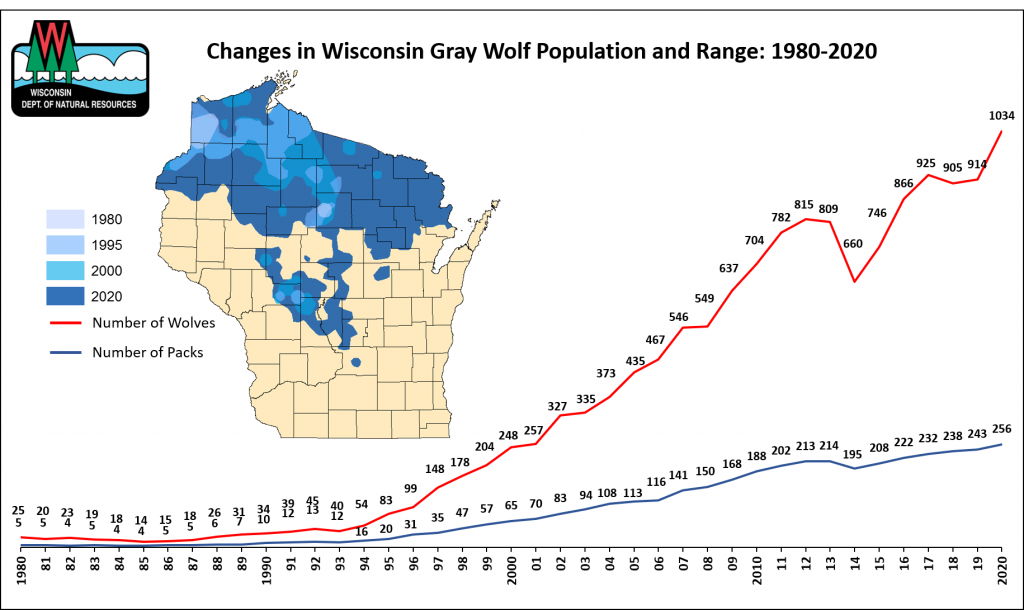
Not sure how to ask for an explanation of this without profanity.