Because SIMs require the physical card. You cannot forge a SIM without the SIM itself. There's a physical second factor. Usernames and passwords get leaked all the time, and since Reddit et al are meant to be accessed by multiple devices, device-locking them would be antithetical and anti-consumer.
A phone service is implicitly device-locked (well, doesn't have to be, but it doesn't make sense to allow multiple devices per number anyway). Just using device credentials could allow anyone to log in with that information and use your subscription or pose as you.
As for ADSL or other forms of internet, there is already a second factor - ISPs generally know from which vicinity you are connecting from, and when you log in with your account information in your modem, they can match what's on your account to your physical "drop" and assert that it is at least within the same neighborhood - again, creating a physical second factor. This is also why your internet service generally needs to be "moved" whenever you change your residence.
A SIM card allows the freedom as the GP mentioned, without requiring someone from the centralized authority to process the request somehow.
There is a huge difference if you think about it for a bit.
SIM cards are famously the weak link in the 2FA. They have all kind of security issues as they are computers themselves.
The way forward is to get rid of the SIM and access those carrier networks through credentials, ideally I would love to see it as a cryptographic receipt that you get from your payment provider and pass it to the the carrier as a proof of right for account and usage of their networks.
SMS-based 2FA's weakness is not due to SIM cards. It's due to carriers being shit.
SMS-based 2FA is not exploited by breaking any cryptography or exploiting some software vulnerability. It's by "asking nicely" the carrier's customer support idiots to associate a new SIM to the target account & number.
Replacing the SIM with username/password wouldn't do anything - instead of the attackers having to associate a new physical SIM they'll just associate a new set of credentials.
Yes - carriers managed to find a company even more incompetent than themselves and outsourced sensitive data to them. It doesn't make SIMs insecure. No amount of authentication will help if the party you're authenticating to then decides to send your data to a compromised third-party.
By the way, CDR processing (aka parsing CSV files and figuring out how much to charge - rocket science I know) is also routinely outsourced to the lowest bidders with no doubt terrible security practices: https://berthub.eu/articles/posts/5g-elephant-in-the-room/
Those SIM engineers should build other unhackable systems too!
Anyway, it's not only social engineering but even if it was it simply means that it's useless for security.
Just yesterday, a friend of mine got a fringe hacking incident or a bug. We are not still sure if it was hack but somehow the SIM card in her phone identified as another number from another carrier. Who knows what happened, her SIM wasn't swapped it simply think that it's another number as she found out when started receiving notifications about her new number. Maybe it was Apple's bug or something but who cares, the physical SIM did not change anything.
> Those SIM engineers should build other unhackable systems too!
They did - see EMV payment cards for example.
> it simply means that it's useless for security.
It's not - SIMs close one attack vector where credentials can't be stolen by malware/bruteforced. Current SIM-swap attacks don't scale well; imagine how worse the problem would be if any Android malware could silently take over your number even after you've wiped the device clean.
The solution is to close the social-engineering attack vector by making carriers liable for any losses, not to remove a different layer of security because it's currently being bypassed by a different flaw.
> Who knows what happened
I doubt it was nefarious, I'll place my bets on misconfiguration somewhere. The telephone network is a massive mess and it could very well be that some carrier/equipment in the path rewrote the caller ID as something else.
Again, if you're skeptical of the government itself and allowing them to tap your communication lines, then I understand your hesitation here (although 2FA won't protect you against warrants), but outside of that it's actually simple incompetence of the carriers - SIM swap fraud attacks are common in North America but surprisingly fewer outside despite having the exact porting capabilities, probably because there's a waiting period (usually 48 hours) enforced where the current holder of the SIM card gets warnings about the impeding deactivation in other countries. Annoying if you lost your SIM card, sure, but is much better than having an unauthorised person getting a shiny new SIM card without warning.
> probably because there's a waiting period (usually 48 hours) enforced where the current holder of the SIM card gets warnings about the impeding deactivation in other countries
Not sure what's going on in other countries, but back when I was a phone store monkey in the UK this was not the case. A SIM swap could be done immediately and the previous SIM doesn't get any notification. If I remember right we needed to check ID, but we had no way nor proper training to tell a potential fake ID, nor what counts as an acceptable ID (the UK doesn't have mandatory ID cards, so a lot of people don't have ID) - I would defer to my manager in this case but I'm pretty sure the whole process was really at their discretion and whether the whole thing "feels" legit. Making it look like we'd get a sale is an easy way to sway the odds in your favour (we'd need to access the account anyway to make the sale, so you can play along and buy a new plan, and once we pulled up the account you can mention "oh BTW I need a new SIM" and we would oblige).
Fun fact: to access someone's account in-store we had to either text them a code and enter it in the web UI (good!) or provide knowledge-based answers such as amount of last bill, some digits of the ID/driver's license number or a security question answer. There was bruteforce protection, but here's the fun part - it was presumably implemented on the frontend only because you could reload the page on the last attempt and reset the counter of attempts! There were no consequences that I know of (neither from the company nor a notification/follow-up with the customer) to locking out an account either.
At least part of the system was Java-based (it blew up occasionally displaying a full stack trace full of PII) and was available over the Internet (there was a site-to-site VPN for the store, but the URL nevertheless loaded on a standard internet connection when I tried it probably due to misconfiguration, so it's very likely all of that was exposed during the Apache Struts or Log4J vulnerabilities).
I think the reason SIM Swap fraud isn't as common in the UK is either because getting the money out is more difficult or because other scams (authorized push payment fraud, scammers pretending to be tech support or tax authorities, etc) are just more profitable.
> There was bruteforce protection, but here's the fun part - it was presumably implemented on the frontend only because you could reload the page on the last attempt and reset the counter of attempts! There were no consequences that I know of (neither from the company nor a notification/follow-up with the customer) to locking out an account either.
Back when I had to use AllScripts EHR software, if I messed up my password three times, I'd just restart the client application. Bam, three more attempts, no need to wait ten minutes.
(I don't know if this is still the case, but I sure hope it's not.)
If you are skeptical of government, live off grid.
Sure are a lot of rugged individuals who can do it all (they claim) yet seem to not notice they hardly accomplish any more than anyone else without the help.
I’m skeptical of other humans period. You’re regurgitating the most reinforced rhetoric in your experience. You’re decoupled from the actual work implementing solutions to these problems, and the ease at which theft and fraud occur without technology.
There’s no such thing as a 100% secure system. Physics doesn’t allow it. Accept it. Lean into your biology to self soothe.
I may mistrust the government but like everything else it’s just people, not a black box.
Come on internet geniuses; open source and hardware are right there for you to make this happen. Get funding. Prove you can do better. Show you’re more than syntactic and semantic drivel.
The collective of people making your phone work are incompetent, says the person whose probably never tried. What a joke.
> but it doesn't make sense to allow multiple devices per number anyway
Why not? This is a useful behavior that is currently emulated by forwarding calls to laptops and tablets with the same account when the devices are on the same Wi-Fi. You could get rid of the Wi-Fi requirement if those devices all simply had an eSIM with the same number.
Number assignment is handled at the network level. I have the exact functionality you speak of (single number to multiple devices) on my company's good old physical SIMs.
Phones & SIMs don't even know nor care about their own number. The SIM has a field for that but in fact it's often left empty (iOS devices discover their own number by texting a known Apple number and getting the response via the Internet, they'll then populate this field out of courtesy but it's not necessary for functionality).
When a call comes in, the carrier decides which SIM it should be routed to. When a SIM makes an outbound call, the carrier decides which number to set as caller ID.
The functionality you speak of has nothing to do with SIM vs eSIM, it's about carriers having to actually innovate and do some engineering. Their current oligopoly means there's no commercial pressure for them to do so, and there's no reason why they would suddenly do this with the switch to eSIMs.
> iOS devices discover their own number by texting a known Apple number and getting the response via the Internet, they'll then populate this field out of courtesy but it's not necessary for functionality
TIL! Is that why in some countries and some SIM cards my iPhone can automatically report its own phone number (when I look at my own profile under 'Contacts') and in some countries it doesn't do that?
Carriers who assign numbers to SIMs in advance could set that field directly. Others, either because they don't assign a number at the time of the SIM manufacture/personalization or just because they can't be bothered as it's not functionally necessary will leave it blank - in that case from my experience iPhones will populate the field with the number they get back from the iMessage & FaceTime provisioning step but again that's not actually necessary for functionality. The field is also user-editable in Settings -> Phone if you wish.
The SIM card is even less secure than a username and password because someone just calls the carrier, reads out some sob story and gets your sim credentials transferred over to them.
The sim is nothing more than an auth token which can easily be duplicated.
I didn't say either of those things weren't true. Perhaps I should have used "cloned" instead of "forged" to be clearer. You can't remotely clone a SIM unless you use an OTA exploit or something. It's not the 'normal' case.
SIM is the second factor when it comes to proving that this device with this physical SIM is indeed accessing the network.
Fraudulent SIM swaps are attacking a different layer of the system, they are social-engineering underpaid idiots to associate a new SIM with a given account & number.
You could in theory social-engineer a bank to reissue someone's payment card and somehow intercept it in the post or steal it from their mailbox. That doesn't mean chip & PIN is insecure.
And from my understanding, these social engineering and sim swap problems are mostly ( if not all ) US specific. I have never heard anything near the order of magnitude of US sim swap from any other country. Most countries have Personal ID that are required and issued by government as verification. But even places like UK will require address and Driving License / Passport proof along with security questions.
I can only assume it's not more common because other scams are more profitable and/or not enough targets (banks, etc) use SMS 2FA as their only method of authentication so a SIM swap wouldn't give you much.


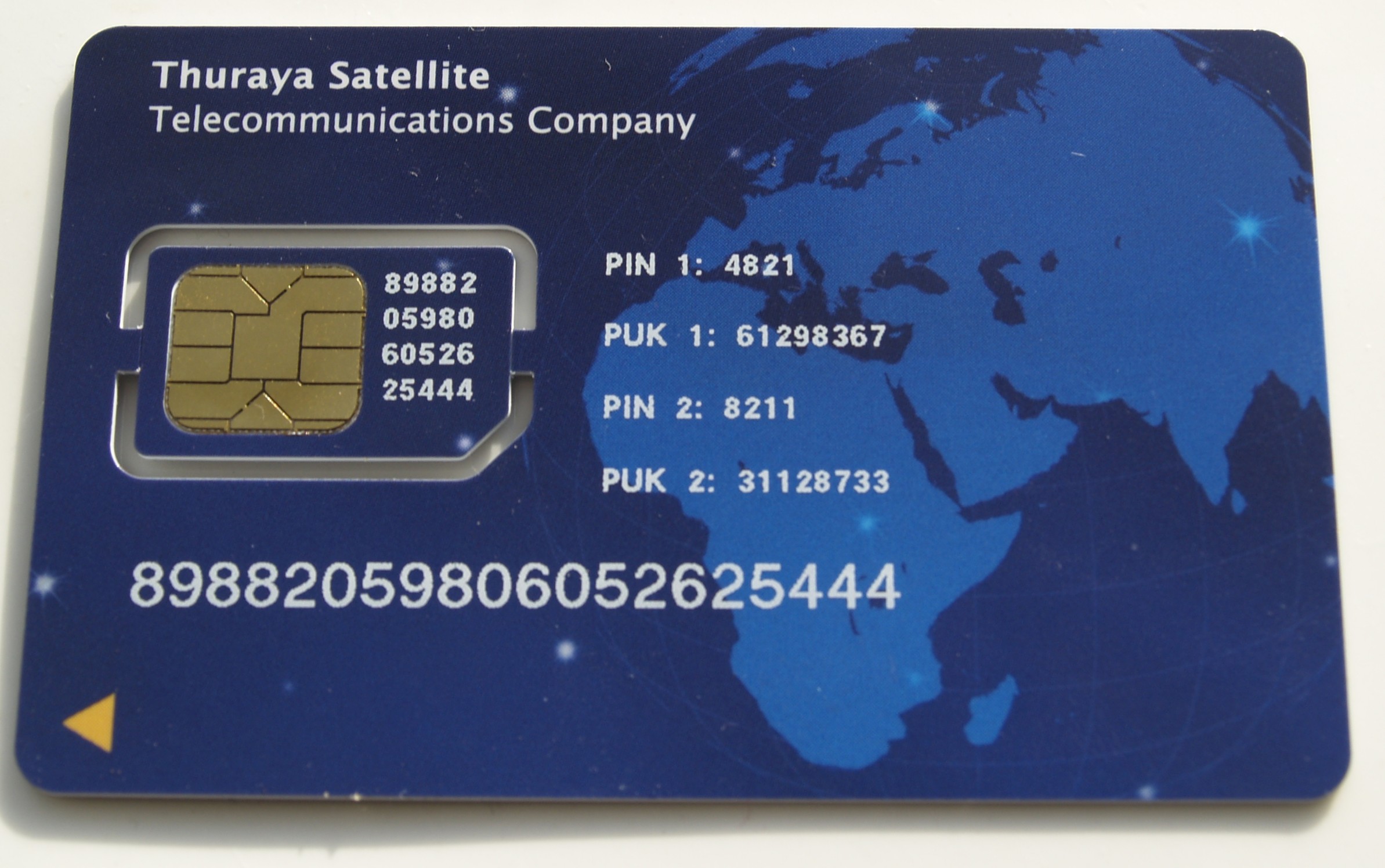
A phone service is implicitly device-locked (well, doesn't have to be, but it doesn't make sense to allow multiple devices per number anyway). Just using device credentials could allow anyone to log in with that information and use your subscription or pose as you.
As for ADSL or other forms of internet, there is already a second factor - ISPs generally know from which vicinity you are connecting from, and when you log in with your account information in your modem, they can match what's on your account to your physical "drop" and assert that it is at least within the same neighborhood - again, creating a physical second factor. This is also why your internet service generally needs to be "moved" whenever you change your residence.
A SIM card allows the freedom as the GP mentioned, without requiring someone from the centralized authority to process the request somehow.
There is a huge difference if you think about it for a bit.