Maybe because I read a lot of scifi and fantasy, despite not having read any Anne McCaffrey, but that doesn't seem particularly hard to parse or understand.
I seem to read more fiction now than I ever have, but much of it now slips through publishing (and editing)
So novels that start like that make me read uphill. Way better to plunge into the book.
The first few lines of books I recently liked...
"DEATH CAME FOR him through the trees."
"Gallegher played by ear, which would have been all right had he been a musician - but he was a scientist. A drunken and erratic one, but good."
“Like any good story, it began with a girl. It was supposed to end with a bullet."
"The level was at his top lip now. Even with his head pressed hard back against the stones of the cell wall his nose was only just above the surface. He wasn’t going to get his hands free in time; he was going to drown."
a little conflicted on this one:
"ON TUESDAY, OCTOBER 11, 1988, the Jason Taverner Show ran thirty seconds short. A technician, watching through the plastic bubble of the control dome, froze the final credit on the video section, then pointed to Jason Taverner, who had started to leave the stage. The technician tapped his wrist, pointed to his mouth."
The books that made me read uphill in sentence 1 loosely correlate with the rest of the book.
Makes me think of the MrBeast pdf from yesterday wrt the first crucial seconds of a youtube video.
it has four, going on five, esoteric proper nouns in one sentence. it's not hard to parse, but it isn't something I love reading either.
I'm reminded of the Illuminatus Trilogy, which at times is barely more than proper nouns arranged into sentences at random. like Finnegan's Wake but with more flower power
Compare with the first sentence of The Silmarillion by J.R.R. Tolkien:
> There was Eru, the One, who in Arda is called Iluvatar; and he made first the Ainur, the Holy Ones, that were the offspring of his thought, and they were with him before aught else was made.
except for 'Arda', every new word is defined/clarified.
I'm a huge LOTR fan and a moderate Silmarillion fan, and I can see how maybe Tolkien is guilty of this 'new words for familiar things' problem.. I guess when Tolkien does it, I'm enchanted, e.g. the first non-introduction line in _Fellowship_:
> When Mr Bilbo Baggins of Bag End announced that he would shortly be celebrating his eleventy-first birthday with a party of special magnificence, there was much talk and excitement in Hobbiton.
To me this immediately evokes: we're in a foreign land, but it's going to be vaguely small-town England in its manners and interests.
> it has four, going on five, esoteric proper nouns in one sentence.
F'lar is unexplained within that sentence. Mnementh is also unexplained, but sounds like a constellation.
Fax and the High Reaches are explicitly marked as the names of a person and a place. Those are going to appear as proper nouns no matter what genre you're reading. It's the only possible way to do things. This is like complaining that Robin Hood's primary antagonist is the Sheriff of Nottingham. What's the complaint?
Not surprisingly, Robert Anton Wilson, one half of the writing team behind Illuminatus, was a huge fan and scholar of James Joyce. Indeed in the first volume, the character Epicene Wildeblood writes, a damning dismissal of what is obviously meant to be the trilogy itself, describing it as "a very pretentious imitation of Faulkner and Joyce"[1]. I can't think of anything more Joycean. (Epicene doesn't think much of science fiction either, even when she transitions into a more relaxed Mary Margaret Wildeblood in the later Schrodinger's Cat trilogy.)
> it has four, going on five, esoteric proper nouns in one sentence. it's not hard to parse, but it isn't something I love reading either.
Even so. If the sentence was something like "Kowalski's Mosquito soared high above the Führerbunker, Hitler's final redoubt in Berlin," no one would find that problematic. McCaffrey's sentence is only troubling if you've already assumed that made-up names are inherently bad writing.
The thing about the alternative you offer is that none of the names in it are made-up, other than that Kowalski may be a fictional character.
There is nothing inherently wrong with made-up names, and some genres will require more than others, but I suspect that sentences in the style of McCaffrey's are partly intended to draw in the reader who feels, vaguely and probably subconsciously, as someone who has the inside scoop on esoteric knowledge from having deduced what sort of entities these names denote. To be clear, I am not immune to the effect, and it can be pleasant in small doses if the rest of the story is engaging.
My first paragraph is very well true. The second one says "there is nothing inherently wrong with made-up names", which seems to be in agreement with what you hold to be true.
I am also entirely in agreement with the position that no significant criticism of the author can be made from a single sentence, especially when presented without context.
Made-up names are bad to read for me too. I don't like too many things in my head with unfamiliar names. I can't think of things with unfamiliar names, and it bothers me.
That sounds very unpleasant. I'm sorry. With all respect, though, I think we can agree that that's an issue with the reader, not the writer? If I read a novel with a lot of Vietnamese characters and locations, say, I might well have some difficulty telling them apart, but that doesn't mean that Vietnamese names are bad writing.
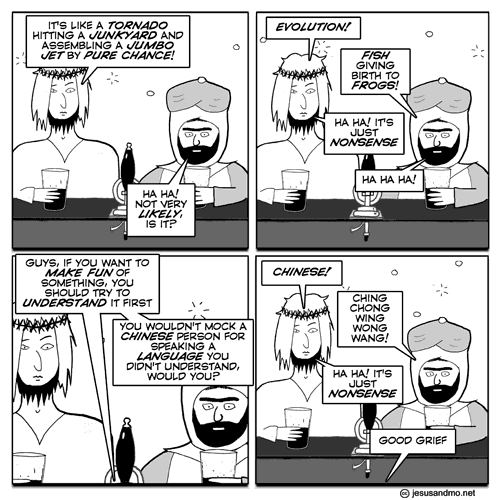
On a more serious note, I watched a Chinese drama with my parents, and the fact that the characters' names were in Chinese caused enormous problems for them.† This is hard for me to empathize with, but clearly it's something that some people can't handle.
† Another thing that caused them problems is that Chinese characters are addressed differently by different people, sometimes by name, sometimes by title, sometimes by a kinship term that will vary with the relationship between speaker and addressee....
That's easier for me to empathize with; it causes difficulties for me too, but those difficulties are mostly in the nature of nailing down a bunch of different pieces of information about each character, not in the nature of "why are you speaking a language that isn't English?!?"
I don't think foreign names are 'bad writing' but I do experience more difficulty keeping track of names that are in a language I'm completely unfamiliar with.
English names already have an allocated space in my brain. Fake names that follow the pattern of English names are usually easy to slot into the existing system. Names in my second language can be slightly more difficult but I seem to have developed a similar system of breaking them down and storing them. But names that don't fit into patterns I'm familiar with can be like trying to memorize completely arbitrary strings of information.
For example (grabbing some Aztec mythology names) "Tlaltecuhtli" won't be accurately stored beyond the first syllable or two until I've seen it many, many times, and if there's another character called "Tlazolteotl" I'm likely to mix them up.
But I will never ever remember how to spell the name. It’s like the perfect combination of letters that are just alien to me. I usually find it by searching “hiccup github duplicate finder”
>English names already have an allocated space in my brain. Fake names that follow the pattern of English names are usually easy to slot into the existing system.
I often 'round' them to the nearest English name or just see a long string of letters and mentally think 'the guy with the S name'. It gets confusing when there are additional weird names all starting with S though. Even relatively short names, if they are weird, I'll notice halfway through the book that I've been mentally pronouncing them as if 2 of the letters were swapped in a way to feels more natural.
>† Another thing that caused them problems is that Chinese characters are addressed differently by different people, sometimes by name, sometimes by title, sometimes by a kinship term that will vary with the relationship between speaker and addressee.
I have that problem with watching anime, especially slice-of-life types where you have 20 people all in school uniforms and with realistic hair colors and such. They'll all be called 3-4 different names and have no real distinguishing characteristics.
Oh that was great. In no small part because Burgess's slang is rooted in real etymology so it's not entirely a foreign language so much as creative use of our own. Snowcrash is similar in this respect.
My original example was going to be, a young person reading an adult book with a large vocabulary. I decided that might come off as rude, so I changed it, and maybe lost some impact.
Put more bluntly: having a reading disability does not obligate all authors to write to your reading level.
>Put more bluntly: having a reading disability does not obligate all authors to write to your reading level.
This, although it's not even always a disability related issue. Sometimes things in life aren't made for you, and you'll be happier understanding that. It's similar to complaining that an advanced mathematics textbook wasn't understandable given your baseline understanding of maths. It's not being written for you.