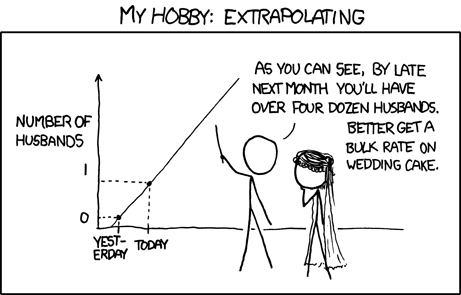
Sigh. One of the most discouraging things of Internet 'Culture' is to be the person who said "X is a failure" first, as some sort of street cred. Come back in a year or two or three and then tell me its dead, but a couple of months in? Really? Hard to plot a trend line with one data point.
The problem is not under-usage per se, but hype. Caldwell's soapboxing about Twitter's failure to live up to its potential raised expectations, but didn't provide a solution to the chicken-egg problem. I'm sure Caldwell & co can build a great API and app platform, but that all becomes relevant and compelling only once App.net can grow a community a respectable fraction (1%?) of Twitter's size.
Of course, as noted elsewhere, it's too early to pass judgment - but it's also a good reminder that unless you like throwing around $50s (http://ihave50dollars.com/), App.net won't matter to you for a good while yet.
Early Reports indicate that App.net is not generating very much user engagement. In fact, most of their 10,000 daily posts come from about 250 users, a far shot from Twitter’s 150 million users and 350 million tweets.
That's not a fair comparison. How many users did Twitter have a month after launching?
Indeed. I keep seeing these sorts of posts all over the place today... "Ohnoes, App.Net doesn't have millions of users yet - it's a failure." Rubbish. It's been around a month or so, and is only really known in tech-circles at the moment. They have managed to convince a significant number of people to sign up for a service when they can access a larger competitor for _free_. That in itself is a pretty big success.
It's too early to call App.Net a success or failure. Maybe it got too much press too early, and that has given people unrealistic expectations? I say come back and look at the numbers in 12-18 months. Then we'll be looking at a mature service, and will know how many users they added, or convinced to renew their subscription.
The number of users is irrelevant when measuring user engagement, at least when it is defined as the article describes. (But comparing early app.net versus a more mature Twitter may be relevant.)
To calculate user engagement they should take the number of daily posts and divide by the number of users (so with these numbers, for Twitter it is 350 million/150 million = 2.33 and for app.net it is 10,000/[# of app.net users...20,000 according to the study linked to by diego] = 0.5. This isn't necessarily the best metric since somebody could easily write a bot that makes several posts per second, which could skew things considerably. (I don't think anyone cares about how active peoples' bots are.)
It is quite possible that Twitter has a similar situation where most tweets come from a smaller number of users.
"It is quite possible that Twitter has a similar situation where most tweets come from a smaller number of users"
It's not only possible, it's certain. The average Twitter user doesn't tweet very much. I don't know if it's 5% or 1% that's responsible for half the tweets (I could find out), but it's definitely a small minority. This is expected for every content-based social network.
Agree, that doesn't mean anything. My study was misinterpreted: those users are generating a TON of posts. The top poster has close to 6000. There is a long tail of thousands of users who are pretty engaged. They are just not posting like crazy!
At the same time it has received a ton of press up-front, in exactly the circles early adopters of the service would frequent. I think there is a feeling (right or wrong) that if the problems App.net purports to solve were really as bad as claimed, people would have been jumping on in droves, at least to give it a good spin around the block.
Its actually quite fair. When Twitter launched there was no Twitter. Now App.net is basically Twitter for a certain segment of the market. You can compare them now because people are already familiar with and have proved to be ready to adopt the idea. Now if App.net was a direct competitor from the early days of Twitter then it'd be less fair.
My favorite part of this is that he criticizes App.net for copying but is using a Wordpress themes that copies Svbtle and does so pretty blatantly with the WP-SVBTLE tag at the bottom left
I believe you're missing his point. He isn't criticizing App.net for copying Twitter. He's pointing out that it is a poor business model, even from a sustainability standpoint. There isn't enough of an improvement to cause people to switch over. I agree with him.
It's a theme that you otherwise would not have access to unless you're part of the elite few that are actually allowed to post at Svbtle. I like the way it looks, personally.
The Atlantic Monthly has a theme that is only available to people the Atlantic Monthly has hired to blog for them.
The purpose of this theme is not to capitalize on the same design ideas as Svbtle (that's what the DRAWAR.COM link alludes to). The purpose of the theme is to dilute SVBTLE.COM because the author is so insecure that not being invited to a group blog makes them bitter.
A willingness to publish under one's own name using this silly WP-SVBTLE theme says way more about the author of the blog than it does about Svbtle.
>A willingness to publish under one's own name using this silly WP-SVBTLE theme says way more about the author of the blog
The Atlantic theme looks like a fairly generic news website, to be honest.
That said, wow. You are reading a lot of personal bias into choice of website theme.
I was planning on grabbing this for my personal one just because I really, really like how it looks. If it's going to tick off people who over-extrapolate, so much the better ;)
I think it's a very bad idea to use this theme for your personal blog, regardless of what you think of Svbtle. But if you want your choice of blog theme to compete for attention with your ideas, that's your call.
I absolutely agree with this sentiment. There's no reason to choose this theme unless you're trying to confuse people that you're a part of this network. Unfortunately, the userbase you're trying to impress is smart enough to know the difference and you just end up looking the fool.
In my mind, app.net is incredibly interesting, but not because it is like Twitter. If app.net is going to be successful, it is going to be because they become very not-like-twitter, by becoming critical infrastructure that applications can easily talk together with. In my mind, app.net's competitor isn't Twitter, it's HTTP.
OP is missing the point. I don't think App.net is going out to be a Twitter replacement. I don't think App.net requires the critical mass or wide spread popularity that Twitter enjoys.
Its a niche product that is serving a very particular purpose. I wish that some blogger or journalist would try to evaluate App.net on what its setting out to be, not comparing it to Twitter.
At the end of the day, App.net will be a paid service. It's not fair to compare it to Twitter. There is some overlap, but for the most part this is a different market segment.
Im not convinced that app.net needs to beat twitters numbers to win. If they continue with the paid membership model, then they can carve a nice niche in the developer community.
Not related to his point, but he isn't actually part of Svbtle, right? Not that it really matters, though I bet that annoys the hell out of dcurtis.
Isn't Twitters success mostly attributed to its mainstream user adoption? I'm not sure how app.net can survive on a niche developer community if that community is building on top of a platform that caters to itself.
All social networks suffer from 90/10 rule (90% of the content is generated by 10% of the users), so this really isn't surprising.
Other posters have mentioned this as well, but I think Twitter has too much momentum. Someone trying to do the exact same thing from the end-user perspective isn't going to be able to compete.
Apart from the fact that it's extremely early days for App.net right now, this article assumes that Twitter will remain as it is now, and not deteriorate further with significantly increased levels of advertising and spam. App.net will likely become increasingly attractive as Twitter becomes more "manipulated" to deliver on those promised eyeballs.
I've paid up for App.net because I have a zero tolerance policy to advertising, and I don't want to be involved with services that have their primary business model built around marketing and advertising. In this case App.net is not aping Twitter, because Twitter will never indulge the idea of a world without advertising.
Yes, that's me. And no, I don't watch terrestrial TV, or read magazines.
Yes, I use Twitter now, but I'd like to move away from it, especially if it continues to move in the direction that it's going... hence my subscription to App.net and my comment that you're responding to.
The fact that I have a Twitter account means that it is curretly useful for me, but it doesn't change my stance on advertising, which I do not tolerate. I also use Twitter via a client that does not pollute my stream with advertising, but this cannot last.
I'm quite happy to pay for a service that doesn't advertise or sell eyeballs.
I am not a paid supporter of app.net nor have I seen what they have built to date but I'd put money on app.net evolving into something different than what it is today. For those of you who paid into supporting app.net, I think you paid into the people behind app.net and not app.net itself. Give them time to flesh things out before you critique.
Why are you finding problems with app.net instead of focussing on it;s good parts and possibilities. You say and talk about some fundamental differences with companies facebook and apple, but why should anyone believe your assessment. Future can not be predicted in the world of technology and app.net has a good chance like any other company.
>For an end user, App.net looks exactly like Twitter and it won’t improve their experience in any relevant way that will make them want to switch.
The whole point of App.net is to be an API for other apps to be built on. The "Alpha" app or whatever is a twitter clone, but that doesn't mean that every app built on it will be.
Yeah, I guess the NFL season has started - here comes the Arm Chair quarterbacks.
What did you expect from App.net. I think you are suffering from setting your expectations too high. It is designed to fill a niche - and it actually has a more sustainable financial outlook than Twitter.