It is also a rugged phone. So if you want to make a fair comparison with an iPhone, you have to put the iPhone in a case, resulting in a similar weight and thickness.
The distinction, though, is that you get to make that choice as the consumer. You can carry the phone with no case, or you can put a very rugged case on it, or something in between.
Yeah the first thing everyone does with their new iPhones is put them in a case - at that point thinness doesn't matter, Id argue Apple counts on it, as their phones are awkward to hold otherwise.
Replaceable covers used to serve the same purpose.
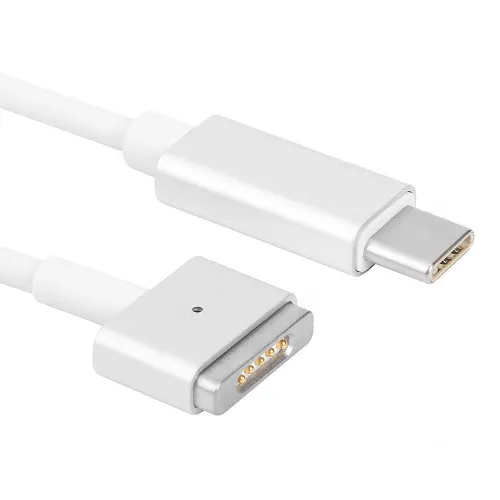
Indeed. I've had my XCover 6 for 3½ years now. I've dropped it many times, on hard surfaces (like outdoor concrete/brick). I've undoubtedly been fortunate. the plastic has gouges in it. there's (small) scratches on the screen (some from my keys), but the screen is not cracked. When it is dropped the back and battery pop off, which I think helps dissipate the forces. BTW, for anyone trying to extend their phone life, I strongly recommend those magnetic USB connectors. Reduces wear and tear on the USB port, and is also kinda convenient for quick disconnect.
> I strongly recommend those magnetic USB connectors
Note that these connectors are in violation of USB standard and potentially harmful as they expose the pins in an unintended way. For instance, notice that all the connection on the USB port are not all the same length, it is a form of protection, to make sure the power lines are well connected before the data lines make contact. With magnetic USB connectors, you lose that feature, in addition to potential issues with ESD, short circuits, etc...
I have a friend who swears by them and never had a problem, but still, that's good to know.
> notice that all the connection on the USB port are not all the same length, it is a form of protection
This was noticeable on USB-A connectors when you look closely where the two outside pins were slightly longer than the two inside pins: the Make-First, Break-Last (MFBL) principle. You can also see the same thing on SATA edge connector pins.
Take care googling for photos because many are CAD mockups misinform (because they are drawn pretty incorrectly and show no physical length differences).
USB-C does have longer pins for the ground, and the CC (configuration channel) connects last. A USB-C host doesn't deliver power until it is negotiated using the CC pins.
So USB-C via a "magsafe" connector is safe.
But maybe look for the two outermost pins to be longer.
You mention ESD which could be riskier since charged fingers or worse could touch contacts directly. However the lip around the contacts is usually grounded so any spark should be grounded first. I would also assume modern electronics are well protected against ESD (nobody wants occasional undiagnosable failures leading to refunds). Sure that stuff from earlier this century wasn't so well protected. YMMV if you are a sparky person in a sparky environs: weigh the downside costs of different approaches appropriately.
At least the USB-C ones I purchase are not flush - I never found those to be reliable. It's a male prong that looks pretty much identical in wiring to the male prong on the phone, that connects to a female one plugged into the socket. That plus a bit of a collar to help hold it in place. So I don't see why there would be any difference in grounding, it's the same connection...
(that plus the comments from the more knowledgeable person below)
Eventually they start wearing out, and I just replace them. I've had no issues with high voltages (45W+ charging on phone and steamdeck) and with peripherals (hub for example).
You want to get everything grounded before the data wires connect. But that's more about the shroud than the pins as far as I understand it, and a magnetic connector could ensure grounding if it was designed to do so. And for charging purposes you could skip the data wires entirely.
Oh yeah so it's utter trash and not worthy of our attention. Imagine carrying a whole 58 grams more, during a whole day, impossible for the average tech worker's atrophied muscles
The point is that people have different preferences, so the EU should not force people to buy phones with removable batteries. People who want such features can buy those phones, and people who want smaller, thinner phones can buy ones with integrated batteries.
At most the EU should tax externalities like electronic waste, though that would be a rounding error compared to the cost of the phone itself.
Phones with removable batteries are rare because only a small fraction of people want phones with removable batteries. Phone manufacturers also dislike removable batteries because customers buy cheap 3rd party batteries and complain when these batteries perform poorly or malfunction, sometimes by exploding. And then the headline is, “Phone made by company X explodes.” not, “Cheap battery explodes.” Removable batteries also introduce new failure modes like contacts degrading, causing phones to power off unexpectedly when jostled or flexed in certain ways. That increases the risk of a recall and bad PR.
I and millions of others want a phone that is smaller than the current offerings. Heck, my 13 mini is too big for my tastes. But I don’t think that means the government should force phone manufacturers to make smaller phones. So too for features like removable batteries, physical keyboards, or headphone jacks.
What do you mean by "rare"? You just click "order". It's not like you have to go on the quest for the lost arc or anything like that. They are uncommon in the sense that people don't actually get them, but that's not because of a lack of availability. People do not want them.
They mean the models are rare, not the devices. The claim is if you want feature X + removable battery, it's unlikely that you will find it. People's willingness to forgo the battery for feature X therefore doesn't tell you if people care about removable batteries in an absolute sense, just that they care relatively less than they do about feature X.
You could argue that the market already reflects people's desires via, eg., Apple's market research. They could argue that democracy in the EU also reflects people's desires.
> The point is that people have different preferences, so the EU should not force people to buy phones with removable batteries.
There are many food additives with very useful properties, but health effects. There are many perfumes too where the original formulation had a particular compound layer found to be carcinogenic.
Regardless of whether an individual prefers to use such compounds at their own risk or not, large companies will use whatever is the cheapest ingredient for their product.
In some cases, that's better for the consumer - who, often, has almost zero choice.
(And if you think you truly have choice as a consumer, I challenge you to use a phone that isn't running either Apple or Google's code.)
I not sure how much we’re disagreeing here. Applying my argument of taxing externalities to certain food additives would result in taxes so high that it would effectively be a ban.
The externalities of integrated batteries are that people probably replace their phones sooner than otherwise, resulting in more electronic waste. But phones are only a tiny fraction of e-waste. Most e-waste is from household appliances, displays, & HVAC equipment. Phones are less 10%. I mean, how could it be otherwise? Phones are small and people use them for years before upgrading.
I’m not sure what the Android/iOS duopoly has to do with removable batteries. Mandating removable batteries would not change the operating systems available. And while there isn’t much choice in which OS you can run on a phone, there is enough choice that you can buy phones with removable batteries. If anything, this is an argument against mandating removable batteries, as governments are not mandating/subsidizing another phone OS despite far less choice in that area.
Lastly, I don’t see how banning people from having phones with integrated batteries gives them more choice. Most people (such as myself) don’t really care about removable batteries, and would rather have a phone that is smaller, cheaper, and/or more resistant to the elements. The way to give people the most choice is to tax externalities commensurate to the harm they cause, and let the market figure out what people actually value.
My point or argument isn't that customers have absolutely zero choice, but that there are very few options out there.
If (phone) OSes were truly healthy free markets, there would be a lot of healthy competition. Even cars and automobiles (which still are almost oligopolies, as it's extremely hard to compete) have more options.
I said that sentence primarily as counter to anyone who thinks the mythical "free market" is a panacea to all ills, as many anti-EU folks often have such a view. I was trying to demonstrate that an unregulated market is (very) often unhealthy, and can paradoxically can result in viewer choices.
Sure, but it seems like the person I was replying to doesn't even consider two options to be a choice, so perhaps their choice framework has obscure criteria that you or I haven't been able to grok. That's why I asked.
This has been repeated so so many times... How can you be sure that throwaway glued-together phones are thinner and lighter than repairable phones.. If there is any source of this information, it's vendors who have interest in phones being non-repairable so they can ship more units...
How about vendors get on their asses and design thinner and lighter phones that are not e-waste from the moment they leave the factory?
I bet you when forced to make the right decision they can go even thinner and lighter than the current flagships...
For that matter, I put a chonky case on my phone anyway... would rather have a sturdier phone that doesn't need an additional case that has the features I'd like, including an easily replaced/swapped battery.
Beyond this, hell, make the "internal" battery solid-state with minimal capacity and have an external power pack from the get-go as part of case designs. Get the size of battery you want... if you want a big booty phone with battery for days, you can get it.
That assumes that the market itself is actually "free" and consistent and that there are no bad actors in the mix, and upstarts are allowed to freely start and compete. Given the regulations in the space that is emphatically not so.
Incumbents will remove and enshitify a number of features in order to maximize returns... Your new clothes dryer has a 10 year mechanical warranty.. but the control board isn't covered, will die in 12-24 months and won't be produced again. Oh and there's some clunky DRM in the mix on top. Guess you get to buy a new dryer, but this time you'll go with $OtherShittyBrandThatDoesTheSameThing.
Aren’t newer washers/dryers full of electronics because of laws mandating higher efficiency? My parents have an old Maytag washer that uses around 30 gallons per load while my washer uses less than 8. I know Speed Queen makes dumb laundry machines, but at least one of their models was banned for residential sale by the Department of Energy. They ended up figuring out a workaround by gimping the default cleaning mode and encouraging users to not use that mode.[1]
But I don’t see how mandating removable batteries helps this situation with phones. I don’t replace my phone when the battery degrades, as it’s pretty cheap & painless to replace the battery after a few years. I upgrade when my phone stops getting security updates, or when a new phone comes along with some feature I want.
I'm mostly with you.. my hope is to see more options with swapable batteries... I used to keep one on the charger and the other in my phone, then just swap them out when I leave the house. Not any time recently, but up until android/ios became pretty common.
Earth's resources are finite, both in terms of raw materials and ability to absorb pollution. Stewardship of our resources entails the regulation of the things we create with those resources such that our collective consumption is conserved. Such oversight is both prudent, and as history and global outcomes teach, quite necessary.
I don't disagree with your statement, but an increase in design durability also does those things. A phone that you can drop and it doesn't break creates less pollution than a phone that you can drop and replace the screen.
E-waste is a minuscule rounding error compared to all the other forms of environmental destruction modern industrial civilization causes. European countries are massive polluters and net carbon producers (though not quite as bad as the US); e-waste shouldn't even be on their radar since it is a distraction from almost infinitely more important environmental concerns. People complaining about this don't actually care about e-waste, they just talk about it because it's convenient for their argument.