The utility of this can't be understated. In space, no one can hear your call to AAA. Like everything else with 3D printing, the first things will be small and I doubt NASA will forego incorporating redundancy in favor of sending more printers.
But I imagine the space (and cost) saving potential is huge here. I'm guessing the space station requires a number of redundant and common parts. That has a cost, a common part is more easily replaced, but has to be made to the lowest common denominator. Niche parts have to be carried in duplicate or triplicate, I'm sure. If someone could chime in, I'd like to know how much that's the case.
If my supposition is true, then this means fewer parts need share common components, and this means less weight and more room for everything else. Now if only they could 3D print better meals and more dignified sanitation for the brave members of the ISS, I'm sure they would appreciate that.
All of that is very true, plus there is one more huge advantage. Everything in space is currently designed for launch loads. Strapping something to the top of a rocket puts massive stress on everything - even small things, so they have to be overbuilt relative to the loads they experience in space.
Manufacturing things in space (3D printing or other technologies) allows building the minimum required part for space. Imagine how much smaller and lighter simple things like equipment mounts could be if they didn't have to survive launch.
> If someone could chime in, I'd like to know how much that's the case.
I'd be interested to know this too. I'm guessing there aren't that many vital parts made from plastic though, unless they've secretly built the ISS out of Lego :D
Next step would be a laser sintering device (additive metal manufacturing). Floating powder might be a problem, but could be solved with rotating the device to use centripetal force to hold the powder against a surface during the process.
I doubt bringing fine metal powder to the ISS is a good idea. Any powder that escapes (and escape it will) will end up everywhere, and can short out electronics. Breathing it in also isn't that healthy.
Indeed, the toxicity of the metal powders is one of the major issues with laser sintering metal, and real care must be taken not to ingest it. The reason we can deal with it on earth is that the metal falls down very quickly, not lingering in the air to be breathed in. Cleaning laser sintering machines typically requires protective gear, though.
Then any escaped "fine metal powder" could turn into a 10,000 km/h sandblast for the next satellite over.
It'd probably be fine for the ISS, since it's in a low enough orbit that dust should deorbit quickly, but you'd still have the basic issue of logistics. I can't comment on how convenient it'd be to build and operate a 3D printer in hard vacuum, beyond "not very".
Most definitely for larger pieces, but it isn't suited for precision welding applications, or complex structures as selective laser sintering would be.
I wonder if they can print without using support structures? I would have expected layer bonding to be an issue due to no gravity, but if it's really not a problem (as indicated in the article), I think that 3D printing should work better in space.
I suspect you'd still need 'supports' added when slicing - as often it's not so much gravity, but movement from the print head that causes things to go awry.
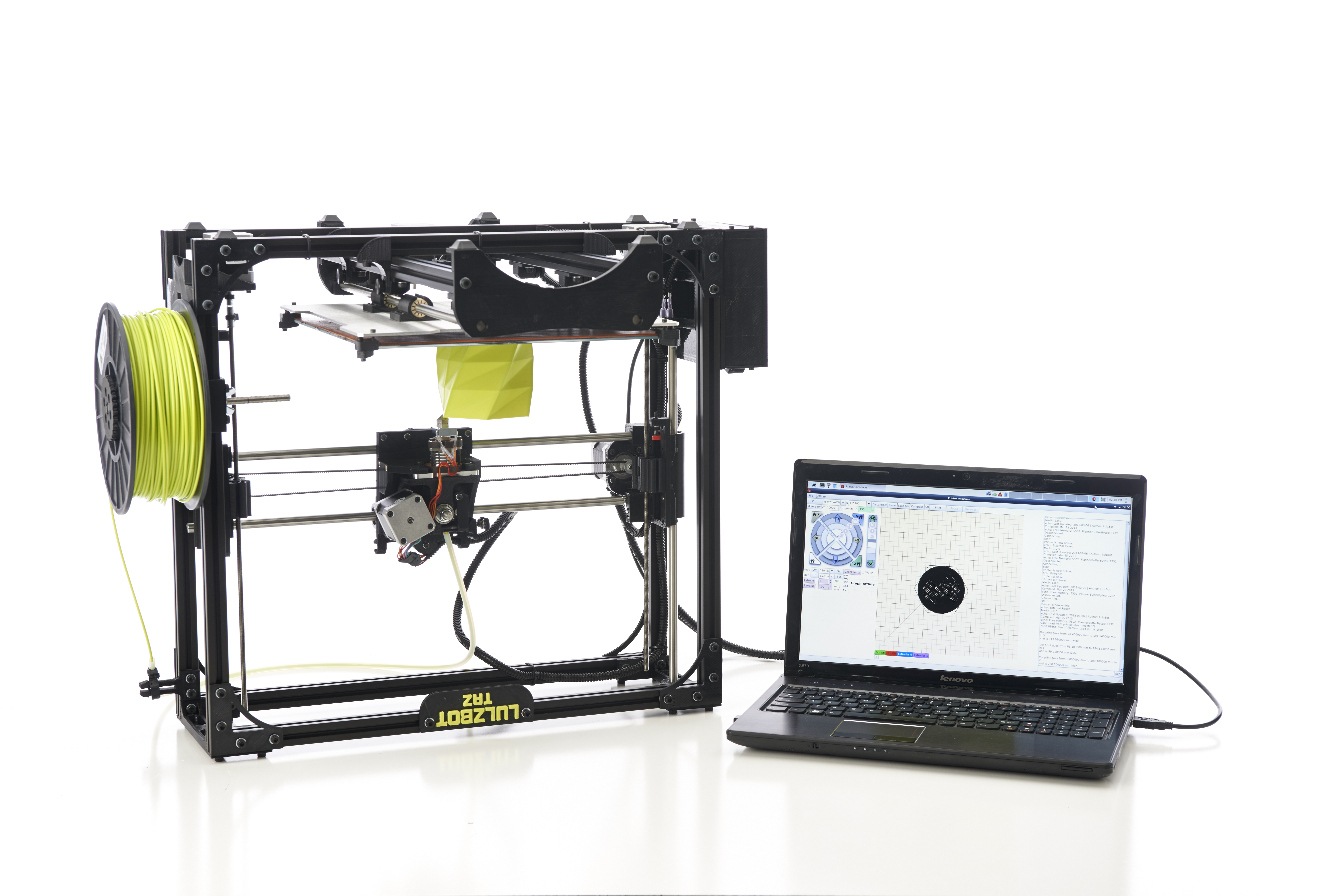
As for layer/bed adhesion. Even here on Earth, the RepRap MendelMax/Lulzbot [1] can print upside down. I imagine that's true for most of the units made from aluminum extrusions. And there have already been prints done in parabolic 'zero-g' flights using a Makerbot looking printer [2].
I know theres some really tantalizing ideas about using metal 3d printers which melt powdered metal with a laser in space. By varying the composition of the powders, it's possible to make pieces which are gradient alloys- Imagine a pipe thats copper at one end, silver in the middle and gold on the other. Opens up a lot of possibilities for mining asteroids.
A few years ago I met some folks at the Huntsville, AL Hackerspace who were working on turning the consumables into 3D printer feedstock. All of the food containers, etc would be turned into valuable materials. Right now they have to ship all of that waste back down to Earth. The potential for this kind of reuse is huge.
Very handy to have spare parts to be 3D printed. Reminds me of the Bob Shaw's short story "Put part A into part B", where the crew have to assemble a robot capable of assembling anything, but it comes disassembled to the space station.


But I imagine the space (and cost) saving potential is huge here. I'm guessing the space station requires a number of redundant and common parts. That has a cost, a common part is more easily replaced, but has to be made to the lowest common denominator. Niche parts have to be carried in duplicate or triplicate, I'm sure. If someone could chime in, I'd like to know how much that's the case.
If my supposition is true, then this means fewer parts need share common components, and this means less weight and more room for everything else. Now if only they could 3D print better meals and more dignified sanitation for the brave members of the ISS, I'm sure they would appreciate that.