I was in Iceland a few weeks ago and the people, museums, info plaques, etc. talked about deforestation and how the early settlers chopped down all the forests. Also mentioned was forestation and how they were slowly replanting. The grazing by horses and sheep were never mentioned as a problem. I did hear about how flocks of sheep are just let loose in the highlands in the summer to graze and the sheep herders separate out the flocks in big festivals in the fall. Similar to the old time Spanish rodeos in California.
This article obliquely mentions the sheep problem but only by saying:
Mr. Jonsson and his volunteers then plant the appropriate species for the plot — birch, Sitka spruce, lodgepole pine, Russian larch or other species. “We’d love to plant aspen,” he said. “But sheep really love aspen.”
Sheep may love aspen but they will eat all the other trees also. I did not realize this was the main reason there was only grass everywhere until, when up on top of the Skógafoss waterfall, there was this[1] little island in the river covered in a little mini-forest. This rocky island would not be a very good place for trees to grow compared to the nice soil under the grassy fields around it, but since nothing could graze on the island, the trees could grow up.
The tl;dr of Iceland's colonization is: Norse settlers arrive, placement in society is based on how big of a farmer you are. Thus they overgraze and unlike their native Scandinavia they're doing this on a volcanic island with really thin topsoil, so the overgrazing leads to runaway topsoil erosion and dustbowlification. This leads to desperate logging of the last of the trees around for firewood and housing.
It's never remotely recovered, but that process is slowly starting just now. I was trying to find a photo like the one you just posted but couldn't. There's lots of examples like that where the plant biodiversity in an area where the sheep can't get to is night & day compared to the area right next to it where they can.
Which is not to say that those specific trees are old growth forest or anything like that. Icelanders pretty much lived in mud huts until after WWII in large parts of the country. If the sheep didn't get to a place like that some guy would have certainly swam over there to gather firewood. But it'll have been left alone by sheep and man in the last several decades, which as you can see makes a huge difference.
The accompanying article (in Icelandic, but it translates ok-ish) says that compared to the land around it it has a lot more biodiversity and a better topsoil, similar to other areas in the country protected from grazers that they've studied: http://www.skogur.is/um-skograekt-rikisins/vidburdir/2014/04...
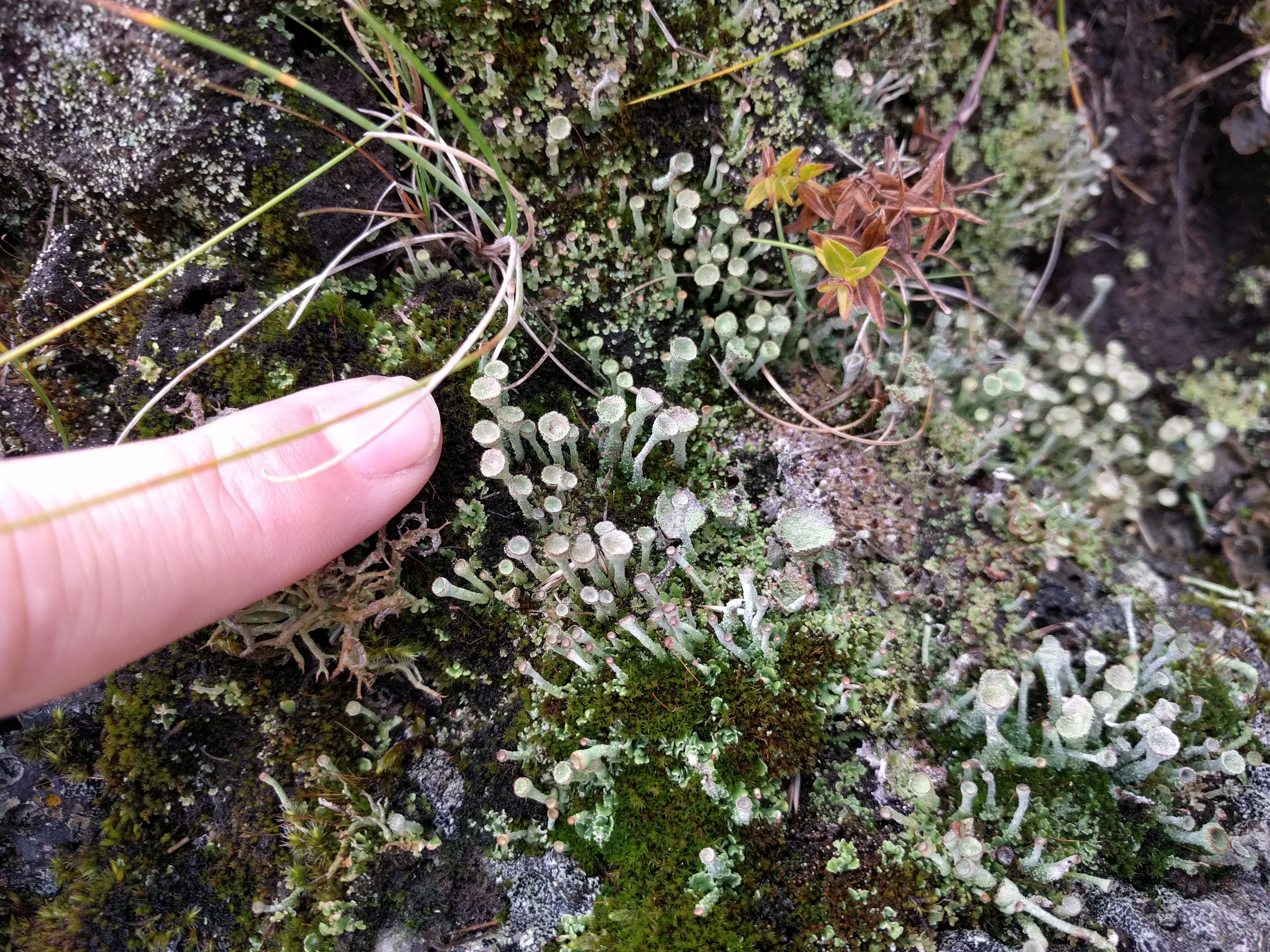
Another part about Iceland vegetation is that developing soil on top of fresh lava takes a long time. Tens of thousands of years in some cases. Large sections of Iceland gets covered up with lava flows pretty often. But you can get some great biodiversity on the lava pretty quickly in a wet place like Iceland with lots of moss and lichen growing. On an 8,000 year old lava flow in the middle of Iceland near Leirubakki, the moss is half a foot thick[1] in places. You find a few old gnarled birch growing here and there in the hollows where wind blow dirt accumulates, but mostly just huge mats of moss and lichen with a bit of grass.
Grazing by sheep and goats in California devastated native flora in California's Central Valley and foothills, and also introduced the Mediterranean grasses that put the Golden in California's current landscape.
Src:Allan A. Schoenherr's A Natural History of California
It’s theorized that CA’s golden hills used to be entirely covered with wildflowers. I find it sad that no photosynthesis can occur all summer due to the dead grasses. Such lost potential. But we get some amount of beef and dairy in exchange for the dramatic loss of efficiency and biodiversity.
That photo is a sharp (and fascinating) reinforcement of the grazing sheep point. Is there any other reason those trees would grow clustered right there and nowhere else? Was that area not accessible by sheep?
As you can see somewhat in the photo, this island is isolated from grazing by the river and the steep rocky sides of the island. You could probably get a mountain goat to climb up there with some prodding, but sheep and horses that range on the slopes behind wouldn't.
Yes, I was aware of it, thanks though. That is why I mentioned the novel in the first place. Was going to mention the jökulls too, as sibling comment does. One of them was Vatna or some such, need to check - it was long back that I read it :)


This article obliquely mentions the sheep problem but only by saying:
Mr. Jonsson and his volunteers then plant the appropriate species for the plot — birch, Sitka spruce, lodgepole pine, Russian larch or other species. “We’d love to plant aspen,” he said. “But sheep really love aspen.”
Sheep may love aspen but they will eat all the other trees also. I did not realize this was the main reason there was only grass everywhere until, when up on top of the Skógafoss waterfall, there was this[1] little island in the river covered in a little mini-forest. This rocky island would not be a very good place for trees to grow compared to the nice soil under the grassy fields around it, but since nothing could graze on the island, the trees could grow up.
[1] https://njarboe.com/iceland/IcelandTreeIslandSkogafoss.jpg (The trees on this island are only about 4 feet tall)