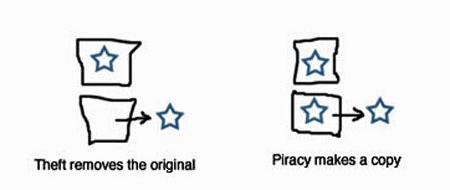
No worries, I'll just use the torrent sharers. I bet those will give me a constant 4K quality on all my devices, no ridiculous DRM, get to keep them once I terminate my "subscription", etc. Oh and it's free, not 10-15$ USD for each service.
I may (or may not) have built my own Netflix competitor. It had more content than all of the major providers combined.
Legal buffer: I will not say what the content was. It may have all been non-copyrighted cat videos ;)
The service was available cross region. Stored videos in multiple resolutions for streamability in low-bandwidth situations. No DRM bs. It cost me under $400/month to run the whole service, and I could access it from any device, anywhere I had internet.
I gave access to a few friends and family and they all chipped in to help cover expenses (it was never profitable). I ran it for a few months before I started to lose interest in maintaining it - it was mostly just a proof-of-concept, and fell back to Netflix/HBO/other subs for convenience.
I applaud Netflix, HBO, etc for offering competitive solutions to monopolistic cable companies and other restrictive media outlets, but this will always remain a problem.
Once you create a piece of art and put it out for the world to see, you cannot control how/when/where it will be shown. Stop trying... Just make it more convenient for people to pay to view it.
Going after people for low-level copyright violation, like sharing a password, is childish.
This comes off as incredibly self-entitled and arrogant.
That piece of art? It takes years and tremendous amount of people hours to bring these films into existence your enjoyment. I grew up in Hollywood, in family of filmmakers. My friends are actors, producers, and well anybody else who is involved in the business - and we all dedicate unbelievable hours of love and labor into the “non copyrighted cat videos”
Yes. The system isn’t perfect, but ... what you’re doing is quite frankly, stealing. It’s offensive. We’re entitled to our livelihoods as much as you are.
I can concede that I am certainly self-entitled and arrogant in many ways, but I fail to see how I am being so here.
This project was built as a fun proof-of-concept. Less than a dozen people used it, and none of them cancelled their other paid services to use it. Also, like I mentioned, it was never profitable and I never made any money off of it.
Also this is coming from a fellow content creator, of many types (music, short videos, random pieces of art). Never once have I thought that anyone owes me anything for it. Unless I'm hired to shoot a video, or design something, I can't think of a more self-entitled and arrogant state of mind to be in, than to expect someone to give me gratitude because I spent time doing something I love. Doing what you love isn't enough self-gratitude for time well spent?
The only real argument that will get people to give money for dedication to an art is the appeal to pity. It's "I am pursuing my dreams and dedicating time to building something I love, I would really appreciate financial support for it so that I can continue to do so". The second the tone switches to, "I am owed gratitude in the form of money for this masterpiece I have created", is the second I will pirate that shit into oblivion.
Imagining that people loved my content so much that some would even go to illegal means to enjoy it, is a compliment to me.
Also, this appeal, is the reason that I pay for most all of the media I consume - music, movies/TV, games, concerts, etc. It is my way of showing appreciation because I can afford to, and choose to.
Having some appreciation that people actually give enough of a shit about the art you create that they'll try to get to it illegally, that's a mindset to strive for. If they pay for it, damn... you're doing good.
No, OP is bragging about building a content delivery service, what was being distributed is completely irrelevant. For all we know it was legally purchased physical media that was ripped into a digital format to facilitate sharing the media without having to mail it back and forth.
The point is, it's not that hard to build Netflix, it's hard to get the rights to the content itself. I, and many others, just want an easier way to get access to the content. Streaming services are frustrating because the selection is limited and varies, buying digital copies is frustrating because you are still beholden to the company you bought it from to support whatever devices you want to use it on.
I have absolutely no problem with paying for content, I have a problem with being locked into a specific DRM-scheme, especially when the price is essentially the same as physical media that I could rip myself to do whatever I want with. Just let me buy/rent DRM-free content and I won't be tempted to pirate. The problem is that piracy is often easier than the legal method, and when that happens, people will prefer to pirate.
For example, Netflix didn't work on Linux for quite a while. When it finally did, I was locked in to using a specific binary blob on my machine, so I have no idea if it's actually secure. If I choose to use another platform (let's say I experiment with RISCV or POWER9 devices), I'm again out of luck with most streaming services.
Why can't I just buy an MP4 of a movie and use whatever software I want to watch it? If that was an option, I'd buy a lot more movies, but since it's not, I suffer through the crappy selection on Amazon Prime and Netflix, not wanting to build too much of a library on Amazon or any other digital video platform.
If you are paying for a Netflix subscription and a movie comes on over the air you are legally allowed to timeshift and record the OTA show for later consumption. So what’s stopping the other direction, timeshifting (or pirating) and not watching until it’s available on a service you paid for?
You are allowed to backup a movie for your records, which means you can record Netflix shows for later consumption. Those backed up shows watched later are not counted by Netflix’s algorithm, so that production company is not paid.
I’m not supporting one side or the other, I’m raising awareness that IP theft is not so simple when the production companies are still getting paid even with loopholes in the regulation
You come off as self-entitled for believing that everyone should adhere to your system of values which includes the particular expectations for compensation of your work.
I grew up around musicians. Musicians steal and pirate themselves all the time. Nobody will bat an eye if you pirate their music. Being poor themselves most know that affording a concert or paying for legal music can be a hassle so they don't bust people's balls.
I've pirated tons of music myself. I've also spent thousands of dollars in vinyl, potentially tens of thousands in festivals with their associated costs and merch, and have spend more money in building a sound system for parties that I have no possibility of ever recovering.
Art doesn't entitle you to a livelihood. If you don't like the level of compensation, get a day job and do it for kicks like the vast majority of people do.
> Art doesn't entitle you to a livelihood. If you don't like the level of compensation, get a day job and do it for kicks like the vast majority of people do.
That's not for you to decide. Replace "art" with {your actual job} and see if your statements still feels reasonable.
An artist that considers his music as the actual product he's selling, not t-shirts and merchandise, may very well expect listeners to pay for it. Obviously you're free not buy and lsiten to his work, but the fact that you disagree with their terms or pricing still doesn't justify stealing their content.
It's not that you can't make money. It's that this particular business model doesn't jibe with reality. There's a reason iTunes switched to DRM-free formats early on. For video games, piracy can actually increase profits, because people really like a try-before-you-buy model. (Piracy is not as helpful for movies.) It's possible, actually not super difficult, to make money for "bringing films into existence" without trying to keep 100% control over distribution. Check out all the Patreon accounts that put out freely-available YouTube videos for a trivial example.
Paying for content to consume is a perfectly valid business model and has done extremely well for music and video streaming.
It seems that you specifically do not like the deal, which is fine of course, but that doesn't excuse stealing and copying content that you didn't pay for.
It's also the only legal option for the audience to take. The companies who own the copyright make the content available under certain terms. Don't like the terms? DON'T WATCH THE FUCKING CONTENT. If you do somehow contrive to watch the content despite not accepting the terms, then you are stealing and will be prosecuted to the fullest extent of the law. Capisce?
How rich that you speak about law, yet insist calling it “stealing”, when the law is very clear that copyright infringement or breaking a civil agreement is not stealing.
That's like saying that "trying to prevent kids from doing hard drugs doesn't jibe with reality". Piracy of entertainment content is straight-up immoral, and the only reason it's not viable as a business model is because certain groups of people actively work to prevent it from being such.
You can deal with people in good faith. You don't have to be so cynical as to think that piracy is going to kill your business or livelihood. Game of Thrones was HBO's most-pirated show and also one of the most profitable shows of all time. There are whole stores like GOG that are DRM-free because piracy is not the biggest barrier to making a profit. Getting your content to people and letting them give you money are the important parts.
There isn't anyway of knowing it was the most profitable unless you can prove that the number of people who signed up for HBO because of GOT was enough of an increase to make up for the cost.
The dude above is freely admitting to grabbing movies wholesale and distributing them in a glib manner. And I’m addressing him, because it’s wrong. I’m the guy on the other end of the economic equation.
End of the day it’s a choice to do the right thing and respect the artists behind the work you enjoy regardless what the “reality” is.
Not even remotely close to stealing. Stealing causes an actual loss to the victim - they owned an item which is worth money, and now they don't. Copyright infringement, OTOH, causes a potential loss to the 'victim'.
The copyright industry's propaganda about 'piracy = theft' is based on the frankly absurd concept that anyone who pirates media would have paid for it had piracy not been an option. This claim doesn't hold up to the slighted shred of scrutiny.
>End of the day it’s a choice to do the right thing and respect the artists behind the work you enjoy regardless what the “reality” is.
Except when you pay money for TV, movies or video games, your money either doesn't go to the artists behind it, or very little of it does. Rather, the money goes to the investors who funded the work, or the publisher contracted with the musician. The real people lacking respect for artists are the publishers/record labels whose entire contribution to the process is making the initial investment, paying artists the bare minimum - and moaning about internet pirates, it seems.
> Except when you pay money for TV, movies or video games, your money either doesn't go to the artists behind it, or very little of it does. Rather, the money goes to the investors who funded the work, or the publisher contracted with the musician.
This is the reality with any industry that has lots of "losers" for every winner. What you don't see is the massive amount of money lost by these same investors on media that doesn't hit. Returns on the winners have to be high enough to justify continued investment in the space. Media isn't created for free.
You don't get in trouble for copying a licensed work, you get in trouble for making it available to others without permission from the current rights holder (or more likely, their hired thugs or your ISP).
How would Fair Use and libraries work if copying alone were illegal?
Libraries provide both a system and the materials for facilitating the reproduction of copyrighted works.
They also don't pay publishers or content creators every time a material is consumed, and they don't employ DRM to ensure that people aren't violating the licences of works that are being checked out. In fact, they don't keep records of people while inside the library, so a content creator can't control how their products are being used and by whom. There are surely some DMCA violations happening at any given moment.
Libraries do not reproduce anything. They buy original copies and lend them out. Renting is a perfectly valid business model, and in this case it's paid by taxes.
But just because it's easy to copy does not make it legal.
>This comes off as incredibly self-entitled and arrogant.
>That ~~piece of art~~ bag of Rice? It takes years and tremendous amount of people hours to bring these ~~films~~ grains of rice into existence your enjoyment. I grew up in ~~Hollywood~~ a farm, in family of ~~filmmakers~~ farmers. My friends are ~~actors, producers~~ farmer, harvesters, and well anybody else who is involved in the business - and we all dedicate unbelievable hours of love and labor into the ~~“non copyrighted cat videos”~~ bags of rice
>Yes. The system isn’t perfect, but ... what you’re doing is quite frankly, stealing. It’s offensive. We’re entitled to our livelihoods as much as you are.
>Show some gratitude please.
Now that I have changed the object that is "being protected", do you see how unreasonable and senseless your argument is?
Those arguments you used could be used exactly as they are to argue for any monopoly whatsoever, and then we would all be worse off.
Of course you're entitled to try to make a living, but if you making a living requires the state to subsidize and enforce your business model, then maybe you should change your business model.
There have been artists, writers and inventors for millenia, and for the vast majority of time they haven't needed an intellectual monopoly l, so why do you ?
I don't see how changing the commodity from media to rice improves your argument, if anything it weakens it. Of course people who grow your food need to be compensated for it! Otherwise they'll stop growing your food. You're not entitled to steal rice from food manufacturers.
Secondly media is far more complex than the art we've had for millenia. The sheer amount of resources to create a modern movie dwarfs what artists have created in the past, its comparing apples to oranges.
and the state enforces and subsidizes every business model.
The laws against theft, contract law, corporate law, tax law, equities laws, real estate law are there to allow business to be done in a secure trustable way.
Subsidies exist for all businesses like roads, electricity, farm subsidies, tariffs, protect business models, and allow businesses to transport goods for a low cost or protect them from competition.
> There have been artists, writers and inventors for millenia, and for the vast majority of time they haven't needed an intellectual monopoly l, so why do you ?
Isn't this argument completely wrong/pointless considering reproduction was close to impossible until the last ~20 years? If nobody can access/copy my product, i don't need to protect it much...
I think the poster is upset about DRM, not paying money.
It should be easy to pay and own the content, but nowadays it's not easy.
In past I paid for some content multiple times for instance, because one company decides to shut down their DRM servers, and then I had to buy it again from elsewhere. Yeah, just like that - I was frankly very upset.
Also, piracy is different to stealing. Both are wrong in my opinion, but still very, very different things!
At a complete guess i would say most people (with ok paying jobs) that pirate do so because they think the charges are so high they amount to theft + the whole stealing from a thief is ok
Look at how much Tom cruise or the rock have made from movies or the upper layer of studio cucumber water,egg white omelette employee. There is a massive amount of profiteering on movies. Of course indie and a whole lot of roles are done by people getting normal wages.
If the rock took a 50,000,000 pay cut and the studio cut their extravagance the steaming cost will come down, but they choose to profiteer because they can pushing up streaming costs
It's especially obnoxious because, unlike educational materials or programming tools, you can't make an ethical argument that the content impacts the quality of life of people who receive it. It's entertainment, and so nobody is entitled to access it, ever - you must pay for the right, and the price and terms are entirely up to the owner to set however they like.
> It's entertainment, and so nobody is entitled to access it, ever
You seem to have been indoctrinated by the big media companies, to believe their profit-maximising false narrative. Copyright was designed to terminate, at which point everyone is entitled to the material. Media companies have repeatedly pushed law changes that are purely in their own interest, to extend the original fairly reasonable short terms to what they are today, "forever" for most purposes.
Sure, but that's not what I'm talking about. I'm talking about the belief that it is fair and just for all this media to be controlled by a few companies forever. The person I replied to said "nobody is entitled to access it, ever", and I think it's very unfortunate for anyone to believe that.
First-sale doctrine means that, generally, creators don't have any control of their product after they have sold it to someone else. Intellectual property is not an inherent right in the US constitution. In fact the only purpose is to promote artists and inventors - a kind of subsidy. The legal exclusivity is a gift from society, not something that is owed to the creator.
I see your point, but look at all the accounts of "this [movie|book|album] changed my life." There's a reason why well-read people and cineasts are respected (by some)
I don't know how pervasive the act of trying to fit into rules for a Chinese audience is, but the fact that all of cape-movies are made to fit in gave me some tangible reason to say why I find them so empty and lame (and you should to!).
It's also really strange given how much the opposite web content is becoming. With patreon, we're starting to get some seriously fringe content, and the streaming services don't seem to be too afraid of having an opinion either.
I don't think it's just the "rules" for a Chinese audience (though that doesn't help); I think it's the economics of making movies primarily for a global audience, rather than a particular language, culture, or even sub-culture. This was an "aha" moment in realizing why so many movies over the last decade contain seemingly lazy, blunt dialogue, lacking subtlety or subtext: the meaning needs to come across clearly in subtitles and dubs, divorced from English idioms, cultural context, and intonation.
It's quite simple: mass market content is made for the lowest common denominator. See also, Jack of all trades, master of none.
It's not a phenomena unique to movies, or the modern international economy, it's a pattern that pops up all over the place. Look at multi-tool pocket knives: capable of doing many things, but mediocre at everything.
Not ready yet. Buffer interruptions are constant and the metadata scraper often tells you you have 7 seasons of the same Star Trek: TNG (for example) episode.
It is not ready yet. I hope it one day can compete with Plex, but I wonder if a community OSS project like this will take off and create high quality native apps per platform.
isnt that sort of Plex? It came from a political fork of XBMC for OS X. Some of plex is still open source, despite it having no XBMC/Kodi code anymore.
As @diminoten mentions, legality is questionable here, so I do not recommend. If you do dabble, restrict access, and encrypt everything so that if you lose your keys, they only option is to destroy the stack and start over.
Cloud provider of your choice
Plex media server running on a high-throughput instance, with cloud storage mounted locally for reading. (Redundantly created in multiple regions depending on where the service is being accessed from)
A separate master instance responsible for downloading content from a private torrent site, with cloud storage mounted locally for writing.
Multiple on-demand background workers that are spun up when new content is available to be reformatted in various resolutions. They pull the original video from cloud storage, create various versions, and re-upload it to the cloud storage.
The largest cost is in data usage, and storage.
@diminoten Not sure what I did to "oversell" it. I used off-the-shelf tech components, and some cloud-enginuity from experience, to build a proof-of-concept competitor. I didn't build the entire interface from scratch, or write my own OS, if that's what it sounded like.
Do you think it would be viable using a pool of 'a few' residential connections (think fiber >500 Mbps upload) in each region, with some x86 server behind each to transcode / store?
The idea being to self-host the whole infra between users themselves, those willing to plug a desktop/server somewhere.
I figure you'd only need a basic load balancer in an actual cloud (always on) which redirects to whichever server is available enough.
How many users were trying to support simultaneously? I can stream maybe four or five streams at various levels of real time transcoding on my Core I3. But I do have about 900Mbps up.
$400/month and multiple cloud instances sounds like overkill though. The same could probably be achieved with a Raspberry Pi or Intel NUC on your home network. Maybe an RPi wouldn't be great for multiple reencodings, but I don't think that's really needed. How often do you really want to watch low resolution TV-series on your mobile data connection?
One feature I haven't seen on any commercial service is the ability to integrate with your IMDb watchlist, and automatically download "Linux ISOs" when they become available.
Transcoding video won't work on a Raspi (in any realistic sense), and video streaming is pretty I/O intensive if you have multiple clients.
You can certainly get a similar thing working on a Raspi, but you'll likely notice buffering issues. Especially if you try to stream different content to different clients.
You can rent a Hetzner server for ~€25 bucks (has local storage and a good Intel CPU for live transcoding streams if needed), get infinite cloud storage for ~€10 and Plex Pass for ~€5 bucks. Add in a private domain for ~€5 per year and you're done.
Total cost ~€40.50 per month. Hetzner gives you infinite ingress and a few TB egress bandwidth per month. As long as you only give access to your box to family/close friends you'll never hit that cap. And all they need is a Plex account. Then you just invite them and the setup is done, zero technical finnicking for them.
You could run it off of a laptop sitting in your closet and be able to support 3-5 simultaneous users no problem. It'd be a benefit if you had 1GBPS symmetric fiber, though.
But yeah, RPi is rough because you do need legit CPU to transcode on the fly, which is what Plex does, and the more users the more transcoding power you need.
But Plex is very limited in its encoding capabilities. H265 with HDR is just not supported properly. On top of that, there is just no way to encode H265 in real time (a high quality reencode of a Bluray can take days on top of the line Xeon CPUs). One would be better off downloading a few versions of the same movie; plex supports choosing which version to play.
He's (possibly) overselling his accomplishment here a little bit. You can achieve what he's describing using a combination of Plex, Sonarr, Jackett, and a private torrent site. You also need a torrent client that can work with Sonarr (Synology's torrent client works great in "watch this directory" mode).
It's a truly self-running system. Other than the upgrades, you're able to select whatever shows you want to follow, and that's it. They automatically get downloaded, sorted into the right directory structure, picked up by Plex, and on-demand streaming around the world is yours, with all kinds of cool features like bandwidth optimization, offline show downloads, etc. More or less feature parity with Netflix, without any of the restrictions.
Of course it's 100% illegal, though honestly I've never heard of a prosecuted case in the US.
Sounds like you ran a plex server - amazing tech, always makes me wonder what companies like Netflix, HBO, and now Disney spend all their money on...
Users would probably be better of, if these systems would be distributed rather then centralized. Like a plex server per household or something, where family owns all the stuff they bought and can freely watch it.
What I'm looking for is a future proof stack. DRM has failed many times to deliver that.
Would you pay for a service that physically stores your DVDs, but rips them and makes the content available via Plex? It would be less of a copyright violation since the copy is made for personal use. You'd have your library available anywhere in the world and it wouldn't take up space in your house. the content would be available permanently and not subject to contract disputes with publishers. What do you think?
Not quite relevant to OP but apropos of the concept introduced above...apparently, quite a few people do pay for such a service as VidAngel (https://www.vidangel.com) is still running.
I have not kept up with their developments but it was created by Mormons to help families stream movies while filtering out content deemed not appropriate. IIRC at one point and possibly to this day the tech included a massive farm of physical disks being spun and streamed to end consumers with skip points programmed in.
They used to stream DVDs kinda like my description, but there were several kinds of copyright complaints which is why they stopped doing DVD-based content. https://en.wikipedia.org/wiki/VidAngel
Yup, and now they only support filtering as an add-on to other streaming services, which is a completely different business.
I was interested because they had a way to rent movies for $1, which I think is a fair price for older titles (I'd actually pay $2 for older titles). I feel like their business was essentially Redbox, but with a more efficient way of transferring product from one person to another, with a layer of customizable filtering on top. That seemed completely legit to me, but apparently copyright law doesn't agree.
We don't know how much content OP had stored. Do you know how much public domain, 4k cat videos exist on the internet? I'm sure with enough storage, a proof-of-concept VPS with cloud storage could run that much per month.
I don't understand the moral indignation. Getting angry at netflix et al. for trying to improve their bottom line is like getting angry at water being wet.
If you want to pirate, fine, pirate. I just don't understand why people are so insistent on coming up with moral justifications for their actions. If it's moral or immoral fine, who cares? It's simply a sign of weak character when someone needs to come up with a justification for every little thing they do.
Put in a more relatable phrasing, they're angry that they're not being compensated for the substantial expense they put into creating that content (e.g. $8M/episode for season 2).
Not paying for something you value is a good way to reduce its quality.
The proper economic arrangement for those who wish to make a living with creative works is patronage. Someone asks you to make something, you make it for them, then you get paid. You then don't get paid until you make another work.
Thus content creators shouldn't have an automatic entitlement to get paid each time someone reads/listens to/watches a work.
If you work once, it's only fair for you to get paid once. The idea of royalties that pay beyond the initial act of creation is unfair because you should not get paid to do nothing.
Copyright is meant to be temporary scheme to encourage creative works. It is not meant to establish ownership over non-physical goods like music, art, etc. though it is definitely currently abused to be that way.
I guess at some point in history we needed copyright to encourage more creativity, but honestly look around you - we are saturated with so much intellectual property. So many movies, software UIs, rehashes of rehashes. Does society really need/benefit from the incentive of copyright/royalty any longer? It seems only entrenched legacies are significantly benefiting currently.
Similarly, the proper economic arrangement for those who wish to consume art is patronage. If you want to view someone's creative work, you must hire them, come to an agreement about the subject to be depicted and materials to be used, and commit to paying the full amount upon delivery.
The idea of reproduction of artistic works from all over the world and from any time in the past? It makes everything too complicated to analyze in terms of what's fair!
It’s fair you get paid an amount commensurate with the quality of the work you produced. The quality is determined by the number of people who view it, so while in effect it’s payment per view, it’s not practically different than having an oracle who can perfectly assess quality of work pay the artist once up front.
> Thus content creators shouldn't have an automatic entitlement to get paid each time someone reads/listens to/watches a work.
If those are the conditions for which the work was created, then they absolutely do. Regardless, downloading a work and distributing it, that’s theft. If the creator/financer made it available, then that’s their prerogative. At some point in the chain, that content left someone’s server under a license agreement that then was broken when the downloader shared it.
The breaking of the license agreement is the issue here. People don’t have a right to break a valid contract unless a court says they do. Regardless if your feelings, it’s still theft.
And yes, we do benefit from copyright. It protects your work from thieves who played no part in the financing or creation of the work.
If a work is truly useful, it's better for more members of a society to have it at a low cost. The other way around benefits one person at the expense of society.
There are valid arguments for whether it is right nor wrong, but it is most certainly not "theft". Call it copyright infringement or piracy or whatever else.
BTW—I never thought that I would still find use of these things from early 2000s. Going into the 2010s, it looked so promising. But they couldn't have a good thing going.
Copyright infringement doesn't change whether you charge for the copies or not. No authorization === infringement. Fair use privileges never let you reproduce and distribute an entire work for casual consumption.
But torrents don't distribute the entire work, they distribute fragments of a work with instructions on how to reassemble them. ;)
That being said, the point here isn't to argue that file sharing is ok, the point is that making something harder to consume legally than illegally is a recipe for failure. Media companies try to maintain maximum control over their content and are surprised when people innovate ways to distribute it more simply?
I just want to have a file (preferably legal) on my computer that I can watch whenever I want with whatever software that I want. I would probably cancel my Netflix subscription and spend more total buying content if that purchase option was available. I would rent far more movies and TV shows if they were more reasonably priced ($1-2 per movie, $0.50 per TV episode or something), probably spending more in total if they were available DRM-free (as in, just an MP4 stream from some CDN). I don't want to steal stuff, I just want to consume media in a convenient, DRM-free way.
I don't want to steal stuff, but I absolutely don't want to be locked in to a content provider.
It's worse than theft. When you steal a car, only that car is lost. When you infringe copyright on a massive scale, it dilutes the value of the original work and reduces the value of all future copies.
This can be seen with music today. Rampant sharing made it so you can't really sell albums anymore. If you want to make a living, you almost have to go with a big label.
It's also why most software companies have now have SAAS and we now are renting software by the month instead of being able to buy a copy.
All of those people I remember a decade ago who claimed they were sharing music to help the indy artist are nowhere to be found and their actions have only hurt any chances of an Indy artist to make a living.
If I remember it increases the value of the most popular work. The content viewer creates a viral effect and shares feeling/opinions about the content.
I remember one video game ceo saying. We don't want you to pirate oir game but if you do choose to pirate we hope you choose our game over the other guy. Makes sense if everyone is playing WoW and talking about it you are more likely to buy said game.
I know Paradox Games specifically doesn't block piracy, and AFAIK they do pretty well. I bought all of the DLC for a game I enjoy because I enjoyed the game so much. Yes, I could have easily pirated the game and all of the DLC, but buying the DLC wasn't that expensive (when on sale), was super convenient (I can still play the game just fine without internet access), and I want to support the developers (especially since they maintain a Linux port of my favorite games).
Hollywood should take a page from the iTunes/Steam world. Make purchases easy and you don't need DRM. Yes, Steam games use DRM, but it's much less invasive than movie DRM and also is usually optional (I can run most games without starting Steam directly on my Linux box without internet access).
I've actually reduced how many movies I watch and increased how many games I buy because the experience is so much better.
Of course, this is so logical. Well, to everyone but the suits. With video games, there is also the risk that you might buy a game, and it's a buggy and/or unopimized mess. They used to release demos where you could try the game and see how it runs. Today, they push preorder nonsense and ship broken garbage. I would never buy a game without testing it first, which usually means I pirate first, then buy if all is well.
Yes, a viral effect. If the effect is to download it for free, people will be unwilling to pay for it in the future and the value has started creeping toward $0.
If you are going to infringe on someone's copyright, at least be honest about its effects.
Absolute rubbish - and quite sadly I note that you're just parroting industry talking points.
>This can be seen with music today. Rampant sharing made it so you can't really sell albums anymore. If you want to make a living, you almost have to go with a big label.
This didn't happen due to piracy. Music piracy is dramatically down compared to the lofty heights of the late 00's. The culprit is music streaming platforms, who used their official licenses from the music labels to dramatically dilute the perceived value of music.
Music piracy was popular, yes, but everyone knew it was illegal. That combined with the relative lack of convenience (compared to streaming) meant that it never had the effect of dilution that streaming has caused.
Now that consumers can get a near-complete music collection for $10 a month, and the entire thing is legal and endorsed by record labels, there is a general perception that music has no value.
As always, the big companies cause the damage, take the profits, and pass off the blame on the little guys. It's a story as old as time, and people keep falling for it. Compare this to 'jaywalking' or 'litterbug's.
>It's also why most software companies have now have SAAS and we now are renting software by the month instead of being able to buy a copy.
How on earth you connect SAAS to piracy, I'll never know. In reality, that's being caused by companies realising that they can make a hell of a lot more money, and more consistent money, by moving to the SAAS model.
>All of those people I remember a decade ago who claimed they were sharing music to help the indy artist are nowhere to be found and their actions have only hurt any chances of an Indy artist to make a living.
Except numerous indie artists did make their break though internet piracy. A number would even put their own music on the pirate bay as a marketing ploy.
This isn't really a thing now, because gasp music piracy is dying, and now the Spotify's and Apple Music's of the world are the sole gatekeepers to music - for most people, at least.
--
In general, when major harm is happening in the world, it is always being caused by those with major power - and that means corporations and governments. Those with power will always try to misdirect the anger of those wronged upon each other - look at the way the 'debate' over immigration in US politics has overtaken real issues like healthcare, taxing the rich/corporations, or tackling climate change.
Immigration is being pushed as a social issue by corporate media and politicians as a wedge issue which doesn't matter to the average person, but gets them really riled up so they don't get too upset about anything which actually matters.
You really and honestly believe that the 'exposure' artists get from piracy is balancing/used to balance out the lost revenue from sales?
Yes sure a few made it. But for the vast majority of small artists there's just no venue to sell their music anymore because no one buys music anymore. Streaming definitely helped accelerate this process but to believe that piracy only helps creators and did not already erode the market for anyone but those with big names and marketing budgets is really just self-delusion.
Streaming services are only popular and accepted by big companies now because piracy reduced CD/album sales so much, they had no choice.
A sliver of the Indy artists got popular and signed with a big label after getting pirated so much (which was my point about requiring a label).
The rest make nothing on streaming sales (fractions of pennies) and forget about trying to sell an album. I suppose begging for donations on patreon might work, but it's not a very good way to make a living.
The culture acceptance of music piracy pushed all music in the hands of big corporations. To not admit this is not accepting the truth about your actions. It seems you want to justify your own piracy and ignore all of the negative effects it had on companies...which most likely led to the loss of many jobs.
I connect SAAS to software piracy because I've been in countless meetings over the past 5 years with business owners of software companies saying exactly what I told you.
If software can be turned into a service, it will be..because companies don't want to deal with lost sales, people that somehow think they can get free support with a pirated copy, and the spreading of misinformation when a pirated copy filled with viruses and malware is attributed to them.
Not to mention organic google keywords that lead to the pirated copies rather than the original..causing confusion, more lost sales, and harm to the company reputation.
As for the Immigration issue, blame the Democrats. When you have politicians pushing for open borders, it's difficult not to pay attention.
I really think we need new language around digital content. I'm not a lawyer but it seems intuitive to say "the reason theft is bad is because you're taking something from somebody else that they, then, no longer have" or "you did not compensate somebody for services that, had they provided those services to somebody else, they would otherwise be compensated for."
With digital content this is just not the case. The original file still exists. You not paying for a movie you download does not deprive the license-holder of an opportunity to offer that download to somebody else. Only the opportunity to sell it to you, one they wouldn't have had in the first place because of [your stance on draconian DRM, high prices for streaming, needing multiple different services instead of a single stop, etc]. What did they lose?
It’s a big assumption that you wouldn’t have purchased the product anyway. Sure, it’s often true, but there are clearly many people who dislike DRM and subscription fees who would nonetheless accept them if the alternative was to forego copyrighted entertainment altogether. The loss of the opportunity to sell to ‘you’ is not negligible.
Not sure why you're being downvoted. It's certainly true that while there are many people who would not pay for the content at any price, there are also many people who would stop pirating and instead pay, if they got the right price, format, terms, etc.
But that's not what the parent is saying. They are saying that if piracy stopped dead cold, almost all pirates would just go and buy the content they were pirating. That's categorically not true, or at least not 100% true. People would probably buy stuff, but at a rate so low, the industry would be hard-pressed to notice the difference.
They didn’t say “almost all”, only that there were many people who would. That seems highly plausible given how many millions of people have pirated content: no, it wouldn’t be everyone buying everything they’ve downloaded but even a modest percentage would be a noticeable increase in sales.
There’s a widely accepted claim that Netflix entering a market correlated with piracy going down because many people are looking for something to watch at a reasonable price. The person who is looking for, say, the latest release or determined not to support certain large media companies is probably still going to hoist the Jolly Roger but that’s far from everyone.
Yes, there are always people on the edges of the spectrum. But most people who can afford it, will prefer to pay some price for the most amount of content. For a time, that service was Netflix, but it is no longer the case (not necessarily Netflix' fault).
If I pay for streaming service Z but don't like their streaming tech or the geofraphical restrictions they put on show Y that I was watching while traveling, I feel that there's no ethical harm happening if I obtain a copy of Y for private storage. It might not be legal or might be in violation of ToS, but personally I wouldn't call this theft. Would you agree?
As long as you delete that copy once your streaming subscription ends, it might actually be reasonable. Otherwise a month of Netflix or Spotify would entitle you to pirate their whole catalogue.
According to whom? If region enforcement is in place, it's because of legal obligations. So yes, there's ethical harm involved when you do something like this because you're intentionally circumventing a business's legal obligations to their partners.
One thing in ethics you might ask is “if everybody did it, what would happen”?
If everybody pirated their videos, maybe media companies would get a clue and make a better product. Nobody pirates music anymore—it is much easier to just pay a small amount to Spotify and the like and get access to almost any song you’d want on basically all your devices.
If anything, perhaps it is more ethical to hard pirate video than it is to let media companies shoot them selves in the foot...
People wouldn't stop producing content because regional restrictions became something that customers don't want to pay for anymore. Any entity that refuses to change those restrictions would leave the market open for another entity who's willing to do business without imposing these terms.
The demand for the fundamental content would remain and if some suppliers are unwilling to provide for the demand, other suppliers would arise.
Did people stop producing music when Spotify hit the market? No, so why would Hollywood stop producing movies?
Music piracy was a huge problem in the 90s, and from what I can tell, that's essentially disappeared with iTunes and Spotify. It should be easy to buy exactly what you want for a reasonable price.
From what I can tell, movie and TV show piracy went way down in areas where Netflix was available, so what does Hollywood do? They lock down their content even more and reduce the content available at any given service.
That's backwards. They have a winning service, they should double down on it and make more content available. Maybe distribute new releases to Netflix customers that have a premium account or something, and have a payment tier with nearly complete access to old content with a single subscription. That's essentially what Spotify does, and it works.
That's a bridge too far. If I have Netflix and I'm in the US and then I travel overseas on vacation and I can't watch the same content, I would have no problem pirating it.
Absolutely. It's illegal, but ethical, provided you remove the content when it disappears from US Netflix and you don't share it with anyone who isn't a US Netflix customer. Also, make sure it's the same quality or worse than your service agreement is.
Ethics and contract law are different things though. Is regional licensing ethical?I don't have opinion one way or the other but violation of a contract is not automatically unethical.
I do but in modern society as a party to an exchange with a faceless entity, I have very little opportunity to change terms in a way that I feel is more fair to my circumstances. If I believe in good faith that my detraction from the terms is not unfair, detrimental or damaging to the counterparties, considering the imbalance in power at play, then I feel that I'm well within the bounds of ethical behaviour.
IP infringement isn’t like theft because it doesn’t deprive owners of their property, but it is a lot like trespassing (e.g., sneaking into a concert, movie, or amusement park without paying).
Your “watching a concert through the fence” analogy doesn’t hold up because the experience of illegally copied content is identical to the paid experience.
You couldn't be more wrong. You do not have an entitlement to intellectual property, our entire society is built on top of that concept.
It's more like you're saying you get to use any logos you want because you can download the images for them on their website.
The only reason you can listen to a concert outside of the venue is because there's no way to stop you that's also in any way proportionate to the crime.
Edit: I'm rate limited so here's a clarification.
My point is that just because it's available doesn't mean you ought to have access to it. You do, no arguments there, but should you? No. You are not entitled to that media by virtue of the fact that it is available to you, much like you are not entitled to the contents of someone's home just because their door is unlocked.
You're not satan if you download a TV show, but I hate it when people try to rationalize that behavior with a moral argument.
You seem to be confusing the idea of entitlement with simply having the ability to do something. It's perfectly possible to download copyrighted content while also not feeling entitled to that content. If I look for a torrent for some movie, and I can't find a torrent, I don't throw a fit, because I don't feel entitled to that movie. If I do find the torrent and download it, cool, that still doesn't mean that I feel entitled to it. People seem to label any actions they don't like as being an indicator of "entitlement," when that word actually has a pretty clear specific meaning.
And yes, you're completely correct about the reason you can listen to a concert from outside, and that is also true of online copyright infringement. Remember the whole "suing grandmothers because their grandkids used Napster" thing? It wasn't even remotely proportionate, and it didn't go over well.
He's not saying you're acting entitled towards the content, (ie you'll throw a fit if you can't pirate it). He's saying you're acting entitled towards being morally justified in downloading the content for free from a torrent site.
It's perfectly possible to have an ability to do something and not be justified in doing it.
> The only reason you can listen to a concert outside of the venue is because there's no way to stop you that's also in any way proportionate to the crime.
As is stopping people from pirating. Where there is will, there is a way. The promise of Netflix was that virtually all content (or at least a very large percentage of it) would be there, under one subscription, at optimal quality. And convenience.
As years have gone by, that promise is nothing but a husk (not necessarily by Netflix' wrong doing).
I agree, I don't think the individual pirates are ever going to be in any real trouble. HOWEVER, while it's impossible to find every person who improperly listened to a concert without paying for a ticket, it is not impossible to find every person who improperly obtained a video file for content they haven't paid for.
Just something to keep in mind as we talk about this; you can actually find the people who did it, and there's actual (digital) evidence, if the government ever decides to change its mind on the issue.
Let me be clear; I don't give a shit if someone pirates digital media. But I do think it's a personal failing of mine that I don't care.
I do, in principle, believe in the concept of intellectual property, and I do, in principle, believe someone who owns an idea can decide to only give it to people who have paid. However, on a purely practical level, I cast no judgement towards anyone who violates that belief, even though I do understand that it does cause real, tangible harm.
It’s not just enforcement challenges. There is no law that gives you the right to prevent someone from ‘improperly’ listening to your concert, because restricting that freedom is not seen as a necessary condition for the continued existence of concerts.
Usenet is still around, and there is content, but for archival purposes, torrents are still a lot more convenient. Years back, publishers started issuing take downs to Usenet provides on specific binary posts. So, as all cat&mouse games go, there were private NZB forums/sites which posted encrypted content and provided the key to members.
I'm actually much happier with my usenet setup than I ever was with torrents. I use tools like Sonarr and Radarr to subscribe to and automatically download content from usenet. Since it's automatic, it's easier to pick up content before DMCA take down notices. Especially because usenet will allow me to use my full bandwidth instead of relying on a trickle from peers.
It depends on the torrent tracker. I've settled down on several private ones, which normally max my 200mbps connection right away. The reason I prefer torrents is the back catalog. With Usenet, it was very difficult to find older content. Also, the content that is uploaded there is scene stuff, which for 15 years now, isn't the most quality stuff (technically). With torrents, the library is always there, and plenty of versions to choose from.
Nice to hear it's still around. I suppose more folks would then use burner cards with VPS providers + torrent and just sftp down their loot. I can't imagine torrenting from home is safe.
> You do not have an entitlement to intellectual property, our entire society is built on top of that concept.
Our society is based on the idea that the public in fact does have an entitlement to all IP except trademarks. The Constitution is pretty clear that it's a limited monopoly that was originally 14 years for copyright. When that's been perverted so that "forever minus a day" is a limited copyright, then I don't feel the need to respect their property.
The constitution literally describes IP as "for limited Times to Authors and Inventors the exclusive Right to their respective Writings and Discoveries." with "for limited times" clause in many, many court cases being taken to mean that everything eventually enters the public domain. That's why the CPEA couldn't extend copyright indefinitely like originally planned as constitutionally it all must enter the public domain eventually. The "forever minus a day" thing is their dubious legal hack that's blatantly at odds with the constitution.
The key word is eventually, which makes what you're saying irrelevant to the conversation we're having here.
No one is talking about downloading media outside of copyright and you know that, but insist on derailing the conversation by continuing to talk about it anyway.
Except, as I've said multiple times already, that part has been perverted to where now "forever minus a day" somehow suffices. When they pull that crap to hold on to property that should be in the public domain, I don't feel a need to respect even the concept that they own that IP.
Right, but in so doing you're presenting an inconsistent and selectively favorable-for-you viewpoint, which in reality is nothing more than a smokescreen for your greed.
I have elsewhere. If you want to discuss this further, email me. HN isn't good for any kind of protracted conversation such as what you're trying to have now.
Eh, we're in legalese grey area here. "Entitlement" is a loaded word.
Personally, I believe that if I am walking down the street and someone is playing The Avengers on a screen, I'm very much entitled to stick around and watch the movie. The internet, to me, is the same thing as walking down that street - public space. Feel free to disagree though - the CCP does. Not to get into politics, but it's fundamentally similar.
If I torrented a movie and then went to resell it in the public market, feel free to pursue legal charges.
If I click a link and the movie downloads onto my computer, look for the person who uploaded it if you want someone to charge. Don't come at me for using the internet.
The internet is a free market, or at least ought to be, if we're discussing what ought to be.
The internet is a free space, but so is reality; there's nothing actually physically preventing you from walking into a store, grabbing whatever you want, and walking out. You're not violating the laws of physics if you do that, in other words. However, laws apply, and on top of reality we've created a set of rules that are enforced, ultimately, by big burly people with guns.
Nothing, to me, makes the Internet any different from that. There are a set of immutable properties of the Internet, akin to its "laws of physics" (ultimately they still are the laws of physics but I digress), and in that sense yes, the Internet is a truly free space, just like physical reality is. However, just like reality, we've also laid on top of those rules a second set of rules that are enforced, ultimately, by big burly people with guns.
Not to say that laws are a perfect mirror of morality, but why would a rule (moral or legal) that exists in physical reality not also exist on the internet? If you believe in intellectual property in physical space, why wouldn't that belief hold over onto the Internet?
You are using hyperbole to straw man what is being said.
If you go into a store and take a laptop, this is completely different from downloading a movie. If I could, I would download that laptop, and that, too, would be completely different from physically taking the laptop from the store, which robs the store owner from compensation. To use your argument, if I go into a store, look at a laptop but don't buy it, that's theft, because if I did buy it, the owner would have profited.
Sorry, I'm not, and there simply is no moral argument for pirating content, because no, if you believe in intellectual property, the is nothing whatsoever different about stealing a laptop and downloading a movie.
If you believe in intellectual property, piracy is amoral. It's not pure evil incarnate, but harms more than it helps.
And yeah, of course I would download that laptop. Doesn't mean I should!
There absolutely is a difference. The cost of reproducing a laptop for the owner exists and the cost of reproducing something in the digital world does not, or is negligible.
That's just an argument against intellectual property, which I've already said is a non-starter. If you don't believe in intellectual property at all, then of course it's fine to pirate, but if you believe in intellectual property, then you are violating your own beliefs when you pirate.
Its not a straw-man its a very real comparison if you think about a physical copy of content vs a digital copy. When you bought a dvd in stores you paid more than the $5 it cost to manufacture, ship and store the physical medium. You payed mostly for access to the content therein, and gave that compensation to the creators of the movie.
If the movie is showing in the park for free, you can stick around and stand to watch it, but if there was a better service at a reasonable cost, you could go home and watch it there more comfortably.
Works even better. You can stand in the dirty alley (with piss smell and dog poo) and watch it, or go home and watch it comfortable, if the price and service is right. Sure, some people will never go home (maybe they don't even have one), but most people will, given the right incentive.
That's not the same scenario. The content was taken from a private place (bootleg, studio leak, paywall/subscription, etc) and put into a public place.
Why does using the proper definition of words matter? I think that should be fairly obvious.
"Downloading copyrighted music is murder."
Ok, then downloading copyrighted music should be punished like murder.
Oh, it isn't Murder?
Well, it also isn't theft. So it shouldn't be punished like it is theft or treated like it is theft in conversation. It should be punished like and treated as copyright infringement, which it is.
Well, we have trespassing and copyright infringement. Neither of those have the emotional baggage as theft, so the movie industry uses the term for maximum effect.
These things also suprise me, since my opinion is exactly the opposite: Content is so cheap nowadays, that it doesn't make any sense to look for illegal options anymore. If I pay 10$ for Netflix I get already more content than I can consume. And 10$ is not even that much for a non silicon valley non software engineering salary. I think even paying for multiple services shouldn't be an issue for people who actually have the time and interest in consuming the services.
And to why I think things actually are getting cheaper:
In germany you pay already mandatory 25€ for public broadcasting, which you might never watch. Pay TV back in the days was like 50€, and tons of people where willing to pay for it. You can get a lot of the new streaming services for that.
I am in the same boat. Content is so affordable and accessible these days that I don’t understand why people get pissed about it. Part of the reason, I feel, is that there’s so much abundance of content and stuff that choosing becomes impossible. We feel FOMO and slighted if there’s content which is not already included in the service we are paying for.
As consumers we have come to expect everything under the sun to be accessible right here, right now, according to my expectations and preferably for free. That’s honestly irrational on our (consumers) part. Internet and forums just amplify this part.
I am not looking for free content. I am looking for content that is available conveniently, at a reasonable price, at high quality, available anywhere I want it to after purchase. I would gladly pay for
Ten different 10-15$ DRM-filled streaming services, that only allow me to watch 4K if the sun is 5 degrees above the equator and require being online always, is not that, and thus, I refuse to pay.
They might be shooting themselves in foot here. Part of the reason why Microsoft is so big and why there is a PC n every home is because many of us could pirate Windows and Office in early days. That reduced barrier to entry and enabled poor folks in India and elsewhere use computers and be familiar with all other MS technologies.
Eh. Most software can be pirated on iOS. Obtain an IPA (easy), resign it with Cydia Impactor and most apps will work no problem. There is now a "hack store" software that uses your Apple credentials to resign all the IPAs you give it and push them to your (non-jailbroken) phone.
They could for years do something about it. I.e. start offering DRM-free video for sale. They never cared, so the conclusion is that they don't want to do anything proper about it, they will only spread the DRM paranoia.
To be fair, iTunes and Amazon do/did offer DRM-free for some music selections.
I think blaming the distributors is misplacing the blame. The problem is that the distributors don't have the legal right to do that without contractual buy-in from contentowners who fear that their golden goose will dry up if content is offered without DRM or if digital content can be kept and used in perpetuity by consumers.
Not everybody is in DMCA jurisdiction. Maximum liability in Canada is something like $5000, which makes it uneconomical for a copyright owner to actually send a lawyer to court to litigate against a person who wants to defend themselves.
I'm not sure what you are saying, no one implied everyone was in the reach of HBO. The parent was saying HBO was going to go after torrenters in the future, but they have been doing it for years.
I guess what I'm saying is that inevitably in these sorts of discussions, about legal repercussions, the assumption is that the torrenters are physically located in the US 50 states.
Careful with that, in some countries, anti-piracy outfits are monitoring torrent releases and sending out c&d letters in bulk to people who they catch downloading/uploading with a domestic IP.
Particularly a problem in Germany, that's why it's best to use a torrent-friendly VPN in countries like that.
I would recommend looking at seedboxes /servers where you run your torrent client/. You can then download the files from the server. 10-15 years ago, it was pretty cheap, so I can't imagine it hasn't gotten dirt cheap by now.
I think thats the point? From what it sounds like, you are not paying for the services now but yet they are incurring costs every time you use it.
This change is not going to force paying subscribers off their services.
Ah yes, this comment. Whenever a story pops up here about a media company having the temerity to try and get people to pay for their product, I count the seconds until someone's inb4 with some pithy response invoking BitTorrent, the immorality of paywalls and DRM, and the supposed right that we all enjoy to freely consume content that costs billions of dollars to create. Love it.
Came here expecting to find it, was not disappointed. In some sense, anyways.
Because of politics and DRM, Apple doesn't offer Disney movies in 4K, for example. I really don't give a rats behind about Hollywood politics. I would have purchased if I could get DRM free movies. Alas, this is not an option. So I go the "remux" way, where everything is free, quality is better than all streaming services and there is no DRM. It's up to Hollywood to make change.
> I would have purchased if I could get DRM free movies.
I have a feeling this isn't true. I'm sure if they released DRM free movies you would simply balk at the cost and then use that as justification for not purchasing it.
Your feeling is wrong. I used to collect optical media for many years, until I got rid of all my optical drives. At which point, my only choice was to torrent movies. Optical wasn't DRM free, but at least I could rip those, which is what I usually ended up doing for ease of use.
You should be able to buy and watch 4K Movies on the Vudu app, tie your iTunes account to the Movies Anywhere apps and your movie purchases will transfer to your iTunes library (but not in 4K). You can also link your Amazon Prime and Google Play accounts.
they don’t have everything (and I regulary buy things from them). Try watching “Spirited Away” there or upcoming “Mandolorian”.
Also, what you can watch on Netflix depends on where you are.
No, I literally can't. I keep track of all the movies I'm interesting in watching in a list on IMDB. Checking right now (IMDB has this feature built in), it seems only about ~5% of them are on Amazon Prime. Assume I'm lucky enough that there's no overlap in the catalogues and subscribing to Netflix will get me another 5%, Disney+ another 5%, and let's say subscribing to the other services will get me 10% on top of that (they're smaller, but there are more of them ... this is just a guess). That means ... 75% of the movies I might want to watch any given night are simply not available through my streaming subscriptions. That's pretty bad, given how much money I'd be spending on all these.
You might claim I could still do this legally, by renting the other films I want to watch at $3-4 a pop on the same apps (e.g. Amazon video). But no, that won't work either. IMDB tells me that less than half of the movies I want to watch are available to rent from Amazon at all, even if I could afford the thousands of dollars it would cost to rent them all. And since catalogue overlap for rentals is nearly 100%, I have little hope that I'll be able to find any significant portion of the remainder somewhere else.
Even if e.g. Netflix somehow magically had every film I want to watch, it would still be a miserable experience, because since they don't like my browser / OS / hardware combination, I'm limited to 720p streams at 3000 kbps. That's noticeably bad compared to a Bluray.
Not everyone's film interests can be satisfied with the top five Disney films from each of the last 10 years. What piracy means is the ability to watch anything you want near-instantly for free in the highest quality it was ever released in, if not higher (pirates not-infrequently correct mistakes made on commercially mastered Blurays). And even some popular stuff (like the original non-special-edition Star Wars trilogy) isn't available at all, you'd have to pirate it.
Yes, for $200/mo, and you cannot watch when you're on the go with just laptop and no Apple TV device, and when Amazon and Netflix go bankrupt you won't be able to go back and watch all that content.
At least nowadays we can still get most content on DVD. It just feels like a waste with the physical media.
Surprisingly, even that won’t be enough! Like I commented above - try watching “Spirited Away” via that method .... and you can’t, unless you buy a disk! (and this isn’t the only example)
AppleTV doesnt have a deep integration into all of the streaming services available on the device. But they are at least trying to resolve the fragmentation issues.