I've never understood how real returns on house prices could be believed to be sustainable. If the value of a house appreciates in terms of purchasing power for some other good at a constant rate, at some point in the far future just a single house would become valuable enough to purchase the entire global supply of the other good.
The illusion of house price appreciation is due to historical population growth creating scarcity, and cheaper money allowing for higher and higher leverage. At some point the music has to stop.
At this point, I think people of a certain age would just be happy to have a parcel of land with a roof over their head to call their own as opposed to buying a house as some sort of long term investment whose value keeps accumulating (and whose tax value will continue to increase as a result)
Sure if you have a separate home on your own dedicated land, but what about everyone with HOAs, property taxes, etc. to deal with? For many people they still have to pay "rent" and still can't really do whatever they want with the land and roof, so they don't see much of these benefits either, right?
Like most things in life: it depends. I live in an HOA. We pay about $150 a year, they keep the common areas maintained, coordinate with the county for road and other municipal work, and … that’s basically it. They’re pretty much otherwise invisible and are just my neighbors.
Sometimes I even break the rules and put my garbage bins out too early and leave them out too late and I’ve never heard a word about it.
There was even a foreclosed house in the neighborhood that was increasingly unmaintained, and the HOA hounded the bank and got them to take better care of the property until it was finally sold.
Overall, our HOA is a net positive.
I also was part of an HOA for 4-unit condo building I lived in previously. It was perfectly fine and its purpose and necessity was very apparent.
I’m sure there are nightmare HOAs out there, just like there are nightmare neighbors in places with no HOA.
An HOA is like socialism. It's great for the first two, maybe three generations. But then new owners come in and they DGAF about HOA rules and/or the HOA (what's a measly $150/year on my sr engineer salary). And finally the HOA and/or property starts falling apart^W^Wchanging.
We are witnessing this right now, having not moved from our townhome. First decade was great, everyone follow the rules, HOA cared about the look of our properties and kept everyone in check. Then HOA stopped sending letters about the dirty facades. Then the neighbors one by one all decided its okay to leave their garbage cans out even though the bylaws specifically forbid this. Then they cut back on services they offer (illegal parking is only enforced during HOA business hours, no more landscape maintenance), they stopped enforcement (neighbor has 4 pets, facades haven't been cleaned in 5-6 years, trash and toys are being left in the shared driveway). The final slap in the face, we got an email last month saying they are raising the HOA fee by 25%.
Unlike socialism, I can politic my way into the board and demand change. Which looks like something I'm going to have to do to get back the HOA (and property) that I loved
HOA is more like Democracy: you have to participate in the meetings and governance of the HOA to make sure it is run well, but people are often too lazy to vote or be informed, so it can deteriorate. The HOA isn't an independent entity, it is supposed to be collectively run and managed by all of the home owners.
It's not about being lazy. It's that (like government voting) people try to confuse and mislead you with HOA voting, too. Like they bundle a bunch of things together and try to sell you the changes you like, while burying the ones that hurt you deep inside the text so you don't notice them. Or making the rules obscure enough that you don't realize their full implications until it's too late. Or, when they come to your door and ask for your vote to changes to the HOA rules, they (at first glance, quite graciously, with a smile!) request that you hold off on voting so they can discuss your concern and find a way to incorporate it into their changes... except it later turns out the package is all-or-nothing (changing it would invalidate existing votes!), and their real intention is to prevent you from voting against the initiative until the deadline passes, so that they could gather the minimum number of favorable votes more easily.
The HOA can hire a property management company, and the builder usually sets up some kind of contract, but after the builder is out of the way, the HOAs are always run by the home owners.
Is the price rise a slap on the face? It sounds like it’s what you want. If you want letters to go out for minor issues and landscaping, towing etc, you need funding to do it. This has to happen before enforcement increases.
I think that getting your ideal back is going to take several more big increases.
> Unlike socialism, I can politic my way into the board and demand change.
That sounds like the definition of socialism. What do you mean?
I have no idea what an HOA has to do at all with socialism, apart from the fact both involve groups of people.
Aside from that, an HOA functions as well as it is run. It sounds like the folks running yours aren't all the invested in it or don't have the same priorities as you. The solution is, as you stated, being the one to try and make the change by joining the HOA leadership.
In my case, I don't have that issue, and the HOA is a few years past 30 running now. I suppose I'm lucky that there's enough homeowners in the neighborhood who are both will and able to run things to an acceptable standard.
Many local municipalities actually require the developer to include a new HOA as part of the permitting process for new development.
This is because small local governments are often too cash poor to foot the additional road maintenance, utilities, etc so they want to offload the cost to the developers/ the developers customers.
As a European, this really reads like the thing with the "give them 5 more minutes and they'll rediscover taxes" situation.. Yeah if you outsource government functions to private institutions you'll have to require those to exist. Just that, being private, there's no accountability to be had..
I’m in Auckland, New Zealand and don’t have a housing association.
I pay about US$1500 per year in property tax. It covers rubbish collection, library access, street cleaning, park maintenance, subsidised public transport (which is an abysmal service) etc.
In the SF Bay Area the property tax rate is around 1-1.25% (it varies slightly by local bonds for school districts etc.). So someone who buys a house today in a popular suburb at $1M+ will be paying $10k+ per year in property tax. My parents' home has one of these typical HOAs established by the builder. The HOA fees were $1200 last year.
The HOA does have significant common areas including a pool and park that has been there since the beginning. It also has hilly open spaces that require annual weed and brush clearing for fire breaks. These areas also have landslide potential with drainage and retaining wall engineering issues, which adds to both contractor costs and also increases insurance premiums for the HOA.
My parents bought their house new for under $45k in 1975 and are currently assessed at under $170k based on the Prop 13 logic. It's hard to say what the market value is since recently sold homes in the area have had significant remodeling compared to my parents' time-capsule, but I imagine they could get nearly $1M. They probably represent the lower limit of assessments in their neighborhood. Most neighboring houses have been resold and reset to market rates at least once in the past 50 years, or at least done some major renovations which also partially increase the assessment for tax purposes.
Part of this may be due to differences in what taxes do? I pay 33% income tax. Some of this might go to things that local government pays in your region? For example, in NZ income tax pays for schools, not property tax. Same applies to hospitals and various other services.
My state lacks an income tax, so we pay high sales and property tax. But overall my tax burden should be lower than NZ, but those property taxes are ridiculously low, no wonder NZ is (or was?) a good place for foreigners to speculate on property.
And if it’s getting tricky, you can usually find a politician who is sympathetic and will bend the rules for you.
Thiel managed 12 days here before citizenship came though, but if you aren’t as rich as him I’m sure we could come to an arrangement.
If working here, you’ll be alarmed by the low wages, high housing costs (for low quality housing) and high cost of living. However bad you think it is, it’s worse.
I have enough acquaintances from NZ in tech to know the drill, but just that low or no property taxes, in relation to other taxes, encourages property speculation (eg in china, which lacks them).
So? It doesn't particularly matter _how_ taxes are collected. Just how much in total, and what you pay from that tax money. If I'm reading, that HOAs have to build their own roads, their own sewer system, power lines, etc. Then yeah.. that is a state responsibility here. That is done by a publicly accountable organisation, where you can, when you are angry with their performance, go to your elected officials and make them do something about it. Yes it's not as direct as being a customer, yes it's not as easy as you getting your own way on everything, but there is an established process for everything.
The typical argument on this site here is: Europe doesn't have a thriving tech center because of high taxes. The HOAs and stuff like that is a consequence of the different tax burden. So I guess your total taxability is lower than ours shrug
I’ve posted this before and it wasn’t well received but I love HOAs.
When I bought my first house, I was adamant that I didn’t want an HOA. Over the next ten years the neighborhood went to crap. I ended up living next to neighbors who didn’t maintain their yards, parked junker cars on their lawn and let their houses go to trash.
When I moved, I specifically wanted an HOA. After five years, I still love my HOA. Mostly for two reasons. First, other neighbors here generally have the same mind set and care about their most expensive possession. Second when someone starts letting things slide the HOA slaps ‘‘em on the wrist.
I don't understand this mentality at all. Why do you care how they maintain their property if it doesn't harm you directly?
I never understood why anyone would harass someone else over their lawn. It's only a matter of time where you end up with neighbors who don't share the same mindset to start micromanaging the neighborhood.
I live in north Seattle area where non-HOA homes are priced higher than HOA homes. The area has a couple of older somewhat rundown houses and no one cares. Prices are still at least $100k higher than the new builds with HOAs on the next block. So there goes the old excuse for maintaining home value.
You don't understand why I would care about the neighborhood that I live in? My house is the most expensive thing I own, I worked incredibly hard to get it. I am proud of it. I take care of it.
I want to live in a neighborhood with others who feel the same way.
To your second point, yes, not all HOAs are great. If you frequent fark.com, you'll find multiple threads per month about some terrible thing an HOA is doing. But, that's why you do your due diligence when selecting an HOA. You carefully read the CC&Rs before signing on the house, you talk to others in the neighborhood before moving in. Much like selecting an insurance plan. For example, my HOA is setup so that leadership fully rotates every 3 years, with the rotations staggered. Worst case we get bad leadership for 1 year. Though, so far, in the in the 15 years the HOA has existed, they've done nothing but enforce rules everyone has agreed to. (Well that, and they killed off a bunch of common-area grass by hiring the cheapest lawn care they could find. )
Same! My house is the most expensive thing I own, I worked incredibly hard to get it. I am proud of it. I take care of it the way I want it. I don't care what some other un-invested party has to say about how I live.
> they've done nothing but enforce rules everyone has agreed to
But that's not really true is it? Most people buying a house in America do not have access to HOA by-laws until after signing. It's increasingly hard to even find homes that don't belong to a HOA unless you have the financial means to buy wherever you like. Plus, HOAs aren't opt-in/out either.
It doesn't matter if a majority of you decide on rules, unless the same majority is willing to fork out money to pay my mortgage+taxes, Idgaf what you have to say.
> I want to live in a neighborhood with others who feel the same way.
If you really believe this, you can go ahead and disband the HOA. You don't need to enforce with a stick if this is really the case.
Right, what I’m saying is that the HOA is not allowed to say no to the request, and you have the opportunity to look over the docs once you get them (and decline to move forward if you don’t like what you see - and get your earnest money back).
But the main thing, is that you have to ask for the docs at the very start, or those laws don’t really protect you.
> Most people buying a house in America do not have access to HOA by-laws until after signing.
I know John Oliver mentioned in his HOA segment that this is sometimes the case, but it's definitely not "most" locations and I actually don't know where it is true (wish he had clarified).
It's definitely not true in Massachusetts, New Hampshire or California because I'm familiar with the real estate laws of those states.
HOAs are the only legal mechanism for a development to assess fees to maintain common amenities.
If your neighborhood hires landscapers, or has a pool, or you share literally any part of the building structure, then an HOA comes into play. Often new developments have private roads that need maintenance, snow clearing, etc.
In many places, the HOA is the only entity that will do anything about bad neighbors like a dog that barks 24/7 or someone playing music all night—things that don't necessarily break city law but do affect your life, or things that do break city law but the city won't bother enforcing.
Those things should break city law though! To me, this is another of privatizing what should be the government's job, resulting in less accountability and less democratic control.
Why not have both? City law sets a baseline for the city, but that will be a one size fits all solution.
Someone who wants a place quieter than the noise level the city enforces can find a development with an HOA that sets a lower level. Someone who is particularly sensitive to smoke can find a development that bans outdoor fires on more days than the city does.
As long as an HOA is only limiting things that actually affect other people and maintaining common property, and it is legally structured in a way that prevents scope creep (or ensures that existing owners are grandfathered if new restrictions are imposed), I don't see anything inherently wrong with having an HOA.
I don’t know if HOAs are great or not, but I live in a mid-size city with a lot of more important problems than taking care of my neighbors’ unsightly home situations. I can’t realistically expect city government to handle it, and moreover different neighborhoods have different very comfort levels with that sort of thing. Moving that sort of “minor living arrangements” governance out of the big city government into the neighborhood actually works much better.
If the HOA is entirely elected by the people who live in it, it sounds as if it would be more democratic and more accountable than a town or city government. Your vote will have more power and the people elected will literally be your neighbors.
The problem is that cities encourage/force HOAs to exist. The city gets the HOA to maintain the infrastructure indefinitely. So you can’t really vote with your wallet. Developers often don’t want to make HOAs, it costs more money and it’s a pain.
But that’s the big thing with all construction. It’s super, super regulated. It’s probably the most heavily regulated thing there is… what gets built is the small subset of things that can both work financially and get approved. If you got on the right merry go round early enough, it’s great. It’s probably the biggest thing creating inequality.
The irony is that long term, many HOAs hurt property values. But supposedly they exist to enhance property values.
My HOA is pretty nice. They manage the common areas and maintain a community pool and tennis court. It was one of the positive reasons I bought my house.
But they also aren’t allowed to monitor grass height and whatnot.
So i think the trendline in terms of homeownership rates seems to be gently decreasing for all age groups, but there's a big spike during the 2 housing bubbles we've seen when rates were at historic lows.
The overwhelming majority of habitable land in the world is uninhabited. The problem is most people want to live close to cities, where land and housing is expensive.
Hard disagree here. Decentralization might reduce housing costs, but makes many other things more expensive. More roads to pave and maintain. Higher delivery costs. More time in the car to get to work, shopping, entertainment.
What we need is more/smarter infill development. And the elimination of R1 zoning (single-family only). Let the market decide what housing density should exist on a given block (within reason).
> Hard disagree here. Decentralization might reduce housing costs, but makes many other things more expensive. More roads to pave and maintain. Higher delivery costs. More time in the car to get to work, shopping, entertainment.
I think when people talk about decentralization they usually mean people moving from the big cities to existing less big cities. Those less big cities are usually built on the road and/or rail networks that are used to supply the big cities.
Decentralizing to such exiting smaller cities wouldn't necessarily be costly, especially if not done too fast.
I think there are probably serious limits on the extent to which decentralization is viable in North America. The lifestyle that comes with rural life for example is not one that the majority of the population finds attractive, with how far removed from not only creature comforts but also employment opportunities and essential services it makes one.
There's also many things that don't work out economically for towns below a certain size. This is why little towns of 1k-10k tend to have only megacorp chain shops and restaurants — despite the cost of operations being so much cheaper than they are in more urban areas, things like little family owned bakeries, delis, etc are mostly found in cities in the US.
The latter of those paragraphs could perhaps be changed, but it'd take an earth-shattering level of infrastructural redevelopment that I don't see happening any time soon.
The reason why the US is the number 1 producer of greenhouse gases is because of decentralization.
Our cities are built unlike any other city in the world. We live in vast swaths of suburban sprawl that is so decentralized you get cities like LA where it takes over an hour to get anywhere within the city.
The problem is opposite. We aren't dense enough. No plot of land should be single family.
Sb-9 and adus are designed to help relieve this problem, but ultimately residential areas should all be apartment units 10 stories high when there's a population mismatch with housing and people. Singapore, Shenzhen, Tokyo, Shanghai and any other city evolves their urban infrastructure with a change in population. The western US chooses not to do shit.
You can go an hour in Beijing or Shanghai and not get anywhere in those cities. They are sprawling also, but well, those places in Pudong eventually became popular as Shanghai became more popular.
LA traffic is way way better than Beijing traffic. They aren't even comparable, really.
That's different. Shanghai and Beijing are still cities that are built really densely. LA is suburban sprawl which means everybody lives on a parcel of land and has a backyard. That same parcel of land in shanghai probably has 30 people living there in a tall building.
> LA is suburban sprawl which means everybody lives on a parcel of land and has a backyard.
Having lived in LA before (Westwood actually), I know that is false. While Shanghai is pretty dense, Beijing is much less so, although the notion of a city in China includes rural areas as well. Both are denser than LA, but I’m not sure Americans are ready to live in 30 story concrete boxes.
Yes, China has lots of people, but the infrastructure to support their density still isn’t that great. It has improved, driving still sucks but subway is a real option now vs in 2007.
Having lived in LA all my life including westwood and outside of westwood I know it's true. LA is a huge suburbia. You are biased if all you've lived in is westwood.
If you lived in westwood that means you likely went to UCLA and the neighborhood there is uniquely apartments because its for students. The majority of LA with the exception of downtown, ktown, westwood and some other neighborhoods is mostly suburban sprawl with apartments sprinkled in little pockets everywhere.
Did you have a car? you can't really completely understand the city of LA without owning a car and exploring everything. If you lived in westwood without a car as many students do then you don't really have a good perspective of the entire city.
Heck go a little south of wilshire and you'll see the apartments turn into little plots of single family houses. Go north past sunset and it's single family mansions. The westwood area is just this microcosm of transient students.
Most of california is like this because it developed after car culture. If you go to the east coast which began developing before the automobile you will see that the cities there are much more dense and much better suited for public transportation.
I literally lived in an apartment, in an area with lots of apartments, so I know not everyone in LA lives in a house with a backyard. I wasn’t even a student, it was just too expensive to rent a house even on a tech salary.
We looked at lots of places around LA before renting in Westwood, lots of apartments. The apartment came with a parking spot, we owned a car.
Now, ya, there were lots of SFHs, just that not everyone or even nearly everyone was living in an SFH.
Westwood is the way it is because of students. That's one of the largest concentration of apartments due to the proximity to the school.
Not "everyone" lives in a parcel of suburban land. Of course not, home ownership even in suburbia (LA or not) is not affordable by everyone. So LA like every other suburbia out there in existence has many pockets of areas zoned as multi family apartments.
When I say "everyone" I mean the general way of life for someone who's not transient/starting out and living in popular areas. Obviously there aren't suburbs with zero apartments. LA is still overall suburban cul de sacs. You stay there long enough you will be able to afford a home, just not in Westwood.
Westwood is one of the most expensive areas in LA. There are plenty of areas that are cheaper and much much more affordable. You likely only looked for things west of UCLA due to proximity to your job or desirability of the neighborhoods. That area is extremely expensive and just a small (although popular) part of LA. Go south and go east (skipping past Beverley hills) and you'll see places where things get cheaper and youll get a better view a larger section of LA.
I come from a large area east of DT LA which encompasses even larger swaths of suburban sfh that rivals the size of the neighborhoods close to the coast. Starting out people live in apartments. Over time they graduate into buying a sfh and paying a mortgage. Owning and living in a sfh is the typical life path of someone living in LA or suburbia.
China is, by far, the number one producer of greenhouse gases. Most estimates have it at about the rough sum of the following three countries, it’s really not even remotely close.
You have to measure per capita. That means greenhouse gases per person.
China has a huge population. So it's more reasonable for them to emit more gas given population size.
If we want to be pedantic, the tiny middle eastern oil rich cities are the biggest emitters per capita but their impact is small given the small population. Australia also beats the US but they are also much smaller then the US.
In terms of any reasonable impact measurement the world stands to gain the most if the US cuts down usage. Hence why I chose the US as the number one emitter. We stand to benefit if China cuts down too but they are at roughly half our emissions per capita meaning such cuts will be viciously closer to the bone if you know what I mean.
Why would one have to measure per capita? The Earth isn’t measuring per capita, crap in the atmosphere is crap in the atmosphere, nature does no discerning how much of it came from one person vs a larger group.
I understand the spiritual idea of trying to measure per capita, but I think for something as severe as climate change, the only relevant metric is the absolute one.
Why would you measure per country? Countries don't actually exist. You think measuring it by artificial borders drawn by the imagination makes sense? No it doesn't. It makes less sense then per Capita.
Following your line of logic, Antarctica emits the least greenhouse gases of any country or continent. Per Capita doesn't matter so whatever Antarctica does, they're doing it right.. nothing to do with the fact that the country is practically empty.
It's not spiritual at all. The realistic measure is per Capita. If you aren't measuring it this way... and I say this to be factual and with no intention to offend .. but if a person isn't measuring it this way when they have awareness of the per Capita factor then that person is concretely (not spiritually) stupid.
You are not definitely not stupid. For something as severe as climate change the per Capita measurement matters absolutely.
It’s my belief that in a few generations in the US “owning a home” will no longer be the default dream people have.
You can kind of see a similar shift today in how teens/young adults are losing interest in driving — something their great-grandparents would have thought crazy. “But a car is what makes you free!”
Maybe I'm just sandwiched between those generations but I don't see how those are equivalent. The desire for stable housing isn't a social construct. If you can't secure that you'll always be stressed.
Stable housing isn’t limited to owning a single family home. Renting a small apartment can be very stable (I’ve done this for the past 15 years). Owning a small condo can be very stable. There are also many stressed homeowners who worry about making mortgage payments.
The reason many see these as unstable today is because of the default-ness of single family housing as the default goal. Similarly how driving a car was the default goal for 16 year olds for several generations.
It’s hard to imagine not wanting to purchase a home because we’ve been sold it as the smart and obvious thing to do for quite awhile now.
Also, renting from a private landlord and owning are not the only two options that can exist. Social housing can be incredibly stable as well, and there are lots of different possible models for social housing.
I read an article recently (can't find it immediately) proposing a social housing mechanism where you pay into it via rent and gain equity not in the specific housing unit itself, but rather in the social housing program as a whole. Kind of like a REIT, only at a certain point you get an entitlement to a housing unit and no longer have to pay rent, as if you'd paid off a mortgage.
Renting might be stable but it's very dependant on whoever owns the house and what type of regulations and protections your government has in place. Owning a home (house/apartment/land/etc) gives you more rights over where you live and more stability in most countries.
I've seen rents go up with inflation where inflation grows at 25% yoy, and I've seen people kicked out of an apartment 3 months after moving in because the owner found a buyer with a good deal.
But I agree with you, single family housing is the goal for some cultures and generations, and it was carefully crafted by governmental policy, propaganda, marketing and third party interests. We are now seeing the consequences of such.
Yet, not all people have that goal, but a lot are content to just owning a place to live even with relatives, a community or others.
I feel it's hard to not wanting to own something if it grants more rights and protections against injustices. In the countries I've lived, having a property deed of any sorts with your name on it makes your life so much better and stress free.
For a counter perspective, think about home ownership as not stable, but inflexible. It doesn’t quite have the same ring to it, does it?
A lot of this comes down to what an individual values and my argument is that what individuals value when it comes to housing will change drastically over the coming 50 or so years.
You would be surprised how adaptable people are, everybody owning their house and this being some yardstick of success is very US-centric construct.
Here in most of Europe its luxury with 2 faces - it costs significantly more of your money, time and energy to own it. Is it worth spending the little free time you have in your life with just plain stupid property maintenance? For me its a skill I happily delegate to (much) less earning fellows, and I spend that time with family, doing sports and adventures or just relaxing.
Ie in Switzerland, due to way property taxes are setup, its very ineffective to fully own your house. To inherit is sort of curse or at least a burden, you usually immediately have to sell. Nobody apart from few whiny expacts complaints about it, people have actual lives to take care of and focus on much more important matters.
What required maintenance are people doing all the time that is taking up their free time? Everything I can think about are things that renters still need to deal with, like cleaning. The only big US thing I can think of is lawn mowing, which, as crazy as it sounds to a lot of Americans, is not a requirement to have outside of very strict HOAs. And you can also just pay someone to do it if you still want a lawn.
This might be due to misunderstanding of the economics involved on my part, but I don't see this happening unless the cost of renting in desirable areas drops substantially enough that yearly price increases can no longer present a substantial risk to the average individual's financial stability. Needing to periodically move to keep rent affordable and the anxiety that comes with always having to think about where you're going to have to look next gets old really fast.
From my perspective as a mid-30s millennial, much of what's fueling desire to own a home right now is the ability to turn housing costs into a semi-fixed and mostly predictable expense, even if mortgages aren't all that much cheaper than renting in the short term. That assurance is worth quite a lot.
I find that it’s difficult to change anyone’s mind on this subject, but the issues I often see are:
1. Overestimating the predictability of the costs of owning a home. As a renter, I know exactly what I will pay for the next year. A homeowner doesn’t have that same knowledge.
2. Comparing rent to mortgage for equivalent properties. Yes, renting the same property will generally compare unfavorably to purchasing it. But compare a 2-bedroom apartment to a 4-bedroom home and the apartment becomes much more competitive financially. However then it comes down to personal preference for the place you want to live, not a rational cost analysis.
3. Underestimating the stress of owning a home and overestimating the stress of renting - but this is also mostly a personal and perspective thing.
The calculus is naturally going to differ depending on the individual, but for points 1 and 3, if you can find newer construction within budget that's more likely to have been built to code and not in need of critical maintenance, things will likely work out in favor of homeownership.
Having previously been renting in the SF Bay Area, ownership worked out much better in my case. With the rate that rent had been increasing there it'd take several bad unexpected house repairs each year to equal the increases.
Factoring in planned improvements might make money spent over time more of a wash, but the big difference there is that I can save and plan for improvements… point in case I have planned major bathroom renovations that I've been sticking money into a high yield savings account for. If push comes to shove, don't actually need to do the renovations though, and that money can go towards other more important things helping mitigate or prevent financial disaster. On most peoples' salaries that's difficult to do when renting unless you're renting something so small that it's difficult to use as anything but a place to sleep.
> On most peoples' salaries that's difficult to do when renting unless you're renting something so small that it's difficult to use as anything but a place to sleep.
This is kind of getting at my point and prediction. Cars were once seen as Freedom Machines that people were dying to operate when they turned 16.
I believe in future generations will see housing as more than a place to sleep but won’t continue to drool over a 3 or 4 bedroom single family home. People are having fewer kids and the climate is going to make maintaining a yard a bigger hassle and cost in many areas.
> a semi-fixed and mostly predictable expense, even if mortgages aren't all that much cheaper
Sorry I break the bad news - As a homeowner, this is not an advantage of owning a home. Houses are MASSIVE money sinks. The cost of rent is MUCH more predictable.
Well, two years in that hasn't been my experience. Costs have so far been minimal and well below what rent increases would've been. Things can and will go wrong but it'd take something pretty crazy to nullify the money saved on rent increases already, let alone if things continue as they have been.
Even when a big unexpected house expense inevitably happens I will have had the benefit of having been able to invest the cash that would've otherwise have been spent in the meantime somewhere where it's making some interest instead of going into the black hole of rent with no returns at all.
Well, it's easy to have two good years. It's also easy to have a bad two years with multiple major repairs.
I went one year where I spent at least $16,000 on repairs.
But that's the point - having $16,000 in repairs unexpectedly is the opposite of "semi-fixed and mostly predictable."
In the 10 years I rented I always rented from small landlords. I had three apartments during that 10 years. Because of that I've never had my rent increase without moving.
As far as black holes go - I spend more than $600/month in just property taxes and insurance. Add to that $360/month currently in interest.
But if your rent is equal to your mortgage (very doable in many places, albeit for different properties), you do not need to uninvest that money for unforeseen expenses.
Those two things are only related culturally, not inherently.
I do own an individual house in Tokyo and don't have, need or want a car, so it is definitely possible when the society wants it and politics allows it.
This is already the case for people my age unless one gets a significant parental handout. Certainly for anywhere within an hour or two commute of a city where most jobs are.
Meanwhile other people are pretty happy with the (r>g) gradual decline into feudalism driven by asset and land ownership accumulating in fewer and richer hands.
I love Piketty for bringing the data, but it's clear that r incorrectly lumps together land and capital. R can be decomposed into returns to land (rent) and returns to capital, and the former is much more pernicious.
The house doesn’t go up in value, houses depreciate. Hence why the IRS let’s you take a tax break for depreciation if you use one for business purposes. It’s the land that goes up in value and land will never be a sustainable resource.
As the saying goes- they aren't making any more land. Land (in an area with a growing population) is a finite resource, like gold or precious metals. Nothing about it is an illusion, if you re-zone for dense housing, it will actually further accelerate the increase in price for a single family home since the land underneath is now has more utility.
Land is effectively infinite. But it's a non-fungible ranked good. For something like real estate your entire lifestyle depends on your ranking, including ability to work. It's a community wide constant auction.
It is naturally a race to the bottom. As long as a community is getting wealthier, the competition will be more fierce.
You can develop more land as fast as possible. Unless you're lowering the ranking of the whole area, then again as the community develops competition will become more fierce.
How much does a home cost? $(however much the second buyer can maximally afford) + $1.
Land may be "effectively infinite", but desirable land isn't.
Land in the middle of a desert in Arizona may be ridiculously cheap, but few people ever choose to live there (or can actually pull that off). OTOH land on Manhattan, or on the Miami beachfront, is for some reason quite limited.
> How much does a home cost? $(however much the second buyer can maximally afford) + $1.
Which, as a corollary, also means that with double income now being the norm, prices are basically doubled on their own. This also means everyone who doesn't participate in comphet can get fucked.
I've thought about this a lot, and this is happening in real time where I am in Saudi Arabia. The break neck transition from single income households to double income households.
Employment is never a choice. You either can't work, or you must work. Choosing not to work means getting priced out by everyone who does work for all ranked goods.
If you could put a value on a stay-at-home spouse's labor, you can work out whether this was a positive or negative to the family's economy. You see that at the low income end, a double income society forces the family to have a lot less just to compete for rent. Educated professional couples earn more, while outsourcing house labor to the low income families. Capitalists are very happy because they doubled the supply of their labor.
Essentially you see a person go from full time cooking for their family and raising their kids, to working at a fastfood restaurant and babysitting other people's kids for minimum wage, while their own family gets no support.
> The house doesn’t go up in value… it’s the land that goes up
There’s a lot more to price of a house than land or the house itself. A good schooling district, lower crime, access to good commercial businesses, and a bunch of other things dictate the value of a house.
The value of the land includes the benefits from living in the community. There is land you can't build on and it has much lower value. (Restrictions on agricultural land, for example.)
This is where it would make sense to differentiate between land value and property value and go all Georgian on this. You should benefit from value you added by improving what's on the lot. However, we should limit or erase what someone gains from the land itself going up in value. That we aren't doing that, results in empty lots being a fine investment, even though it's a massive lost opportunity for society.
Most people stay in houses (statistically) for 7 years. so it really is appreciation of their capital. for a common person its the most leveraged investment one can do because its deem 'safe'. let leverage is 5x-10x depending upon your down payment. so from ROI terms it works out so long as prices steadily march upwards.
I agree its just larger buyer pool chasing slowly increasing supply. but you have to understand the population growth is only needed locally so so long as a metro remains financially viable growth will continue & hence housing prices. Also thanks to some spectacularly BS regulations/nimbyism we cannot build fast enough so that creates extra pressure in coastal centers.
Skyscrapers are very expensive to build. What would actually help is allowing ~10 story buildings everywhere in the five boroughs with a fast and simple permitting process.
> These 12 cities alone say they will need a total of more than 250,000 new homes built over the next five or 10 years to meet demand from current residents who are inadequately housed and future residents who will move to Metro Vancouver.
Investors are the ones who finance new housing. You want the investors to be purchasing land and financing new construction.
Unfortunately there tends to be a lot of interventions which make building adequate housing difficult. But remote work has allowed more developer friendly places like Texas and Florida to attract net migration.
Austin is number one (or close to) for new housing permits and every few months I see the city council changing ordinances to make it even easier. Imagine San Francisco did this 20 years ago instead of stifling every effort to build something?
Blaming developers is one of the reasons housing is expensive. Yes, they make money, but they do it because they’re providing a good that’s in demand. Thats how a market based economy works. When things are in short supply, price goes up which incents new supply/competition.
To elaborate; downtown and midtown are the two transport nexuses in New York City where most if not all suburban labor markets are easy to access, and employers want to have their pick of employees.
NYC is an archipelago separated by large bodies of water, and it is hard to avoid going through Manhattan to go between the western suburbs, the northern suburbs/Bronx, and the eastern suburbs/Brooklyn/Queens. What few links exist are always horribly congested.
The streetcars were equivalent to today’s buses, and were about as fast. Brooklyn and Queens is still only about 4m of the 21m total population of the metro area, so it’s still a small share. Even Nassau to Brooklyn or Queens takes overly long and/or is too expensive.
The West Village is actually not very well connected transport wise, and historically the waterfronts were docks-oriented. Downtown is the historic core where pre-bridges, all the ferries went, and where many bridges still exist. Midtown is the location of the rail terminals, so a suburbanite can walk to their job without having to pay a second fare. (IIRC Grand Central is where it is because at some point the city banned surface-level steam trains below.)
Downtown is where all the ferry landings were, and where a lot of the bridges were built after.
Midtown is where the rail terminals stop, so suburbanites can quickly walk to their jobs instead of paying a second fare for subway/bus/taxi.
There is no correlation between bedrock depth and height in Manhattan, as explained in the article of the grandparent comment. In fact, most of Downtown is landfill.
I know. I’m not from NYC anyway. But it was the grandparent that started talking about the five Burroughs.
I think your causality is backwards. Why has downtown and midtown always been the two main population centers, and not one continuous city? Because that’s where the exposed bedrock is, with some swampy midlands in between in the West Village. Geology.
Yeah, and that's also the reason that far more people are complaining about housing prices specifically in high-demand cities vs ghost towns in the rust belt...
Talking about housing prices without talking about demand being a non-static thing is only talking about half the story. And development, by its very nature, is intended to increase demand and make land even more valuable, so it can easily have unanticipated results.
We moved demand around in the past, such as with the federal government and defense contractors spreading out a bunch of work in the Cold War to smaller developing cities. It could happen again.
> I've never understood how real returns on house prices could be believed to be sustainable. If the value of a house appreciates in terms of purchasing power for some other good at a constant rate, at some point in the far future just a single house would become valuable enough to purchase the entire global supply of the other good.
This is likely on me for misunderstanding your comments, but if housing costs increase in line with inflation then everything else will get expensive too. The relative cost of other goods will be constant, and we would never reach a place where a single house could be so relatively valuable.
Unfortunately, house prices have been outpacing inflation. This can't continue forever. It's being propped up by laws and policies and special tax exemptions, but eventually the majority of voters will live in rental accommodation, and they'll vote for policies to bring house prices back in line with inflation.
GP is talking about housing appreciation in excess of inflation — the terms they used “real return” and “purchasing power” are specific economic terms that mean inflation-adjusted rate of return or price levels respectively.
>but eventually the majority of voters will live in rental accommodation, and they'll vote for policies to bring house prices back in line with inflation.
For most developed countries with declining birth rates, the opposite will happen, older generations will be more than ever represented politically and they will vote to favour home ownership bcs they inherited valuable assets from previous generations and/or had the possibility after decades of renting to get on the property ladder.
> I've never understood how real returns on house prices could be believed to be sustainable. If the value of a house appreciates in terms of purchasing power for some other good at a constant rate, at some point in the far future just a single house would become valuable enough to purchase the entire global supply of the other good.
Isn't this the illusion our economic system gives us though, for everything from goods to companies in general? There is no "top" of the value of a company, so seemingly everyone is OK believing companies can grow forever and always get bigger/more profitable, so shareholders gets more profit.
If this is to believed, why cannot you believe the same for the housing market? Seems to fit with how most people understand the underlying economic model anyways.
house price appreciation is due to historical population growth creating scarcity, and cheaper money allowing for higher and higher leverage
If was just population growth and cheap money, you might expect housing prices would rise everywhere, but prices have dropped in places like Buffalo, Detroit, Cleveland. The housing price bubble is in large part because there is a been a highly uneven distribution of high value job creation. Also, a side effect of the influx of high paying jobs is that local amenities spring up (restaurants, grocery stores, coffee, breweries - typical gentrification), and that reinforces the demand and pushes prices even higher.
Drive across the country and it is clear land scarcity is not a problem, it is just that too many people want or need to live in the same small areas.
> The illusion of house price appreciation is due to historical population growth creating scarcity, and cheaper money allowing for higher and higher leverage. At some point the music has to stop.
The music did stop in the 90s, we just forgot what a low point in the cycle looks like.
Is that really down to a single factor? Would it be impossible to improve the situation by creating more developed land and/or rezoning the land we already have to allow higher density in more desirable locations?
If it's all just population growth, then all you've done is shifted to a new "unsustainable" metric with all the attendant problems you've just flagged.
Shelter is a unique and essential commodity. To me, it makes sense that it appreciates faster than your average good which is rarely essential. At the same time, if housing was made universally available, I think the great lift in burden on the average citizen would render the need for appreciating assets to diminish. As it stands now, my house has to appreciate for it to be worth it
Food is also essential. If housing appreciated at a constant rate against a commodity like wheat for example, eventually you would be able to sell a house for the entire global supply of wheat (assuming wheat supply grew slower) .
Food in general is essential but not any one specific form of food. If wheat was the only food then I would agree. The same could be said for housing but housing in a particular location is mostly fixed and limited unlike the flow of food and other resources
Shelter is essential, but "real returns" means returns to housing as an asset above inflation, which includes the cost of shelter. Even if the cost of every other good drops to zero and all that is left is rent, the house asset would need to keep going up faster than the rent charged to live there. Maybe that's possible in the case of increasing population and population density, but it can't be possible everywhere, especially with a flat or declining population. Unless interest rates fall forever, that is.
the scarcity is more a property of the concentration of people in urban areas than population growth in general, but yeah. homes are depreciating assets with some bonus land speculation
In north america, housing has outpaced other costs because of a shift to near universal low-income families, then multi-generational families, plus capital flight from other countries (china etc). There's some other factors (population growth, move to cities) but there are less important.
The upper limit is when the middle class has the entirety of their retirement accounts invested in their homes. As long as investments in primary residences continue to maintain their unique tax advantages, people will keep dumping their life savings into their homes.
And then sell to someone who is willing to trade away $ sufficient to retire on for just a home. I'd say this seems crazy but we're already there. People in SF and NY sit on homes and keep working when they could sell the home and jet set for life.
Especially considering the house structure itself is usually depreciating in real/material value (whether or not the price is still going up) due to aging. At a certain point, just the land needs to cover those real returns.
That's true for anyone that provides a positive impact on the community. You make something better, it increases in value. Could be a store, could be a trash person, could be a police officer, could be street performer, could just be the person that maintains a nice lawn.
It‘s not like the structure rots or crumbles every year. It can last 100 years or more so it doesn‘t really affect the price that much. In any case the same house in a great location is valued far, far higher than in the middle of nowhere which is a good indicator where the price comes from. Not from the structure primarily.
Have you priced housing in middle of nowhere lately? I would be more then happy to live an hour off the interstate and have a couple acres of trees for neighbors. No problems with maintaining a well, having a septic system, and a propane tank. Doesn’t bother me that DoorDash doesn’t come there, StarBucks is a trip, and Amazon doesn’t do next day delivery. Houses like that now start around $350k and go straight to the moon. Most of them were purchased in the last 2-3 years and the sellers are trying flip them at 2-6x the price having made no improvements at all. The purchase history is public record and very telling.
At some point the banks should step in and say hey, there is no way this property is worth $300k, $600k, $900k - it will never sell at that price again, none of the local industries pay well enough to have a $7k per month mortgage payment, if the loan defaults we are going to take a bath. However the banks don’t do that, they just say California idiot has money to blow, give him the loan.
And of course the California idiot is going to have problems also when he wants to move in 2-7 years and finds out nobody can afford his house.
but the real appreciation is actually in land prices. at least in highly contested markets.
though I agree with larger point that its not productive growth. In fact I have been saying in past that land prices are the perfectly useless sink for the worthless money created by central bankers out of thin air.
Real returns from home price appreciation are sustainable to the extent that only some homes see such real returns. And indeed, national housing data shows that averaged over time and distance, U.S. home prices don’t climb faster than inflation. Even though some hot markets do.
They historically go up in line with wages. That means city center property may go up in real terms as wages go up in real terms. Non city center, people tend to build bigger better houses as they get richer so you have to invest more to keep up.
it's based on an expectation of long-term economic concentration that has held for centuries so it's not expected to reverse anytime soon
the concentration is two-fold: of capital toward assets as the monetary mass keeps growing outpacing human labour/capital, and geographical as location near economic activity continues to matter a lot for most people
i don't think there are any instances of these trends reversing without the money simply moving elsewhere
> long-term economic concentration that has held for centuries
This reminds me of the article someone posted on HN that, from ancient Roman times till today, a nice house has always cost roughly 10,000 grams of gold. It wasn't quite true and is an over-generalization, but it was an interesting point.
I see this recent housing boom mostly through the lens of monetary expansion, since the US population has not actually skyrocketed over the last 2 years.
while you are right this hasn't strictly happened over a 2-year period, the US population has concentrated significantly during this generation, creating a supply crunch on economically desirable locations
supply crunches create volatile markets in the short term
Wait what happens when it collapses a bit. Less improvements will be done on existing properties, even less will be built. Sustainability requirements and quality of new housing goes up, as usual. Prices will rise again to reflect this.
edit: Seems to be a controversial opinion given the votes. But what‘s controversial about a pork cycle? Housing markets create a pork cycle.
My neighbors are currently organizing in opposition to a proposed 36-unit apartment building on a commercial lot. The developer held a community meeting, and the opponents impressed themselves by getting 150 attendees to show up. "We're tired of these NIMBY tropes!", they say.
I point out: "150 attendees is just 0.03% of the municipality, and in fact really only a small multiple of the number of people who will end up living in this new development".
They respond, "Why would you expect anybody who doesn't live directly adjacent to this planned development to attend? It's not going to be built in their back yard, so they won't care."
I'm not sure I understand - it's natural to care more about what is built closer to you than farther from you. It sounds like you're generalizing "NIMBY tropes" to mean "caring about what gets built near you". But that's natural and immutable. It's the base definition - not the trope subset. "NIMBY tropes" normally means "opposing what gets built near you to the point of hypocrisy, irrationality, selfishness, etc", which is obviously more specific and more reasonable to criticize.
If you think it's hypocritical simply to care more about what gets built near you than what gets built far from you with no other qualifiers, that's not realistic (or even reasonable, really).
Feels like a rhetorical trap. It's easy to brand someone "a nimby" because by nature people will care more about the building of things the closer they are to them. However it's just pointless dunking that doesn't engage the core issues of why people might disagree over what is being built and where.
For instance, ones reasons for opposing a landfill being built nearby are morally very different from opposing high density housing.
We should strive for policies that we'd want to be implemented everywhere and not defend different policies for ourselves. I'm inclined to see anyone who demands different treatment for themselves than they'd want for the system as a whole either as a moron or evil.
This is generally true, but policy is hard to define and individual cases are easy to have an opinion about. Specifically, what you're describing is sometimes literally impossible, because society is zero-sum. When situations between people are at odds due to no direct fault of either party, it's unreasonable to expect people to cede their own interests to those of others. Of course there's a limit - you shouldn't oppose nearby housing if it would help people in need and wouldn't hurt you in any appreciable way, obviously. Point is, it's subjective.
Also, I would suggest closely analyzing your thoughts and feelings when you run into a situation where you are broadly considering some category of people "morons or evil". Such categories obviously exist, but when you see them in the real world, the picture is often more complex than you might be willing to admit at first.
IMHO you should engage directly with the reason people are opposed rather than just seeking to label them hypocritical based on implicit reasons. In this case you believe high density housing is more important than their property value; either that or you just want them to accept the label that a political movement brands them with (no harm no foul, I like to argue on the internet too).
My point with the landfill is reductio ad absurdum. There is definitely something that you would oppose if proposed to be built near your home. I guess you are saying at that point you would be a nimby too? And I'm saying that's not a debate that gets us anywhere in terms of where to build things we need built, it just leads to further polarization.
Here we're talking about an apartment building, so I don't think the slope you're trying to slip the argument down really exists. We're talking about anti-housing advocacy.
What you describe reminds me of arguments about whether "TERF" is a slur (and therefore objectionable) or just a straightforward description a specific political stance.
Ironically, the "Radical" in "TERF" was never intended to be disparaging, but rather as a descriptive label within Radical Feminism. In fact, it could almost be read as begrudging respect from the perspective of non-TE radical feminists. Of course, the term "TERF" has now become so generic that the "R" is almost always a misnomer (and to a certain extent at arguable degrees so is the "F").
That's not what you said - you said they opposed NIMBY tropes. We use group names like this to mean specific things. It's OK to care about what gets built near you. "NIMBY" normally has more negative connotations than that.
I disagree - the parent only said that these people disapproved of the plan and acknowledged that people who live closer to it will obviously care more than other people (the latter being an inoffensive truth that it is unreasonable to persecute people for). That information isn't enough to determine whether they are being unreasonable or not, and "NIMBY" colloquially refers to people being unreasonable about what is built near them. You're falling into the trap of "it sounds like these people are a member of a group I dislike".
At this point, the contours of the argument you're trying to have here are abundantly clear. You'd like me to believe that the term NIMBY doesn't mean "opposition to new things being built in proximity to people's houses", but rather "only the bad kinds of opposition to new things being built in proximity to people's houses". OK. I get it. I disagree. It doesn't seem clear that there's a rich vein of curious conversation to be mined out of this semantic dispute, so maybe we just leave it here.
You're mistaken - I have no problem with two people having different definitions for "NIMBY" (A. Objecting to something being built, reasonableness not being judged, and B. Objecting to something being built unreasonably; though certainly definition B is more common colloquially). But your post was a criticism of these people, and an implication that they are hypocrites for not considering themselves representative of "NIMBY tropes", which would be nonsensical unless you are using definition B (again, barring more details of the case).
I.e. you are implying "ugh, these people are NIMBYs and won't admit it", followed in later posts by implying, "there's nothing inherently bad about being NIMBY", which is tonally confusing.
The "rich vein" in this case is the clarification. What you're talking about in your original post is important and interesting. I oppose NIMBYism broadly speaking. I am not disagreeing with you on some semantics irrelevant to the main point of your post - I am commenting on the validity of one of its central points. Humanity tends to be one of the first things we throw out when we find ourselves on two "sides" of some societal disagreement (especially when our "opponents" are not very articulate, which pretty much everybody at a community meeting is not), and that's the relevant part I'm commenting on.
There are plans to up-zone large portions of the city I live in. Appended to every related article on the local newspaper’s website are dozens of comments about how such a move is a scheme/payout for developers. But of course, who else is going to build sufficient housing? The real concern is not actually how much money someone else would make, but how much the current homeowners would have shaved off their selling prices.
Yes. There is a whole playbook of these arguments. Watch carefully and you'll pick up other ones. For instance: developers will announce new apartment buildings with some number of floors in them, and residents will organize around demands that 1-2 floors be removed from the proposal, knowing that most of these projects won't be viable (won't recoup within the required fixed time period for investors) with a whole floor of units removed.
Can developers not account for this and design as big as possible for their first plan, knowing they’ll have to scale it back? This reminds me of stories around adding hair to arms in graphic design so when you must make a change, you can remove the purposely sacrificial element incorporated into the original design.
Not a fan of the adversarial nature of these zoning mechanics, but when in Rome.
I assume it depends on the locale, but where I live at least there are challenges with this negotiating tactic
Like many (most?) municipalities, our zoning codes were largely set in the mid-20th century, and were deliberately designed to prevent Black families from moving in by restricting multi-family development --- this was a direct response to the 1917 Buchanan decision that outlawed explicit racial zoning (prior to that decision, and to the Great Migration, SFZ was almost unheard of).
What that means today is that any new apartment building will be built under a variance negotiated with the municipality; effectively, every new apartment building is done at the individualized discretion of the board.
So you have a couple problems here:
* There's a process by which these projects are introduced and endorsed to the board which doesn't include opportunities to put give-to-get proposals on the table.
* It's probably not a good idea to play games with the board in the first place, since they have other things to do and there aren't really many stakeholders that will hold them to account if they accede to local NIMBYs and just kill a development.
* It puts them in a weird position if their negotiating-position-bid is accepted.
I recently realized that the general public only finds it acceptable to make money off ethically neutral things. Obviously you get resentment when you make your money from vice-related things like selling legal or illegal drugs, gambling, arms or sex work. But you also get pushback when you make money providing good things like healthcare, housing, or medication for a global pandemic killing millions. Capitalism/the invisible hand is only allowed to provide neutral things.
Probably because most people understand money will subvert ethics so the only ways to make money that don't create gigantic moral hazards are the ethically neutral ways.
Housing should have never been allowed to be an 'investment' in the first place. We've known that, but I think these chickens are finally coming home to roost.
I'm 22. This has been talked about my entire life. Progress on this has been glacial, if there's been any at all. At some point, enough is going wrong with this country that there is going to be a mass of young and angry protestors that's never been seen before. The question of when it will happen hinges on when enough people can find enough interest and social cohesion to organize. For young people, this is not a political issue. It is an issue of inadequate and out of reach housing.
> I'm 22. This has been talked about my entire life. Progress on this has been glacial, if there's been any at all. At some point, enough is going wrong with this country that there is going to be a mass of young and angry protestors that's never been seen before.
Probably not. I'm 59, it's been talked about my entire life, in two countries. Governments are unwilling to fundamentally reorganize the basics of property ownership and building to help their citizens lead better (or even reasonable) lives, but they will go the extra mile or three to make sure that a mass of young and angry protestors do not get what they want.
> Governments are unwilling to fundamentally reorganize the basics of property ownership and building to help their citizens lead better (or even reasonable) lives, but they will go the extra mile or three to make sure that a mass of young and angry protestors do not get what they want.
That's just categorically false. There are quite a few countries that do this very thing, like Austria.
And has it performed a radical reorganization of property ownership that has resulted in a better quality of life for its citizens? Well, I know almost nothing about Vienna, but a quick check would suggest that it has an enlightened if not entirely successful take on this.
But if that's true, then Vienna is just one of the handful of the exceptions that prove the rule.
There's 100 people in a room. I say "people don't dance to ambient". We put on some ambient. 1 person dances. I still feel fairly comfortable saying "people don't dance to ambient".
The fact that there's a city in Austria that behaves differently to most governments in most parts of the world does not invalidate the point I was making.
Aye, one of the thing I came to realize as I grew old enough to know people younger than me who were not teens or children, is that every generation overestimates how much they’re going to change the world and underestimates how many of their peers will change their views and become some version of the things they once opposed, just on different issues or contexts.
Sure, "Don't trust anyone over 30!" (or 25, or...) is just a claim that the preceding generations are too invested (in both senses) in the status quo to consider sweeping changes. Of course, sometimes sweeping changes are for the worse, so that doesn't seem to me like best battle cry, really.
The Zoomers will be in charge… for a time. But then will come others, younger and more liberal. They will believe in things such as transracialism, which most Zoomers simply either oppose or have no opinion on, to them it just doesn’t make sense, but for the younger generation it will seem incredibly obvious. If a man could become a woman, why can’t a black become a white? Just believe… and make it so.
I’ll believe it when I see it. Heard this sentiment 100s of times.
Also housing is really only out of reach ina few highly desirable places. Many of the places that are now super desirable weren’t that great when the previous generations were moving into them (SF, Santa Monica). Maybe the new generation needs to create a community and develop it themselves.
I can’t think of anywhere off the top of my head that housing could be considered in surplus in the US. Can you? The fact is housing now consumes a much higher percentage of income than it did for earlier generations. Either wages need to catch up or housing prices need to drop.
There are many places in the US where housing is a surplus. The obvious example is Detroit (as well as other "rust-belt" cities), where many functional houses have been demolished because there is no demand. Many rural areas are also losing population.
Climate change will continue to be the cover story for demands of self-sacrifice. Lots of 22 year olds currently think eating meat, owning a car, and traveling by plane are climate-irresponsible and have sworn off, or significantly reduced, doing so. Before too long, the argument will become that living in a house -- all the materials to build it, and especially the energy required to heat and cool it -- as opposed to a common-space dorm-like setting, is heavily wasteful, climate-unfriendly and selfish. This will suffice to eliminate any threat of protest. And if not, the powers that be will simply magnify other auxiliary stories that people actually do get out and protest about.
> enough is going wrong with this country that there is going to be a mass of young and angry protestors that's never been seen before
18 to 24-year olds still punch in around two-thirds weight at the voting booth [1]. Protesting is useless without the ballot-box threat; absent it, the politically savvy move is to crack down and preserve voters’ benefits.
I think it’s a lack of uniform culture that makes it difficult for movements to succeed in the US. Combine that with demagoguery and other fear tactics used by politicians and it slows progress to a halt.
> Wealth redistribution and getting money out of politics. I guess not everybody understands this concept?
Those are so vague as to be meaningless, and so sweeping as to be quixotic. Protests always fail when there is not a clear and attainable path to success. This is something successful movements understand, and unsuccessful ones don't.
> Inequality is objectively measurable with a single number
No, it isn’t. Let’s start with scoping. Everyone in America is immeasurably better off than the median in some countries. Clearly not what anyone in Zuccotti Park meant.
> Are you under the impression that this is a complicated demand?
Are you under the impression it’s not? It would push down inequality to remove student loan and public transport subsidies in cities and cut cheques to the poorest rural Americans. That’s obviously not what was wanted by those protesters.
>Everyone in America is immeasurably better off than the median in some countries.
1. This is not a logical argument - it is a red herring combined with whataboutism (forget American gini! whatabout global gini?!).
2. If you take into account that they have to pay rent in America, go to college in America and pay for medical care in America the median American may live in the richest country in the world but that doesn't make them the richest median citizens. Not even close.
>Are you under the impression it’s not?
Of course. I'm not the one playing dumb for political effect here.
>It would push down inequality ... to cut cheques to the poorest rural Americans. That’s obviously not what was wanted by those protesters.
No, it is. And the US establishment violently crushed the protest precisely because this is the furthest thing from their preferred outcome.
Of course it is. There are numerous strategies to achieve that goal, and each of the strategies themselves are overwhelmingly complicated (to the extent that you'd potentially be criminalizing or destroying capitalism) to execute. Make specific, actionable demands, or you might as well save everybody a lot of wasted time, energy and effort.
> Wealth redistribution and getting money out of politics. I guess not everybody understands this concept?
This isn’t an ask. It’s a general grievance.
> media did a pretty good job of depicting people being dragged away by riot police screaming as hippies getting bored and leaving
I was there. Never saw screaming people dragged around. Did see tear gas, which isn’t nice. Not saying it didn’t happen, but it wasn’t common. Mostly, people were yelling at each other about stuff being stolen from their tents.
Et cetera. Unfortunately, delineating these policies, agreeing to them internally and then messaging on them externally is a lot more work than spouting general grievances.
> the system using violence to defend itself. Just like in Russia.
It’s the system clearing a public park. Nobody cared what people were asking for at that point, the place smelled of piss.
You lost credibility with the false comparison with Russia, but I think you know that.
I think for a good functioning economy we do want housing prices to generally go up, but in a much more modest and controlled way - so in that way it should be viewed as an appreciating asset.
What it shouldn't be is a speculative investment for companies, non residents or wealthy individuals.
> I think for a good functioning economy we do want housing prices to generally go up
In nominal terms it's inevitable. In real terms, this should not be the case.
Housing is a commodity. It's the only commodity which has increased in price in real terms over time. This is because we've turned it into a retirement account.
How about this alternative explanation: Unlike a real commodity such as fruit, people compete for houses and look carefully. This is because houses are in different locations, generally unique, limited and perhaps most importantly because they are the largest expense most buyers will every have.
Because there is competition a certain premium is paid. And if we assume further economical growth, the premium that an individual is capable of paying likewise should increase. Therefore, all things being equal, the prices should increase.
Which means it could still be relatively affordable for people who live in the area (minus income inequality issues) while also being a good investment compared to national average.
Also maybe we need to ask if houses get better. Or bigger. And by how much.
In good functioning economy, building a same house with same features and such should get cheaper as efficiency gets better. Materials should be at least cheaper.
Ofc, we want bigger and more efficient housing with more features so that counteracts it, but how much should it counteract?
Labor costs are a bigger percentage than materials. Those have been going down relative to efficiency for many years now, but there are limits to how much you can cut people's pay. Both relative to inflation and in absolute terms.
it can go up as long as it goes up roughly in line with incomes, GDP, etc. basically, as long as the housing affordability index stays in the healthy zone.
also, in Japan housing is a depreciating asset and while their economy has well known challenges over the last few decades, they're still an advanced economy that the majority of nations on Earth would probably be happy to trade places with. an outlier for sure, but worth mentioning
Japanese houses are built to last 20 years and be thrown away. Japanese houses are better compared to trailer homes in the USA in terms of lifespan and depreciation. Also they have a declining population.
In Japan in 1990, did people suddenly stop wanting to be in Tokyo? If so, why has the population of the country been pouring into Tokyo ever since? If not, how does that square with Japanese real estate being almost the most terrible investment you could make in that year?
Maybe land in popular places is always a good investment, or maybe that sentiment is already factored into the price when you buy in, and subsequent returns are mainly driven by macro factors like interest rate adjustments and banking crises?
Japanese homes are disposable like trailers in the USA. They are often demolished and fully replaced after 20 years or changing hands. So yes, investing in a disposable thing would yield poor results.
This argument makes no sense, no matter how often it's repeated. The Japanese housing bubble crash represents investment losses on land, even empty lots, and is not a result of high upkeep costs. The losses in that graph represent many several multiples of the cost of the structure. Furthermore, depreciation of structures happens everywhere worldwide, and while it may happen faster in Japan, it's mostly balanced there by low construction costs.
Competition for land could be structured as 30 year leases (give or take), rather than perpetual ownership. Then A. prices don't reflect an asset premium and B. the surplus accrues to the public, rather than to rich people.
The problem with the 30 year lease idea is that it heavily discourages investment. Why would you build a billion dollar skyscraper when the state will reposes it in 30 years? What we need is perpetual leases that charge the full value of the land. We need LVT
The "give or take" caveat was intended to cover different terms for different zones. 99 year leases might make sense to incentivize green-field development, 45 years might make sense for heavy infrastructure (going by depreciation rules), and 30 years is calibrated more towards families. Lower durations could be sold as extenders or to synchronize move-outs in place of eminent domain.
The exponential decay of net-present-value calculations means that time horizons do not have to be infinite to encourage investment. Making them infinite doesn't even help very much at all. When you compare this against the dramatically higher capital requirements of the perpetual ownership model, it actually has very little to offer. Except ensuring that rich people can get paid for being rich, of course, which one starts to suspect is the actual purpose.
Leases from the public to the person who wants the public to stay off a chunk of land. The perpetual ownership model is actually pretty weird: the public in 2023 agrees to stay off Bill Barnes' land in transferrable perpetuity in exchange for... a railroad built in 1850 that went defunct 100 years ago. And a dribble of property tax. Lol.
Yes, the USA was founded by english nobility for english nobility. Is it really so surprising they upheld one of the most important institutions for ensuring that rich people can get paid for being rich? They also upheld slavery for similar reasons, though thankfully we sorted that one out 150 years ago.
Again, this is in effect what property tax does. You effectively lease the land from the government because the second you can’t or won’t pay your property tax they will take your land and sell it.
Private ownership of land is actually in the governments best interest. Private individuals will improve land creating further tax. And buildings and people are the 2 things of value a government has. With private ownership the people are truly invested in the government and the government with the people.
I’m not sure what you mean by allow. Rules and regulations preventing profits? Or outlawing financial instruments backed by mortgages? Owners have to prove all the money they’ve ever spent maintaining and improving the house w/ receipts and estimates in those costs after accounting for inflation, and only then selling it at a break even price? All apartment complexes operating at mandatory break even rates?
I can tell you this: if I added up all home improvements, maintenance, and property taxes I’ve paid over 20 years then I’d take a significant loss when selling at current inflated values. Maybe when you look at the total cost of ownership for typical family owned homes then in many cases it’s not actually investment, maybe more like a savings account. That’s the best I’d get out of my home and I bought cheap w/ prices, inflated as they are, roughly 150% higher than my sticker price 20 years ago. The financial model for developers is of course different but if you’re going to look at home ownership as an investment for the owner then you can’t do that going from the buying price to selling price, you have add in all the costs of ownership. (Disclaimer: my TCO loss on my home despite rising prices would be do in large part because of truly massive property taxes.)
I don’t see an easy way to outlaw the abilities for housing to be an investment. Even the it wouldn’t do anything at all to actually get people into housing, it would just make it more affordable for the lucky few who got to buy in at the reduced price.
We just need to build more housing and have laws/regulations/rules in place that stop the NIMBY nonsense. No reasonable development can be denied if the increase in housing supply is lagging behind local increased population growth. Incentives to developers to build more than that minimum. Tax incentives for developers to keep prices within confines bands of local median incomes, tax penalties— a luxury tax— against selling a certain amount above these limits.
And I don’t know, these may be really bad ideas too. But all I see disallowing investment accomplishing is to have housing inventory stagnate and make housing access partly a game of who you know to get an inside track— similar to how some affordable housing programs work right now. Around me, apartment complexes that are part of affordable housing programs have 2+ year waiting lists, some should be condemned and closed, but I’ve seen people pretty much walk into a recently opened space when they know someone who administers the program for that complex.
Here are some laws that partially curtail housing as investment:
- ban anyone non-resident in the country from owning property
- create an exponential property tax. 0% for first home, 2% for second home, 4% for third home, 8% for fourth home etc to discourage mass renting.
- to make the point above easier to enforce, make it illegal for companies to own residential property other than a few exceptions such as developer companies holding newly built property that they’re selling, banks holding repossessions etc. All property must be owned by an individual citizen.
- Mandate that developers build >50% affordable housing. Earmark this housing for first time buyers only. Non compliance means the developer is shut down and loses their license.
- Mandate that developers build on their land or else have it seized by the government to avoid developers land banking and waiting it out for a change of administration which would reverse all the above rules so developers can go back to raking in absurd profits.
> Mandate that developers build >50% affordable housing. Earmark this housing for first time buyers only.
This is a trap. It sounds good on paper. In practice, every bureaucratic busybody wants to define affordability to deliver to their constituents. This dramatically raises construction costs. It’s a current cost adjuvant in New York and San Francisco.
A simple first-time homebuyer (or single homeowner) requirement should suffice in segregating the market.
> This is a trap. It sounds good on paper. In practice, every bureaucratic busybody wants to define affordability to deliver to their constituents.
It’s a trap if you let it be a trap. You define affordability using median earnings of the area in question. The properties built are then sold for no more than 3.5x that amount.
> You define affordability using median earnings of the area in question. The properties built are then sold for no more than 3.5x that amount.
Let me introduce you to the myriad of definitions of income and area, and how dare you suggest we include public subsidies or salaries in the calculation, also, why aren’t we creating a special category for [things]. These floating variables immediately corrupt. You can fight political nature, or you can write good policy.
> Let me introduce you to the myriad of definitions of income and area, and how dare you suggest we include public subsidies or salaries in the calculation, also, why aren’t we creating a special category for [things]. These floating variables immediately corrupt. You can fight political nature, or you can write good policy.
This is why, at the national level, you have someone who sets these definitions using common sense. All of these are completely surmountable problems - the only thing lacking is political will to do it and defeatist attitudes.
> why, at the national level, you have someone who sets these definitions using common sense
You’re going to federalise house pricing? And again, you’re depending on commonsensical bureaucracy. That’s a losing move. Especially when rules-based systems are available.
Put another way: if you empowered such a panel, there would be political opportunity in using its own rules to re-orient its mission.
> You’re going to federalise house pricing? And again, you’re depending on commonsensical bureaucracy. That’s a losing move. Especially when rules-based systems are available.
Put another way: if you empowered such a panel, there would be political opportunity in using its own rules to re-orient its mission.
It is if we take a defeatist attitude. Would you be saying the same thing if you knew it was the founding fathers who were going to be writing the laws or if it was Abraham Lincoln in charge? At some point in time, everyone just decided to get completely defeatist about politics and what is possible to achieve and nothing will change until that attitude is overcome.
As societies, we’ve become weirdly tolerant of deception and corruption - I assume as a result of the financial crisis and lack of punishment for those involved. Personally, I think the only antidote is to start getting really fucking tough on white collar crime - and that means long jail sentences for offenders. We also need to start rooting out all the nonsense we’ve allowed to creep into the system and stop allowing people to exploit technicalities that fly in the spirit of the law for their own personal gain. Maybe this means expanding the laws as written to include stated aims of the written law to allow for easier interpretation by juries in disputed cases. At the minute, we just allow people to exploit loopholes and shrug our shoulders saying “fair enough” when everyone can see plain as day that the spirit of the law is being flouted even if it is technically legal. Im not saying people should be jailed for this kind of behaviour like they should if they’re outright engaging in fraud, but we definitely should not be ruling in their favour.
Also I’m in the UK, not the US. The same problem exists in all English speaking countries.
> Would you be saying the same thing if you knew it was the founding fathers who were going to be writing the laws or if it was Abraham Lincoln in charge
Laws versus rules. The latter should be simple, because there are too many of them to keep an eye on. In any case, adding Nu element of discretion guarantees a litigation carousel. Another mode through which affordable-housing schemes fail.
> the only antidote is to start getting really fucking tough on white collar crime - and that means long jail sentences for offenders
Totally agree. Violence, fraud and corruption strike me as the three that deserve long, unyielding jail time.
> How do you ensure people aren’t using human or corporate straw buyers to take advantage of this?
You can’t. Plenty of countries have no-foreigner and first-time only requirements, and they’re flagrantly violated throughout. There isn’t a demand-side solution to housing I’ve seen. That said, there are better and worse ideas, and the affordable-housing gimmick is among the worst.
I agree you can’t stop it entirely. But when you catch someone doing it, you seize the property and then stick them in a jail cell for 20 years. You break the law, you face the consequences.
> when you catch someone doing it, you seize the property and then stick them in a jail cell for 20 years
Every country with these rules does this. What happens is the political opposition winds up in jail and then people riot and burn things. Also, when the stakes are that high, law enforcement loses fidelity.
To be quite frank mate, if that’s what needs to happen to make housing affordable again then that’s what needs to happen. If it wasn’t for bloodshed and civil war, black people in America would still be slaves and France would still be run by tyrannical monarchs. I think it should obviously be the absolute last resort, but if the ruling classes are determined to send their countries back into feudalism for their own gain rather than share the country with a fair housing system, then maybe that’s what should happen. People aren’t asking for mansions here, they’re asking for a simple roof over their head without having to pay over 50% of their salary in rent. There’s not much difference in threatening homelessness and having a gun to one’s head. Access to shelter is a fundamental necessity of life and it’s got to be one of the only things in life worth fighting for. And a bully will take everything they can get unless you stand up to them and fight back.
> if that’s what needs to happen to make housing affordable again then that’s what needs to happen
That’s what I’m arguing against. It isn’t necessary. There are better ways than classic affordable housing. (Your other suggestions, for example.) It’s a broken policy model that one would sooner inject into a workable framework in an effort to tank it than seriously pursue.
Exponential property taxes, vacancy taxes, zoning limits–these work, and don’t require a discretionary bureaucracy. Price regulation through affordable-housing mandates do not.
Well I hope you’re right and they get implemented. Unfortunately I think we‘re going to see riots if not civil wars all across the globe in a couple of decades.
Not offering mortgages against rentals (a buy to let mortgage as it’s known in the UK) would have a significant impact. Not claiming there wouldn’t be secondary effects though.
I guess the question is, how can an upcoming generation fight against the locked-in self-enriching greed of asset owning generations in a non-destructive way? Visible suffering of homeless in the streets has done nothing to change the minds of homeowners in the Bay Area. What if anything will? I personally have little hope in my own generation (Gen X) doing anything different from boomers since the incentives are the same.
Get involved with your local YIMBY group and, most importantly, vote for pro-housing politicians. One of the problems with housing policy is that it is decided at the local level, and the only people who turn out are the highly motivated zealots. In SF we could make a huge amount of progress if only we could vote out everyone on the board of supervisors apart from Joel Engardo.
I think the only thing that made it possible for my wife and I was very good timing. We bought a house that was bank-owned just after the housing market collapsed 15 years or so ago. If that major reset hadn't happened, I can't imagine we'd have been able to buy anything bigger than a backyard shack.
I’m not disagreeing. I think you’re putting more work on “non-destructive” than was intended. I mean it in the literal sense of property destruction and the like. I’m not lumping in protest as destructive or legislation that forces a lower gains on housing. I mean destruction born out of pure political frustration of the revolutionary type.
Well, the trivial solution is to organize. But not in the mostly low-impact "vote" way, but in the vote with your feet way. Move to a municipality that has the right idea, that builds high-density housing. Or get enough people together and move to somewhere and then vote.
Libertarians tried it. Of course that's just a very nice exercise in rediscovering democracy from first principles.
When you treat basic needs as an investment… same with masks during early pandemic periods, we frown upon those scalpers. But somehow we aspire to become housing scalper one day ‘when the day comes, I’ll sell mine at highest possible return’
Maybe we need blind lottery and if a buyer turns out to be new buyer, the price is automatically adjusted to a reasonable value (no extra 50k to pick my offer…)
The interesting thing that a lot of people forget about is that many people are “stuck” in their homes because of this.
For example, an older couple whose kids have left could downsize, but often can’t afford it due to that generation trying to maximize ROI.
So, the system is broken even for folks who want a different home, and the incentive to fix it may be that flexibility for existing homeowners to get a better fit for themselves.
The gains from selling a house are taxable. In addition, last I checked, 6% of the sale price is split between the buying and selling realtor. But the biggest factor here in California is the controversial Proposition 13. The assessed value of the property for tax purposes can only increase by 2% per year. Since real estate has appreciated in value much faster than 2%, an elderly couple like my parents are only paying about 1/10 of the normal tax rate.
The house my parents bought in 1975 is worth $4 million (according to Zillow) because it is in a prime Palo Alto location. In their case, assuming the house is actually worth $4M, they will make a tidy profit. They could buy a downsized house, but only if they move out of Palo Alto. And their tax bill would sky-rocket.
A better example might my house, which I have owned for 22 years, valued at a "mere" $1.4M. Taxes at market rate would be $12,320. Assuming I bought it in 1975, my yearly tax bill would be a mere $1,232. The first problem, small houses in the Bay Area are still expensive. But suppose I found something for $700K, my tax bill would go from $1,232 to $6,160. OK, maybe I move somewhere cheap, and get a house for $350K, I'm still probably paying more than 2x my current tax rate.
Add to that the enormous stress involved with buying a house, I'm not planning on selling, ever.
The first $500k is tax-free if married filing jointly. The rest is taxed at a maximum rate of 20%. For nearly $4m in profit, that's pretty good. There'll be cash left after selling. Pay the taxes. They've gotten a really good deal on property tax for decades, and will continue to do so in their new home (keep reading).
> 6% of the sale price is split between the buying and selling realtor
You don't have to accept the standard shit deal in a seller's market like Palo Alto. Negotiate. List directly on MLS. Sell off-market. There are so many possibilities.
> And their tax bill would sky-rocket
Prop 90 allows homeowners over age 55 to keep their original assessed value when selling and moving to a different home of equal or lesser value. [1]
To me it sure sounds like your parents could sell for $4m, buy a high-end condo in Mountain View or Sunnyvale for $1.5m, and have well over $1.5m left after taxes, closing costs, and moving expenses. And continue to enjoy low property taxes on their new place. Maybe I missed something though.
For one thing, in California, prop 13 means that property taxes on a newly purchased smaller home would be a lot more than a bigger/nicer home purchased decades ago. In a lot of other places, property taxes are similarly under-assessed on homes that were bought a long time ago, just not as egregiously.
This is because a home is not seen as a place of dwelling but is framed as an investment. Because, sadly, it is, for many people in the US.
Imagine what would happen if normal consumer goods, like flatware, or clothes, or, mmm, tulip flowers were considered an investment, which should keep growling in value and kept scarce lest the prices go down.
Look what happened to art market now that "fine art" is considered an investment.
The irony is well-taken but it goes a little deeper. Even for someone who bought a house 20-30 years ago and could sell far below the current market without losing money...that person then can't afford to buy anything else. (Doubly so in places where property tax increases have been limited over the span of their ownership -- the taxes on a comparable house in the same region may be a large delta.) It's a vicious spiral with, I think, no pain-free offramp.
This article reminds me of the "Prayer of a Selfish Child"[1]
The attitude of homeowners is somehow slightly worse than "fuck you, I've got mine". It's more like "no matter what, I must stay ahead of those lacking the foresight to be born in the 1950's or 60's".
[1] https://shelsilverstein.yolasite.com/prayer-of-the-selfish-c...
I am not sure what this kind of articles are supposed to prove, the issue anyway is not my house, it's the housing system, did they just discovered that the human being is greedy and tries to maximise his wealth? That's why we regulate, but do I have the power to cheat the housing market? Can I leave dozens of houses empty to shrink the supply and increase the value? Can I buy politicians to implement rules that improve my power?
Houses are not expensive because of NIMBYs, I've seen government throw protesters in a trash bin with no issues when it was convenient for the wealthy, my first protest was the G8 in Genova, Italy, and they had to issue to kill and beat kids, but then when it comes to housing the protesters all of a sudden become a blocker
NIMBYs are voters and loud voices in municipal elections (and often on the ticket themselves). They aren’t just protesters. If housing reform were widely popular with the affluent, civically engaged crowd, then we might have done something more substantive by now.
Yeah but it's bad satire, it's the same kind of material of "calculate your carbon footprint and see how you can help fight back climate change", it's the kind of satire that deep down blames the general populace that apparently when it comes to housing has all the power but in other context is just powerless, I understand this is satire, but I sadly also see that it is a common citizen blaming satire, I think
What makes this satire interesting is there is a conflict here. People sitting on $4 million homes in Palo Alto want to see more affordable housing. Just not here and not now.
The housing protestors are not a mob that has descended on the city from elsewhere, but only represents a tiny fraction of the population, like the G8 protests. They are local property owners and they all vote in local elections. And then there are the other local property owners who aren't actively involved in the protests but would join them the second they saw their property values drop. Local officials are terrified of this because they can legitimately lose elections over it.
this is the biggest problem in unravelling the scam IMO. as people age they get more vested in the system. this makes them harder to want a fundamental change. The other think is basically lack of leverage for the little guy. so basically any fundamental change is likely going to push more power to the exploiter/powerful so I am quite vary of them despite the promise on face value.
btw I still support student loan reform at the age of 40+ but not in the hackey one-shot way current politicians are trying to get it done. same with many other things.
I don't think there is any scarcity to housing, there is only a scarcity of housing where people want to live; safe, clean, hip walkable areas. There is an abundance of housing, just not wear people want to live. The irony of that is that if people did buy these homes, they would create over time the kinds of communities they can't afford to buy into.
> The fact of the matter is this: it’s so important that new housing is affordable, because there’s no way in hell I’m accepting anything less than a 20 percent return on my own home.
That’s the issue. I don’t think homes should appreciate in value (less inflation). It causes massive inequity. Houses are depreciating assets too. Just decaying/breaking over time.
1. New buildings that aren't rent controlled, can rent for $1-3k monthly.
2. Alt buildings that are rent controlled and compete with public housing, renting for $400-$700 monthly.
Old/alt buildings sell for at least half the price of new buildings. Around 60% of Vienna's residents live in public housing. I don't think things that work here would ever work in other parts of the world.
Vienna housing is unique even in Austria. Other cities, like Graz for example, don't have as much public or rent controlled housing so you're mostly dependent on the free market unless you're highly economically vulnerable and get help from the sate.
But even in Vienna, if you move there now you'll have to rent off the private market.
The disturbing part of this is how desensitized people are to certain kinds of violence, specifically state violence.
Charging someone $3000/month for insulin without which they will die? Preventing the import of the same thing from Canada at a fraction of the cost? That's quite literally state violence.
Housing (shelter) is one of humanity's basic needs. Denying this to people is again, quite literally, state violence. It's not market conditions that made this happen. It's not population growth. It's deliberate policy at every level of government.
Yet one person steals from CVS or breaks into a car and people lose their minds. As a society we will deploy the police state at a moment's notice in the case of property crime. Think about that.
In the US in particular, housing policy is a key tool in economic segregation, which is the replacement to literal segregation that was slowly made technically illegal post-WW2.
What do I mean by this? Redlining is an obvious example. A big one is the GI Bill, that provided cheap mortgages and free education to returning white servicemen. Coinciding with the flight to the suburbs, this created generational wealth. This allows future generations to live in those "nicer" areas and have access to better amenities. This is what I mean by "economic segregation". The "riffraff" are simply priced out.
And since so many amenities like education are funded in large part from property taxes, the wealthier areas get more and more of an advantage.
Some people like to say "I'm fiscally conservative but socially liberal". This betrays a deep misunderstanding of what systemic racism actually is. Many think racism is just using a bad word. It's not. It's the continued disenfranchisement of entires groups of people through economics, government policy and the police state.
It's the FYIGM mindset; the advantages that previous generations had over later generations are now an aside, the next class divide is those who are inheriting something, and those who are not.
Without inheritance, for the average Millennial and Gen-Z, they will currently not be able to afford buying a house.
Also, don't bother trying to argue that buying a house isn't required; the system all previous generations has set up for retirement requires that you own a house. It's just now they cost $1M.
I wonder if housing prices is a significant cause of the inflation we are seeing. Potentially, one important item that permeates throughout the economy can drive inflation up for all things. The one typical example is oil or energy costs. But it could also be housing. The owners and managers of businesses ultimately are directly effected by the cost of housing. The increase in the cost of housing, may lead to them asking for more of the revenue be converted to profit/compensation for them, hence leading to increases of the prices of the goods/services these companies sell.
No ,when money is cheap people buy assets. Doesn't really matter what it is as long as it goes up in value. Bitcoin, Homes, NFT, who cares.
This isn't quite the same thing as inflation. Inflation is the cost of milk and eggs. That also has gone up, in part because the Fed is dumping money into the economy during the pandemic as part of quantitative easing. But the home prices are an effect of cheap money.
Now cheap money is gone, people have to rethink were to put money. Homes that are expensive to leverage and don't go up in value aren't a great place to put money anymore.
Young people (late 20’s/early 30’s) own homes at the same rate as people did 40 years ago. There’s a lot of misconception about home ownership. It’s similarly accessible as it has been for decades. At the same age millennials own homes at a rate higher than Genx
If you look at home prices and can’t believe the prices it’s because you’re looking for homes you can’t afford.
According to the article ~20% of people under 20 years old own a home? And that percentage decrease for a few years and then increases again?
> A 25-year-old’s median monthly mortgage payment was $1,013 in 2021
The median price for a home owned by 25 year olds is 235k, and 30% of 25 year olds own a home. Doesn’t really seem like that passes the sniff test, unless like 100% of rural 25 year olds purchased homes.
Interesting. Milliennials are a bit behind but it's essentially rounding errors. Did not expect that. It's another example of narratives the media pushes being different from reality. However I wonder if there's any good data on a milliennial's PPP vs. their parents. That definitely has to be the real difference especially since there's plenty of data on how the average income hasn't scaled with productivity for ~50 years.
I'm now 45, and couldn't buy a house until I was well into thirties, and even then it was damned difficult. About a third of my friends still haven't managed it. Difference with us is that we just accept life being difficult and don't bitch about it.
This doesn't fit the narrative that gen-zedders are being fed, and so they downvote your statistics and move on, because somehow their internet points change reality.
I get it, it's easier to blame the world than admit life's just hard for everyone, but I cringe when I think this generation is going to be in charge of everything soon. The only thing I trust them to run, is us into the ground.
To the extent that is partially true (your link explains that it's not completely true), young people homeownership is largely driven by gifts and inheritance from wealthy parents.
Do your “studies” take into account that nearly everything you buy and consume today is significantly cheaper? A high end video game in the 1980’s was $75. It is today too. The list goes on.
Houses are the same when you factor in interest rates outside of certain regions that have concentrated wealth due to the expanding professional class.
Medical care is more expensive but not for young people that rarely need it.
Education is a real problem. I’d agree we need to figure that out. It’s a scam today. Kids are left with massive
debt and brainwashing.
But by and large people are wealthier than they’ve ever been overall. There’s never been a better time to be alive and opportunity is everywhere. The question is will it last?
Consumer goods are cheaper. The basics needed to participate in society are not, both individually and because there are more of them (education inflation, etc).
Ok I'll explain. When all the jobs that pay enough for housing require at least a bachelors degree then you must pay for that education.
Similarly we are "richer" because we have nice cars, but also you can't do almost anything in the US without a car (outside of a few cities). So the cost of the car is not a luxury, it's a basic requirement to participate in society.
In other words, in 1940 you might have been able to opt out of a car and post high-school education and have a normal life. In 2023, you arguably can't.
In 1940 there was a good chance you lived in a dirt floor structure with outdoor plumbing, no electricity, or climate control. You probably has a lot of people sharing a bedroom and maybe didn’t have much of a kitchen.
In the city you had a good chance of living in a tenement building under cramped conditions with other families. You were desperately afraid your kids would acquire polio or that everyone else would acquire TB.
Regardless, your building was probably rundown and in need of renovation that wasn’t possible since the depression and WW2 made materials impossible to get or afford. Meanwhile the cost to live in the city was still relatively high, hence why so many people cramped together.
People moved to the suburbs in the 50’s to escape this. (Moving to flee blacks is more of a myth.) We has breakthroughs in manufacturing houses (which only wealthy people could really afford prior) in terms of materials and methods and the automobile and road network became viable.
You could stay in a cramped, expensive, outdated, and dirty city or you could get a plot of land and a spacious (for the time, average home sizes are twice as large today) home and a new car. This is what people did because it’s a much better way to raise a family.
You can live in a small place and work a job that doesn’t require an education. Tons of people do today. You’ll still have better conditions than people back then.
I don't buy that life was as bad as you are describing, that's still besides the point of the basic cost of living increasing.
> You can live in a small place and work a job that doesn’t require an education
Indeed, you can get by with a little bit of training post high school, but even those jobs are drying up. Notice they are already at the margins of society. Previously high school was a significant achievement. You didn't address the car example.
I can tell this isn't going to go anywhere. Good luck.
So true - this is why we should include the price of housing in inflation statistics and basically manage them to be level by increasing interest rates.
A house is not an investment and it should not increase in value when discounted by inflation.
Most of these houses will be inherited by their children. Certainly many homes will enter the market, as the inheritors might be living elsewhere or already have housing they prefer, but I don’t think that will be the cause of a housing market collapse.


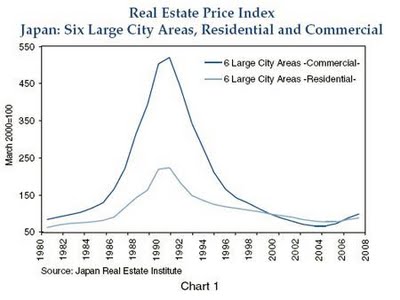
The illusion of house price appreciation is due to historical population growth creating scarcity, and cheaper money allowing for higher and higher leverage. At some point the music has to stop.