You misunderstand cat adaptation !!! These little bastards would learn to swim lazily before spending any effort on ninja moves :D Have you seen a well-fed pampered cat, the thing will meow for his food before even turning his head towards its human slave.
Those auto righting reflexes are just there to ensure their eternal survival when presented to (rarer and rarer) danger.
They're Gods making us do their bidding while they pretend we're the masters :D
We are not a crypto company. Moreover, being as clean and open as possible is the only way to win the battle of the good guys vs. the bad guys in supply chain.
First, you can just google for "logistics is a shady business"
If you want to be more specific, you can google for "carrier haulage tax evasion" - this will be just the tip of the iceberg.
Supply chain is mixed with shady practices for tax evasion, bribery, laundering and all sorts of shady things at all levels that "compete" with actual process optimization. Combined with overall opposition to automation this incapacitates any effort to make the process efficient cuz it's hard, it "steals jobs" and not easy money.
Gotta say, I expected to find a lot more, compared to industries I know are shady (compare to googling "vpn shady"). I don't think I have a specific model of what shady practice are common in the logistics industry.
I hate that. I call myself immigrant in my new country and I find it very snobish to call ourselves "expat".
In fact I did some tutoring to a school for poorer pupils, many of them second generation from the Philipines (so born in Hong Kong, where I immigrated, with two parents born in PH).
When I told them I was an immigrant they were dumbfounded "but then you re very lucky to have arrived here", I was like "not at all, immigration is a choice, you dont need to feel victim of it, we're not here by luck but by work and opportunity seizing".
Talking of immigrants as victims is like talking of africans as "subevolved" charity needing parasites: it hides most of the truth of it.
Every expat is an immigrant, every immigrant is an expat. You left for a reason, and it s always money or a girl.
I can't agree. they generally describe different situations and are used in different contexts. We have different "degree" words for all kinds of situations. I think it's people just trying to virtue signal on both sides though. People really overreact to what in the end is just a word.
You're not disagree-ing, the different "contexts" are what is the issue here. The only difference between immigrant and expat is how rich and privileged the individual is. In the past, it's been used to differentiate between white "expats" working in India, and Indian "immigrants" being used as slave labor in other countries. Whether or not its virtue-siganlling is for you to decide for yourself.
Chinese ! So maybe less focused on absolute numbers in terms of profit and able to be more focused on the product ? Even saying that feels so wrong, right, like US companies really cant enjoy building anything anymore ?
I think Chinese cultural exports obviously lag behind those of Japan and Korea because the government censors confine their creatives, leaving them less free to create.
The CCP really, really likes video clips of happy people doing cheerful things, and there's absolutely nothing wrong with enjoying that content, but really great films and TV shows challenge us, give us fresh new perspectives, and make us see the world a little bit differently. China may be able to compete with some of the more guilty-pleasure sorts of TV content, but it's hard for me to imagine many high quality films that resonate with the human spirit coming out of China any time soon.
I live in China, I think the best way to summarise everything we do at all level is: the end justifies the means.
Need to seize power ? Murder all members of the former power. Need to make poor peasants rich middle class ? Build entire cities, put them there, and done. Need to build a metro station ? Take the land, build it. Need to make Hong Kong a more physically integrated part of the country ? Build a gigantic bridge to Zuhai even if nobody actually need to use it.
The problem ofc is that sometimes the means is more costly than the benefit of the end result, and also that the goal of the end result is never debated, but I suppose that will change eventually, once we've incurred too high a cost for too little a benefit overall.
In China, authority overcomes any friction and drives a project forward. In the US there is no authority and there is no common purpose or enemy. So thousands of self interested parties abuse the system in a very time consuming way.
If a major war was to break out, that would provide powerful common purpose and mountains would be moved in weeks, as history has shown. Same would apply in the case of a major environmental catastrophe.
Encapsulating innovation inside a corporation is the one way in the US to create a common purpose and shield a group from bureaucratic capture.
The risk with the first method is that if the authority is wrong, no one can correct its course. One unlucky dice roll and you have 30 years of a dangerously incompetent maniac. Some will only judge such countries by their lucky rolls.
While a war unites a nation, it’s offset by the waste and destruction it creates. The cold war didn’t build more school and hospitals. All those resources went elsewhere, with the occasional dividend for civilians.
Mountains do get moved quickly when you sign blank cheques, but at a greater cost, with more waste and corruption. We put way too much faith in crash programs.
I think this is why authoritarian governments can be more effective at economic growth when they're behind; they just follow the path that a more economically advanced power did, but with more focus and less concern for individual welfare. Hence China's rapid industrialization.
If that's true, then it'd fall apart when the central authority either becomes too inept or corrupt and the path to follow becomes less clear. Essentially, when the low hanging fruit is gone, the corruption/inepts of the authority would become clear.
If China only had higher standards for its wet markets and disallowed the wild trade all together, this whole pandemic would probably never have happened. At some point, Chinese medicine (which the wild animal trade supports) is doing much more harm than good (if pseudo medicine does any good at all).
Yes what s ironic is that they now try to push traditional medecine as a remedy caused by a virus maybe originating from abusive use of traditional medicine material.
However now I think they just fucked up at the lab, importing bats from all over Asia as a mad rush towards cataloguing everything. The end, then, justified the means and safety was secondary.
Whatever hypothesis anyway, this tendency we have in China only to care about the goal, will end up in tears. Taiwan is prob our next fuckup.
My understanding is that the lab studying coronaviruses situated in close proximity to the wet market is the much more likely source than the wet market itself. And as labs in western countries have had similar leaks (see for example Foot & Mouth disease in the UK), I'm not sure we can really blame the Chinese.
The best info we have is that it was a bio lab release, just an unusual transmission from wild bats to humans in a wild animal market. And really, for all the authoritarian power they seem to have, sanitation standards are shockingly low, and with their density, these kinds of things will keep happening until they basically go with Japanese level cleanliness standards.
Given its situation, china really had no choice but to go with a zero COVID policy. If they tried to handle it like the Americans did, 10s of millions of people would have died, if not more (because their density is higher with lower hygiene standards, not a good combination).
> The best info we have is that it wasn't a bio lab release, just an unusual transmission from wild bats to humans in a wild animal market
That's not my understanding at all. My understanding is that there are two competing theories, neither of which there is categorical evidence for:
1. A bat coronavirus jumped to an unrelated species (e.g. pangolins) that were sold at the wet market. Which then jumped again to humans. But we have not been able to find a close viral match in the intermediate animal population.
2. A bat coronavirus was accidentally leaked from a lab that was known (they have published papers on the topic) to be studying and actively mutating in gain of function research bat coronaviruses.
To me 2 is much more likely. The idea that the epicentre of a coronavirus epidemic was ~100m from the only lab in China that studies these coronaviruses, but that the source wasn't the lab is preposterous. It's possible, but it seems like far too much of a coincidence to me.
Does the waste and corruption cost more than the checks and balances though?
Looking at government IT projects, it feels like the overhead and paperwork make everything 10x more expensive, and taking a risk that some of the projects will end up "stolen" would still be cheaper. Especially if particularly egregious cases of corruption would be prosecuted after the fact.
> Same would apply in the case of a major environmental catastrophe.
I disagree. The current major environmental catastrophe is unfolding right before our eyes. But because there is a lag of years between cause (positive and negative) and effect, the United States has been an example of how to do absolutely nothing substantial.
Sure, when earthquakes level bridges the US pulls out the shovels and starts collectively digging. But mention climate change and suggest that V8 daily drivers might need to change their habits, and they double down on hurting their progressive neighbors:
> I disagree. The current major environmental catastrophe is unfolding right before our eyes. But because there is a lag of years between cause (positive and negative) and effect, the United States has been an example of how to do absolutely nothing substantial.
Right. This is a major failure of US and British culture in particular: the failure to understand how to grasp future exponential disastrous consequences and the exponential impact of our small individual actions in combatting them.
At the beginning of the Covid pandemic I spent a lot of time trying to explain to people that "but it's been weeks and there's only been a few hundred cases" is not a sufficient guide to what is going to come or how to respond to it.
Trying to urge people that they should be more concerned when they have not been taught about things like survivorship bias, the small-world experiment, have never heard of grains of rice or wheat on a chessboard, and were so rushed through school biology that they've missed key demonstrations of exponential growth, etc., is very difficult.
It was not long before we had people and even politicians saying that people like us were over-blowing things when we worried about Y2K, not out of any wise retrospective assessment of real risk but because "after all that, nothing really bad happened". And that is before we in the UK get to the B word.
Basically people need to see real world consequences for themselves or for those they love before they are galvanised into action, and then they galvanise themselves into action in part by blaming those people who tried to warn them and were not listened to, for failing to act pre-emptively to save them.
Edit to add: I don't mean to say that other cultures don't fail at imagining consequences. And indeed in the Covid situation it might be that some of the cultures that did significantly better had more exposure to SARS or bird flu and learned from that. But there is a general lack of cultural understanding of the risks of severe outcomes in the UK and USA
The common purpose is that we're about to ruin the planet's climate if we don't allow more people to voluntarily live in cities and live less car-dependent lifestyles but still we prohibit apartment buildings in many urban neighborhoods and can't build transit projects anymore.
The USA has an adversarial political system: half the people associate with Democrats, half associate with Republicans. But in China, you are either for or against the CPC, and being against it almost means being a traitor. The other political parties exist just for appearances. Unity then is just the default.
Most people in general have a short term cost/benefit analysis period. What China seemingly does different is they have 10, 20, 50+ year plans which in the time horizon of their multi-thousand year history even seems short term.
Your example of the bridge may seem like no one uses it today but most likely in the future, it will be used and the scale will tip towards it being vastly beneficial compared to its cost.
When countries like the USA have an entire history (not including native americans) of ~300 years, planning anything for 30 years out seems relatively crazy in comparison.
Trying to use a 50 year plan is also a weakness. Technologies developed between now and then will make many goals obsolete before their finished.
China the county younger than the US. Linking the history as a monolithic entity is really propaganda more than anything else. They are sure trying to create a culturural identity across a country with multiple cultures and languages.
> Trying to use a 50 year plan is also a weakness. Technologies developed between now and then will make many goals obsolete before their finished.
It's not that simple. If something changes within the 50 years (and it certainly will), they can pivot away and work on something else.
It's more that they have a relatively unified, authoritarian government with absolute power and no external checks and balances.
At our other extreme, we have a two-party deadlock stretching back decades, and every major policy gets turned back after 4-8 years when the other party regains power. It's impossible to plan or build for the future that way.
We used to be able to send people to the moon, develop nuclear power, build interstates and dams, win not just wars but hearts and minds, rebuild Germany and Japan... and now... we can't even evacuate Afghanistan, can't stop our citizens from being so pissed off they storm the capitol, can't do anything about climate change, can't have a sane discussion about educational curricula, can't maintain infrastructure, can't keep our people off the streets, can't deal with a pandemic...
We've become good at one thing and one thing only: allowing private actors to optimize for massive short-term profits at the expense of society and the future. That's no way to run a country. We've turned citizens into gladiators fighting over scraps.
Not saying we should emulate Chinese authoritarianism, but having a national vision lasting more than one election cycle isn't a bad thing. Being able to unite a country behind a major social project isn't a bad thing. Being able to even THINK of a country as a country, instead of warring factions, isn't a bad thing.
Pivoting away still costs the initial investment. Creating canals seemed like an obvious win being a useful technology for hundreds of years which justified extreme investments. Until suddenly rail took over in a relative blink of the eye.
Authoritarianism tends to efficiently solve the wrong problems which results in an overall inefficient system. Private actors aren’t limited to only optimizing for today. Going to collage is a great example of long term optimization as is getting a 30 year mortgage etc. The difference is simply one of scale where private actors may not optimize the global problem, but global optimization is really difficult.
Private actors optimizing for their local maximum is in and of itself a sort of inefficiency.
In any case, it doesn't have to be an either-or situation (and arguably shouldn't be). For most of the last century we were able to juggle private needs with public works, using private talent to cooperatively tackle problems of national scale.
It was only in the last 2-3 decades that we really stopped believing in the country, and the government became increasingly dysfunctional. Then the last 5-10 years we really started circling the drain. I don't know what happened. Some of it looks to me like deliberate sabotage, a concerted effort to decrease public faith in government so that deregulation can benefit the elite. Some of it just looks like sheer incompetence.
Maybe it's just the natural end of our golden age. We've hit the limits of the sort of problems our system can reliably tackle, while the nationalists are still on the upward trajectory -- for now. China is especially scary because they've managed to invent a whole new sort of capitalism hybridized with nationalism-authoritarianism. It has the hallmarks of a free market at the lower levels, but the government has the final word on any business and can nationalize/co-opt corporations whenever they want. In that way they get the benefits of private innovation and enterprise along with the ability to essentially eminent domain entire businesses and sectors at will. It's worked scarily well for them, and they are on the verge of eclipsing our model in the next few decades. The severe cost of it, of course, is measured in lives and liberties, something that West would not (and should not) accept.
But the thing is, we have no answer to that at all. We don't really even discuss it anymore as a nation. There is no national debate about public works or long-term planning from anyone except a tiny portion of the left, while the rest of the political class argue about gender and race and toilets and guns and abortions. It's almost like all the culture wars are an intentional distraction from our failing system of government and economics, where the rich keep getting richer every year -- especially during covid -- and everyone else falls further and further down the ladder. We're so fucked without some sort of forward thinking. Wish we could see some actual leadership for once...
> Maybe it's just the natural end of our golden age.
Alternatively, America simply lacks obvious large scale investments to make.
High speed rail seems like a winner, but is it? We have a very efficient national train network for goods and both an interstate highway system and airlines. As a practical matter HSR is unlikely to change much and is really expensive to build and maintain.
Similarly rural high speed internet is pushed as a must have, but 5G and Starlink are much cheaper solutions to the same problems. Getting wired high speed internet to central Alaska for example is extremely expensive and probably not worth it. Where to draw this line in pure economic terms probably isn’t exactly where telecom companies picked, but there wasn’t a clearly better option.
Bridges and Dams have similarly been added to all the obvious locations. Should we build X is again a really difficult choice.
I would rather have a government that tries and builds solutions that are not the most optimal rather than giving up and not doing anything. Solutions do not have to be the best all the time, just better than what exists. Constant iterative improvements over time
The political will to do it, fund it properly just is not there.
Many want private entities to do it, many do not and that logjam has gotten in the way of a lot.
And there are teardowns. The Post Office has been damaged for politics, for example. Private entities want more of the business and do not want to compete with the PO. Or, they want the PO to work for them at a loss or as a subsidy.
There is a reluctance to make big public investments. There should not be.
Those are more complicated than just building infrastructure. Take healthcare, having more hospital buildings or equipment isn’t a fix. Same with education we don’t need more school buildings. Cybersecurity is again not solved by building more servers.
Carbon sequestration is an open technical problem without any known scalable solutions.
Under grand power lines and roads run into the same issue, building more means you need to maintain more. The solution to pot holes and old bridges are to remove old bridges and roads until we can afford what’s already built.
Renewables are the only pure infrastructure problem, but we are actually building a lot of Renewables. Look at the ratio of new wind/solar vs new coal/natural gas and the grid is only going in one direction. We could spend a lot more going faster, but the end result would be the same.
In term of infrastructure: I would be happy with roads without potholes that are large enough to damage my car, schools, and a semi resilient power grid.
> China the county younger than the US. Linking the history as a monolithic entity is really propaganda
If you know anything about Chinese mentality and how it deeply affect all level of its society, you'll know that it didn't start from 1949. While the government initially tried to suppress China's historic roots in 1960s and 1970s to install a communist utopia, it failed miserably, and they have stopped trying since and embraced it.
As it stands, the first statement quoted is hilarious.
People defiantly get taught to make such connections and people therefore do feel a connection. But all that proves is propaganda works.
It’s no more accurate to trace China’s history through prior empires covering it’s approximate borders as it is to it through the British empire which ruled some of it’s current territory, subjugated them, and still has a huge influence on current culture. The obvious reason to do so is to suggest a shared cultural identity.
Germany, with its 200,000 year history,[1] has for its transport infrastructure at least 15 year plans, which are only moderately legally binding. They are readjusted approximately every five years. New 15 year plans are being developed before the new ones expire, and there are is also some overlap between the plans. With this in mind, the current government has a transport infrastructure plan for 2040 on its agenda.
In this bridge example, not only did it cost $19 billion to build, but the tolls collected actually do not cover operating costs. Doubt their 20 year plan included having to dump more money into the bridge to just keep it working. There are a lot of Youtube videos about China's similar problems with their large high speed rail network.
I don't understand your point. The US may not be old, but European and other histories are taught. Meanwhile, how much impact do the war of the three kingdoms have on modern China?
It isn't so much that I disagree as I think the frame is a bit skewed. When America is operating at its peak everyone has similar complaints (switching "end justifies the means" with "you can do whatever you like if you have money" because historically the US operates using money as a medium).
Whenever anything happens people complain that some interests aren't represented or that resources aren't being used in the way they'd like. The point of the article is more that the US has systemically made it illegal to deploy resources quickly and effectively.
Need to stop a student uprising ? Roll the tanks. Once I understood that about the country, I stopped discussing morals and instead focus on debating cost.
The following wikipedia article contains hundreds of sources for war crimes committed on both sides (Yugoslav and KLA). KLA were officially NATO allies, and a lot of video evidence and official UN evidence exists regarding alleged locations, witness intimidation, and failure to prosecute KLA's top commanders.
There is a 3 hour documentary produced about the whole war in which Carla Del Ponte was featured.
Your first citation references a woman forcibly removed from her post and then goes on to make unorthodox claims about both the Yugoslav and Syrian wars, neither of which are supported by evidence.
Now you’re moving the goalposts - I said a citation was needed that NATO was harvesting Serbian organs. You’ve yet to supply one and are apparently unable to do so.
From the Wikipedia article I linked, here is just one of the sources which states that the EU issued a report stating that "organ trafficking did take place on a limited scale by a few individuals".
I am not moving the goal posts. Hashim Thaci intimidated witnesses who were supposed to testify in the organ trafficking trial.
How do you live with yourself knowing you are not debating in good faith?
I would hardly bring the Balkans as an example of "the West". That's a mix of Soviet / middle Eastern cultured countries.
That said, I wouldn't be surprised to hear about racism, rape or organ trafficking in any war zone.
No-one fighting a war is innocent, not even if you control the media like the West does.
There was no evidence, only allegations brought up by the prosecutor you mentioned.
at all levels ? there must be limits to this approach right ???
otherwise this way of thinking gets terrifying fast and rapidly descends into conspiracy theory land
example: "need to find a socially-acceptable solution to a demographic time bomb caused by decades of one child policy, while still maintaining ethnic homogeneity ? perform gain-of-function research to develop a vector that disproportionately harms the elderly"
to be absolutely clear, I don't believe this was actually the case in 2019 at all - but as an no-limits "end justifies the means" thought exercise - it is easy to arrive at inhuman dystopian nightmares
It should surprise nobody that an authoritarian, centrally planned, and massively resource-rich country can perform infrastructure miracles. You don't have to stoop to conspiracy theories to understand this.
Some of the infrastructure has lead to extra economic benefit beyond just the infrastructure stimulus. But other infrastructure might not - and i would call them economic waste (but not political waste).
The building of those rail networks is meant to achieve a political purpose, rather than an actual productivity increase. Perhaps their leadership thought it was worth the spend, but this sort of spending would unlikely work in the US imho.
With freight, if you consider all factors, road is much more efficient for all but bulk loads or edge cases.
You can make more economical runs per month with trucks than with trains, meaning you get to have less stock on hand as a buffer on both ends.
This has many knock-on efficiencies - fewer resources tied up in goods, lower insurance expense, lower warehousing cost, and above all: a more flexible and responsive supply chain.
China expanded high speed rail that can't be used for freight. It makes perfect sense to connect megalopolises with such a network. But when you start building out to Podunk provincial towns when the passengers can't afford the high prices, they'll continue to take the bus. Meanwhile your shining example for modernity and progress turns into a debt bomb.
No, since the previous fast trains aren't run on the old tracks any more. Due to stopping distances etc, you can fit several freight trains in the space needed for one express train.
The maglev in Shanghai isn’t very usable: it doesn’t go to the city center, just somewhere remote in pudong. It is fast, but if you need to get to the airport from somewhere except one or two places in Shanghai a taxi would do better. But definitely ride it once.
  > The building of those rail networks is meant to achieve a political
  > purpose, rather than an actual productivity increase. Perhaps their leadership thought
  > it was worth the spend, but this sort of spending would unlikely work in the US imho.
You might want to read a bit about the Space Launch System, a well-known political jobs program that many consider a hindrance in advancing the art of space flight.
Yes at all levels, do you want me to tell you what we do to kill a virus ? :D
For natality dont just think today, think 50 years ago when the goal was to reduce it: forced abortion, abandonning your newborn at the nearest wet market (high volume of people) was very common. It's harder to force people to copulate, but I trust our overlords to find a way ahah
The virus however, I m more of the opinion that to fix SARS we decided to import thousands of vietnamese bats to study or such thing and fucked up one way or another. I dont think it was made to kill old people, it was a crazy large scale risky project to prevent the next SARS - the end justifies the means, but this time the means were very costly to foreigners. We dont care yet, or at least we managed to pretend our costs were still low enough not to execute every single person involved, as one should have done if millions of Chinese had died.
China’s ZeroCovid policy worked pretty well, but it’s failing with Omicron. And unfortunately, the nonMRNA domestic vaccines aren’t terribly effective. So it’s possible millions of Chinese people will still die. (I hope not.)
You're right, I think we dont prepare for the worst case. Im in HK and just today our dear leader said nobody could have predicted 2 millions HKers would be contaminated (5000 deaths).
Well, let s give her that but then the central gov, surely NOW they can predict 25% of China being contaminated ? How are they preparing ?
>China actually solved the excess men problem problem via ethnic cleansing.
How would the US behave if it had Wahhabist extremists near one of its borders? We've only seen how the US responded to some 6000 miles away in Afghanistan, most of them were brutally executed, not deradicalized or reeducated.
The US did not, in fact, brutally execute most of the population of Afghanistan. Remember, it's the Ugyur population as a whole that China has "deradicalized or reeducated" - not just active terrorists, not even religious extremists, but everyone.
The Uyghurs being targeted for deradicalization are Wahhabist (an offshoot of Salafism) that have a lot in common with, and in many cases directly trained by, Al Qaeda.
Granted, the net may be slightly larger than it needs to be due to China's high population density and the resulting fact that terroristic acts have a high human cost... but it's nowhere near the scale of our (US) net across Afghanistan, Syria, and Pakistan.
The vast majority of muslim communities in China have nothing to do with this kind of extremist ideology, don't commit acts of mass terror, and are not part of these deradicalization programs.
The net worth a cast really broadly, and a Uighur doesn't have to be a Wahhabist to be labeled as needing re-education through labor, just expressing dissent is good enough. China has already done this with the rest of its population, even many Han were subject to these camps. The party has a lot of practice here and is only doing what it knows.
I'm sure you are aware of that entire cultural revolution thing? Just read up on laogao and laojiao. They never really went away, they just moved the camps from east China to west.
According to the Wikipedia description, they sound like US prisons. Prisoners in the US can spend years in solitary confinement (like Kalief Browder from NYC, an unconvicted minor), are forced to work for pennies an hour (same as UNICOR and other such US orgs), and the amount of violent deaths of inmates within the US prison system that generally have little to no followup investigations are alarmingly large from my understanding.
>The United States Department of State called the conditions in prisons "harsh and frequently degrading," and said the conditions in re-education through labor facilities were similar, citing overcrowded living spaces, low-quality food, and poor or absent medical care.Detainees in camps are required to work for little or no pay; while Chinese law requires that prison laborers' workday be limited to 12 hours a day. In 2001, sociologist Dean Rojek estimated that detainees generally worked six days a week, "in total silence." Much of the labor done by re-education through labor detainees is geared towards agriculture or producing goods, many of which are sold internationally, since re-education through labor detainees are not counted as official "prisoners" and therefore not subject to international treaties. They also perform work ranging "from tending vegetables and emptying septic pits to cutting stone blocks and construction work."
>Although drug abusers are ostensibly placed in re-education through labor to be treated for their addictions, some testimonial evidence has suggested that little "meaningful treatment" takes place in at least some of the centers, and that drug abusers often relapse into addiction upon their release from detention.
Chinese prisons are completely separate things. These are more like concentration camps for people who aren't branded exactly as criminals but somehow need re-education through labor or indoctrination.
I have no idea why you are comparing them to US prisons. Chinese prisons compare to US prisons, and both are inhumane.
i agree that is disturbing but it is not what i was referring to, sorry I meant excess old people - age demographics - not excess men.
based on projections china's population peaked ~last year. it is a shrinking population from here, and while this will be a huge problem in most of the world (see https://news.ycombinator.com/item?id=30735230 discussed recently) but it is happening MUCH sooner in china, and at an unprecedented scale.
it is an existential threat and i am sure their government sees this, and it is scary to think what an "ends justify the means" way of thinking leads to with this problem
Yes, my point was that’s a looming problem but not currently an issue so we can only guess how their going to solve it. But, the options considered are anything up to including say romanticizing elderly suicide.
If we're lucky they'll pioneer growing babies entirely in vitro, no humans needed besides their DNA (which is branch of research I'd really like to see but morals in the West prevent that)
Forcibly re-education and forced jobs(read: labor) is more accurate. Graceful isn't the right word. They're certainly more efficient, but their efforts are not without vast international condemnation. As much as I deplore the US response to terrorism, China's response isn't exactly a breath of fresh air
what do you propose? because this all just sounds so naive. obviously the methods are horrible but there is no feel-good response to terrorism. can you really blame a nation for taking a zero-tolerance approach?
"international condemnation" is hardly a meaningful metric. It comes from 1. countries that have done and are doing far worse (slaughter, invasion, fomenting regime change), 2. countries that are sitting there wringing their hands as internal strife mounts over the increasing culture clash, and 3. countries that are lucky enough not to have these problems.
Yeah, I'm not really sure what they're talking about. If anything, the development of the vaccine for COVID impressed with how quickly we were able to iterate from proof of concepts to actually getting the vaccine distributed and given out. That's not to say that the process was perfect, but overall, I think the end result was much better than I would have predicted if asked hypothetically how long it would take to from the appearance to a new virus until when vaccines were actually administered nationwide to whoever wanted them. Unless that's what GP is saying, that the availability of vaccines for a wider variety of diseases were being artificially suppressed? I'm not sure I'd consider that to be much of a conspiracy theory though. I think it's clear from efforts to squash stuff like polio and smallpox have made it clear that it's practically possible to mass distribute vaccines without gatekeeping based on who can afford it, but in general it would require either an extremely benevolent entity who came up with the vaccine and is willing to forgo profits or some sort of government intervention; I don't think it's really surprising that this doesn't happen more often.
Man, this shadowy cabal was so good, they started a global pandemic that brought the world economy under its control, made everyone fall in line behind pandemic mandates, shut up all dissent and turned everyone into zombies who now work three times as hard.
It kind of happened? Many countries established new levels of censorship and control. People installed tracking apps and got used to constant surveillance. All sorts of things. But not good enough, hence the need for WW3.
Anyway, not saying it was or is a master plan. Just saying that if you were hypothetically thinking about a reset button, a pandemic would be a clever approach, and within technological reach.
"The Great Reset" was the official motive of the World Economic Forum. They absolutely do want a reset.
I'm european but I moved to Hong Kong to dev software. I d like to come back, but when I joined a startup in Paris, for 3 years the other devs talked day and night about class warfare, the state was taking 2 months of my salary end of year (now they take each month directly from your salary), 20% tax on everything I bought, a few hundreds in local taxes, criminality was unlivable, the boss stopped sleeping at some point out of financial stress because the gov made a mistake and took 2 years of corporate tax at once, unemployment was reaching 10% and muslims were killing you in the weekend if you went to a concert.
So I scrapped together some savings, learned English and bailed and Im happier for it. Maybe our roads and hospitals were beautiful, but it wasnt worth the constant frustration. All I can do now is vote and wait they wake up.
Are you french by any chance? Most ambitious french devs I've met have either moved to Switzerland, UK or the US, citing the lack of VC money and a stingy and overly bureaucratic government taxing the living daylights out of you.
Also a french dev I knew, moved with his family to Warsaw, Poland citing a higher safety than in Paris.
Then again, I also have a friend who moved to Toulouse, France to work in the aerospace and defense sector (Airbus) and he's very happy with his life there.
Yeah, I m sad you dismiss them as clichés but I've met people who cant believe what it is to work in Paris for some of us, so well... I left and now I dont have to bother people with my complaints as much : if you can live well in France, happy for you!
Pro-market small gov, indeed, never found my candidate. I vote Macron, since I often agree with his stance, but the problem has never been the politicians, it's the people: they cant see it the way I do, so they wont vote for that imaginary candidate if he appears. So I left and I'm happy, that s all that matters: that s what borders are for.
I m sorry but there is a Cantonese superiority complex, we see it here too in Hong Kong. It s not crazy, it s in a lot of other places (one american girl once told me Europe is boring, to which I replied for me all americans are morons: see a bit lol), but it s more than defensive and a big reason why we have so much trouble credibly communicating demands to Beijing.
> why did you steal all their intellectual property?
Just as a side note the American industrial revolution was built on intellectual property theft [1]. So was the Byzantine empire [2]. The British empire (and it’s tea production) also did well out of IP theft [3].
And how is it you are helping? What is it that NASA does again with its annual $20B budget? Sleeping? ...Not putting people into space, that's for sure. Or maybe it pays others to put people into space? Is that how it works now? On the plus side, I saw one of your NASA T-shirts at Walmart - good job? ...No NASA emblems on spaceships though.
Not for the people who would have liked to drink the water used to clean the panels (cf the projects in deserts). Everything has some drawbacks and it s useful to diversify.
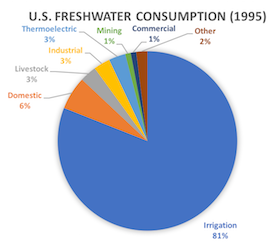
Your off by orders of magnitude. Nuclear uses vastly more water than solar power per kWh.
“Nuclear Energy consuming roughly 400 gallons of water per megawatt-hour, 320 billion gallons of water were consumed by United States nuclear power plant electricity generation in 2015.” And that’s direct consumption in cooling towers, nuclear indirectly uses power in other ways.
By comparison the 550-megawatt Desert Sunlight project in Riverside County estimated 2/3 cup of water per megawatt hour.
Most of the water used by nuclear is used to run the heat exchangers, and gets dumped straight back into the river it's drawn from. This looks like it's the source you're quoting [1]. It's pretty clear that nuclear power is a tiny fraction of water usage [2]. Furthermore, in water-constrained areas nuclear plants can be cooled with wastewater [3]. And lastly, plenty of nuclear plants are cooled with ocean water, which obviously has zero shortage.
The notion that nuclear power is going to significant affect water supplies is without merit.
I agree it’s a trivial amount of water and both can go without using water, the point was solar is on average vastly less.
However, wastewater is just water. Look at a long river and towns upstream dump their wastewater into rivers that towns and cities downstream collect as municipal water.


Those auto righting reflexes are just there to ensure their eternal survival when presented to (rarer and rarer) danger.
They're Gods making us do their bidding while they pretend we're the masters :D