yes. any set of complete functions form a vector space and can be used in a linear sum to appropriate other functions in the same space. the dot product tells you the value of the coefficients. The fourier transform is just a special case of this.
idk why this is downvoted. the 90s is the period between the end of the cold war and the start of the war on terror. its the only time in living memory where there was no enemy.
9/11 absolutely changed the country. it was the start of militarized police, nationalistic displays, and 24/7 fear that have all been normalized today. Perhaps the terrorists didn't win (Bin Laden is dead and the house of Saud still stands) but we certainly lost.
Perhaps this is far too controversial a view for HN, and for many Americans, we'll see.
The terrorists absolutely won. Least that's my perception as a non-American. Your first mistake was legitimising them as "the enemy"
When the IRA were bombing Docklands, Manchester or Birmingham pubs we'd make a poor taste joke the next morning, walk past the wreckage and forget about it the day after that. When the Baader Meinhoff Group were killing public figures, and bombing Brits, Germans and Americans over in Germany they were treated as a bunch of insignificant extremists. Even by the Americans it seemed from news reports. There'd be a poor taste joke or two, and they'd be ignored. Much the same for other terrorist groups hijacking aircraft or killing people through history. "Don't deal with terrorists" was heard from every politician.
Then came 11/9 and the "war on terror." So determined were your politicians to legitimise the terrorists it became a war. Against a legitimate target. Globally. So determined were you to preserve your "freedoms" that you built an apparatus of surveillance to ensure that freedom. Apparatus so far reaching that it is indistinguishable from an apparatus of oppression. Most other countries played along too in support, and built the same apparatus of oppression to preserve freedom. Not only did the USA lose, and the terrorists win, but the UK, France, Iraq, Malaysia etc lost too. So did freedom.
No more bad taste joke the morning after and treating them as a bunch of irrelevant idiots unworthy of but the briefest air time (like I get the impression most Americans still do with a group like the Westborough Baptist Church), but an unwinnable war with a legitimate enemy and a leader, and endless analysis. Everyone except them, globally, lost.
I think you missed my point when I said "the terrorist didn't win but we certainly lost".
Everything you say about how we've lost our identity, optimism, and freedom is exactly what I meant by "we certainly lost". I agree with that 100%.
But none of these things were the goal of al quida. AQ doesn't win by virtue of what we've lost. AQ doesn't care that we turn ourselves into a police state. "They hate our freedoms" is a propaganda line we told ourselves. The goal of AQ was to end the rule of secular governments on the Arabian peninsula (namely the Saudi's) and they attacked the US precisely because we prop up the Saudi's. 17 years later we're still backing the Saudi's. Bin Laden is dead. An order of magnitude more death has been unleashed in the Muslim world than what was released on America on 9/11. 9/11 was ultimately massively counterproductive to the goals of AQ. The terrorists didn't win.
The price of freedom isn’t the WOT or trillions for wars - it was 9/11 and accepting what a few handfuls of men could do in a one-off in a free society.
We can win every tactical battle, but we lost strategically.
In a country of 325 million people, it seemed like there wasn't anyone who didn't know someone either affected or directly harmed by the 9/11 (11/9 as you call it) attacks. It didn't feel like "some poor saps over there got the short end of the stick" it felt like "we're all directly attacked".
This wasn't the first time Osama bin Laden and al Qaeda reached out and touched us. Previously, we'd treated him more or less the same as you'd suggested, thinking back to the attack on the USS Cole we just lobbed some missiles off into the desert and called it a day.
As for the surveillance apparatus that sprang up in response, there was most certainly a backlash against it, with all the dystopian oppressive government warnings. The general public didn't really mind much, though, because they'd felt that the government fundamentally failed at what could theoretically have been a preventable disaster.
So, given that, what were we to do? Say to our neighbors, "sorry, you have to risk death in future attacks because I can't be arsed to wait longer in lines at the airport"?
I don't think the terrorists have won, because their objective wasn't to make our lives a little less pleasant. Their objective (as stated) is the fundamental destruction of our nation. Sure, we've compromised our constitution by allowing our government more power than it ought to have. The consequences of our reaction, our actions (and lack of actions in other places) will be felt for generations. That doesn't mean that the terrorists have won, far from it.
I normally transpose to US order when it's 9/11 as it's become the name. Date habit got the better of me, sorry.
> So, given that, what were we to do? Say to our neighbors, "sorry, you have to risk death in future attacks because I can't be arsed to wait longer in lines at the airport"?
Not at all. It was a horrific, terrible event on an unprecedented scale, which I don't wish to play down or disrespect. Perhaps no reaction could have kept the trademark US unbounded optimism afterwards, but it seems that the reaction changed more than the event itself.
If the reaction had been more like other incidents, the authorities could have quietly done what authorities do whilst the politicians try to play down the drama and immediate desire for revenge, reinforcing the need to mourn but preserve all that's best of your way of life. The CIA and excellent special forces might have clinically cut al Quaeda and its leaders to shreds over the coming years with global support and enhanced US global reputation. It might have taken longer, or been more difficult with an organisation like al Quaeda. Smaller changes could have improved air security without the enormous security theatre industry that's resulted.
The creation of the surveillance state, the invasions, ongoing military casualties and gunboat diplomacy seems to have brought most of the changes to society and attitudes and subsequent change in international views.
> The consequences of our reaction, our actions (and lack of actions in other places) will be felt for generations
>> The consequences of our reaction, our actions (and lack of actions in other places) will be felt for generations
>That's basically my point.
I was replying more specifically to the claim that the terrorists have "won". By any measure of their stated goals, that simply isn't the case. They didn't want us to be inconvenienced, they wanted us to at least completely withdraw our military from the middle east. Beyond that, they'd love for a total collapse of society... Instead, we have been more heavily militarily entrenched than before ever since.
If their goal was to destroy our society, they certainly got quite far with that. Since 9/11 we have abandoned American optimism, openness, and sense of a positive future in favor of ideologies that more closely resemble the paranoid reactionary beliefs of the terrorists.
I'm fairly sure the cold war paranoia pervaded society at least as much as, if not far more deeply, than post 9/11 effects. Also, let's not forget the internment camps for Japanese after WW2.
We changed, but I wouldn't call that change the kind of "destruction" that am Qaeda had in mind.
Most of HN trends young (<=30) and maybe doesn't remember the before time.
There was a general optimism and sense of freedom in the 90s that is just gone. We have continued to progress in many amazing ways, but I feel like it's on inertia. The living, growing, vibrant ideas of today are totalitarian and paranoid: the alt-right, the authoritarian left, nationalism, technocracy, neo-feudalism, etc.
I think part of the popularity of 9/11 conspiracy theories comes from the deep intuition that something broke and never recovered. I think most of those theories are BS but the intuition is correct.
9/11 didn't come out of nowhere though. The 90s weren't actually war-free. There was, in fact, no shortage of wars[0]. Sure, they mostly do not involve western powers, but they can certainly be traced back to them. All of these civil wars are the reverberations of colonialism and the two world wars.
The former colonisers were so unwilling to relinquish their grasp on these territories and so willing to instead install puppet governments or just continue their colonisation through multinational corporations instead. It's no surprise it led to these insurgencies that have the US in their sights. We reap what we sow.
> its the only time in living memory where there was no enemy.
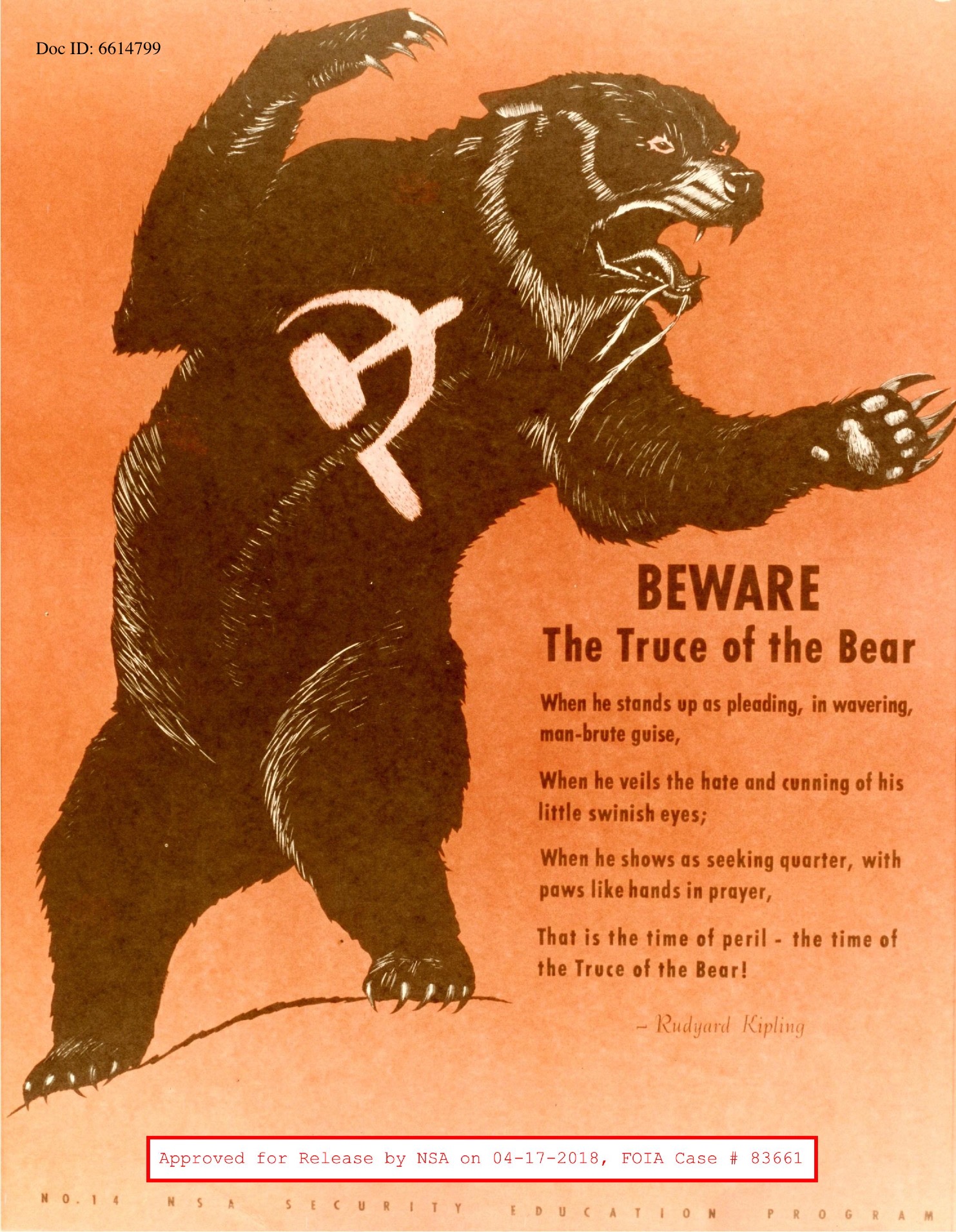
The reality is that we have always been the enemy. And we manufacture a bogeyman to legitimise our hegemonic power and the unjust actions it requires to maintain that power. When the USSR and other socialist powers fell, a new enemy had to be created and 9/11 worked perfectly.
The rooted pay taxes, provide stability to a neighborhood, and are invested in the upkeep of their properties.
They also tend to be better neighbors than a constant flow of random people who may not care whether they make noise, or disturb others.
I certainly would be incredibly peeved if I paid a million dollars for a unit and then the person down the hall turned their apartment into a miniature hotel and had random people coming in and out at all times of the day that I'd never seen before.
Beyond that, these units drive up rental prices, and avoid luxury taxes which can benefit locals to enrich the owners of AirBnB.
Visitors spend far more per day than long-term residents. I think there's a high likelihood that their overall contribution to the taxbase greatly exceeds the long-term residents per day of occupancy.
In other words, there's good reason to suspect that having a unit rented out to a succession of short term residents will produce more tax revenue for the city than having it occupied by one long-term resident.
As for stability, I don't think we're in any danger of destabilizing major cities from lack of long-term residents.
>>certainly would be incredibly peeved if I paid a million dollars for a unit and then the person down the hall turned their apartment into a miniature hotel
This should be decided by the contract you signed with your condo association when you purchased the property, not an arbitrary intervention in private contracts and property by the city.
Also, would it make any difference to you if the steady rotation of guests were not paying? If not, why not make the rule focused on the problematic condition, which is a large number of different people visiting/staying, rather than whether there was financial compensation?
It wouldn't matter if it was the condo across the hall or the house across the street. Just because you own a piece of property doesn't give you the right to do anything you want with it.
That's why we don't allow strip clubs next to schools. Because certain things should be in certain places and not others.
In this case, the people have stated by voting in representatives who've appointed officials who've created zoning laws that they don't want short term leasing without a permit in their residential neighborhoods.
And those tourists tend to contribute more to city coffers when they're not actively dodging things like luxury taxes.
Asking silly hypotheticals about people operating hotels for no monetary gain doesn't help your argument.
It's poor exercise of government power to prohibit a money-making operation, as a way to stop a subset of that money-making operation that has harmful effects. Better to target the harmful activity directly.
>>And those tourists tend to contribute more to city coffers when they're not actively dodging things like luxury taxes.
That's a different topic. My point was that there's no good reason to assume long term residents contribute more to the tax base, given how much more tourists spend per day of occupancy.
But to your point: who said Airbnb means dodging luxury taxes? And why ignore the loss in tourism when you wipe out the low-cost accommodations market provided by home-sharing?
>>Asking silly hypotheticals about people operating hotels for no monetary gain doesn't help your argument.
Remuneration from paying guests is not the only potential motivation for allowing a large number of people to stay at one's place in quick succession. The motivation should not be relevant if the problem is the quantity of people staying. Targeting remnunerated stays exclusively is biased.
When you bought a residential property, you agreed to operate it within certain levels of upkeep, within residential zoning ordinances, adhering to a list of rules the city imposes on you. You didn't settle a piece of land on some unclaimed frontier, and you don't get to change the rules your building, neighborhood, community, city, state, or country imposes on your property just because you don't like them. If you wanted to operate a hotel, buy property zoned for that purpose.
Good point. There is a case that house-use restrictions are consistent with voluntaryism given land is not man-made movable property. The community at large could reasonably argue it has a greater right to govern immovable natural property than the first person to homestead it, given the latter is not an act of creation the way the genesis of other types of private property is.
Anyway aside from the larger political question, I think it's more practical to leave these decisions to individual condo associations. No need to homogenize policy in a diverse landscape.
constitutional rights (and a culture that enshrines them as sacred) is just one layer of protection for civil liberties. The other, Often overlooked layer is the fact that running a dystopian state is uneconomical. For better or worse this is the logic used by gun advocates, but it should also apply to other areas.
technology can make it feasible to scale repression like never before. facial recognition, big data, centralized Electronic banking are all enormously powerful tools in the wrong hands. the guns of the 21st century are those made by the subversive cypherpunk. cryptocurrency and encrypted chat come to mind. In China the number one tool to oppose state censorship is not protest, its a vpn.
at the end of the day if amazon doesn't do this someone else will. so long as the tech is possible the gov will get their hands on it, and so far as the tech errodes civil liberties it eventually will be used to do so.
"if amazon doesn't fuck people over someone else will"
yeah i said that.
"so who cares"
no i didn't say that.
I said the best defense isnt the benevolence of corporations willing to say no to gov contracts on principal. the best defense is a populace able to subvert these technological systems of oppression. For facial recognition this means adversarial patches. for Internet censorship this means VPNs. in other cases it means encryption and cryptocurrency.
Thanks for responding kindly to a not so kind comment - sorry.
Your point does make a lot of sense. It sucks we live in this world where we have to operate as if our own government is an adversary. Technologically its very sound to operate in this way, but at best that means citizens in an arms race vs. an all-powerful government with infinite money and resources. In the long run, we will lose that race. For example:
Use masks/patches to circumvent facial recognition? Govt. outlaws those, builds better tech.
Use cryptocurrency? Govt heavily monitors crypto exchanges, ties them back to your identity (this is already happening! - coinbase requires SSN and identity verification), defeating the point.
The only way to really win then is to demand our government, which is supposed to have its citizens interest at heart, actually does. No amount of tech can beat the govt because the govt eventually gets access to that tech & talent too, plus a police force and authority to make laws. The only solution is to have them on OUR side.
Personally, I see it as the opposite side of the same argument people use about drugs - that simply banning things doesn't work, motivated people will find another way to obtain them. There is no one more motivated and persistent than the US Government... Even if all the US tech firms join together and refuse to sell to them, the US is not the only country on Earth with tech companies making innovations in this area.
So in that sense, yes, they'll keep looking and someone else absolutely will. As someone pointed out below, the real solution is to have them lobby the US Government to give up their pursuit, anything else is just a delaying tactic.
Even if all you gained was a delay, which I certainly don't believe is true[1], then it would still be a big win.
[1] their tech would most likely be much inferior, and when the likes of Google/Amazon/Facebook/etc. have to choose between getting kicked out of countries or providing their tech to authoritarian governments, then they usually pick the latter.. because profits is more important than the imprisonment and death of millions.
The argument I think you’re alluding to is that rather than employees petitioning Amazon not to sell the government facial recognition technology, they should petition for Amazon (among others) to lobby government to restrict its use (data retention limits would be a start, I guess).
If nothing else, that would probably be more effective.
what I'm saying is we should assume that whatever mass surveillance mechanisms the government is trying to buy, it will eventually buy and whatever legal safeguards there are to protect us will eventually fail.
what I'm calling for is the individual to be "armed" with adversarial patches or whatever other tool it is that confounds facial recognition sytems. the only thing which is long term effective is a population which can and does resist. VPNs, encryption, cryptocurrency, and a bunch of other tech (existing and under research) will be the safeguard when all else fails.
if the gov has to physically send someone with guns to someones door to enforce a law, the economic feasibility of enforcing the law has already shifted massively away from the passive data scoop of a mass surveillance system. Why hasnt the gov won the war on drugs by just busting down every door?
I'm reasonably sure that it's enough to imprison a small number of dissidents to drastically reduce the number of people using surveillance countermeasures. Making examples of dissidents worked reasonably well for all kinds of oppressive governments.
It's simply not inevitable. I'm so tired of this rhetoric.
"it's going to happen anyway, so give up". No, it's not going to happen if you actively oppose it.
For example, cops in Europe cannot execute crawling, begging, unarmed people. And if they try, they won't be getting away with it. Guns exist, cops exist, and guess what, cops shooting people doesn't exist. Why? Because society is an active thing, and if a society opposes a behavior (including the usage of tools, like amazon's rekognition) they can stop it.
I think there's more to it than actively opposing - in Ireland deaths at the hands of the cops are rare, and there's a huge fuss when one happens ... but that's more a manifestation of the norms of Irish society than anything to do with active opposition to police brutality. It's more - if police brutality is rare then there's not much point in becoming a cop if you're a brute
This mechanism reinforces the societal norms that created it, like many others. If the Irish didn't intensely oppose police brutality, more brutes would enter the police force, leading to higher incentives for brutes to join the force. It looks like a self-amplifying loop but it works towards society's demands.
> The other, Often overlooked layer is the fact that running a dystopian state is uneconomical.
How so?
Only example I can think of is China’s Social Credit system denying loans and traveling permissions to people with a low score - where said score is dependent on your compliance with the whims of the CCP; instead of being dependent on the credit worthiness of the person.
Said person won’t be able to grow his/her business as effectively, reducing his/her company’s competitiveness.
iirc the stasi employed half the population to report on the other half of the population. Thats a lot of wasted money and labor. It simply isn't a sustainable system.
Chinas social credit is a perfect example of what I mean. technology is making it more and more practical to actually enforce restrictions on civil liberties down to the granular level.
you are right and when the public has their own sting rays, their own license plate trackers, and their own facial recognition systems it will be a crazy world indeed. As these systems grow and learn more about people they will become increasingly powerful. Imaging a world where one mistake could follow you around for ever. You take a photo while in public and your facial recognition app detects someone in the background. Of course after you subscribed for 9.99$ you can access information about people detected. The person detected was in the news for assaulting his wife. He was arrested and did a year in jail and did his time and changed his ways and regrets ever doing it. But the facial recognition does not forget what you did 10 years ago. My girlfriend was acting weird, I am going to be insecure and see where she went. Good thing we all have internet connected dashcams taking real time license plates. I better subscribe to the license plate tracking service for 9.99$ and now I can see that when she said she was in class her car was actually spotted 50 miles away. The future will be different.
> technology can make it feasible to scale repression like never before. facial recognition, big data, centralized Electronic banking are all enormously powerful tools in the wrong hands
Presumably those that wouldn't use it. If we accept that those technologies have upsides, then the "right hands" would be those that don't take advantage of the downsides.
I think its mostly just a political statement - that these workers don't like such technology being used for immigration control whilst President Trump is in office.
When the full list was posted on HN previously, [1] there were a few that I thought are humorously over the top today, and would definitely be out of place (and potentially piss off HR) in a modern office:
I think this could be about efficiency. If it is codified that Breitbart is not a credible source (which is not a irrational idea), you don't need to have daily discussions about Breitbarts credibility.
/r/neoliberal has a fantastic slogan/soundbite for you to use.
"legalize housing"
a people ideologically against government intervention should be all for removing government barriers to building what you want where you want. that includes corner stores and town houses. they naturally should be against the gov telling you how much setback you need and how tall you can build.
don't phrase it as we need to zone for corner stores. phrase it as we need to legalize corner stores.
you can recurse in excel. its disabled by default but you can set the max depth on circular references in some menu. I haven't used it since the 2007 version