Only solution: Wall around SF. You have to pass the coolness test to get in. Only artisan puppeteers and activist breadmakers allowed. None of these dorky tech folks driving up the rents.
I don't know many people who aren't frustrated about the cost of rent in the city, but that might be because I'm biased towards knowing people mostly under the age of 40.
I'm torn on the Ellis act evictions. I think something needs to be done about them, but on the other hand I think landlords should be able to sell their properties. Without some form of the Ellis Act, landlords will be forever landlords. Companies like Urban Green Properties are kind of shitty, but the big problem is that San Francisco has absolutely no plans for placement or re-placement of residents.
Strictly speaking, SF has a ~1% population growth. That's 8500 people a year. Theoretically, 2/3 of that is likely non-native, but still there should be theoretically a net 2k new San Franciscans/year if you account for the numbers native high school graduates and subtract the death rate.
And I don't think it's just a nerd vs artist thing, I think it's a bit more of a new adult resident vs established adult resident (which tends to skew to old vs. young). However, the nerd population tends to make more money and larger waves, which means they're the obvious punching bags.
If the nerd population wants to be a less obvious punching bag it needs to do a better job of integrating in to the community and taking part in discussions like this.
As for the Ellis Act, I agree that it is indeed a complicated issue, and one that in it's essence can actually start to question core concepts like "private property", especially in the context of an urban hub.
Private property is pretty cut and dry in a rural context. However in cities, complete with a vertical axis and many other types of proximity effects, the border between public and private tends to get very blurred.
I feel that people who choose to buy property in cities should be aware of these things. They should know that when they buy an apartment for rental purposes in a city like San Francisco that it is not like an ordinary financial investment, rather it also includes obligations to properly house and care for the people who reside in it.
The people who choose to live in cities have other needs and desires on top of an expression of personal liberty. Anyone who moves in to a city should not expect to be able to comfortably bring their existing, external ideals and lifestyles along with them.
Oh, I agree about the nerd non/anti-assimilation thing, trust me. I might be on HN, but I work in academia with a vast majority of friends who are musicians, artists, or also in academia. Most of which live in Oakland.
Of course, if you're an east coast Ivy who hits up mission cliffs on the way home from your startup in SoMa, well, you're going to have a hard time integrating with the Salvadoran family that's lived next store for 40 years. However, I'm not sure who is to blame for any of that. I think the worst part of it all is this weird form of entitlement where everybody has to live in the trendy parts, coupled with the money to afford it at whatever cost. Couple that with the city's desire to restrict any sort of new building at nearly any cost, well then I think you have a real problem. The only solution I see is to either adopt a policy of higher density, in-place structure and tenant replacement (letting tenants move back into a new higher-density building at a similar cost), do more development along Third Street, or to abandon SF and try building out West/Downtown Oakland or something instead.
Indeed. This is one of the few things that could make the residential situation around here even worse. Provided we don't see another bust before then, it'll be interesting to see how bad it gets before even our municipality is forced to consider changes to policies like rent control. 2x NYC? 2x Manhattan? At what point do companies start looking for space elsewhere?
The metro area density is mostly a measure of whether the suburbs are more or less urbanized. E.g. the LA/OC metro CSA is substantially more dense than the SF/Oakland/Fremont CSA, but nobody would say that LA is denser than SF. Rather, LA is surrounded by urban sprawl while SF is surrounded by suburbs.
What sucks more is that a lot of the new buildings are only luxury buildings going for $2000+ a month per living space per person and most have homeowner's association trying to keep the ratio of owners to renter's high, so most units don't even hit the rental market. Couple this with the fact that the only program in the city focused on making housing affordable, the BMR program, only really makes things accessible for those with a household income between 70 and 90% of the median income, leaving every else out in the cold, and you basically have horrendous conditions for most people to be able to live here.
The way I see it, San Francisco's 1% are taken care of, as are San Francisco's 60th to 65th (I don't know the exact equivalent to the 70-90% of median income here), and everyone else is left to fight over what little housing is left.


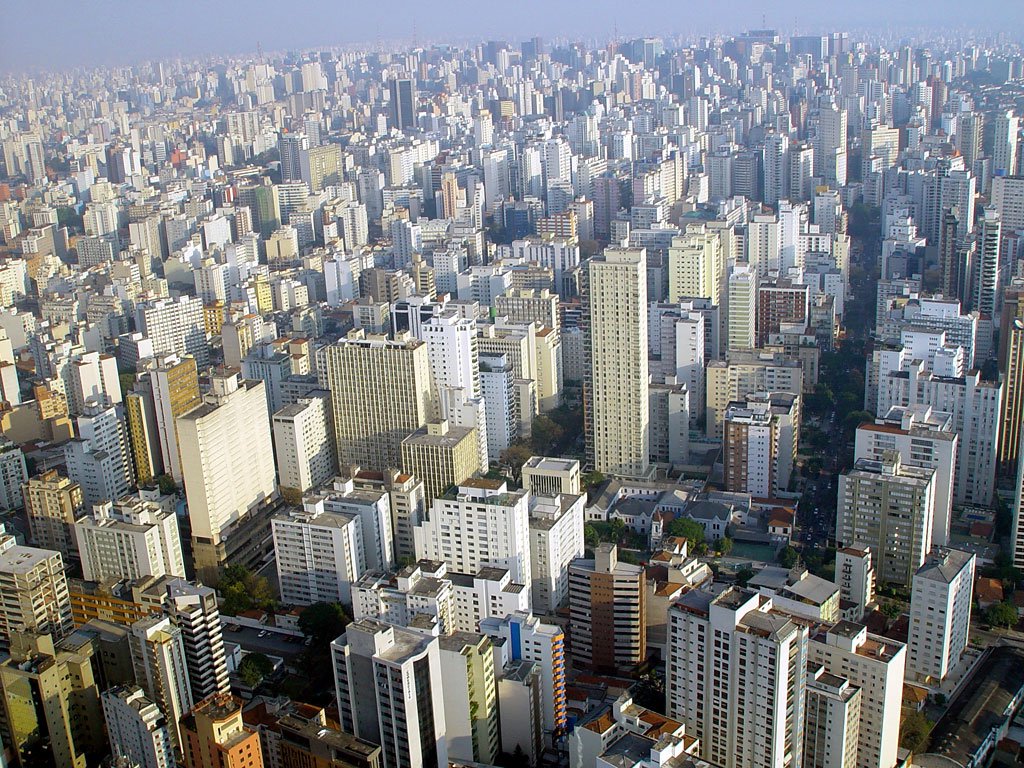

If rent was ugly before, I can't imagine what if will be like now.
I get the feeling that the mayor and supervisors only care about displacement, not placement.