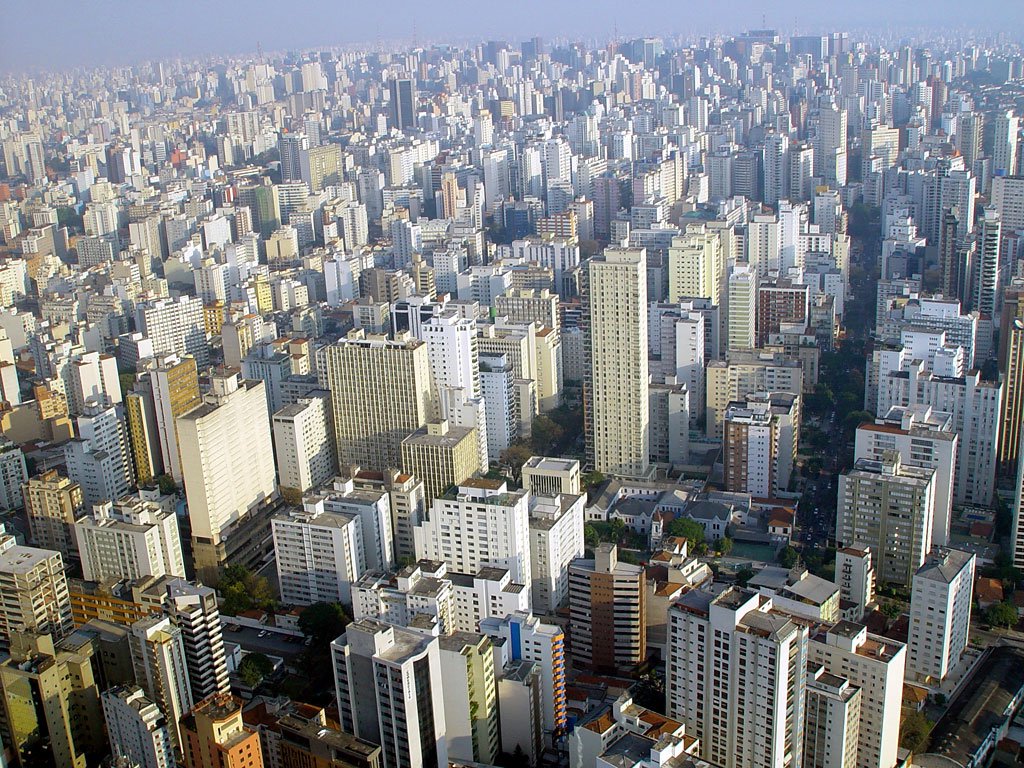
As an European, I've never understand how is that possible that South Bay is such a bad place to live. Everything interesting like night life, public transport even groceries and restaurants are all either non-existent or so far away that you always have to drive. No wonder everyone wants to live in SF because there's nothing to do in the South Bay. What is the problem really? There's a lot of money in there, lots of potential customers, good geographical conditions, creativity and yet it's so badly planned and organized. This year I moved to London and there are lots of things to do in virtually every district. Public transport is amazing compared to the Bay area and you don't even need to own a car. That's completely impossible in the Valley and I have no idea why isn't there someone who tries to change that.
> Everything interesting like night life, public transport even groceries and restaurants are all either non-existent or so far away that you always have to drive.
Nightlife, public transportation, grocery stores and restaurants are not non-existent in the Peninsula and South Bay. And if you live in one of the downtown areas, most of which are clean, safe and vibrant, all of these things are accessible by foot. Rents in these downtown areas are generally no more expensive than rents for comparable housing in desirable neighborhoods in San Francisco, and in many cases, the rents are meaningfully lower.
This said, it's worth considering that a lot of people prefer not to live in a dense, urban environment. One of the most attractive things about the greater Bay Area is that it offers different kinds of environments for different lifestyles within, by US standards, a relatively small geographic area, so there's something for just about everyone. What's wrong with that?
Well, maybe I've lived there for the period of time that has been simply too short to judge, but after being raised in an urban/suburban environment in Europe (Warsaw, Poland to be specific) it just felt like there's nothing to do in the Bay Area without a car. And believe me, Warsaw is certainly not the most exciting place in Europe. :) Maybe that was because of cultural shift I've experienced, but the fact is that distances are way larger than here in Europe. Yes, you have a relatively good network of bike lanes compared to for example Warsaw, but the distances between the places where you sleep and where you can spend time nicely (restaurants, pubs etc.) make it way harder to get there on the bike. It's not a big deal if there's a good public transport that gets you from point A to B quickly, but there hardly is any public transport in the cities like Santa Clara, Sunnyvale or even Mountain View. And there usually is just one main street where you can feel a bit of the city life and vast areas around where people just sleep or work. I don't question those cities are safe or that you can live in a more attractive neighborhood. I have also appreciated that those places are clean and close to the nature, but I've found myself feeling bad that I can't just cross the street and buy some food for the breakfast or cross another street and grab some coffee/beer/whatever with my friends. I guess this is because of cultural difference between America and Europe, set of things you're accustomed to, but I know quite a few people in London or London's sattelite cities who moved there from SF Bay Area and feel exactly the same: suddenly there's so much to do and everything is so much closer! Even when I visit my parents house on Warsaw's suburbs I feel I can get everywhere I want way faster than in for example Santa Clara.
It's not a "bad" place to live, it's simply suburban, thus younger people tend to prefer SF.
How would you "change" it? It's just not dense enough to support enough grocery stores/restaurants that everyone could walk everywhere. There are small downtown areas of each city where that may be possible but those areas are going to be expensive.
How would you "change" it? It's just not dense enough to support enough grocery stores/restaurants that everyone could walk everywhere.
Given the absurd cost of housing in the bay area (http://www.slate.com/blogs/moneybox/2013/04/11/san_francisco...), you'd generally just reduce or eliminate height restrictions, minimum building setbacks, and parking requirements. At that point developers will build structures that increase density and support grocery stores / restaurants.
Well I'd argue that suburban areas in Europe are sometimes even less dense, yet still there's much more places to go to. Maybe "bad" is a "bad" word here, but I think this is just a matter of urban planning. If you build a four-lane highway instead of one-lane street it discourages people from walking. Have there been a better public transport like buses, trams or subway, people wouldn't drive so much either. If they have to drive anyway, because there's no another option, they can drive further and thus don't care if the place they are going to is 5 miles away or 10. I guess the cities would have to make the first step and plan the new neighborhoods as more dense, more urban environments. Housing developers usually only care about earning money, so if it's cheaper to build everything the same way as before they'll do it no matter what. And people cannot even oppose it, because rents/house prices are already stellar in the Bay Area compared to other places even in the US. This makes it a vicious circle.
It isn't going to take "someone" – it is going to take a large cultural shift.
Out of the top 10 largest cities in the US only three of them are livable without a car - NY, Philadelphia and Chicago. (San Francisco is not in the top 10 for size)
Real estate developers like to build cheap and fast. Urban planners do what the book tells them. Public transportation is politically unpopular. And American's love, just love, their cars – don't do anything to get in the way (bike lanes, dedicated bus lanes, congestion pricing).
I do think that younger American's are more urban and are looking for a change. So we shall see what the future offers.
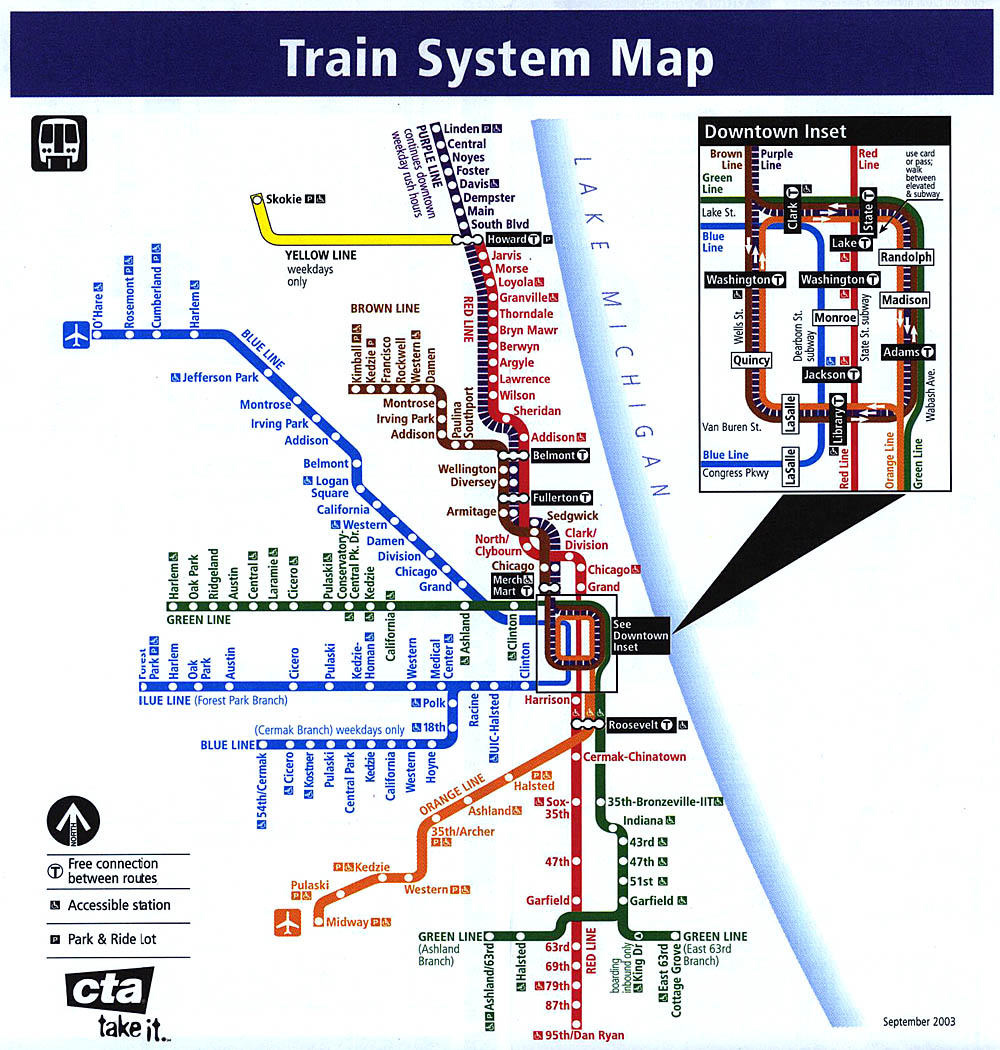
I live in the Chicago suburbs. The CTA ("The El" and the bus lines) and the Metra (light rail to the suburbs) are just barely adequate to be called public transportation. I'm in SF often, and would say its easier to get around SF without a car than Chicago.
Just my two cents. Demo: 30, male, owns a car but hates it.
EDIT: Our bike lanes are coming along very well in downtown Chicago, and almost everyone loves the new Divvy bike sharing program.
Which suburb? There are great suburbs (Evanston, Oak Park) and there are awful ones (Plainfield, Schaumburg).
Virtually nobody in our (sizable) office drives to work besides me, and I really have no excuse, since I'm a short walk from the Green Line. Public transportation is spotty in the suburbs, but in terms of coverage (both in space and time) the actual city of Chicago's system is among the best in the country. Is New York's better? Yes. But New York might be the only US city that can easily make that claim.
There is no comparison to be made between Chicago and San Francisco, or between Chicago Metro and SFBA.
I lived in Chicago for three years without a car. In terms of getting around downtown, the El is fine. METRA is far better for getting in from the suburbs than CalTrain.
I like how the labels obscure the fact that BART just cuts a line through the city of San Francisco. Also funny is how the legend at the bottom of the map blots out the parts of south bay where everything actually is.
Note also that the Chicago map is just a route map, and bears little relation to the geography of Chicago.
Barely adequate? There are on the order of 200 metra stations radiating out from two major and two minor downtown stations. On the north line, folks commute from Kenosha. Because of the line into Indiana, some folks have a very short commute.
I have worked downtown for the last four years, and only drive to Montana.
Unclear to me what more than adequate might look like.
Because engineers move down to the south bay to start their families. The reason why is SF's public schools are some of the worse in the entire nation, and private schools + mortgage is way more money down the drain than just a mortgage in the peninsula. If public schools were replaced with a voucher subsidy system, you would probably see more families up in SF, the city of singles.
Also being a city of singles and young people, it creates it's own sort of gravity well and you get this magnetic alignment effect. You get married families in the south bay, leading to boring suburbia and the young in SF, leading to all of the fun things up there.
Among the good schools, are really horrible schools. You put your top 3 choices, and there is a good chance you wont get any of those choices and be placed in a bad school. You get expectations like 5 year olds being expected to take muni for 50 minutes one way.
This all has come from conversations with people who grew up in the bay area, so the 50 minutes on muni might be different now from their childhood, but the top 3 school choice thing came from a coworker today talking about their friend's experience with their kids.
I recently went through the process for my kid, who is currently attending elementary school in SF. You list seven schools in order of preference. If you are not assigned any of the schools, then yes, you will get an assignment that wasn't on your list, and (because nobody requested it), it usually isn't a good one.
Your odds of getting something on your list depends of course in large part on the list. SF has a number of what we call "trophy" schools, as well as a number of highly in demand language immersion programs (Mandarin, Spanish, etc). If you list only those programs, your odds of getting skunked are high. Some people do this strategically, as people who went 0/7 on their list have a higher priority on wait lists than people who got one of their choices. They figure if they get one, great, if not, they have a priority position on the wait list. Other people play it a bit safer.
My approach was to avoid the trophy schools and focus on very good schools below the radar. In my opinion, there are plenty of very good schools in this range, but this is a matter of opinion. Here's the greatschools list.
I did get one of the schools on my list. That's partly luck, and partly going in with realistic expectations (even my first choice was only an 8/10, I didn't go for the 9's or 10's). It is absolutely possible to create a balanced list with a good chance of an assignment and still get skunked, it's just less likely.
There's good and bad in the ranked choice system. San Franciscans are very split on it (a recent non-binding vote to make district residence the determining factor in school assignments, prop H, actually failed by a few hundred votes, as close to a 50-50 split as you'll ever see in an election).
I think the reason article summed up the benefits from a libertarian point of view pretty well, so I won't expand on it here.
You have to understand that after the 1950s in the United States, everyone thought cars were awesome. They allowed you to go farther than anywhere else before and they allowed a greater mobility in general than ever before. Combined with the dream of having a house and a yard, this allowed for sprawl.
So cities were planned around this. San Francisco itself even had a boom where it tried to utilize cars as much as possible. There were either freeways or plan to build more freeways cutting through the city to get to places. There was going to be a 2nd Bay Bridge to San Leandro, why? Because they wanted more traffic to get into the city and they didn't trust his new fangled thing called BART (the train system for those of you who don't know it).
I don't know what the situation was in England or other European countries when cars started taking off but I imagine there had to be something similar, maybe just not with the same momentum as the United States.
There certainly were some attempts to introduce more cars to the city centers in Europe, tram lines used to be closed etc. but thankfully a lot of streets were too narrow to handle an ever-increasing traffic so they just had to give up. Not to mention that a good network of public transport has already been there, so people have always been accustomed to it. Nowadays most of my friends here don't use their cars in the cities, because it's way faster to get everywhere by bus/subway/tram or even bike.
Well, if they're going to move in a bigger way into SF, Mission Bay makes sense. It's basically a big ghost town. Lots of UCSF-owned medical facilities and lifeless condos. But plenty of space. And it's relatively close to the transit hubs in South Beach.
As a nearby resident and worker, though, I'm not looking forward to the traffic or the added residential real estate crunch. We've got the Giants, soon we'll have the Warriors, we'll have a few huge high rises going up, a huge Salesforce campus in the works, and maybe we'll have a Google office. Oy vey.
Agree on this sentiment; it's a quiet part of town compared to its surroundings, which is kind of nice. The coming boom in automobile traffic will compromise it as one of the relatively few peaceful places in the city to walk, run, and bike.
Small correction: according to the source article, Google is actually purchasing the land from Salesforce. So it may be one or the other.
> We've got the Giants, soon we'll have the Warriors, we'll have a few huge high rises going up, a huge Salesforce campus in the works, and maybe we'll have a Google office.
Sounds like a boon, not a burden!
Maybe Google should move to somewhere people would be grateful to have them. People here in Philadelphia would love to see some business and industry come their way.
Yeah, it's absurd how many SF residents are reacting to all this economic activity. There are so many cities across the country that would love to be in the position SF is right now.
It's almost like a good number of SF residents aren't sharing in this economic activity and are instead being forcibly removed from their homes to make way for the imported worker bees who can actually contribute to and benefit from the industry.
Hogwash. SF residents are being forcibly removed from their homes because they refuse to allow more housing to be constructed. They keep supply artificially low through a lot of ridiculous ordinances, pushing up rent and the cost of living in many ways.
Also, there is nothing preventing many from benefitting from the growth here. For example, every single blue collar worker in construction with unions should be fighting to permit a housing boom here. It increases demand for their services, giving them more work and putting them in a better bargaining position. This city could easily grow 50 to 100% over the next decade if it wanted to. A 50% increase in population would be awesome economically for just about everyone who lives and works in the area and provide goods and services for people living in San Francisco.
If you want to keep it cheap, you need to dilute the 1%ers so they represent a percent of the city instead of like 25% of the city.
It's an economic boon, and it brings in a lot of smart people, and it makes the neighborhood more lively. All of that is awesome. I live in SOMA and believe me, I love how vibrant it is today, especially as compared to what it used to be: essentially, a dead zone of warehouses and shipping containers.
I love SF's ability to reinvent itself, to adapt its spaces, and so forth. I don't think the city gets nearly enough credit for that.
The problems are housing inventory and traffic. The city has not yet figured out a fantastic way to address either of those issues. Personally speaking, I'd freaking love a Tokyo-style mega-city of uber-high rises and elevated catwalks. I'd love for SF to become the dense, futuristic wonderland that Star Trek envisions its becoming. But a lot of regulations are in place that seem to prevent that from happening. And there's also the issue of seismic stability to contend with. SF is not exactly the sturdiest ground on which to build skyscrapers. But we need more housing, and we need more intra-city transportation that doesn't rely on the roads (which, if you've ever experienced gameday or rush-hour traffic in SOMA, you know can become hellish nightmares).
Essentially, SF is a very small space that experiences high density and is not (currently) built to accommodate such density.
All said and done, this stuff is sort of a mixed bag for me. I appreciate it in many respects, but I feel the pain in a lot of day-to-day life. It's not a binary, net-good or net-bad situation.
I really like your perspective on this. You seem very open to the idea that more public infrastructure needs to be built.
I think the first steps that we need to make are towards making the lack of public infrastructure feel more painful to the new implants. We need to do away with the private bus fleets and perhaps explore policies that would limit private and quasi-private modes of transportation like cabs, limos and car "shares".
Cities without any public infrastructure are terrible places to live and work in. We need to stop making "privatization" such an unarguable positive in the tech community. It is at ends with the needs of a population the lives practically on top of itself.
I'm all for the supposed decentralized and sharing-based economics of services like Lyft, but we can't forget that these are not democratic institutions. If we are intending to wholesale replace our existing methods of public transportation with something like this, we need to make sure that we retain public oversight in the matter. I believe the colloquial term for this is "to not throw out the baby with the bathwater".
Interesting points. I agree that privatization is not the cure-all it's been made out to be. I happen to think SF -- the Bay Area in particular -- is both a public and private success story. It's easy to forget that the rapid advances SF's private sector has made in the last few decades were largely built on the back of public-sector investment in sciences and tech companies in the '50s and '60s. But I digress.
Public transportation can and should get better within the city of San Francisco, and in my mind, the best place to build it is up. It's tough to build an intra-city subway for any number of reasons, not the least of which is the aforementioned seismic issue. Additionally, SF turns out to have been built largely (predominantly?) on landfill and liquefaction. Subways would be pretty susceptible to flooding, and would be massively expensive to keep in operation with all the pumping and maintenance requirements the city would force on them.
I really like the idea of a skyward-developing SF, though, not being a geologist or a structural engineer, I'm not sure how that would be achieved in a city like this one, with its inherent foundation issues. But we're starting to build a lot of giant skyscrapers, evidently, so perhaps someone's figured it out?
I'm sure there are plenty of engineering and architectural solutions to building upwards.
How about instead of putting our resources in to "seasteading" and other libertarian ideologies, we put instead explore more humanistic and social endeavors like Buckminster Fuller's "“Proposed Tetrahedral City"?
The thing with trying to leave and start your own community, be it on a floating platform in the middle of the ocean or in outer-space, is that it will still heavily depend on the rest of humanity for support. We don't have any self-supporting mechanisms for life other than Earth.
The irony is that the idealic hippie communities that were inspired by the musings of guys like Fuller fail from the same basic principles.
I think the lesson here is that at least for time being, we can't achieve true self-sustaining communities. An effort needs to be made to interact with humanity at large, no matter how ideological impure that endeavor is.
> I'd freaking love a Tokyo-style mega-city of uber-high rises and elevated catwalks...SF is not exactly the sturdiest ground on which to build skyscrapers.
Uh, did you just use Tokyo as an example of the city you want SF to be and then say that it can't because of earthquakes?
Only solution: Wall around SF. You have to pass the coolness test to get in. Only artisan puppeteers and activist breadmakers allowed. None of these dorky tech folks driving up the rents.
I don't know many people who aren't frustrated about the cost of rent in the city, but that might be because I'm biased towards knowing people mostly under the age of 40.
I'm torn on the Ellis act evictions. I think something needs to be done about them, but on the other hand I think landlords should be able to sell their properties. Without some form of the Ellis Act, landlords will be forever landlords. Companies like Urban Green Properties are kind of shitty, but the big problem is that San Francisco has absolutely no plans for placement or re-placement of residents.
Strictly speaking, SF has a ~1% population growth. That's 8500 people a year. Theoretically, 2/3 of that is likely non-native, but still there should be theoretically a net 2k new San Franciscans/year if you account for the numbers native high school graduates and subtract the death rate.
And I don't think it's just a nerd vs artist thing, I think it's a bit more of a new adult resident vs established adult resident (which tends to skew to old vs. young). However, the nerd population tends to make more money and larger waves, which means they're the obvious punching bags.
If the nerd population wants to be a less obvious punching bag it needs to do a better job of integrating in to the community and taking part in discussions like this.
As for the Ellis Act, I agree that it is indeed a complicated issue, and one that in it's essence can actually start to question core concepts like "private property", especially in the context of an urban hub.
Private property is pretty cut and dry in a rural context. However in cities, complete with a vertical axis and many other types of proximity effects, the border between public and private tends to get very blurred.
I feel that people who choose to buy property in cities should be aware of these things. They should know that when they buy an apartment for rental purposes in a city like San Francisco that it is not like an ordinary financial investment, rather it also includes obligations to properly house and care for the people who reside in it.
The people who choose to live in cities have other needs and desires on top of an expression of personal liberty. Anyone who moves in to a city should not expect to be able to comfortably bring their existing, external ideals and lifestyles along with them.
Oh, I agree about the nerd non/anti-assimilation thing, trust me. I might be on HN, but I work in academia with a vast majority of friends who are musicians, artists, or also in academia. Most of which live in Oakland.
Of course, if you're an east coast Ivy who hits up mission cliffs on the way home from your startup in SoMa, well, you're going to have a hard time integrating with the Salvadoran family that's lived next store for 40 years. However, I'm not sure who is to blame for any of that. I think the worst part of it all is this weird form of entitlement where everybody has to live in the trendy parts, coupled with the money to afford it at whatever cost. Couple that with the city's desire to restrict any sort of new building at nearly any cost, well then I think you have a real problem. The only solution I see is to either adopt a policy of higher density, in-place structure and tenant replacement (letting tenants move back into a new higher-density building at a similar cost), do more development along Third Street, or to abandon SF and try building out West/Downtown Oakland or something instead.
Indeed. This is one of the few things that could make the residential situation around here even worse. Provided we don't see another bust before then, it'll be interesting to see how bad it gets before even our municipality is forced to consider changes to policies like rent control. 2x NYC? 2x Manhattan? At what point do companies start looking for space elsewhere?
The metro area density is mostly a measure of whether the suburbs are more or less urbanized. E.g. the LA/OC metro CSA is substantially more dense than the SF/Oakland/Fremont CSA, but nobody would say that LA is denser than SF. Rather, LA is surrounded by urban sprawl while SF is surrounded by suburbs.
What sucks more is that a lot of the new buildings are only luxury buildings going for $2000+ a month per living space per person and most have homeowner's association trying to keep the ratio of owners to renter's high, so most units don't even hit the rental market. Couple this with the fact that the only program in the city focused on making housing affordable, the BMR program, only really makes things accessible for those with a household income between 70 and 90% of the median income, leaving every else out in the cold, and you basically have horrendous conditions for most people to be able to live here.
The way I see it, San Francisco's 1% are taken care of, as are San Francisco's 60th to 65th (I don't know the exact equivalent to the 70-90% of median income here), and everyone else is left to fight over what little housing is left.
Would that be a headquarters move, or just an SF office move? IIRC, they may have to move out of their present space above Palomino, which means they'd be looking for someplace to put their current SF employees.
Google has a development office in Chicago but I don't think it's very big. The 600k sq ft of Chicago office space mentioned in this post is probably a reference to the new Motorola office space in the Merch Mart.
...because Google was being very arrogant in their stagnation of source tools and community coding infrastructure.
It's easy to say GitHub is killing it now, but back then (2008), GitHub was slow, buggy, and could have been eclipsed by anybody with the drive and focus to run them into the ground. But, GitHub had (has) those wacky overachieving social coder founders. The entirety of Google doesn't have a chance at even recognizing people like that within their ranks, much less (these days) pulling them up out of the muck into leadership positions to create viable competitive products.
It points to a great reason behind the G+ failure too. If they couldn't make a viable social service for nerds—their core in-office demo—what is the chance they can make a social service for the planet?
Also, perhaps even moreso than other places in the US, "The City" (capitalized, with extra stress on each syllable) has long been an affectation in the Bay Area & Northern California to refer to San Francisco proper. See especially the columns of Herb Caen and regional anthems like Journey's "When The Lights Go Down (in The City)".
As someone who is only familiar with calling San Francisco "The City", I am curious what city outside of North America you are referring to; please enlighten us.